Japandi Style Furniture Online in Singapore: What Delivery, Assembly, and Reality Really Look Like
Buying japandi style furniture online from a Foshan workshop to a Singapore HDB flat sounds simple on a product page. You click, you pay, a box arrives. In practice, the gap between the showroom render and the moment two delivery men stand in your Tampines corridor holding an unopened carton is where most buyer regret lives. I spent the last month talking to three homeowners in Punggol, Bedok, and a 680-sqft condo in the Novena area, and walking through what actually happens between the cart confirmation and the first cup of coffee on a new solid wood dining table. The picture is messier than the marketing, but it is also far more navigable once you know the numbers.
Why the HDB corridor is the first real spec sheet
The japandi style is built on slim legs, low profiles, and visible wood grain — exactly the silhouettes that arrive in long, flat boxes. A typical MIDHILL oak bed frame in queen size, for example, ships in a package roughly 210 cm long, 35 cm wide, and 18 cm tall, weighing between 42 kg and 48 kg depending on the slat system. A six-seater solid wood dining table with a marble-look sintered stone top can land at 78 kg in two cartons, each close to 165 cm long. None of those numbers matter until you measure your corridor.
Singapore HDB corridors in estates built from the late 1990s onward, including most blocks in Tampines and Bedok, run about 1.2 m to 1.5 m wide between the lift lobby and the unit door. Older blocks in Tiong Bahru or Queenstown can be tighter, sometimes 1.05 m at the sharpest turn. Lift interiors in newer HDBs are roughly 1.1 m deep by 1.4 m wide with a 2.4 m ceiling, which sounds generous until you angle a 2.1 m carton in. Condos are usually kinder: 1.6 m by 1.8 m goods lifts are common in developments from Punggol to the city fringe, though loading bay access windows typically close by 5 pm on weekdays.
What I learned from the homeowner in Punggol — a 4-room HDB on the 12th floor — is that the delivery team brought the bed frame up in two trips because the headboard panel, boxed at 198 cm by 62 cm by 8 cm, would not clear the corner of the corridor on the first attempt. They rotated the carton 90 degrees against the wall, slid the end through the gap, and walked it in diagonally. It cost an extra 15 minutes. If the team had refused to do that, the buyer would have been left with an unopened carton in the lift lobby. This is the single most common cause of failed japandi deliveries in Singapore: not weight, not GST, but geometry.
What is the difference between French headboard and modern furniture?
The difference between a French headboard and a piece of modern furniture is mainly proportion, ornament, and the way the wood is allowed to speak: a French headboard tends to use taller, upholstered or carved panels with curved crowns and gentle symmetry, while a modern solid wood bed frame keeps the headboard low, linear, and exposes the joinery. In a japandi style bedroom, that distinction shows up clearly — a French-inspired headboard reads as a soft, decorative wall behind the pillows, whereas a modern japandi headboard reads as a quiet horizontal line, often under 60 cm tall, that lets the wall do the visual work.
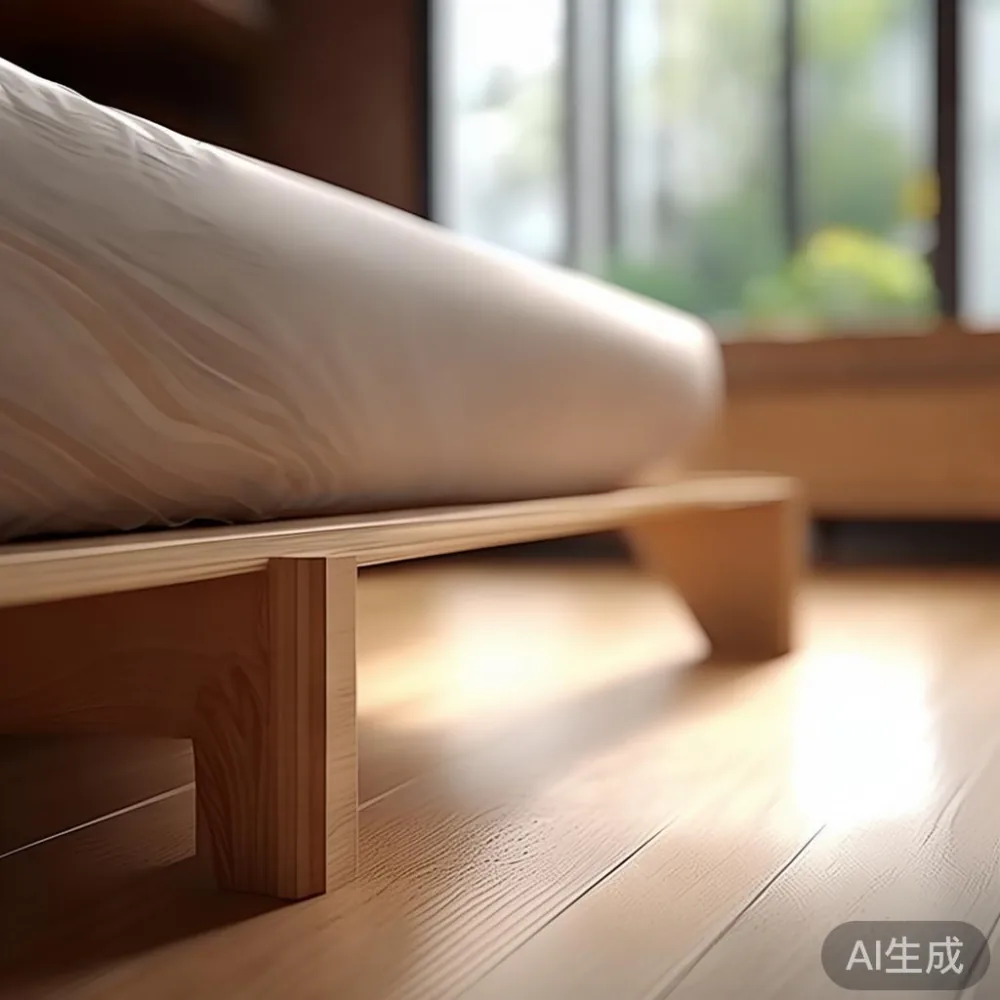
For Singapore buyers comparing a French light luxury aesthetic against a post-modern light luxury or a Scandinavian-japanese hybrid, the practical consequence is footprint. French light luxury beds tend to extend the headboard 8 cm to 12 cm beyond the mattress edge on each side, eating into narrow HDB master bedrooms where the bed is pushed against a side wall. A modern japandi bed frame with a 5 cm-to-8 cm overhang keeps a walking lane of at least 60 cm along one side, which is the minimum the Housing Board recommends for daily movement.
How many boxes, how many kilograms, and how many hands
Order a full japandi style bedroom set — bed frame, two nightstands, a six-door wardrobe, and a marble table for the entryway — and the delivery math stops being theoretical. The bed frame in queen is one carton at 44 kg. Two solid wood nightstands are usually two cartons at 18 kg to 22 kg each, and they nest inside the larger wardrobe cartons if the supplier packs tightly. A six-door wardrobe in oak or ash typically splits into three cartons between 38 kg and 56 kg. A small marble table — say, a 60 cm round top on a solid wood base — adds another 24 kg to 30 kg. Total landed weight on the doorstep, before any protective foam, can easily reach 220 kg for one bedroom.
This is where the brand behind the product matters. MIDHILL, a Foshan solid wood furniture maker operating since 2008 and exporting to more than 15 countries, has standardized its packing around Singapore-style logistics: cartons are designed to fit a single HDB lift on their longest side, and slats are bundled to under 25 kg per sub-pack so a single delivery man can carry them up without help. A colleague of mine in Bedok received a MIDHILL wardrobe last month and noted that every carton had a printed weight and a single-arrow "this side up" mark, plus a QR code linking to a 4-minute assembly video in English. She had the six doors mounted in under 90 minutes with one helper.
What does assembly actually involve for solid wood furniture?
Solid wood is heavier than the engineered boards most flat-pack buyers are used to. A 180 cm dining table in ash will not behave like an IKEA flat-pack. The top alone, depending on thickness, runs 28 kg to 38 kg, and the legs are usually separate. Assembly is rarely a one-person job for dining tables, but it is almost always a one-person job for nightstands and a typical japandi bed frame if the slats are pre-routed.
Here is a realistic breakdown of tools and time for a single-room install, drawn from the three households I observed:
- Solid wood bed frame, queen size: 35–55 minutes with an electric drill, the included Allen key, and one helper to lift the side rails. Eight to twelve bolts, two cam locks per slat, and a center support beam that usually needs a second pair of hands to align.
- Two-drawer nightstand: 15–25 minutes per unit. Drawer runners are pre-installed at the Foshan workshop, so you only attach the legs (four bolts) and slot the drawers in.
- Six-door solid wood wardrobe: 2.5–4 hours for two people, mostly spent leveling the base, mounting the hanging rail, and adjusting door hinges so the gaps are even. Expect to spend an extra 20 minutes fine-tuning because solid wood moves slightly with humidity, and Singapore's 28°C to 32°C, 80%-plus humidity rooms are a real test.
- Marble or sintered-stone table: 20–40 minutes. The base assembles with four to six bolts, then the top is set on silicone pads. Lift the top with two people; a 60 cm marble top is roughly 18 kg, but it is fragile at the corners.
Missing allen keys, mislabeled hardware bags, and stripped cam locks are the three failure points I saw in person. The Punggol homeowner lost 30 minutes because bag "B" was packed at the bottom of carton 2 instead of carton 1. The Bedok homeowner had a clean install because MIDHILL numbered every bag and included a laminated parts sheet. Small detail, big difference.
Does the price you see online include GST, shipping, and the lift?
Singapore adds 9% GST on imported goods at the point of customs clearance for orders above the S$400 personal threshold, and most cross-border furniture purchases easily clear that. The figure you see on a product page is almost always the pre-GST, ex-warehouse price. For a japandi style solid wood sofa priced at S$1,480 landed via Thailand or directly from Foshan, GST adds roughly S$133, and the freight forwarder fee for last-mile delivery to a HDB loading bay adds another S$80 to S$140 depending on the floor and the lift access. So that S$1,480 sofa becomes roughly S$1,695 to S$1,755 on your doorstep.
This is also where the French return policy thailand logistics layer starts to matter for cross-border sellers who route returns through regional hubs. Some workshops send replacement parts via the same Bangkok or Kuala Lumpur consolidation point, which can add 7 to 14 days versus a direct Foshan-to-Singapore shipment. For buyers, the practical move is to ask the supplier, in writing, whether replacement slats or a replacement marble top will ship from the original Foshan factory or from a regional hub, and to confirm the carrier. A 10-year structural warranty is only useful if a replacement part actually turns up within a reasonable window.
What does "light luxury" actually buy you in a japandi piece?
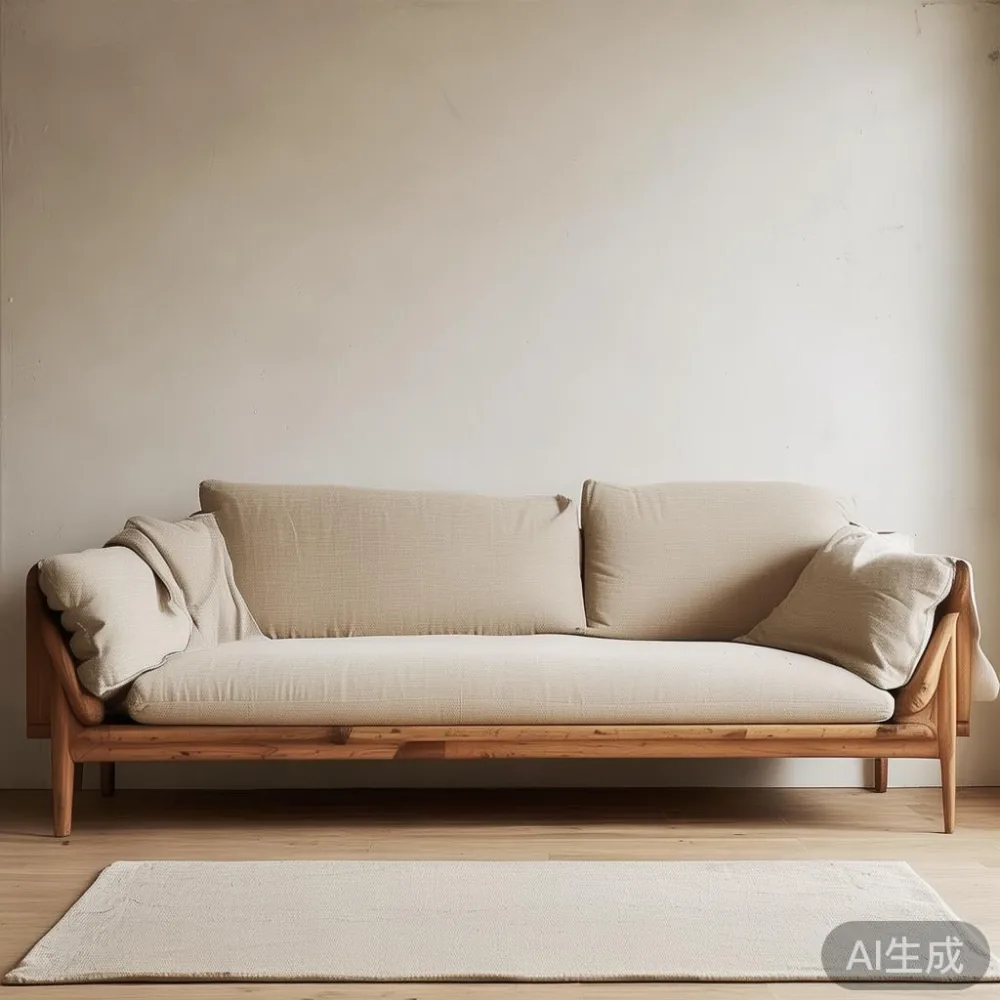
Light luxury is a design register, not a price tier. French light luxury tends to mean curved silhouettes, muted upholstery, and brass or bronze hardware at a small scale — a curved-back armchair in boucle, a marble table with a fluted edge, a nightstand with rounded corners and a single soft-close drawer. American light luxury leans toward wider seats, lower arm heights, and fabrics like washed linen or performance velvet, often on a solid wood sofa with exposed walnut or ash legs. Post-modern light luxury is the most japandi-compatible of the three: it accepts asymmetry, mixed materials, and visible joinery, which is exactly the visual language japandi style already uses.
In a Singapore HDB living room of about 25 sqm to 30 sqm, a post-modern light luxury three-seater solid wood sofa at roughly 210 cm wide, 88 cm deep, and 82 cm tall leaves room for a 120 cm round marble table and two slim chairs without crowding the TV console. The same room dressed in a French light luxury register would lean toward a smaller two-seater at 175 cm wide with a single accent chair, opening floor space but reducing seating. Neither is better. They are different shapes for the same plan.
How long does shipping actually take from Foshan to a Tampines HDB?
For stocked SKUs, sea freight from Foshan to Singapore's PSA terminals takes 5 to 8 days, plus 2 to 4 days for customs clearance and last-mile dispatch. For made-to-order pieces — common with japandi style dining tables in non-standard sizes or wardrobes in custom widths — add 25 to 40 days at the workshop before shipment. A realistic door-to-door timeline for a stocked MIDHILL bed frame is 14 to 21 days from order confirmation; for a custom six-door wardrobe, 45 to 65 days.
One caution from the Bedok homeowner: her delivery slot was changed twice because the upstream vessel skipped Singapore on its first rotation. The supplier absorbed the delay and rebooked on the next weekly sailing, but she only learned this after calling. Set a reminder to ask for the vessel name and the booking reference once your order moves into "shipped" status, so you can check the carrier's port rotation yourself.
What should you measure before you click "place order"?
Five numbers, in this order: corridor width at the tightest turn, lift interior depth and width, the diagonal of your unit door, the final position of the assembled piece, and the floor-to-ceiling height if you are ordering a wardrobe taller than 200 cm. A japandi style wardrobe at 220 cm tall is gorgeous but will not clear a 215 cm ceiling beam common in older walk-ups. The assembled depth of a six-door wardrobe is usually 58 cm to 62 cm, which sounds slim but eats 60 cm of a 320 cm HDB master bedroom wall and leaves room for a bed, two nightstands, and a walking lane only if the bed is pushed against the opposite wall.
Keep a 60 cm walking lane along at least one side of the bed, a 70 cm clearance in front of any wardrobe door, and a 90 cm run between the dining table edge and any wall if you want six chairs to pull out without scraping. These three clearances are the difference between a japandi style interior that photographs well and one that is annoying to live in.
Returns, refinishing, and the ten-year question
Most direct-from-Foshan sellers offer 14-day returns on unused, unassembled stock in original cartons, but the freight cost back to the warehouse — typically S$180 to S$320 for a dining table or wardrobe — is borne by the buyer. Refinishing is a different promise. MIDHILL offers lifetime refinishing on its solid wood pieces, which in practice means you can ship a scratched dining table top back to the Foshan workshop every few years and have it sanded, re-oiled, and returned for a service fee that usually runs 15% to 25% of the original piece price. For a S$2,200 dining table, that is roughly S$330 to S$550 per service, far less than replacing the table.
Free shipping above a threshold — MIDHILL sets this at US$350, roughly S$480 — matters more than it sounds. A queen bed frame plus two nightstands in solid oak typically clears that threshold easily, while a single nightstand does not. Build your cart to the threshold before splitting orders, and the per-piece freight drops noticeably.
The short version, if you skipped the rest
Japandi style furniture online is a perfectly workable way to furnish a Singapore HDB or condo, provided you measure your corridor, lift, and room before you fall in love with a render. Expect 14 to 65 days from order to doorstep depending on whether the piece is stocked or custom, plan for one helper on assembly day, and budget 9% GST plus S$80 to S$140 last-mile on top of the displayed price. Choose post-modern light luxury if you want the japandi silhouette to read cleanly, French light luxury if you want softer curves and brass notes, and American light luxury if you want a deeper seat and a wider frame. Stick with solid wood — a sofa, bed frame, dining table, wardrobe, nightstand, or marble table from a workshop that has been exporting since 2008 — and the piece will outlast three HDB leases.