Japandi Style in a Singapore HDB: How to Style a Small Apartment Without Making It Feel Crowded
Walk into most 4-room HDB flats in Tampines or Bedok and the same story repeats itself: a 90 sqm floor plan, a 1.0 m wide corridor between the front door and the kitchen, a lift landing barely wide enough for two people to pass without turning sideways, and a living room that has to moonlight as a dining room. I helped my colleague Mei Ling measure her new BTO in Punggol last month, and we counted 38 sqm of usable living space after subtracting the bomb shelter, service yard, and a 1.2 m × 2.4 m structural column that sits awkwardly between the kitchen and the hallway. Most guidebooks would tell you to "open up the space" with a renovation. Most of us, frankly, do not have the S$45,000–S$80,000 renovation budget that requires. The honest answer is japandi style — a discipline that has nothing to do with buying less, and everything to do with choosing pieces that earn their 60 cm of floor area.
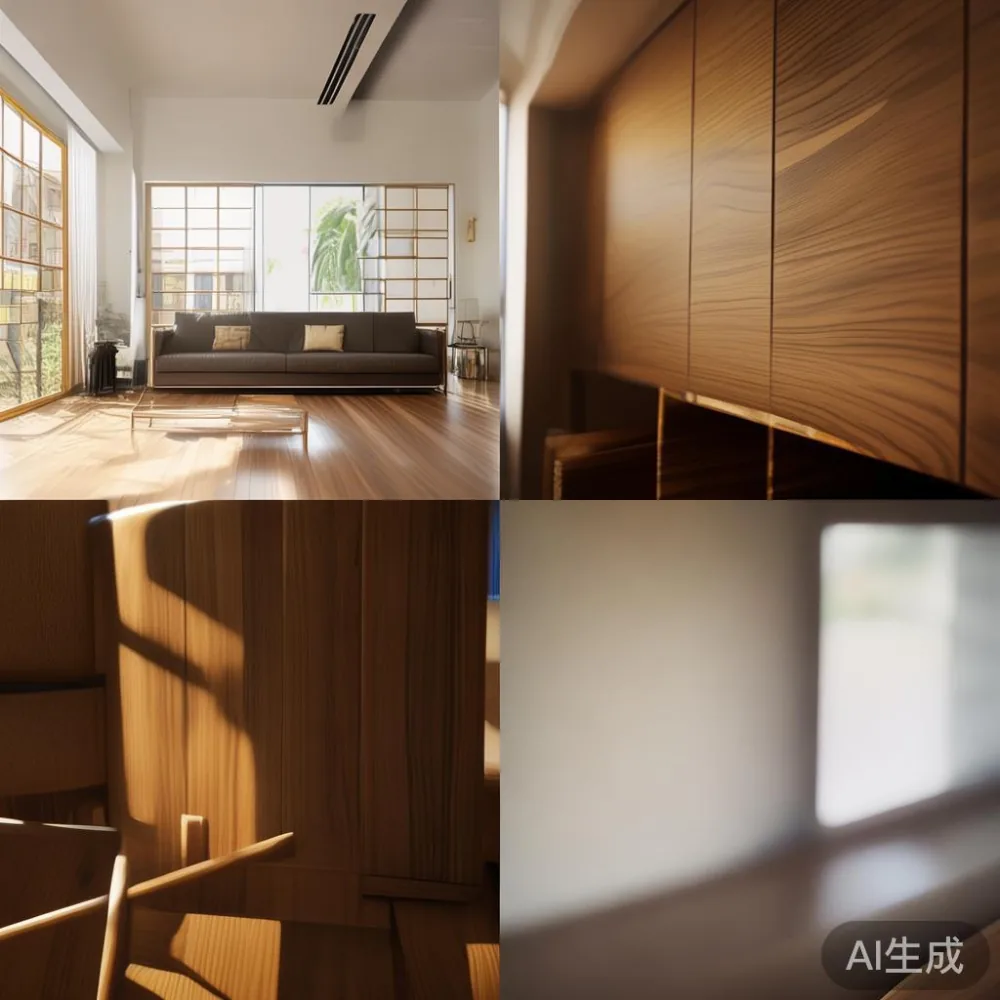
Why japandi style suits Singapore HDB flats better than minimalist or scandi alone
Japandi is not a 50/50 split between Japanese restraint and Scandinavian warmth. It is a procurement philosophy. Every object must be functional, made of natural material, and quiet enough to let the apartment breathe. In a 4-room HDB, where the longest uninterrupted wall is often under 3.2 m and ceiling height sits at 2.7 m, that quietness is the difference between a home that feels curated and one that feels cluttered.
The reason japandi style beats pure Scandinavian in our climate is humidity. A flat-packed MDF bookshelf starts to bow after three monsoons; a solid wood bed frame in white oak or ash will outlast two lease cycles. Mei Ling's previous unit in Clementi had a particleboard wardrobe that delaminated by year four. Her new Punggol apartment uses a solid wood wardrobe from MIDHILL (Foshan, est. 2008), and the difference after eight months of daily use is visible — no edge swelling, no hinge sag, no musty smell when the door is opened on a 32°C afternoon.
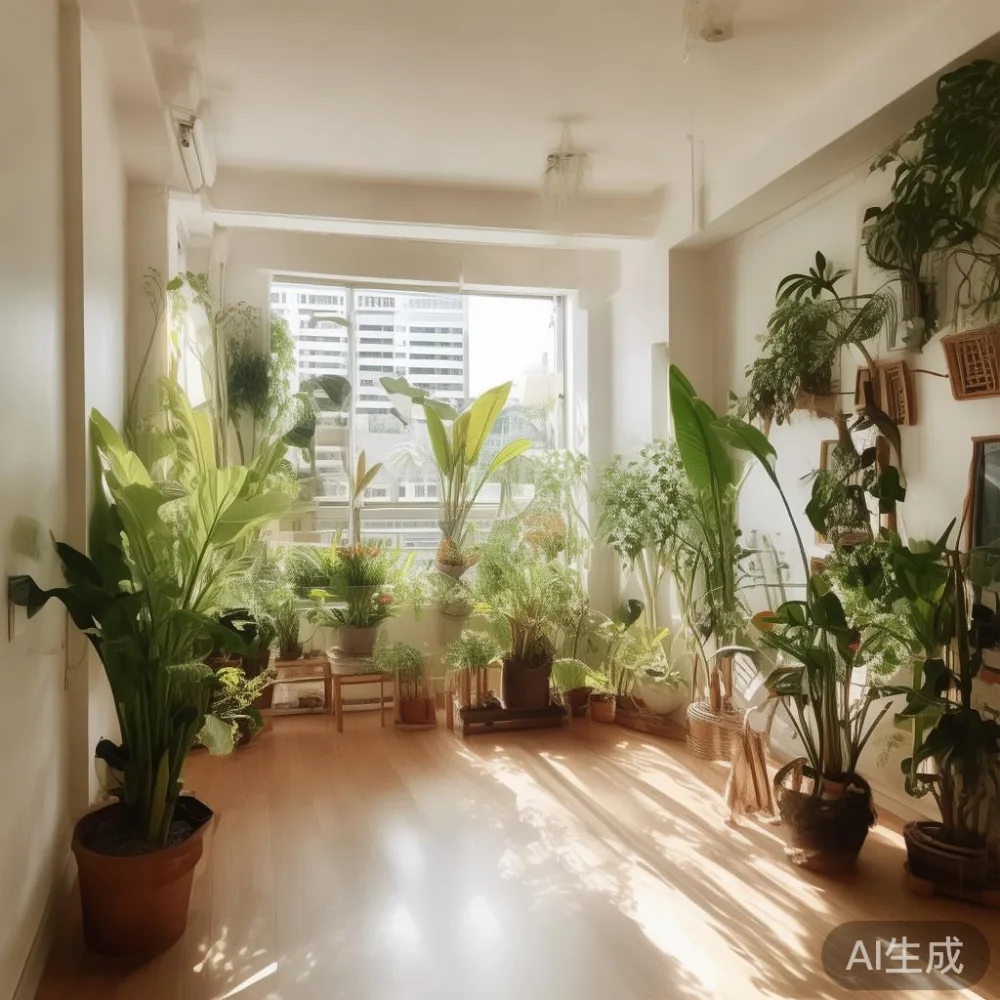
Local context matters. A typical HDB corridor is 1.2–1.5 m wide, the lift door is 900 mm, and a standard service lift in a private condo in District 15 measures 1.5 m deep × 1.8 m wide × 2.3 m tall. Any piece wider than 1.4 m will not make the corner on the 10th-floor landing at The Interlace. Always measure the longest path from the loading bay to your door before ordering.
The 60-centimetre rule: how japandi style prevents visual crowding
The single most useful number in small-space japandi style is 60 cm — the minimum walkway width a person needs to pass behind a seated diner without brushing their chair. Anything tighter than 60 cm and the brain reads the room as congested, even if the square meterage is generous. Design studios in Tokyo use this number as gospel; we should too.
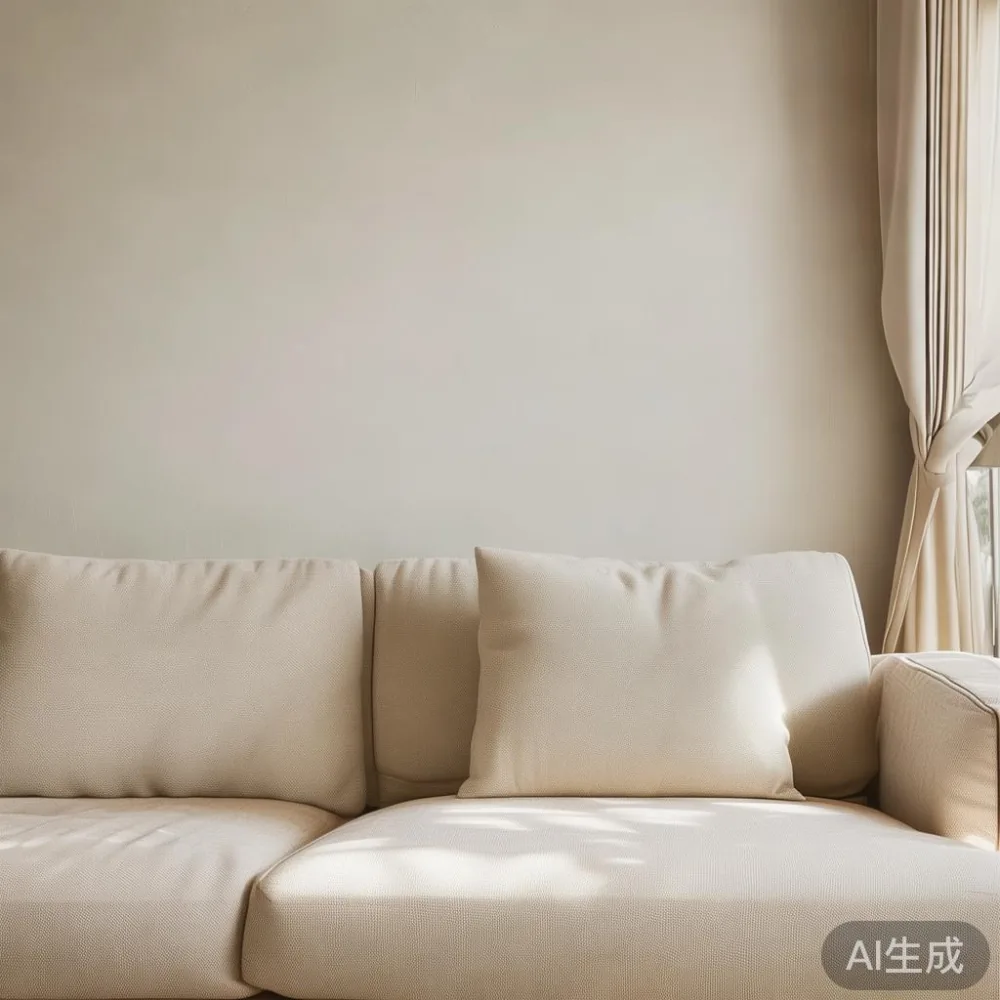
Concretely, this means:
Bedroom: 60 cm between the side of a queen-size bed frame and the wardrobe face. A queen is 152 cm × 191 cm, which fits comfortably in a typical HDB master bedroom of 3.2 m × 3.6 m, leaving 84 cm on each side if centred. Push the bed 80 cm from the window wall to allow drawer clearance on a storage bed.
Dining zone: a 120 cm × 70 cm rectangular dining table seats four at 60 cm per person and fits between the kitchen counter and the sofa with 70 cm of walkway on each side. Round 90 cm tables lose their shape at four covers; stick to rectangles or a 110 cm round for daily two-person use.
Living room: a 210 cm three-seater solid wood sofa in oak with a 90 cm depth leaves a 80–90 cm walking lane to the TV console, which is enough for a 55-inch panel mounted at 110 cm from the floor (eye height for a seated viewer of average Singaporean height, 168 cm).
Mei Ling tried a 240 cm L-shape first. The chaise pushed 35 cm into the corridor to the bedrooms, and within a week the family was walking sideways past it. Swapping down to a 210 cm straight sofa reclaimed the lane overnight.
How do I style a Mid-century modern master bed in a small apartment?
Pick a Mid-century modern master bed in solid walnut or white oak with a headboard no taller than 105 cm, raised 18–22 cm off the floor on tapered legs, then flank it with two 45 cm-wide nightstands that sit 5 cm lower than the mattress top — this single configuration preserves 60 cm walkways on both sides, keeps the visual mass low against a 2.7 m ceiling, and reads as japandi style rather than a hotel suite.
The reason this works is threefold. First, the low profile — a 35 cm platform height versus the 55 cm of a divan — drops the visual centre of gravity by 20 cm, which is roughly the difference between a room that feels cramped and one that feels grounded. Second, tapered legs at a 12° splay expose the floor underneath, so the eye reads more square meterage than is actually present. Third, a 105 cm headboard is tall enough to anchor the wall above a 90 cm nightstand without crowding the curtain rail, which on HDB windows usually sits at 210 cm from the floor.
For a master bedroom in a 4-room HDB measuring roughly 3.2 m × 3.6 m, the layout math is straightforward: queen bed (152 cm × 191 cm) plus two nightstands (45 cm × 40 cm each) plus a 180 cm × 55 cm wardrobe face leaves 60 cm of clear walkway on both sides of the bed and 75 cm between the bed foot and the opposite wall. That is enough room for a 40 cm-wide bench at the foot of the bed without breaking the 60 cm rule.
A common mistake is pairing a Mid-century modern master bed with a thick fabric headboard. Save the upholstery for the accent chair — a single Mid-century modern accent chair sourced from Malaysia in bouclé or tan leather adds the curve that the rectilinear bed needs, without adding weight to the wall plane. Keep the bench, the chair, and the nightstands in the same wood family so the room reads as one composition rather than three purchases.
Five concrete pieces that pull japandi style together (with SGD prices)
For a 90 sqm HDB, the furniture footprint should not exceed 15 sqm of floor coverage. Here is a working kit, with prices after 9% GST and including white-glove delivery up to the 14th floor (typical HDB max):
1. Solid wood bed frame (queen), white oak, low platform. A well-made solid wood bed frame in white oak with mortise-and-tenon joinery and a slatted base runs S$1,450–S$2,200 from direct-from-factory brands like MIDHILL, whose 10-year structural warranty covers joint failure. Cheaper engineered-wood alternatives at S$650–S$900 look identical at month three and start to sag by month fourteen.
2. Three-seater solid wood sofa in oak, 210 cm × 90 cm. Removable linen-blend covers in oat or stone grey, with a high-resilience foam core wrapped in feather. Expect S$2,400–S$3,600 for a sofa that will survive the 32°C, 85% humidity afternoons when the windows are closed and the air-con is set to 25°C. A 65 kg sofa with kiln-dried oak legs is the minimum — anything under 50 kg has used softwood or plywood and will rack within two years.
3. Rectangular dining table in solid ash, 120 cm × 70 cm. Seats four comfortably, two tightly. S$1,100–S$1,800 depending on edge profile (live-edge adds 30% to the price for what is, in a small flat, mostly visual noise — choose a slight eased edge instead). Pair with four solid wood dining chairs at 45 cm seat height; a 42 cm seat height leaves diners an uncomfortable 3 cm drop at the elbows.
4. Two-door solid wood wardrobe, 180 cm × 55 cm × 200 cm. Cedar-lined drawer boxes, soft-close hinges rated to 100,000 cycles. S$2,200–S$3,400. Free shipping kicks in above US$350, which is roughly S$480 — a useful threshold to remember when bundling the wardrobe with the bed frame and nightstands from the same maker.
5. Marble side table, 45 cm round, 50 cm tall. Carrara or honed travertine top on a powder-coated steel base, S$380–S$650. Used between two accent chairs or beside the sofa, a marble table introduces the cool mineral counterpoint that japandi style needs against warm wood. One is enough. Two starts to look like a hotel lobby.
Total kit: roughly S$7,530–S$11,650. That is a wide band because the dining chairs alone swing from S$120 (veneer over rubberwood) to S$420 (solid teak, joinery-checked). Skip the cheap chairs. A wobble at the dinner table annoys you 1,095 times a year.
What should I do about lift and corridor access before I order?
Measure three things before you click checkout: the lift door width (usually 800–900 mm in HDB, up to 1,100 mm in newer private condos), the lift cabin depth (1.5 m typical), and the tightest corner on the corridor between the lift and your door — usually around a refuse chute or a fire-hose cabinet that protrudes 25 cm into the walkway. A 1.8 m × 2.0 m wardrobe will physically fit a HDB lift but will not make the 90° turn on the 7th-floor landing at Block 168A in Punggol. Ask the supplier for the packed carton dimensions, not the assembled dimensions. A flat-pack wardrobe from a Foshan workshop typically ships in two cartons of 190 cm × 60 cm × 20 cm each, which a single delivery man can carry by hand.
For private condos in District 15 or District 9, the service lift is your friend but it books out fast. Allow a 3-day MCST booking window. Mei Ling's delivery at Treasure At Tampines was rescheduled twice because the service lift was taken by a renovation crew — plan for a 7-day delivery buffer even when the warehouse promises 5 working days.
How japandi style handles the realities of HDB living — sunlight, dust, and the occasional cockroach
A HDB in Tampines East gets direct west sun from 3 pm to 6 pm. UV fades linen and weakens rubberwood. Solid teak and white oak take the same sunlight without colour shift for eight to ten years. If your windows face west and you do not have full-height curtains, specify a solid wood bed frame and wardrobe in teak rather than oak; oak oxidises to a honey amber under strong UV, which is either charming or annoying depending on your taste.
Dust is a quieter enemy. Singapore's PSI hits 50–100 on hazy days, and a flat-pack MDF surface holds static and shows dust within 36 hours. Oiled solid wood does not hold static, and a weekly wipe with a damp microfibre cloth is enough. The finish also patinas rather than degrades — a 2018 oak dining table in a Punggol HDB looks better in 2026 than it did new.
For pests, japandi style has a hidden advantage: fewer soft furnishings means fewer hiding places. A solid wood sofa with removable linen covers can be stripped, washed at 40°C, and re-fitted in 20 minutes. A fabric sectional with a fixed cover is a cockroach Airbnb.
Will solid wood furniture actually last in Singapore's humidity?
Yes, with three caveats. The wood must be kiln-dried to a moisture content of 8–12% (factory-controlled, not air-dried). The joinery must be mortise-and-tenon or dowelled, not stapled or glued alone. And the finish must be an open-pore oil or a hardwax oil, not a closed-pore polyurethane — polyurethane traps any residual moisture and the panel will cup within 18 months. MIDHILL's solid wood range, for instance, ships from Foshan with kiln-dried ash and oak at 10% moisture content and a hardwax oil finish, which is why their lifetime refinishing service exists: the wood can be sanded and re-oiled at year twelve without losing structural integrity. Particleboard cannot be refinished because it is not wood, it is glue and sawdust pressed into a sheet.
A practical test before you buy: ask the supplier for the moisture content reading at the time of packing. Any reputable workshop will have a pin-style moisture meter and a written QC log. If they cannot produce one, walk away.
Two small mistakes that ruin japandi style in a Singapore HDB
The first mistake is buying a set. A matching five-piece dining set in the same stain looks like a 2003 condo show flat. Japandi style prefers contrast within a family: a white oak dining table with walnut dining chairs, or an ash bed frame with an oak nightstand. The wood tones should be within 20% of each other in hue but never identical.
The second mistake is hanging the TV too high. The standard recommendation in renovation blogs is 130–140 cm from the floor to the centre of the panel. In a HDB with a 2.7 m ceiling and a 35 cm low-profile bed frame or a 42 cm sofa seat height, that places the screen 90–100 cm above seated eye level, which causes neck strain within 20 minutes. Drop the TV centre to 105–115 cm from the floor for a bedroom and 100–110 cm for a living room, measured with the actual TV, not the mounting bracket.
How does MIDHILL's warranty actually work for Singapore customers?
Orders ship from Foshan to Singapore via sea freight to a Jurong logistics hub, typically 18–24 working days door-to-door for in-stock pieces, 35–45 days for custom sizes. GST is collected at Singapore customs at 9%, calculated on the CIF value. MIDHILL's 10-year structural warranty covers joint failure, wood cracking from kiln-dry defects, and hardware failure (hinges, drawer runners); it does not cover surface scratches, fading from direct sunlight, or damage from prolonged exposure to air-con condensation. Lifetime refinishing is offered at cost — typically S$280–S$450 per major piece including return logistics — and is worth doing once in a furniture's life, around year ten, to reset the patina. Returns within 14 days are accepted for unused pieces in original packaging, minus a 15% restocking fee and the original freight cost of roughly S$120–S$220 per piece. Above US$350 (about S$480), shipping is free, which means a bed frame plus two nightstands will usually clear the threshold in a single consolidated shipment.
What this means in practice: the S$1,800 solid wood bed frame that costs S$2,200 landed including GST, with a 10-year warranty and a free refinishing at year ten, works out to about S$220 per year of use over a 15-year ownership window. A S$700 engineered-wood frame replaced twice in the same window costs S$1,400. The arithmetic is not subtle.
What is the single best first purchase for someone starting japandi style?
Buy the bed frame first. A solid wood bed frame in white oak or ash, queen size, low platform, 105 cm headboard, raised on 18 cm tapered legs. It is the largest object in the apartment by visual weight, it sets the wood tone for every other piece you buy afterwards, and it is the object you touch every morning and every night for the next twelve to fifteen years. Everything else — the nightstand, the wardrobe face, the dining table, even the marble table at the sofa — can be sourced over the following six to twelve months as budget allows, each one chosen to harmonise with the bed rather than to match it.
The discipline of japandi style is not minimalism for its own sake. It is the slow, deliberate assembly of a home where every piece has been measured against the 60 cm rule, against the lift door width, against the eight months of west sun, against the eleven years of lease remaining. Done well, a 90 sqm HDB in Punggol or Bedok can feel like a 140 sqm condominium in Kyoto. Done badly, even a 200 sqm apartment in District 9 feels like a furniture showroom after a sale.