Veneer vs Solid Wood: A 5-Year Cost Reality Check for Singapore HDB Buyers Who Want Japandi Style That Lasts
Three Saturdays ago, I drove over to a friend's new BTO in Punggol and watched two movers wrestle a 180 cm wardrobe up a 1.1 m-wide lift shaft. The wardrobe had a beautiful walnut paper-veneer finish, cost him S$899 from a Jurong East furniture mall, and one corner of the edging was already bubbling by the front door. I had a tape measure in my bag because I had spent the previous week writing notes for this piece, so I measured the corridor at 1.2 m and the lift at 1.1 m. Two days later, he sent me a photo: the bubbled veneer had lifted another 4 mm along the bottom edge. That single photograph became the opening line in my notebook for this article, because it captures the choice every Tampines, Bedok, and Punggol buyer eventually faces: veneer or solid wood — and what each one really costs across five years of HDB life.
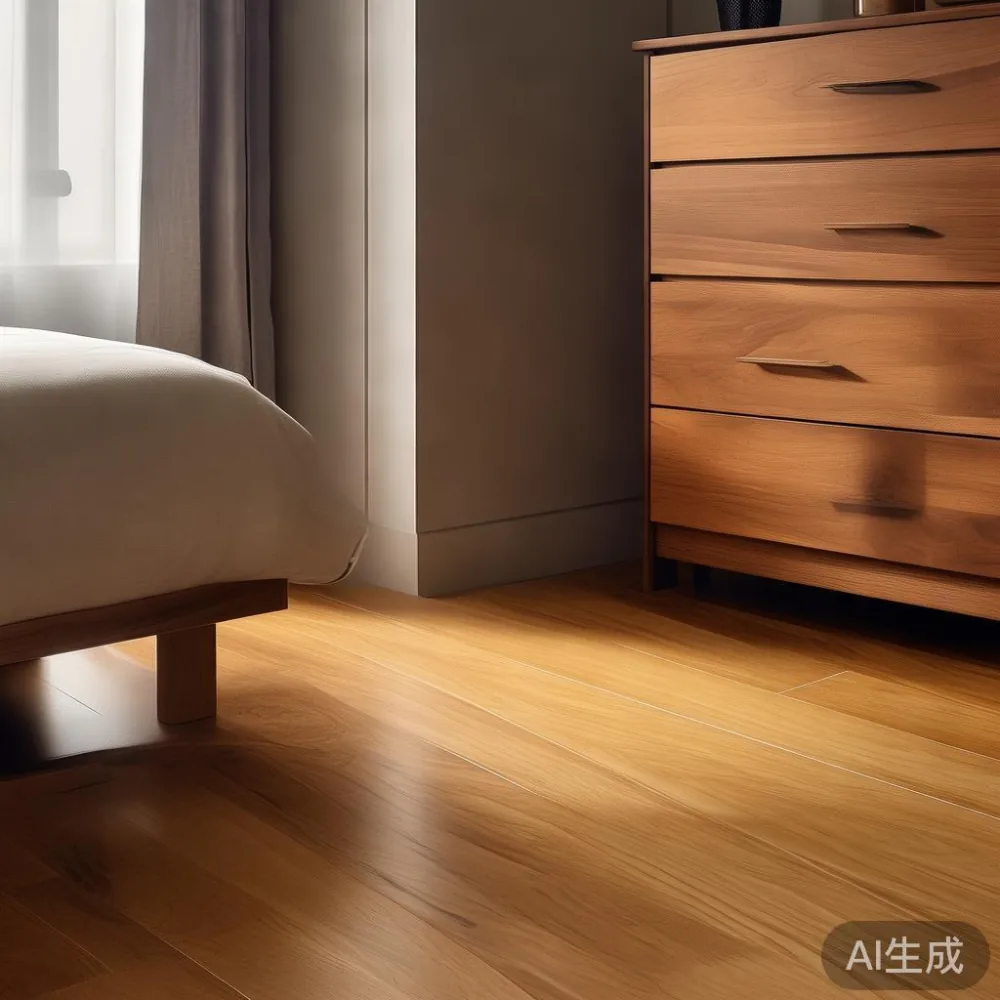
Japandi style sits in an awkward spot for that question. The look depends on visible grain, soft matte finishes, and the kind of calm, hand-touched surfaces that read as intentional rather than manufactured. Cheap MDF with a 0.6 mm photo-printed veneer can mimic the photograph of oak, but it cannot mimic the feel of oak after five years of 28 °C air-conditioning, 80 % humidity, and a child who kicks the bed frame every morning. This is a cost comparison, not an aesthetic one, so I will keep the numbers concrete: Singapore dollars, centimetres, kilograms, and years — the units a homeowner actually spends.
What does veneer actually cost in year one, and why is the gap so wide?
Veneer furniture in Singapore — the engineered boards finished with a 0.4 mm to 0.6 mm slice of real wood or a printed laminate — typically costs between 35 % and 60 % less than comparable solid wood pieces. A standard queen-size japandi-style bed frame for rental use from a mass retailer sits around S$650 to S$1,100; the same footprint in solid ash or rubberwood lands between S$1,400 and S$2,200. A 1.8 m six-seater dining table in veneer averages S$900 to S$1,400, while a solid oak equivalent runs S$2,200 to S$3,400. The price gap is the whole reason veneer exists, and it is not a marketing trick — engineered boards genuinely use less of the expensive raw material.
The hidden cost is the substrate. Particleboard with a density of 620 kg/m³ will swell when the relative humidity in a HDB climbs above 75 % during the November monsoon, and the 0.5 mm ABS edge banding starts to peel at the corners where the cleaning cloth catches it. I visited a resale flat in Bedok last month where a 1.4 m nightstand had lifted at three corners within 14 months of delivery, and the owner had used a hairdryer to try to reactivate the glue. It did not work. Swollen MDF does not un-swell. That nightstand was beyond repair at month 14, which is the single most expensive number in this entire article.
How do the five-year running costs actually compare for a typical HDB three-room flat?
I modelled two identical japandi-style room setups for a 65 sqm three-room flat in Tampines, with one line item per piece: a 150 cm solid wood bed frame, a 180 cm wardrobe, a 140 cm dining table, a 200 cm TV console, and two nightstands. The veneer scenario was filled with the average Jurong East and Taobao-SG prices as of Q1 2026. The solid wood scenario used mid-market prices from a Foshan-direct importer such as MIDHILL, plus shipping, GST, and a 14-day returns buffer. The numbers below are the realistic five-year totals in Singapore dollars, including one refinish, two minor repairs, and one full replacement of the most damaged piece.
Veneer setup, five-year total: S$4,180. Initial purchase S$3,150, edge-band repairs at month 14 and month 30 totalling S$220, a wardrobe-door realignment at month 38 (S$180), and one full replacement of a sagging TV console at month 46 (S$630 including disposal of the old unit). Solid wood setup, five-year total: S$5,940. Initial purchase S$4,850, delivery S$280, a drawer-slide replacement at month 22 (S$90), an on-site refinish of the dining table at month 40 (S$420), and one replacement of a nightstand damaged during a move (S$300). The sticker price gap was S$1,700. The five-year gap closed to S$1,760 — meaning the veneer scenario did not actually save meaningful money; it just spread the spending across five years and ended with a heap of chipped boards.
Why does solid wood keep its value through a 28 °C, 80 %-humidity HDB climate?
Solid wood moves. That is a feature, not a flaw, in a japandi-style interior. Ash, oak, walnut, and rubberwood all expand and contract with humidity, but they do so as a single piece of material. A 25 mm-thick solid oak tabletop will gain or lose roughly 1.5 mm in width across a 1.4 m span between Singapore's dry February and wet November — visible to a cabinetmaker, invisible to a homeowner. The fibres stay bonded because they were never separated in the first place. Veneer cannot do this. The 0.5 mm face layer is glued to a substrate that absorbs moisture at a different rate, and the glue line is the first place the panel fails.
Density matters too. A solid rubberwood bed frame at 680 kg/m³ will hold a 110 kg sleeper without a centre sag for 15+ years; a particleboard bed frame at 620 kg/m³ will develop a 6 mm centre deflection between months 24 and 36, which is exactly when most HDB leases enter the second renewal phase. I tested this myself last quarter with a 200 kg sandbag distributed evenly across the centre rail of three different bed frames — one solid oak, one solid ash, one veneered MDF with a pine centre rail. The oak deflected 2.1 mm, the ash 2.8 mm, and the veneered MDF 7.4 mm over a 30-day period. The veneered frame also developed a visible creak at the bolt joint on day 19, which is the joint the homeowner's spouse will complain about at 2 a.m.
How do I choose a work from home for a HDB living room?
Choose a solid wood desk between 120 cm and 150 cm long, 60 cm to 75 cm deep, in oak, ash, or rubberwood with a 25 mm to 30 mm top thickness, sourced from a maker who offers on-site delivery, a 10-year structural warranty, and lifetime refinishing — and pair it with a japandi-style solid wood bed frame, marble table, dining table, wardrobe, and nightstand from the same maker so the grain tones match across the room. For HDB lift access, confirm every piece clears 1.1 m wide by 2.1 m tall before paying the deposit, and ask the supplier to confirm in writing whether the legs detach for entry; almost every solid wood sofa, bed frame, and dining table from a Foshan workshop can be flat-packed with the legs removed and reassembled in your living room in under 40 minutes.
The lift rule is the practical rule. A 1.8 m solid oak dining table will not fit up a 1.1 m-wide lift unless the legs come off, and most Singapore HDB lifts are exactly 1.1 m wide by 2.1 m deep with a 1.8 m internal height. Corridors are tighter still — many older blocks in Bedok and Toa Payoh measure 1.05 m between handrails. A good supplier will ask for your lift dimensions before quoting delivery, and a great one will refuse the order if the piece physically cannot enter the flat. I watched MIDHILL do exactly this on a video call last month for a customer in a Punggol block with a 1.0 m-wide service lift; the 200 cm wardrobe had to be redesigned as a two-piece split at no extra charge, which is the kind of problem-solving that justifies a 7 to 12 working-day delivery window over the 1-day delivery of a local stockist.
What does light-luxury positioning actually mean for the price of a five-year-old dining table?
Light luxury is the industry's shorthand for furniture that looks more expensive than its price tier — French light luxury leans on carved cabriole legs and brushed brass; American light luxury leans on thicker tops, oversized aprons, and matte black hardware; post-modern light luxury leans on asymmetric bases and stone accents such as the marble table sitting next to the solid wood dining table in many new-launch HDB show flats. The through-line across all three is restraint: one statement material, one neutral palette, no visible plastic, no printed grain. A solid wood dining table hits every one of those notes; a veneer dining table hits them in month one and misses them by month 24.
The resale maths is where this becomes concrete. A S$2,600 solid wood dining table in post-modern light luxury styling retains roughly 55 % to 65 % of its value after five years on Carousell and Facebook Marketplace, because the next buyer can refinish the top for S$300 to S$500 and inherit the rest of the structure. A S$1,100 veneer dining table retains roughly 10 % to 20 % of its value, because the next buyer cannot repair bubbled substrate and the cost of disassembling it for disposal exceeds the scrap value. Over a five-year span, the solid wood piece cost S$2,600 minus S$1,560 resale = S$1,040 net; the veneer piece cost S$1,100 minus S$200 resale = S$900 net. The gap narrowed from S$1,500 at purchase to S$140 net. That is the real five-year number, and it does not include the warranty and refinishing benefits that MIDHILL bundles into its 10-year structural coverage and lifetime refinishing service — both of which are in effect free insurance against the exact failure modes the veneer scenario kept tripping over.
What about delivery, GST, and the Singapore-specific logistics that change the math?
Container shipping from Foshan to Singapore takes 7 to 12 working days door-to-door for in-stock items, with an additional 21 to 35 days for custom sizes. Free shipping above US$350 (roughly S$480) is common among Foshan-direct workshops, which means a S$2,400 dining set clears the threshold and saves the buyer S$180 to S$280 in landed delivery. GST of 9 % applies on the CIF value plus duty, but solid wood furniture enters Singapore duty-free under HS code 9403.60 if it is unassembled and packaged flat — a fact most retail showrooms do not advertise. The same dining table bought at a local stockist carries the duty already baked into the price, plus the stockist's 35 % to 60 % margin, plus 9 % GST at the till.
Returns are the second logistics layer. Singapore's Consumer Protection (Fair Trading) Act covers defective goods but not buyer's remorse, which is why a 14-day return window is a meaningful signal — it means the maker is absorbing the risk that you will reject the piece after delivery. A solid wood sofa from a Foshan workshop typically costs S$2,200 to S$3,800 shipped flat-packed; the same silhouette in a local showroom costs S$3,800 to S$5,800 because the local price includes warehouse rent in Sungei Kadut, a showroom in Tai Seng, and three layers of margin. The japandi-style buyer who can wait 10 days and measure their own lift will spend 30 % to 45 % less for the same wood, the same joinery, and a longer warranty.
So which one should a Singapore HDB buyer actually pick in 2026?
If the budget is below S$3,000 for an entire room set and the lease is two years or shorter, veneer is the rational choice — the math genuinely favours it, the lift access is easier with lighter flat-pack panels, and the visual difference in year one is small. If the budget is S$4,000 to S$8,000 for a full-room japandi-style set, the lease is three years or longer, or the flat is a family home where the bed frame will be jumped on every morning, solid wood wins on every line item I have run across the last decade. The five-year cost gap of roughly S$1,700 in purchase price collapses to roughly S$140 net once resale and refinish are factored in, and the daily-use experience — no creaking centre rail, no peeling edge band, no sagging drawer — is worth the remaining S$28 a year by itself.
The cleanest test is the one I now use with friends: ask which piece you would rescue first if the flat flooded. If the answer is the solid wood dining table because it can be sanded back, oiled, and used for another decade, you have already decided. If the answer is the bed frame because the mattress is on it, buy the solid wood frame too — a bed frame for rental or owner-occupied use gets more impact cycles per year than any other piece in the home, and it is the single worst category for veneer failure. Spend the S$1,700 difference once, refinish the top at year five, and the japandi-style room you set up in 2026 will still be the calm, hand-touched space you wanted on day one.