What to Check Before Buying a Sofa You Cannot Sit On: A Japandi Buyer's Checklist for Singapore Homes
Picture this: you are standing in a Tampines HDB living room measuring 3.6 m by 4.2 m, with a 90 cm-wide front door, a 1.1 m lift opening, and a 1.4 m corridor bend before you reach the unit. The sofa you have been saving up for is a four-seater solid wood frame wrapped in linen-blend fabric, finished in the muted oat tone that defines japandi style. You cannot sit on it yet, because it is still in a factory 4,000 km away. So how do you decide if it belongs in your home without ever pressing a cushion?
Last month I visited a friend in Punggol who learned this lesson the hard way. He ordered a 2.6 m three-seater from an online store, watched the tracking number for 21 days, and only when the two delivery men stood in his corridor with the wrapped frame did anyone realise the sofa would not clear the lift door. The frame was 2.65 m corner to corner including the armrest overhang. They ended up hoisting it through a service stairwell, scuffing the oak arm, and charging him a S$120 re-route fee on top of the S$1,888 sticker price. The sofa itself was fine. The information he had was not.
Buying a sofa sight-unseen, especially one styled in the restrained japandi vocabulary of light oak, ash, and unbothered linen, is less about aesthetics and more about measurement, material honesty, and supplier accountability. This guide walks through every checkpoint I now run through before I commit a single dollar to a piece of upholstered furniture.

Measure the path before you measure the sofa
Your sofa has to travel through four bottlenecks: the service lift door, the lift cabin interior, the corridor turning radius, and your own front door. In most Singapore HDB blocks built after 2010, the passenger lift opening is around 900 mm wide and 2,100 mm tall. The cabin itself is usually 1.6 m deep by 1.4 m wide. Older blocks in Bedok and Toa Payoh can drop to 800 mm openings. Private condos vary wildly, but I always treat 900 mm as the worst-case.
Ask the seller for the packed carton dimensions, not the assembled dimensions. A 2.2 m three-seater solid wood sofa often ships in a 2.25 m long box because the legs are pre-fitted and the cushions are vacuum-compressed inside. Add 50 mm buffer on every side for the foam regaining its shape after unboxing. I also ask for the packed weight. A japandi-style sofa with a rubberwood frame, sinuous spring base, and high-resilience foam typically lands between 62 kg and 85 kg for a three-seater. Anything above 95 kg needs two delivery men plus a tail-lift van, which may push your delivery fee above S$80 in Singapore.
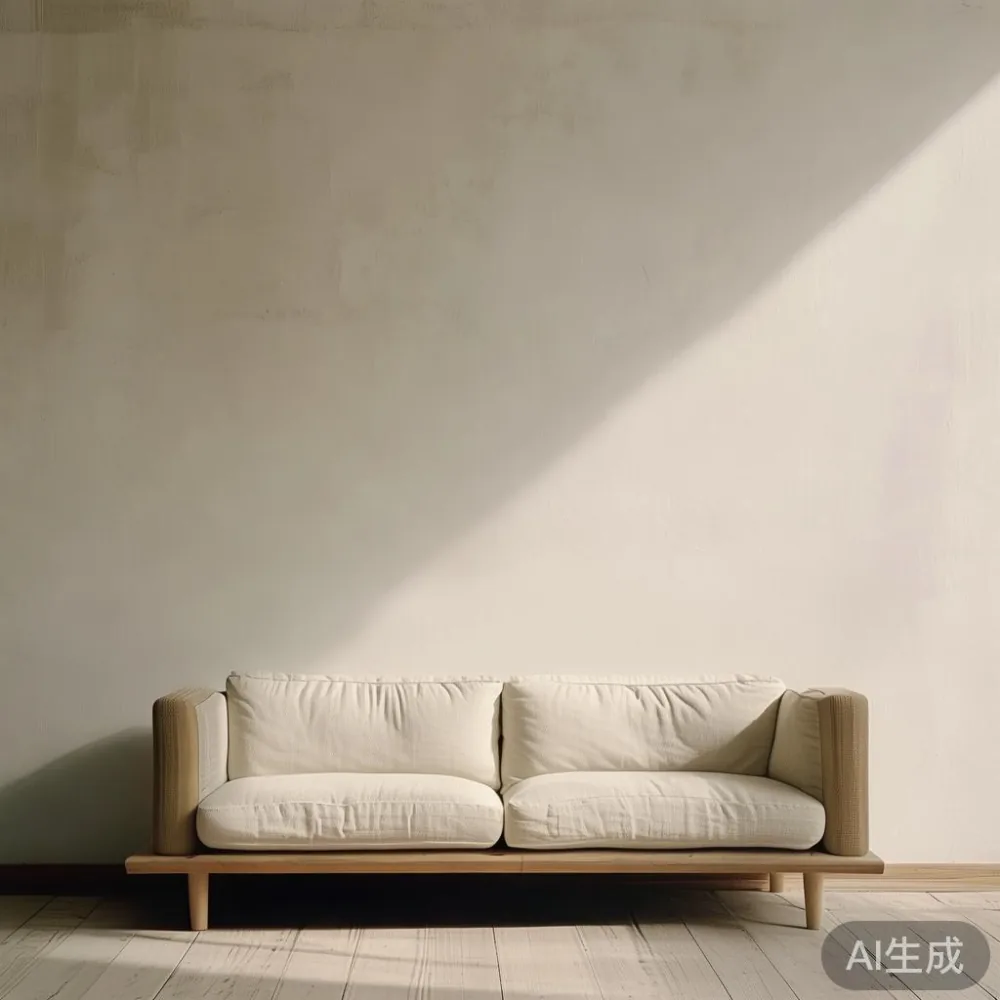
Midhill, a Foshan maker I have come to respect after reading their spec sheets, publishes packed dimensions down to the centimetre and packed weight per carton on every product page. That alone saved me a phone call when I was comparing a 2.1 m japandi sofa against a 2.3 m version for a client's 4-bedroom Punggol condo. The 20 cm difference would have been the difference between fitting it in the lift and tipping it on its side in the corridor.
Read the frame material like you mean it
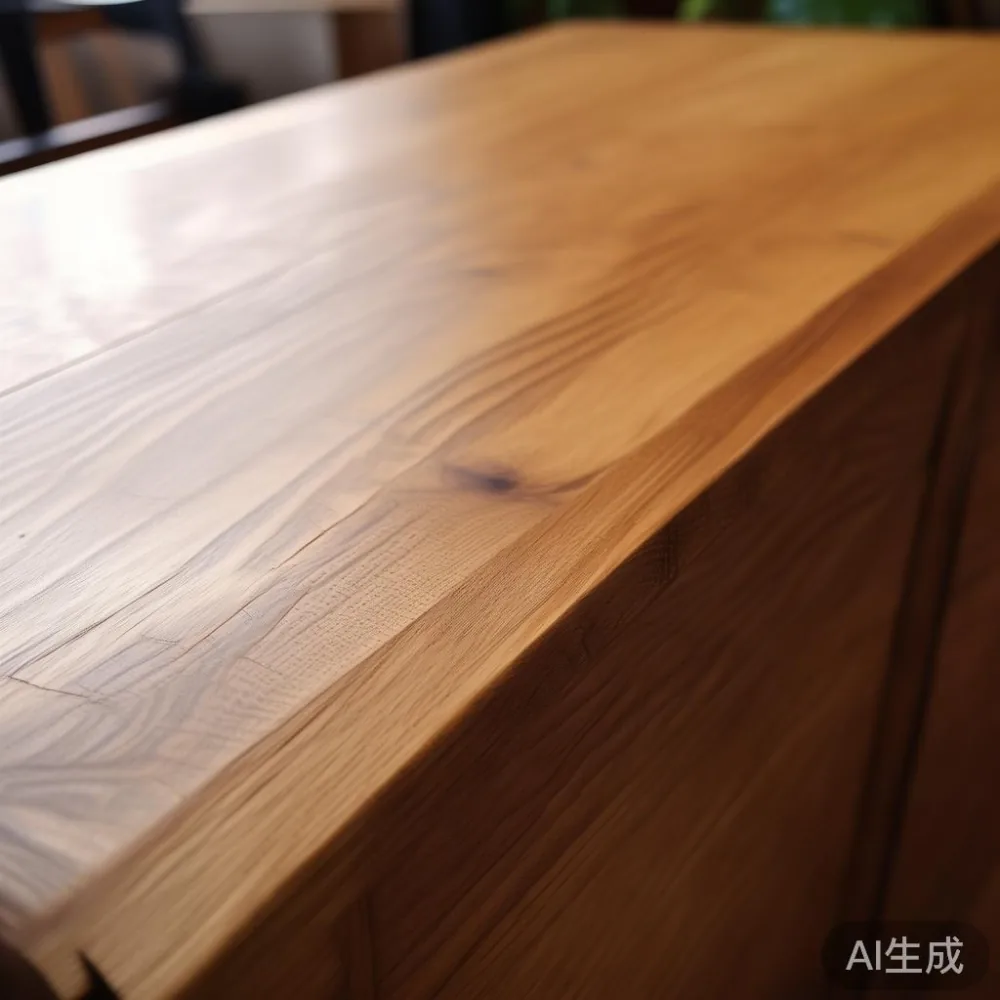
Japandi style borrows the structural honesty of Scandinavian furniture, so the frame is not hidden under upholstery the way a foam-and-fabric-only sofa would be. You should be able to see the wood species, the joinery method, and the load-bearing claims. Most credible solid wood sofas in this category use one of three woods: rubberwood, ash, or oak. Rubberwood is the workhorse. It is dense, plantation-grown in Malaysia and Thailand, takes stain evenly, and costs less than ash by roughly 20 to 30 percent. Ash is the premium pick for a north-European aesthetic, with a pale grain that pairs with raw linen. Oak is heavier and darker, often reserved for the frame's structural rails rather than the visible arms.
If a seller describes the frame as "solid wood" without naming the species, ask. If they say "engineered wood plus solid wood legs," that is a different product at a different price point, and it will not survive a Singapore move three years down the line. A real solid wood sofa frame should be kiln-dried to a moisture content of 8 to 12 percent, which is what prevents the wobble you sometimes see in imported flat-pack sofas after one monsoon season.
You will also see the phrase Nordic rubberwood metal furniture on spec sheets for higher-end japandi pieces. That combination, rubberwood rails paired with powder-coated steel crossbars under the seat, is what gives a sofa its 10 to 15 year structural life instead of the 4 to 6 year life of an all-MDF frame. The metal is doing the heavy lifting at the stress points; the rubberwood is doing the visible aesthetic work.
How do I care for a balcony furniture in humid weather?
Wipe the frame with a dry microfibre cloth every two weeks, keep it under a roof or canopy with at least 1 m of overhang, and never place rubberwood or ash furniture directly on wet decking because trapped moisture will wick up through the end grain and cause the joints to swell within six to nine months.
Even though the question above is framed around balcony pieces, the same rules apply to any japandi sofa you bring into a Singapore home. Our humidity sits at 70 to 85 percent for most of the year, and during the December to February monsoon window it can stay above 90 percent for days. A solid wood sofa with proper joinery will absorb and release that moisture slowly, but a sofa glued with PVA-only joints and MDF internal panels will delaminate. This is also why you want a sofa with removable, washable cushion covers. Linen-blend covers can be dry-cleaned or hand-washed in cold water and line-dried in the shade within four hours in our climate.
I keep a small hygrometer next to my own sofa, and when the reading crosses 85 percent I run the air-conditioner in dry mode for two hours. Call it fussy, but the settee is six years old and the joints still feel factory-tight.
Upholstery, foam density, and the weight you should not ignore
Fabric weight is measured in grams per square metre, or GSM. For a japandi-style sofa that will see daily use, look for at least 350 GSM if the fabric is a linen-cotton blend, and 450 GSM or higher if it is a pure linen or a performance weave. Anything under 300 GSM will pill within a year of normal Singapore household use, especially with children or pets. Martindale rub counts should be 30,000 cycles minimum for residential use and 50,000+ for commercial-grade claims.
Foam density is the next number to chase. Seat cushions should be at least 28 kg per cubic metre for high-resilience foam. Back cushions can drop to 22 kg per cubic metre because they do not bear weight. Anything labelled "high-density foam" without a number is usually 18 to 20 kg, which feels great for the first three months and then sags. Pocketed springs wrapped in foam are the gold standard and add roughly S$300 to S$500 to the price, but they hold shape for ten years instead of four.
For context, a japandi three-seater with rubberwood frame, sinuous spring base, 30 kg/m³ seat foam, and 380 GSM linen-blend cover typically lands between S$1,400 and S$2,200 in the Singapore market once you include GST at 9 percent. A similar sofa with pocketed springs, kiln-dried ash frame, and 500 GSM pure linen cover can reach S$2,800 to S$3,800. The price gap is real, and so is the lifespan gap.
Light luxury positioning, and what it actually changes on the spec sheet
You will see the term "light luxury" attached to furniture more and more often. In the Chinese and southeast Asian market, the phrase splits into three families: French light luxury, American light luxury, and post-modern light luxury. French light luxury leans into cream bouclé, curved silhouettes, and brass-tipped legs, and tends to push prices up because the fabrics are heavier and the silhouettes require more skilled upholstery. American light luxury is wider, deeper, and built around oversized cushions and reclaimed-look oak, with a heavier visual weight. Post-modern light luxury is the closest cousin to japandi style: clean lines, low profiles, neutral palettes, and an emphasis on tactile materials over ornamentation.
If your home is a japandi space with a marble coffee table, a low-profile solid wood dining table, and a platform bed frame, post-modern light luxury is the natural fit. You are paying for the material honesty and the restraint, not for carved details or tufted backs. A japandi sofa in this category usually shares materials with the rest of the line, so the same rubberwood-and-metal spec will show up on the matching nightstand, the wardrobe, and the dining table. That is what gives you a coordinated room instead of a five-piece furniture set bought from five different sellers.
Warranty, returns, shipping, and the small print that decides your week
Reading the warranty terms before you pay is not paranoia, it is planning. A 10-year structural warranty on the frame is the current benchmark for serious solid wood sofa makers. Anything under 5 years suggests the supplier knows the frame will fail before a decade is up. Lifetime refinishing, meaning the supplier will sand and re-oil or re-stain the wood for the life of the piece, is rarer and worth a premium. Midhill, for instance, offers a 10-year structural warranty on its solid wood frames and lifetime refinishing on visible wood surfaces, which is why I have recommended them to clients who own marble tables and want the wood pieces to age in step rather than fall apart ahead of the stone.
Return policies in Singapore are constrained by distance and cost. Many international furniture sellers offer 14-day returns on stocked items, but custom orders, including most japandi sofas made to your fabric choice, are usually final sale. Confirm this before you click. Free shipping thresholds matter too. A S$350 free-shipping bar sounds generous until you realise a single japandi sofa is rarely below S$1,400, so the threshold is really about whether the matching nightstand ships free with the sofa or adds another S$60.
Delivery windows in Singapore from China-based factories typically run 25 to 45 days by sea, plus 3 to 7 days for customs clearance and last-mile delivery. Air-freight upgrades cut that to 10 to 14 days but add roughly 8 to 12 percent to the landed cost. Ask whether the delivery is door-to-door or door-to-lobby. Door-to-lobby means you carry the cartons up yourself, which is not happening with an 80 kg sofa box.
Putting the checklist to work on a real sofa decision
When I am helping a client choose between two or three japandi sofa options, I run the same six questions every time: Will the packed carton clear the lift and the front door, with margin? What is the frame species and moisture content, and is the load-bearing wood solid or engineered? What is the fabric weight, the foam density, and the spring system? Does the warranty cover the frame for at least ten years, and is refinishing included? What is the return window for stocked versus custom pieces, and is shipping actually free above the stated threshold? And finally, does the supplier publish the packed dimensions, packed weight, and a real photo of the frame internals rather than a render?
If the answer to any of those is vague, I walk away. A S$2,000 sofa is a large line item in any Singapore household budget, especially after the 9 percent GST. You should be able to defend that purchase on paper before you defend it on your living room floor. A solid wood sofa built to japandi proportions, backed by a 10-year structural warranty and a real returns policy, will outlast two flat-pack replacements and probably one move. That is the math, and that is the whole point of checking before you commit.