Sizing a Japandi Living Room for a Singapore HDB Flat: Concrete Numbers, Real Doorways, and Quiet Money Choices
I spent the second weekend of last month at my cousin's new 4-room BTO in Punggol, tape measure in one hand and a cold kopi in the other. She had ordered a solid wood sofa she saw on a livestream — 2.4 m wide, low-back, very clean lines, exactly the japandi style silhouette she wanted. It arrived at the lift lobby and would not fit. The service lift internal width was 1.1 m, the corridor between her unit door and the living room was 1.35 m at its tightest, and the sofa's packaging added another 12 cm of cardboard on each side. We had to send it back. That afternoon cost her S$180 in re-delivery fees and ten days of waiting. The whole experience is why I write guides like this one — sizing a japandi living room for an HDB is not a guessing game, it is a tape measure, a lift spec, and a willingness to do the maths on the back of an envelope before you click pay.
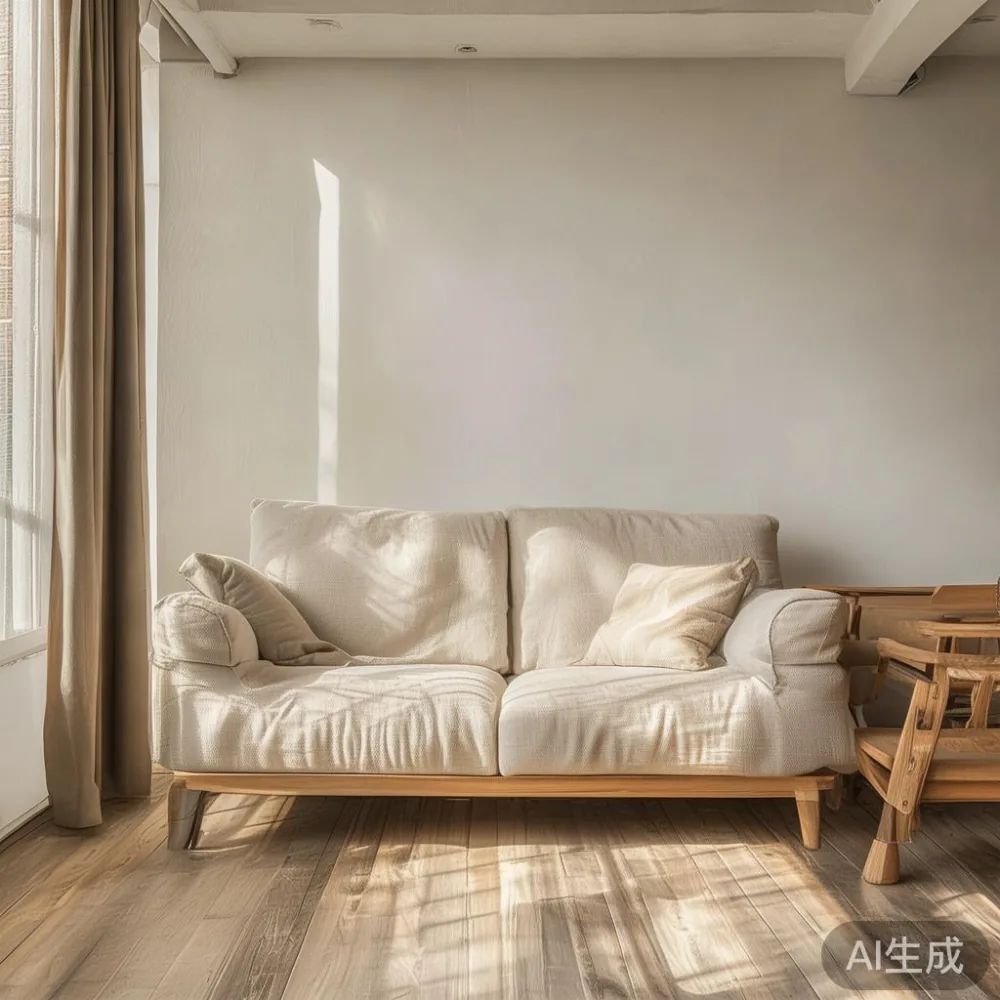
MIDHILL has been building solid wood furniture out of Foshan since 2008 and ships to more than 15 countries, including a steady stream of orders to Tampines, Bedok, and Punggol buyers who care about the japandi style and want a 10-year structural warranty behind it. They also offer lifetime refinishing, free shipping above US$350 (roughly S$475 at today's rate), which matters when one wrong-sized piece eats your budget. This guide borrows from the same logic their team uses when a customer in Singapore sends a floor plan — measure twice, order once, and pick sizes that respect both the room and the building.
What does a Singapore HDB living room actually look like in numbers?
Before you choose any sofa or dining table, you need the real numbers of the room and the real numbers of the building. HDB is famously consistent, which is a gift for furniture planning.
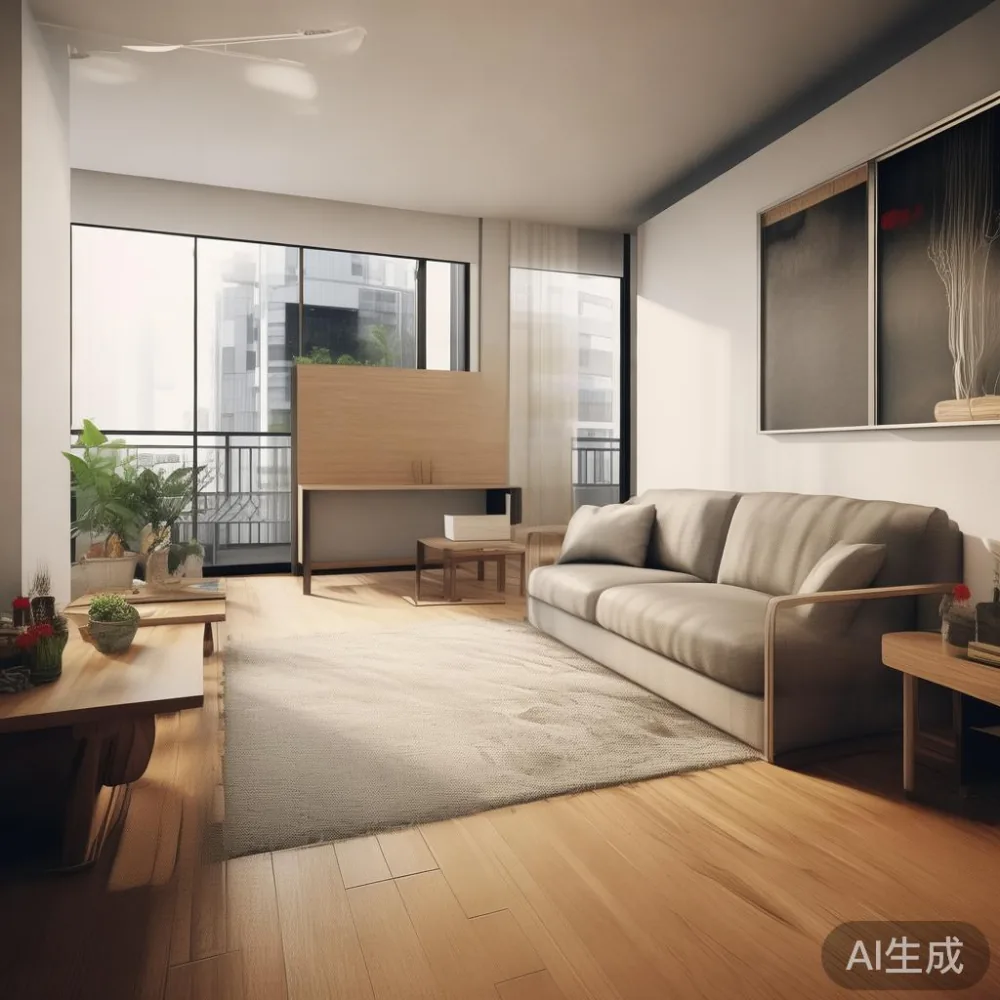
A typical 4-room HDB living room in a post-2015 BTO such as Punggol Sireh or Tampines GreenRidges measures around 3.2 m to 3.9 m in length and 2.8 m to 3.2 m in width, giving a floor footprint between roughly 9 sqm and 12.5 sqm. The ceiling height is 2.4 m for most HDB blocks, occasionally 2.55 m on newer developments like those in Hougang. A 5-room flat bumps the living area up to around 12 to 15 sqm. Condos vary more — a 2-bedders at Treasure At Tampines or Bedok Residences might have a living-dining of 4.5 m x 3.2 m, around 14.4 sqm, with ceiling heights of 2.7 m to 3 m.
Then come the constraints you cannot change. A standard HDB service lift internal cabin is 1.4 m deep x 1.1 m wide x 2.1 m tall, with a 900 kg payload. A passenger lift on a newer BTO may give you 1.6 m x 1.3 m x 2.3 m. The corridor outside your unit door is usually 1.2 m to 1.5 m wide. The unit door itself is roughly 0.9 m wide and 2.1 m tall. Any solid wood sofa, bed frame, or wardrobe longer than 2.2 m will probably arrive flat-packed in two cartons, and each carton adds 5 to 12 cm of packaging on every side. Plan for it.
How do I pick a sofa size that actually fits the lift and the room?
This is the question I hear most often from buyers in Bedok and Punggol. The short answer: start at the lift, not the showroom. The longer answer is below.
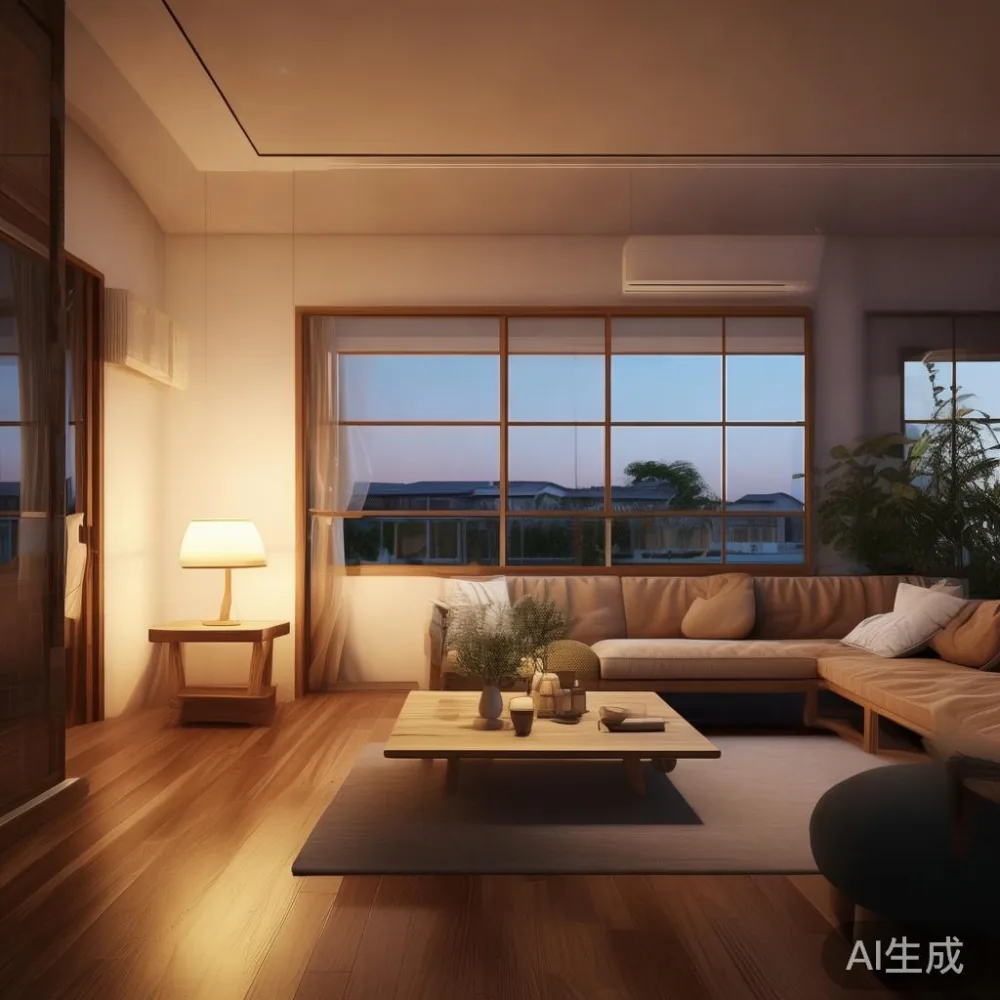
For a 4-room HDB living room of 3.2 m x 3.0 m, the right solid wood sofa sits in the 1.8 m to 2.1 m range, with a seat depth of 85 cm to 95 cm and a back height of 70 cm to 85 cm. A 2.4 m sofa will technically fit on the floor plan but eats the walkway and pushes your dining table against the wall. For a 5-room or condo at 4 m x 3.2 m, you can go to 2.2 m to 2.4 m without crowding the space.
In a japandi style layout, leave at least 70 cm to 80 cm of walking space between the sofa and the TV console — anything under 65 cm starts to feel like a corridor, not a living room. A typical 3-seater solid wood sofa from a Foshan maker weighs between 65 kg and 95 kg depending on the wood (oak is heavier than ash), and a single-seater lounge chair adds another 18 kg to 25 kg. Keep the total delivered weight under 120 kg per carton if your block has the older 900 kg lift, otherwise a single marble table or wardrobe can push you close to payload on a shared trip.
My colleague Priya measured three lift cabins last month for a customer in Simei. Two were 1.1 m wide internally, one was 1.3 m. The wider one was on a different floor, so the delivery team had to coordinate an upward trip with the right lift bank. That customer bought a 2.1 m solid wood sofa in japandi style and the cartons cleared with 4 cm on each side. Tight but real.
What dining table size should I pair with my HDB living-dining?
Most 4-room HDB layouts put the dining area right beside the living room, separated only by a 30 cm to 60 cm change in flooring or a half-wall. You are in effect designing two zones inside one rectangle, so the math changes from "sofa" to "sofa + dining table + walkway" combined.
For a 4-room flat, a rectangular dining table of 1.2 m x 0.7 m seats four without crowding. A round table at 90 cm to 100 cm diameter fits a family of four and gives you the soft edges that work so well with japandi style. For 5-room flats and smaller condos, push to 1.4 m x 0.8 m rectangular, or 110 cm to 130 cm round. Anything over 1.6 m in length starts to fight a 3 m wide living room. Marble table tops in particular need a careful look — a 1.4 m round marble table can hit 95 kg, well within HDB lift payload but worth checking if you live above the 20th floor where some blocks throttle elevator trips.
Leave 90 cm of clearance from the table edge to the nearest wall or sofa for chair pull-out. That means a 3 m wide room can fit a 1.4 m table and two chairs on one side only — a classic japandi trick is to bench one side with a 1.4 m oak bench and chair the other, freeing 25 cm of walk space. Prices for a japandi style solid wood dining table in this range usually sit between S$1,400 and S$2,600 from a Foshan workshop with direct shipping. Add S$80 to S$160 for GST and delivery to a Singapore door, and you are under S$2,800 for the whole project.
Which sizing mistakes cost Singapore buyers the most money?
I have watched the same three errors drain S$400 to S$1,000 from a customer's budget again and again. They are predictable, and every one of them is a measurement problem wearing a design problem as costume.
Error one is buying a bed frame or wardrobe by showroom size, not carton size. A queen-size solid wood bed frame in japandi style with a low platform reads as 1.5 m x 2 m on the website. The carton reads as 1.62 m x 0.52 m x 0.42 m. If your service lift is the older 1.1 m wide type, that 0.52 m depth clears with room to spare, but a king-size at 1.62 m x 0.62 m x 0.48 m pushes you. Always check the carton dimensions on the spec sheet before paying.
Error two is ignoring the corridor turn. A wardrobe with two doors at 1.8 m wide x 0.6 m deep needs a 1.9 m straight run to pivot from corridor to bedroom door. In Punggol Sireh, several corridors turn at 90 degrees inside a 1.4 m width — a wardrobe longer than 1.6 m will not make the corner. Measure the diagonal from your lift to the bedroom centre line and add 40 cm for maneuvering.
Error three is over-sizing a marble table in a small living room. A 1.2 m round marble table sounds modest on paper. Visually it dominates a 9 sqm japandi style room because marble has a higher visual weight than oak. Drop to 90 cm to 100 cm and the room breathes. For shoppers eyeing 2026 light luxury furniture trends, the same rule applies — French light luxury and American light luxury both lean toward visual weight, so size down by 10 cm to 15 cm when you live under 1,000 sqft.
How should a japandi style room handle the bedroom and the wardrobe together?
Once the living room is set, the master bedroom gets the same discipline. A standard HDB master bedroom measures 3.2 m x 3.0 m or 3.4 m x 3.1 m in 4-room and 5-room flats. With a queen-size bed frame at 1.5 m x 2 m and a nightstand on each side at 45 cm x 40 cm, you consume 2.4 m of the 3 m wall. Add a 1.8 m three-door wardrobe at 0.6 m deep and you have 0.6 m of walkway between the bed and the wardrobe face — comfortable, not cramped.
For shoppers browsing European light luxury for bedroom concepts, the same measurements apply; just swap the oak for a slightly warmer ash or walnut stain and the nightstand goes from a flat 20 cm drawer pull to a curved 25 cm handle. Push the wardrobe to a sliding-door model at 2 m x 0.65 m and you free another 15 cm of front clearance, which is the difference between feeling squeezed and feeling calm. A japandi style room runs on that calm, so give it the 15 cm.
MIDHILL's bedroom sets typically ship at queen-size as two cartons (bed frame + slats) and one or two cartons for the wardrobe, total delivered weight around 110 kg to 140 kg. That sits comfortably inside a 900 kg HDB lift, even when the same trip also carries the dining table. If you live in a condo where the lift shares a service lobby with the car park ramp, ask the management about weekday delivery windows — most Punggol and Bedok condos only allow large furniture moves between 10 am and 4 pm on weekdays, and Saturday moves cost S$80 to S$150 more.
What is the smartest way to budget a japandi style HDB furniture set?
Numbers without a budget are just measurements. Numbers with a budget become a plan.
For a full 4-room HDB japandi style set including a solid wood sofa, queen-size bed frame, dining table for four, three-door wardrobe, and two nightstands, the all-in landed cost from a Foshan direct maker with shipping, GST (9% as of 2024, set to rise to 9.5% in 2026), and door delivery sits between roughly S$5,800 and S$8,200. The wider range covers a marble table upgrade (+S$600 to S$1,200) and an oak versus ash choice (oak runs 8% to 12% more). The narrower range covers the base spec that nine out of ten customers in Tampines actually pick.
Free shipping kicks in around US$350, which is roughly S$475 at current rates — a single solid wood sofa clears it, a dining table clears it, a queen bed frame clears it, but small add-ons like a single nightstand usually do not. MIDHILL consolidates multi-piece orders into a single shipment to keep your landed cost closer to S$300 per piece rather than the S$80 to S$120 per-piece courier rates you would pay on a marketplace. The 14-day return window and a 10-year structural warranty also mean that a sizing mistake does not become a permanent mistake — return shipping is on the buyer, but the refund of the item value arrives within seven working days after the piece reaches the Foshan warehouse.
If you are the kind of shopper who keeps a saved folder of "best Modern sofa for 2026" pins and "best Minimalist bed for 2026" idea boards, treat sizing the same way. Write down the lift cabin dimensions on a Post-it, stick it next to your phone, and measure the carton, not the showroom piece. When my cousin in Punggol finally got the right sofa two weeks later, a 2.1 m oak frame in japandi style, it slid into the lift with 6 cm on each side and turned the corridor on the first try. She sent me a photo of her terrier asleep on it the same afternoon. That is the test that matters.
Where do French light luxury and American light luxury fit into a japandi HDB?
You can absolutely blend japandi style with French light luxury or American light luxury in a 10 sqm HDB living room — you just have to size the French post and the accents smaller than the rest of the room.
French light luxury leans on plaster-like curves, brass-ish hardware, and pale travertine or marble tables. In a 9 to 12 sqm HDB living room, keep the curved silhouette to one piece only — usually a marble table at 90 cm diameter or a single armchair with a 70 cm wide back. American light luxury is broader and more horizontal — think a 2.1 m low-profile solid wood sofa in oak, paired with two 55 cm round side tables instead of one bulky coffee table. The horizontal emphasis widens the room visually, which is exactly what a 3 m wide HDB living area needs. Post-modern light luxury leans on lacquered finishes and geometric legs; one accent chair in that style is enough, because lacquer reflects more light than oak and overdoes it fast in a small room.
For readers collecting ideas around "top 10 French provincial furniture" lists and "top 10 Modern light luxury furniture" round-ups, the practical tip is the same — pick one statement piece per room, keep the supporting pieces in solid wood with a japandi style finish, and let the accent do the talking. A japandi room with one French curve in it looks curated. A japandi room with three French curves looks like a showroom transfer truck missed an exit.
Once the sizes are sorted, the rest of the project becomes a calmer conversation about wood tone, hardware, and lead time. Most Foshan-to-Singapore orders land in 18 to 28 days by sea, plus 3 to 5 days for last-mile delivery to your door. If you want to coordinate with a renovation handover, order six to eight weeks before your renovation key collection. If you are refreshing an existing flat, order now and schedule delivery for the week your painting wraps. MIDHILL's team can hold an order at the warehouse for up to 30 days at no charge, which gives you the breathing room to time the arrival with your contractor. Drop a note with your lift and corridor measurements when you confirm the order — the team uses them to choose the right packaging so the cartons clear the lift the first time. For any sizing questions before you order, the team's direct email is midhillco@gmail.com, and they respond to measurement queries with a sketch within a working day, which is faster than most showroom visits in Tampines on a Saturday afternoon.