How to Choose the Right Size for a Japandi Style Living Room in a Singapore HDB Flat
Choosing furniture for a Singapore HDB living room is rarely a matter of taste alone. The constraints arrive before you fall in love with a piece: a 900 mm service lift door, a 1.2 m corridor bend on the seventh floor of a Bedok block, a 3.6 m by 3.0 m living-dining footprint that has to accommodate a four-person household, a cat, and a tv console — all in japandi style, the clean-lined blend of Japanese restraint and Scandinavian warmth that Singapore homeowners keep returning to.
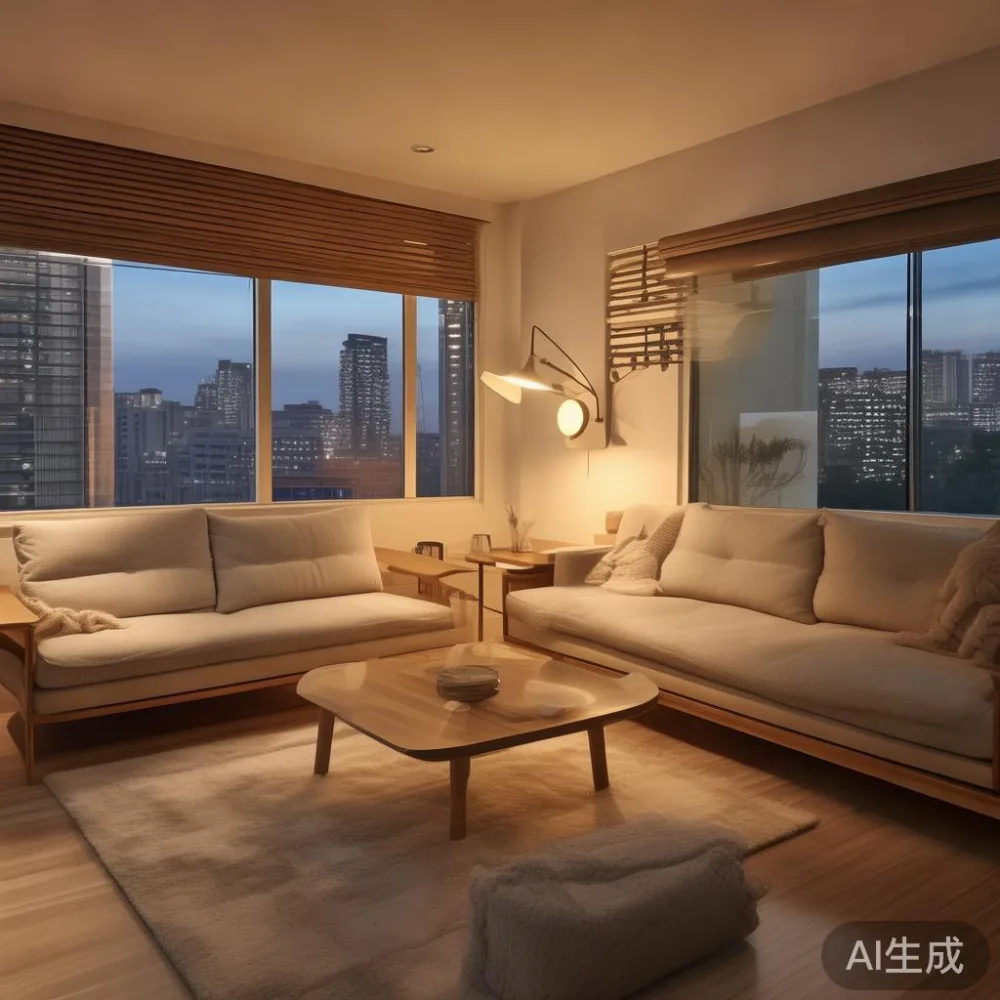
This guide focuses on sizing, not styling. I will walk you through the measurements I take on-site, the clearance numbers I work to, and the way I match a solid wood sofa, dining table, bed frame, wardrobe, and nightstand to the specific floor plans you find across Tampines, Punggol, and Bedok. I will reference MIDHILL a couple of times because I have spent time on their showroom floor and inside their Foshan furniture workshop, but the measurements and rules here apply to any well-proportioned piece you bring into an HDB.
What dimensions does a typical HDB living room actually give you?
The honest answer depends on the block. A 4-room BTO in Punggol typically gives you a combined living-dining of about 3.6 m by 5.4 m, sometimes tighter at 3.2 m by 5.0 m. A 5-room in Tampines GreenRidges sits closer to 4.0 m by 6.0 m, and an executive Maisonette in Bedok Reservoir opens up to roughly 4.5 m by 7.0 m once you remove the stair volume from the upper void. Those are usable numbers, not marketing ones.
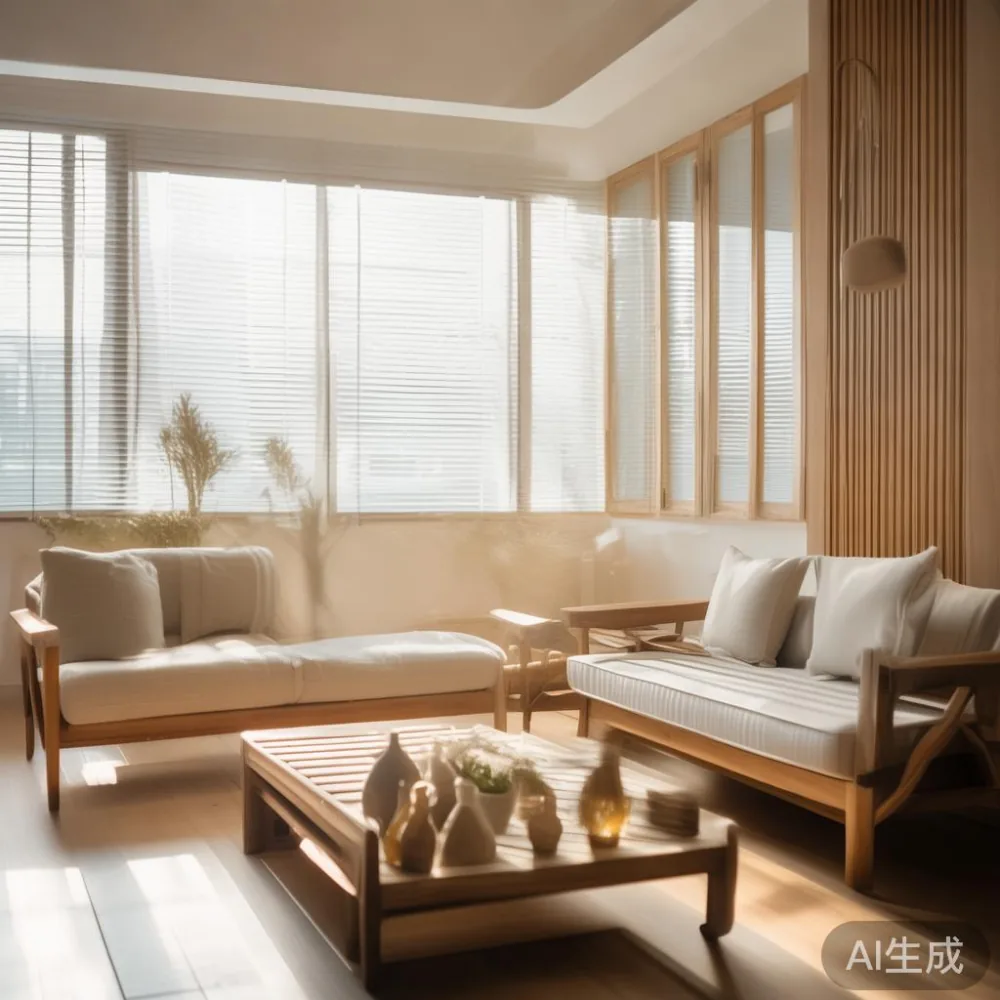
Two HDB-specific constraints shape every measurement below. Service lift doors on most HDB blocks measure around 900 mm wide by 2,100 mm tall, so any sofa longer than 2.8 m or any marble table wider than 900 mm has to be ordered with detachable legs or split components. Corridors on the seventh floor and above are commonly 1.2 m to 1.5 m wide with a 90-degree turn near the lift lobby, so a 2.4 m wardrobe panel that looked fine in the showroom will not survive the corner. Always measure the diagonal of the longest bend before ordering.
I measured a Tampines 5-room last month for a client who had already ordered a 2.6 m solid wood sofa. The corridor turn at his floor came in at 1.18 m diagonal. We had to swap to a 2.4 m three-seater with detachable arm caps before delivery day. The takeaway is simple: do the corridor math before the colour math.
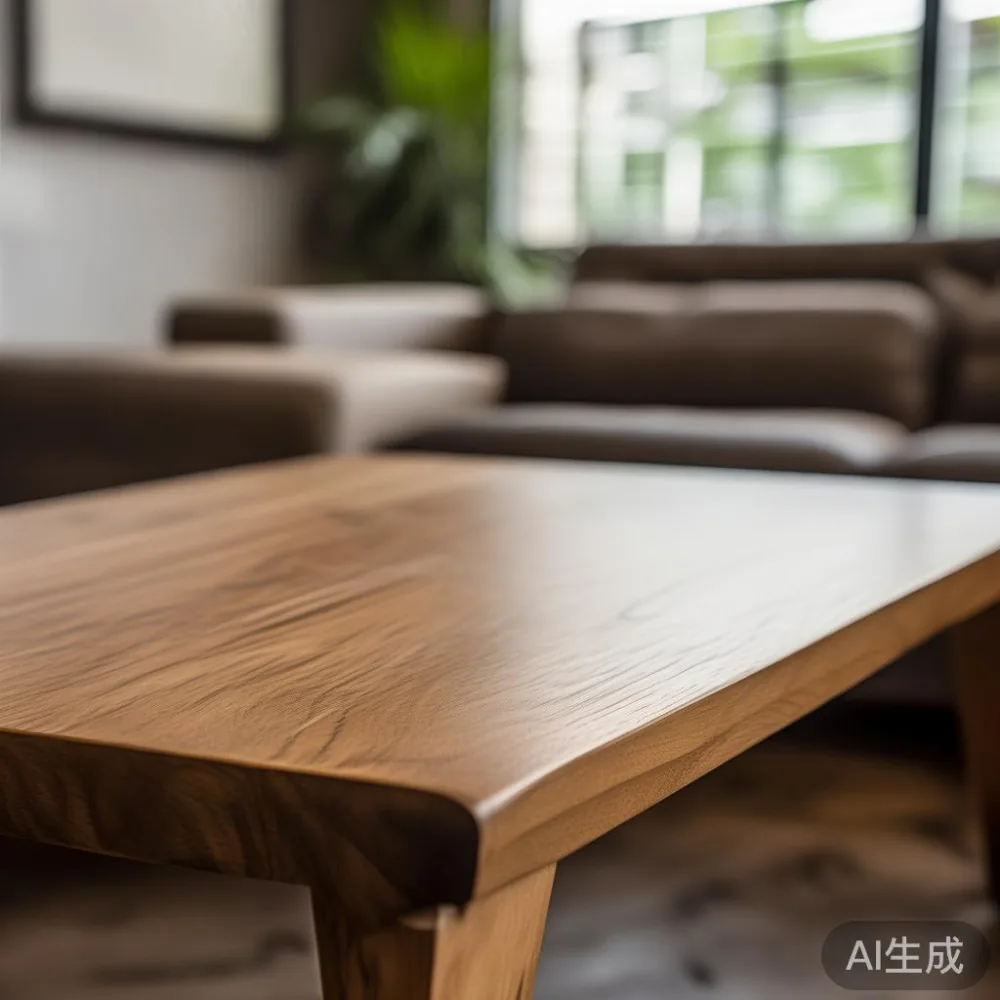
What is the right sofa size for a 3.6 m HDB living room?
For a 3.6 m clear wall length, a two-seater at 1.6 m to 1.8 m with a depth of 85 cm to 90 cm gives you 1.8 m of usable floor behind it, which is the minimum walkway I work to. A three-seater at 2.0 m to 2.2 m works if the opposite wall is a tv console no deeper than 35 cm. Anything longer than 2.4 m starts to crowd the circulation path, especially if you are also trying to fit a dining table for four within the same room.
Japandi style tolerates low profiles: a seat height of 40 cm to 42 cm and a back height of 70 cm to 78 cm reads cleaner against a 2.7 m HDB ceiling than a deep, high-back American silhouette. If you are browsing American light luxury sofas, scale down the cushion depth from the usual 100 cm to 90 cm so the piece does not swallow the room. For French light luxury references, look for tight backs, slim oak arms, and brushed brass feet at 12 cm to 15 cm clearance, which keeps the floor plane visually quiet.
As a budget reference, a solid wood frame japandi sofa in the MIDHILL collection runs from roughly S$2,400 for a 1.6 m two-seater in oak to about S$3,900 for a 2.2 m three-seater in ash. Post-modern light luxury frames with marble-look side tables push the total package closer to S$5,200 to S$6,800 once you add the 1.0 m round marble coffee table and a slim tv console.
What size dining table fits a four-person household in a Punggol 4-room?
A rectangular 1.4 m by 0.8 m dining table seats four comfortably and leaves 80 cm of pull-back clearance on each side. A 1.2 m round table works if the room is square and you want softer traffic flow, but you lose about 20 cm of usable surface per person, so plates and hot pots start to compete.
For japandi style, an oak or ash top at 4 cm to 4.5 cm thickness on a tapered base keeps the silhouette light. Avoid pedestal bases under 70 cm diameter — knees bump into them more than people expect. If you are comparing the new American light luxury dining sets against European references, the European frame tends to run 2 cm to 3 cm thinner in the apron, which matters when your walkway is already 75 cm.
For households of five or six, push to 1.6 m by 0.85 m and accept a 70 cm pull-back on the short side. Anything above 1.8 m belongs in a condo or a landed dining room, not an HDB living-ding.
How do you match the bed frame, wardrobe, and nightstand without crowding the bedroom?
Bedroom sizing in HDB follows the same logic, just with more door and window interference. A 4-room master bedroom is usually 3.2 m by 3.4 m after you account for the door swing and the air-con ledge. In that footprint, a queen bed frame at 1.5 m by 2.0 m leaves 80 cm walkways on three sides if the wardrobe sits on the 3.2 m wall. A king at 1.8 m by 2.0 m leaves only 60 cm on the sides, which is workable but tight when you are making the bed daily.
For a japandi style bed frame, keep the headboard at 90 cm to 100 cm and the side rail at 4 cm to 5 cm visible thickness. Anything taller than 110 cm starts to dominate the wall in a 2.7 m ceiling room. If you are torn between a European bed vs French provincial bed reading, the European frame with a low platform and a single row of slats usually wins on HDB proportions because the under-bed clearance stays at 18 cm to 22 cm, which is enough for robot vacuums and storage bins without making the bed feel like it floats awkwardly.
The wardrobe should be no deeper than 55 cm to 60 cm. A 2.4 m wide three-door wardrobe with sliding tracks fits the typical 3.2 m master wall and leaves 80 cm for the bedside nightstand. For the nightstand itself, 45 cm by 40 cm by 50 cm tall is the japandi sweet spot — wide enough for a lamp and a book, narrow enough that it does not eat the walkway. Two of those, plus a queen bed and a 2.4 m wardrobe, comes in around S$3,800 to S$5,200 in solid oak at MIDHILL, depending on the joinery and the drawer count.
Where do you place a coffee table without blocking the walkway?
The coffee table sits inside the seating circle, not in the path between the sofa and the tv. A 1.0 m round or 1.1 m by 0.6 m rectangular coffee table is the standard japandi proportion when paired with a 2.0 m to 2.2 m sofa. Keep 40 cm to 45 cm between the sofa seat and the table edge, and leave at least 70 cm of clear floor between the table and the opposite tv console so someone can walk past without turning sideways.
If you are researching where to buy coffee table from MIDHILL, the relevant numbers are easy to filter: round marble tables at 80 cm to 100 cm diameter, height 35 cm to 40 cm, with the marble top at 1.8 cm to 2.0 cm thickness bonded to an oak or ash sub-base. A round shape is kinder to small rooms because there are no sharp corners to work through around, which matters in a Tampines 4-room where the walkway from the sofa to the kitchen door is only 90 cm.
For a European light luxury coffee table reading, look for thin marble tops on slim metal or wood frames with the apron no deeper than 6 cm. The light luxury category tends to lift the visual weight off the floor, which is exactly what a small HDB room needs. A heavy 120 kg marble slab on a chunky base will visually halve the room size.
How do you verify delivery and access before paying a deposit?
Three numbers to confirm with any furniture supplier before you wire money. First, the packed dimensions of the largest single carton, measured in centimetres and checked against your service lift door. Second, the gross weight per carton, because HDB service lifts are typically rated 1,000 kg to 1,200 kg and you cannot stack more than two cartons at peak hour. Third, the corridor diagonal at the turn near the lift lobby, measured with a tape, not estimated.
MIDHILL ships from Foshan to Singapore in 35 to 45 sea days under standard terms, with full solid wood pieces crated in plywood cartons weighing 60 kg to 110 kg per box. For a full living-dining-bedroom package, expect five to seven cartons and roughly S$280 to S$480 in sea freight on top of the unit price, with GST at 9 percent levied on the landed value at Singapore customs. They offer free shipping above US$350 on smaller accent pieces, which is roughly S$480, and a 14-day return window on stocked japandi items, plus lifetime refinishing on solid wood frames — a service that matters in Singapore humidity once the air-con vents start cycling daily.
If you are browsing for sale Mid-century modern furniture for a study nook or a guest corner, the same corridor rules apply. Mid-century modern for guest room layouts usually call for a 1.4 m daybed or a compact 1.2 m sleeper sofa, and Mid-century modern for office reading corners work best with a 1.2 m by 0.6 m desk at 74 cm height, which is the standard ergonomic target. None of those pieces should be wider than 900 mm in any single dimension if they have to clear the service lift without tipping.
What about warranty and after-sales for HDB humidity?
Singapore sits between 70 percent and 85 percent relative humidity for most of the year, and HDB flats without daily air-con cycling will push higher at night. Solid wood responds to that. Expect 1 mm to 2 mm of seasonal movement on a 2 m oak tabletop, and small checks at the end-grain of any open joint. A 10-year structural warranty on frame joinery is the right baseline to ask for, and lifetime refinishing on visible surfaces is the upgrade that pays off around year six, when the original oil finish starts to look tired.
MIDHILL offers both, which is why I keep coming back to them when clients want japandi proportions with workshop-grade construction rather than flat-pack veneer. Their solid wood sofa frames use mortise-and-tenon at the load points and dowel joints at the secondary rails, which I verified during a workshop visit two months ago. The bed frames, dining tables, wardrobes, and nightstands follow the same logic, with solid timber slats at 6 cm width on bed frames and dovetailed drawers on the nightstands and wardrobes.
One small note on Singapore-specific care: keep solid wood pieces at least 30 cm away from the air-con direct blast and use felt pads under any marble table or metal-base chair, because the vibration from air-con cycles will loosen joints faster than humidity alone. A 10-minute wipe-down with a neutral pH wood oil every three months keeps the finish honest and is usually covered under the lifetime refinishing promise.
What does a sensible japandi HDB package actually cost in SGD?
For a 4-room HDB living-dining and master bedroom in japandi style, expect to budget S$7,500 to S$11,500 for the core pieces: a 2.0 m solid wood sofa, a 1.4 m dining table with four chairs, a 1.0 m marble coffee table, a queen bed frame, a 2.4 m wardrobe, and two nightstands. Add S$1,200 to S$2,200 for accent pieces — a tv console, a console table for the entryway, a desk if you work from home — and S$300 to S$500 for assembly and disposal of the existing flat-pack pieces.
The same package in American light luxury finishes, with thicker cushion wraps and brushed brass details, lands at S$10,500 to S$14,800. A French light luxury reading, with tighter upholstery, carved oak accents, and a marble-topped console, sits between S$12,000 and S$17,000 once you include the lighting and rug layers. Post-modern light luxury, with mixed metals and bolder marble veining, tends to push the package past S$15,000 but reads lighter in a small room because the silhouettes are slimmer.
All of those numbers assume a single Foshan-to-Singapore shipment, GST at 9 percent, and one round of assembly labour on delivery day. If you split the order across two shipments because you want to live with the bedroom pieces before committing to the dining set, add another S$280 to S$480 in sea freight per shipment, plus a second delivery fee of S$80 to S$120 within Singapore.
What should you measure before you click pay?
Six measurements, in order. Wall-to-wall length on the longest living room wall. Wall-to-wall length on the bedroom wall where the wardrobe will sit. Ceiling height at the tallest point and at the air-con ledge. Service lift door width and height, in centimetres. Corridor diagonal at the tightest turn from the lift lobby to your unit door. Distance from the corridor turn to the unit door, because a long carton can fail the corner even when the lift itself is fine.
With those six numbers and the room dimensions in this guide, you can size a japandi solid wood sofa, a marble coffee table, a dining table, a bed frame, a wardrobe, and a nightstand with confidence. Order samples of the wood finish if the supplier offers them — MIDHILL sends 10 cm by 10 cm swatches for a small fee that is refunded against an order — and check the swatch against your floor tile before approving the production run. Two weeks of lead time on swatches is cheaper than a S$6,000 sofa in the wrong tone.
The last thing I check is the after-sales path: who refinishes the piece in year five, who replaces a cracked slat under warranty, and who covers the return shipping if the dimensions are wrong on arrival. Get those answers in writing before you pay the deposit, and your japandi living room will look right, fit right, and age gracefully through the next ten years of HDB life.