What to Check Before Buying a Sofa You Cannot Sit On First: A Singapore Japandi Guide
You have measured the living room twice. You have scrolled through nine hundred photographs. You have picked a shade of oak that your partner, your cat, and your mother-in-law all separately approved. And yet, somewhere between Tampines Mall and the MRT, a quiet dread settles in: you cannot actually sit on the sofa before it arrives. Last month I watched a friend in Punggol do exactly this. She ordered a three-seater from a regional e-commerce page, waited thirty-one days for the container to clear, and discovered, with her husband holding a tape measure and a defeated expression, that the 218 cm frame would not fit through her HDB corridor. The lift at her block is 1.1 m wide and 1.4 m deep. The corridor turn at level nine is a polite but firm 1.05 m. The sofa, in its lifetime, never touched a cushion.
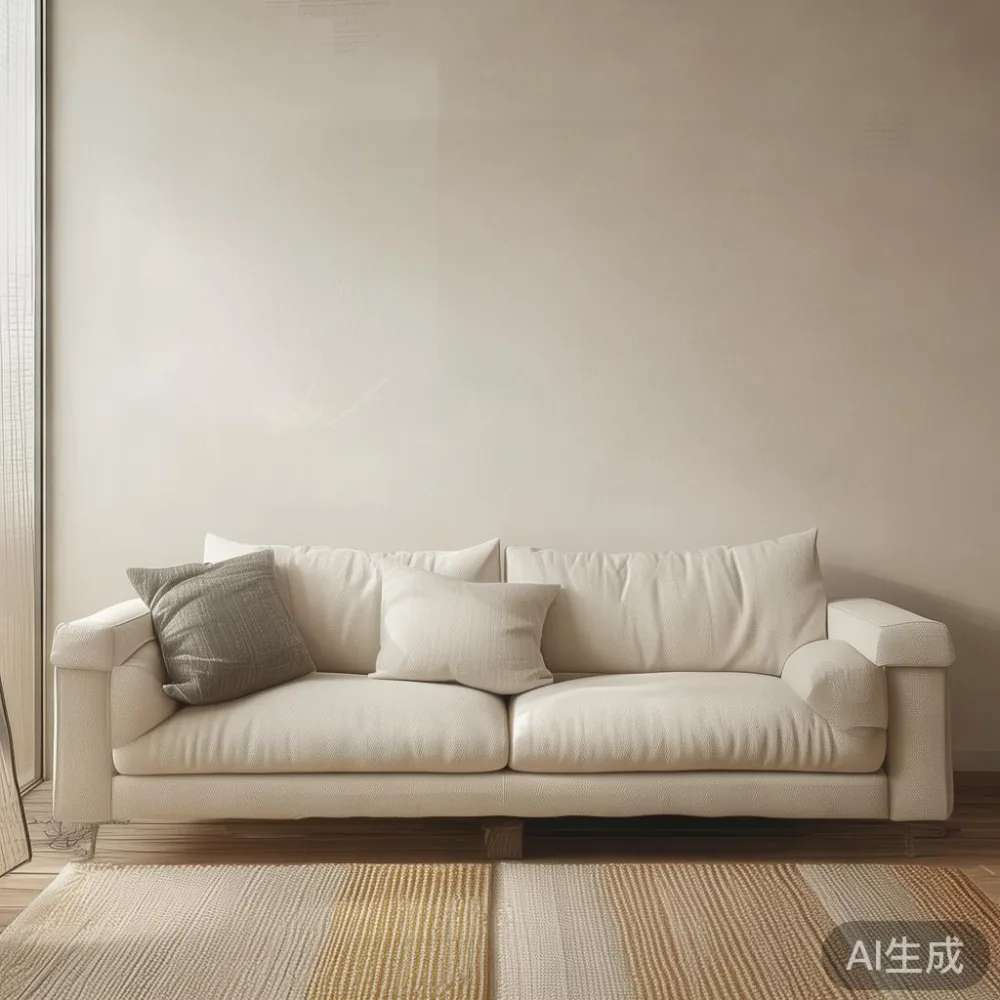
This article is for anyone ordering a japandi style sofa into a Singapore home when showroom visits are not possible, or when you are buying a piece you found online from a maker you have never met, such as MIDHILL, a Foshan workshop that has shipped solid wood furniture since 2008 to fifteen-plus countries, with a ten-year structural warranty, lifetime refinishing service, free shipping over US$350, and fourteen-day returns. None of those policies help if the sofa cannot physically reach your door. So let us walk through what to actually check, in numbers, before you commit.
How do I know a sofa will fit through my HDB door, lift, and corridor?
Measure every millimetre before you fall in love. A standard three-seater japandi style sofa usually runs 200 to 220 cm long, 85 to 95 cm deep, and 75 to 85 cm tall. Apartment entry doors in Singapore are typically 90 to 95 cm wide and around 2.1 m tall, with a 2 to 3 cm threshold lip. Older HDB doors in Bedok and Toa Payoh can dip to 86 cm. Lift openings mirror that range, with cargo lifts (mostly in newer Punggol and Sengkang blocks) reaching 1.2 m by 1.6 m. If your sofa carton is 220 cm long, you cannot tilt it diagonally through a 90 cm doorframe without the diagonal being at least 220 cm, which is roughly 311 cm corner-to-corner on a 90 cm rectangle. You can tilt it upright, but then you need ceiling clearance of 85 cm plus the diagonal of the sofa depth, which is 90 cm, giving about 124 cm. Most HDB lifts offer 2.3 to 2.4 m of cabin height, so vertical tilting usually works. The real villain is the corridor turn into your unit, often 1.0 to 1.1 m wide. A solid wood sofa frame with ash or walnut cannot be folded, so a 95 cm-deep frame must either come straight in or come in at a steep diagonal. Get the building's floor plan, sketch the corridor turn, and call your furniture supplier for the exact carton dimensions, including packaging, before paying a single Singapore dollar.
How do I choose a industrial style for a study?
Pick industrial style for a study by anchoring three measurable decisions: frame material, lighting temperature, and surface finish, then check every piece against the room's smallest dimension. Industrial means exposed blackened steel or hot-rolled iron, visible welds, and reclaimed or new-reclaimed-look solid wood, usually pine, ash, or walnut with a 1.8 to 2.2 cm slab top. For a 9 to 12 sqm study in a Punggol condo, a 140 cm by 60 cm solid wood desk at 75 cm height leaves a 70 cm walking aisle, the minimum comfortable clearance. Pair it with one open metal shelf 180 cm by 35 cm by 35 cm, one wall-mounted task light at 3000K (warm, not cold), and one upholstered chair in leather or canvas. Avoid rugs larger than 160 cm by 230 cm in a room that small. The japandi style version of industrial softens the metal with rounded ash edges and adds a single washi-style pendant at 2700K, which is how a study in a HDB flat in Tampines North can carry both visual languages without crowding.
What dimensions should I check on the product page itself?
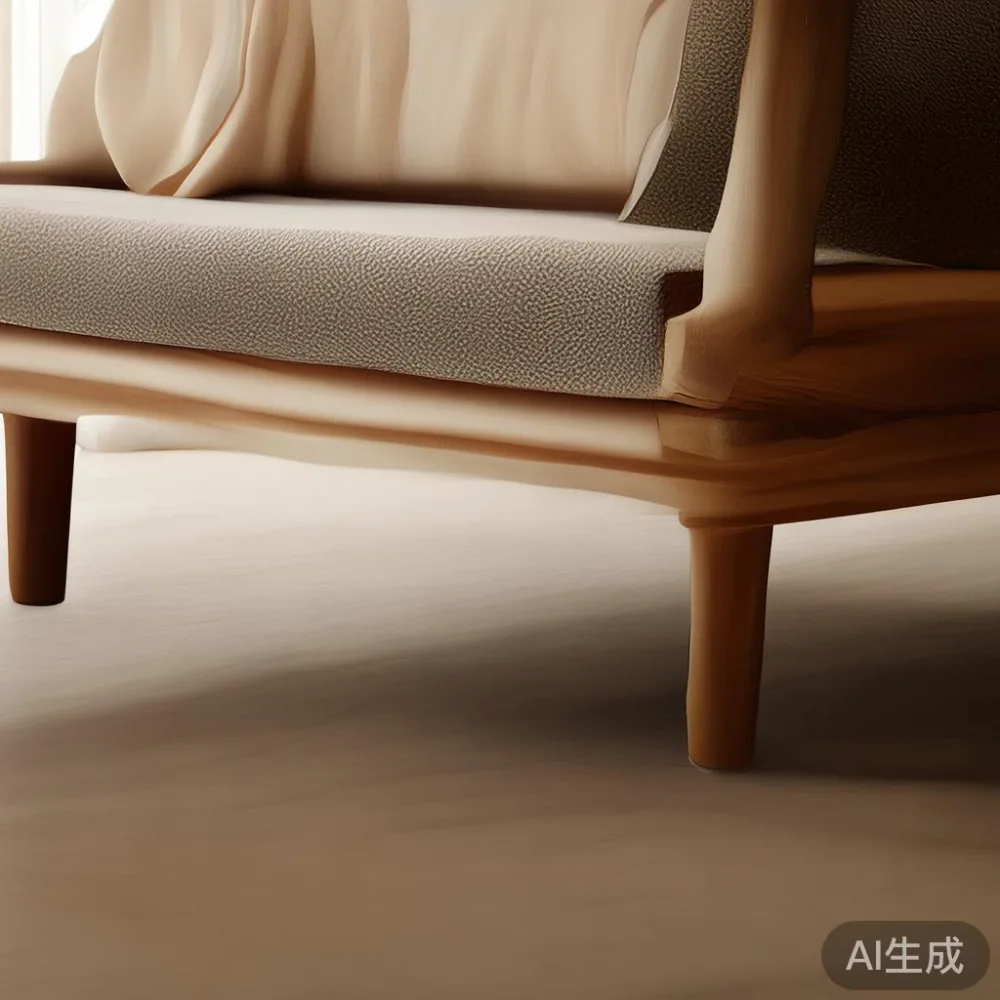
Three numbers matter more than the rest: outer frame length, diagonal of the deepest point, and weight of the assembled frame. For a japandi style three-seater, target 200 to 210 cm outer length so the carton diagonal stays under 240 cm, which clears virtually every HDB lift in Singapore. Check seat height at 42 to 46 cm, which suits adults between 158 and 182 cm, the height range of most Singaporean households. Seat depth should be 55 to 60 cm; anything under 55 cm feels bench-like for anyone above 175 cm. Frame weight matters because a 55 kg solid wood sofa in solid ash is two people to carry up a HDB stairwell if the lift fails. Ask for the carton weight, the gross weight including packaging, and whether the cushions are vacuum-packed or pre-filled. Pre-filled cushions add 8 to 12 kg and cannot be compressed below 40 cm thick without permanent deformation. Confirm the leg height too; 12 to 15 cm clearance lets a robot vacuum pass underneath, which is a small daily relief in a 90 sqm flat.
Which materials actually hold up in Singapore's humidity?
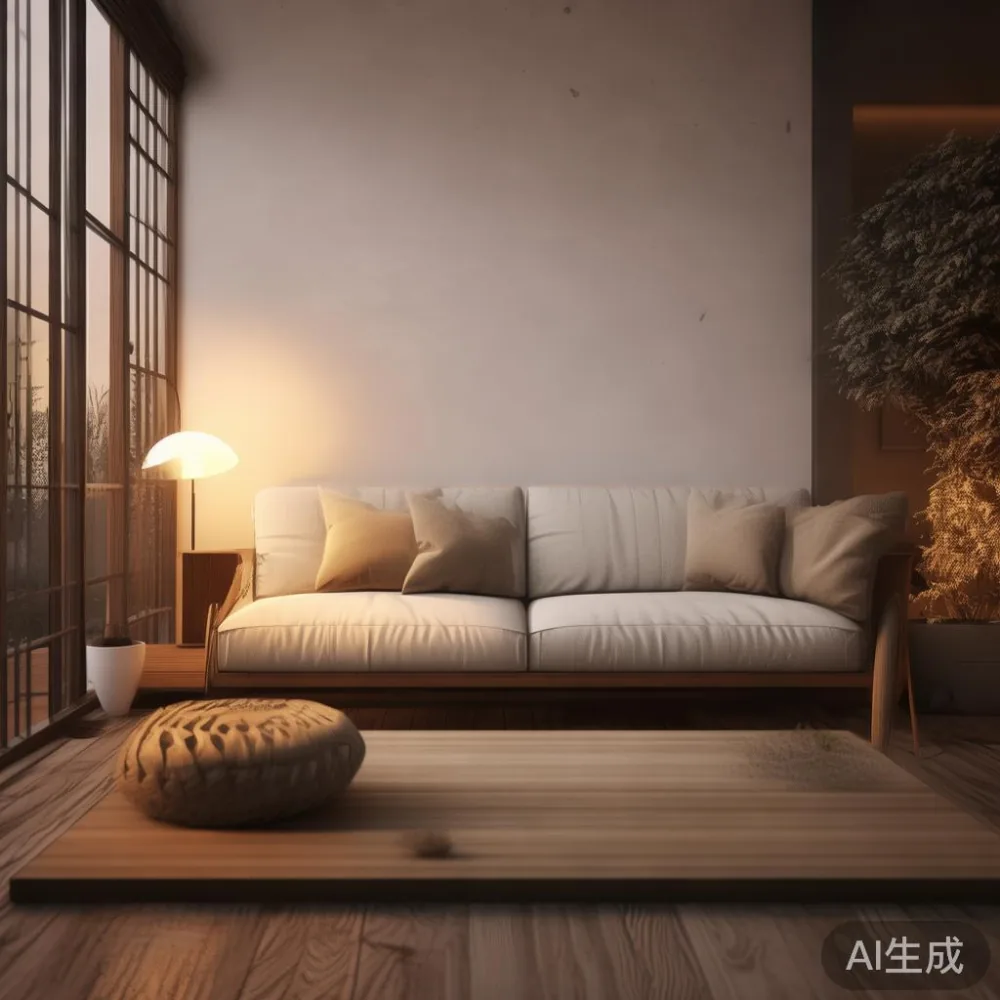
Solid wood, kiln-dried to 8 to 12 percent moisture content, is the safest baseline. Singapore sits at 70 to 90 percent relative humidity for most of the year, so any sofa frame using MDF, plywood with poor edge sealing, or particleboard will swell at the joints within twelve to eighteen months. Ask for the wood species, the drying method, and the finish. Ash, oak, beech, and walnut perform well. Rubberwood is acceptable but must be properly treated to resist fungal growth. A japandi style sofa in solid ash with a hardwax-oil finish breathes with humidity instead of cracking against it. Cushion foam should be at least 32 kg per cubic metre density with a 2 cm down-wrapped topper, otherwise the seats bottom out within two years. Fabric matters: a 30,000 Martindale-rated linen or cotton blend withstands daily use; anything below 20,000 wears through in three to four years for a family of four. Leather, even top-grain, needs a dehumidifier running at 55 to 60 percent RH in the room. Skip bonded leather, which is reconstituted polyurethane and peels within twenty-four months in this climate.
What about delivery timelines, GST, and warranty paperwork?
Plan for thirty-five to fifty-five days from order to doorstep if the sofa ships from Foshan. Sea freight to Singapore takes fourteen to twenty-one days, customs clearance another three to seven, and local delivery one to three days depending on whether your block has a loading bay. The 9 percent GST applies on the landed cost, including shipping and insurance, so a S$2,400 sofa with S$180 shipping becomes S$2,808 before any discount. Ask whether the seller pre-pays GST or bills it on delivery. Confirm warranty terms in writing. A ten-year structural warranty on a solid wood sofa frame is meaningful only if it names the components: rails, legs, dowels, corner blocks. Lifetime refinishing is a quiet perk; budget S$280 to S$450 for an on-site sanding and re-oiling after five to seven years, which restores the wood rather than replacing it. A fourteen-day return window is short, so inspect on arrival day, photograph the unboxing, and refuse the delivery if the carton shows corner damage above 5 cm crush depth. MIDHILL offers these policies as standard, but you still need to verify them in the order confirmation, not just the website banner.
How should I match a japandi sofa with a dining table, bed frame, and nightstand without re-buying later?
Match by wood tone and grain, not by exact SKU. Choose one dominant species, ash for cool undertones or walnut for warm, then keep the secondary pieces within two shade steps. A japandi style solid wood sofa in white-oiled ash pairs with a 180 cm by 90 cm ash dining table at 75 cm height, an ash bed frame for small apartment use at 160 cm by 210 cm, and two 45 cm by 40 cm by 55 cm ash nightstands. The leg profile should repeat across the set: tapered cone, square block, or low plinth. Mixing two leg profiles in one room breaks the visual rhythm. For a wardrobe in the same room line, choose a 120 cm three-door sliding version in matching ash with a single blackened steel handle pull, no more. A marble table, even a small 50 cm round side table in Carrara or Calacatta, adds the cool counterpoint that japandi interiors rely on, but limit marble to one piece per room, otherwise the room turns cold and the wood stops reading as warm. Keep the metal count to one accent per room, whether it is a blackened steel lamp arm, a brass drawer pull, or a powder-coated chair frame.
What questions should I ask the seller in writing before paying?
Send these nine questions by email and keep the replies as your warranty record. What is the exact outer frame length, depth, and height in centimetres, including the legs? What is the carton weight and the assembled weight? What is the diagonal measurement of the deepest shipping carton? Is the frame solid wood, and if so, which species and what moisture content at kiln-drying? What is the density of the seat foam and the Martindale rating of the fabric? Is the finish hardwax-oil, lacquer, or conversion varnish, and can it be locally refinished? What is the warranty in years, and which specific components does it cover? What happens if the piece arrives damaged, and is replacement shipping covered? What is the GST treatment, and is the price inclusive of Singapore import duty? A maker who answers these in twenty-four hours with specific numbers is a maker worth trusting with S$2,000 to S$4,000 of solid wood furniture.
How do I avoid the three most common regrets Singapore buyers mention?
Regret one is ordering too deep. Buyers used to condominium sample-room sofas often underestimate that a 95 cm-deep sofa eats 95 cm of living room. Regret two is choosing too light a wood. Raw oak darkens noticeably under Singapore afternoon light through east-facing windows. Regret three is skipping the underframe. A sofa without a center support rail sags in the middle by year three. Read independent reviews that mention specific room sizes. Look for buyers in 90 to 110 sqm HDB flats in Bedok, Tampines, and Punggol writing about how the piece sits at year one and year three. A solid wood sofa in a properly sized japandi style silhouette should still look honest after three years of children, durians, and afternoon thunderstorms.
What is the final pre-purchase checklist I should tape to the wall?
Tape this to the wall above your study desk, light-luxury or otherwise. Confirm the outer frame dimensions in centimetres. Confirm the carton diagonal against the smallest corridor turn. Confirm the wood species, drying method, and finish. Confirm the foam density and fabric Martindale rating. Confirm the warranty in writing with named components. Confirm the delivery window in days, the GST treatment in Singapore dollars, and the damage-replacement policy. Confirm whether a matching bed frame for small apartment use, dining table, wardrobe, nightstand, or marble table is available in the same timber so the room reads as one composition rather than five separate purchases. Once nine of these nine are answered in writing, pay the deposit. Until then, the sofa you cannot sit on is still just a photograph.