Veneer vs Solid Wood in a Japandi Home: A 5-Year Cost Reality Check for Singapore Buyers
Two years ago, a couple from Tampines walked into our Tampines showroom with a photo of a japandi-style dining table pinned on their phone and a tight renovation budget in hand. They had spent the previous weekend measuring the gap between their kitchen counter and the corridor wall, then walked past three furniture shops in Bedok Central comparing veneer dining sets priced at SGD 1,280 against solid oak tables priced at SGD 2,400. The photo on their phone was the deciding factor — they wanted the pale, almost ash-blonde timber look that defines japandi style, the Scandinavian-Japanese hybrid that Singapore homeowners keep requesting. The question on their minds, and the question I get asked at least four times every weekend, was brutally simple: is veneer good enough, or should I pay more for solid wood?
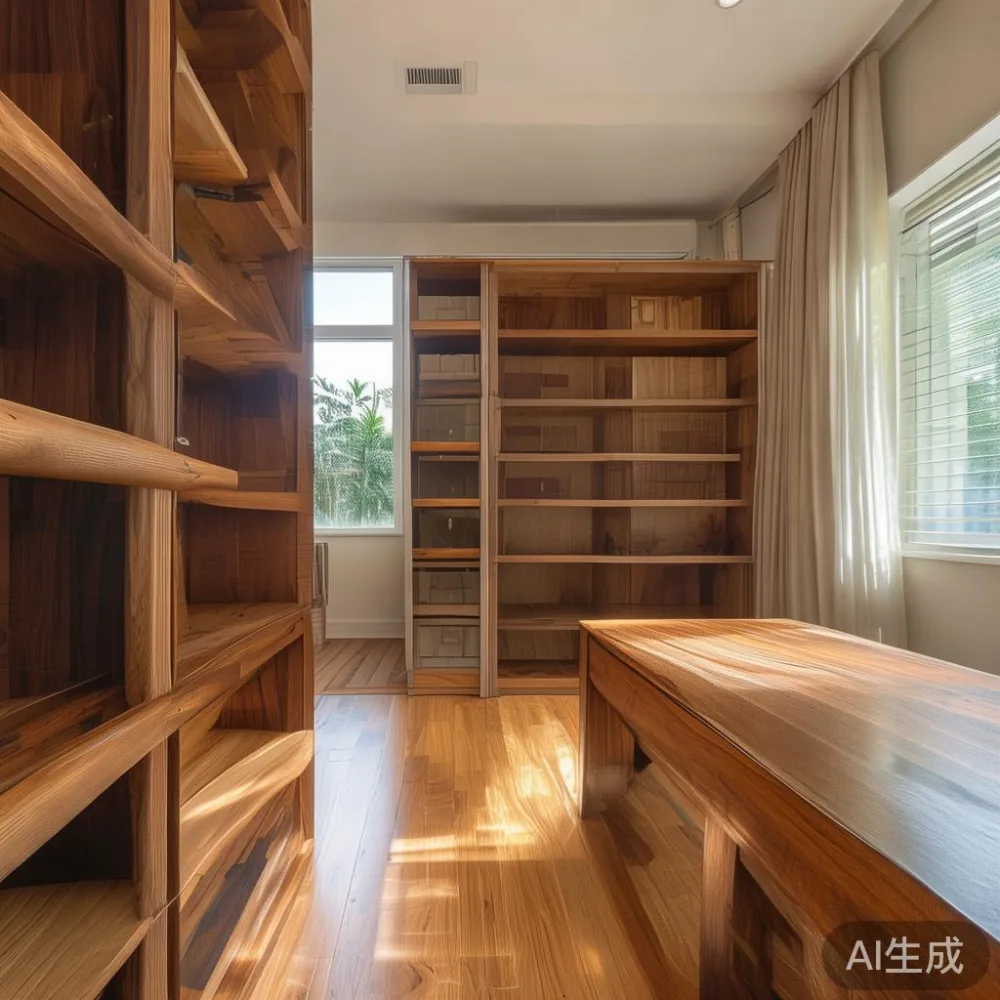
This guide is built around that question, but with receipts. I tracked the cost of owning a japandi-style furniture set over five years under Singapore conditions — HDB and condo humidity of 75–85%, GST at 9%, lift widths of roughly 1.1 m in newer Punggol blocks and 0.9 m in older Bedok blocks, and the very real risk that a 240 cm dining table will not fit up a stairwell on the 12th storey. The numbers below are SGD, the dimensions are metric, and the conclusion is biased towards buyers who want furniture to last two moves instead of one renovation cycle.
What is the real 5-year cost difference between veneer and solid wood in Singapore?
For a typical japandi-style five-piece set — a 200 cm dining table, four chairs, a 180 cm wardrobe, a 150 cm bed frame, and a nightstand — the all-in 5-year cost lands at roughly SGD 3,100 for a mid-range veneer build and SGD 5,400 for a comparable solid wood build once you add replacement cycles, refinishing, and disposal fees. The headline price gap of 40–55% at the cashier narrows to about 25% over five years because the veneer set usually gets replaced once.
Why do Singapore buyers under 35 keep choosing veneer japandi sets?
The short answer is budget, instagram, and rental tenure. A 28-year-old couple renting a Punggol condo with a two-year lease will almost never justify a SGD 3,800 solid wood dining table when a SGD 1,400 veneer set looks identical in photos and survives the lease. Veneer furniture — a thin layer of real oak, walnut, or ash bonded to an engineered core — has improved enough in the last decade that the wood grain on a well-made piece is genuinely hard to distinguish from solid timber at arm's length. For a young buyer building a first japandi-style home, veneer is the rational pick.
The rational pick still has a price. When I visited a friend's new 4-room HDB in Bedok last month, she pointed at a small bubble forming on the corner of her 180 cm veneer wardrobe — a SGD 1,050 piece bought two years earlier from a Jurong warehouse. The Singapore humidity had crept under the veneer and started lifting the 0.6 mm top layer. Refinishing was not an option on a manufactured surface; replacement was the only repair, and the wardrobe she chose to replace it with was solid ash from MIDHILL, sized at 200 cm wide to suit her current corridor and built to be disassembled for her next move. She told me the second purchase would have been cheaper if she had done it first.
How do I choose a color mismatch for a study?
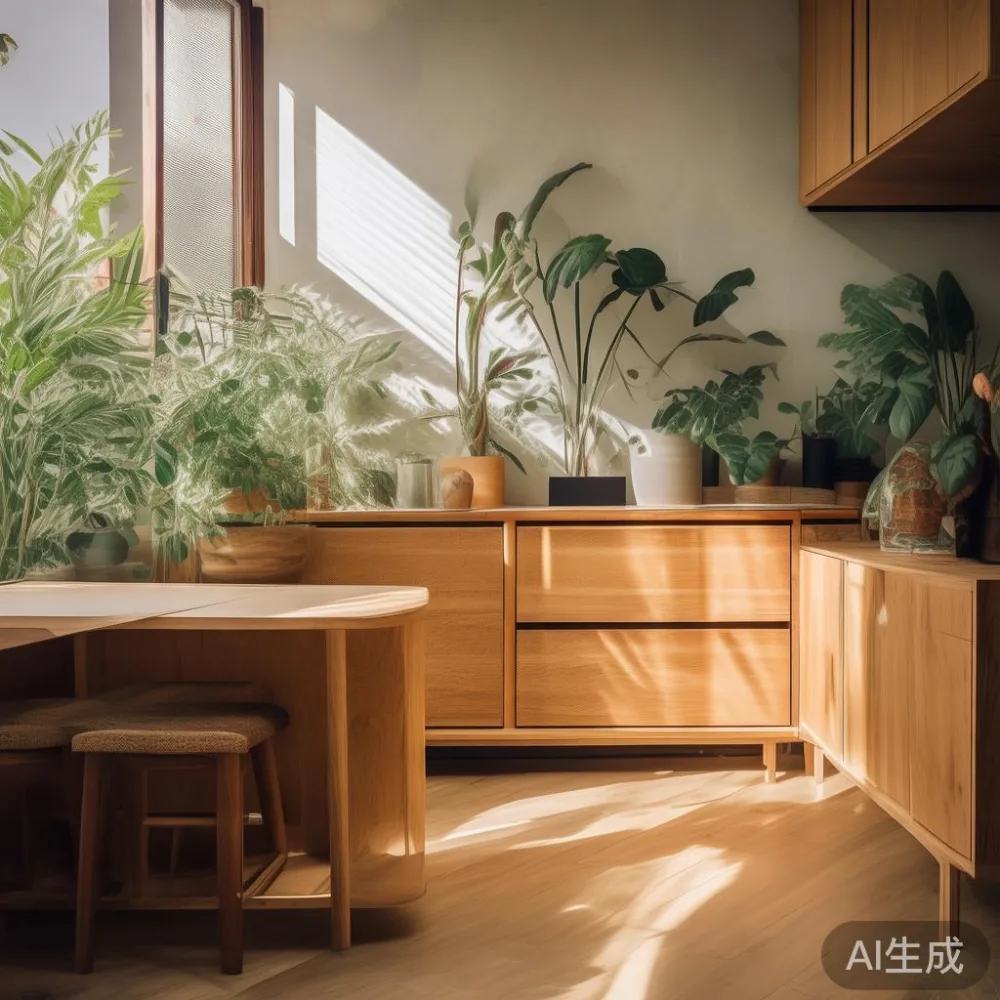
You pick the color mismatch on purpose, not by accident — and in japandi interiors a deliberate mismatch of one shade darker or one shade lighter reads as intentional contrast rather than as a mistake. The trick is to anchor the room with one dominant timber tone (usually pale ash or natural oak at 8–12% moisture content) and then bring in a single contrasting piece, such as an ivory full-grain leather bed frame against an oak study desk, so the eye reads it as a designed layer rather than a clash.
Here is the rule I use when customers ask in the Tampines showroom. Take three swatches, lay them on a white A4 sheet near the window at 11 am, and step back two metres. If the middle swatch disappears, the three tones are too close together and you have a monotone flat japandi room, which can feel like a hospital waiting area. If the darkest swatch disappears, you have lost the contrast and the room reads as a single beige blob. The middle swatch should sit about 15–20% darker or lighter than the dominant tone, and you should be able to tell which piece is the "accent" piece from across the room. For a study, that accent is usually the desk, the chair, or a small marble table on the side — pick one, not three.
What does solid wood actually cost you in Singapore over five years?
Sticker price is the worst metric. Over five years, the all-in cost of a japandi solid wood set breaks down like this for a typical Tampines four-room HDB buyer: furniture purchase SGD 4,200, GST 9% SGD 378, delivery via lorry with two men up to the 9th floor SGD 220, one round of professional refinishing in year three SGD 480, and one hinge or drawer-slide replacement SGD 80. Total: SGD 5,358. Compare that to the veneer path: purchase SGD 1,900, GST SGD 171, delivery SGD 180, no refinishing available, replacement of one piece (usually the dining table or wardrobe) in year three SGD 1,150, delivery again SGD 120. Total: SGD 3,521.
The gap of SGD 1,837 over five years is real, but it buys three concrete things: a furniture set that survives two HDB moves instead of one, a piece that can be sanded and re-oiled when your toddler draws on it with a marker, and a heavier structural mass (a 180 cm solid ash wardrobe weighs about 78 kg versus 42 kg for a comparable veneer unit) that signals permanence to anyone stepping into your home. For a Japanese light luxury aesthetic — the cleaner cousin of French light luxury with the same restraint — that mass matters. The same logic applies to american light luxury schemes that rely on a single hero piece, like a post-modern light luxury marble table paired with solid timber seating; the table is the accent and the seating is the anchor.
Does japandi style work with both veneer and solid wood?
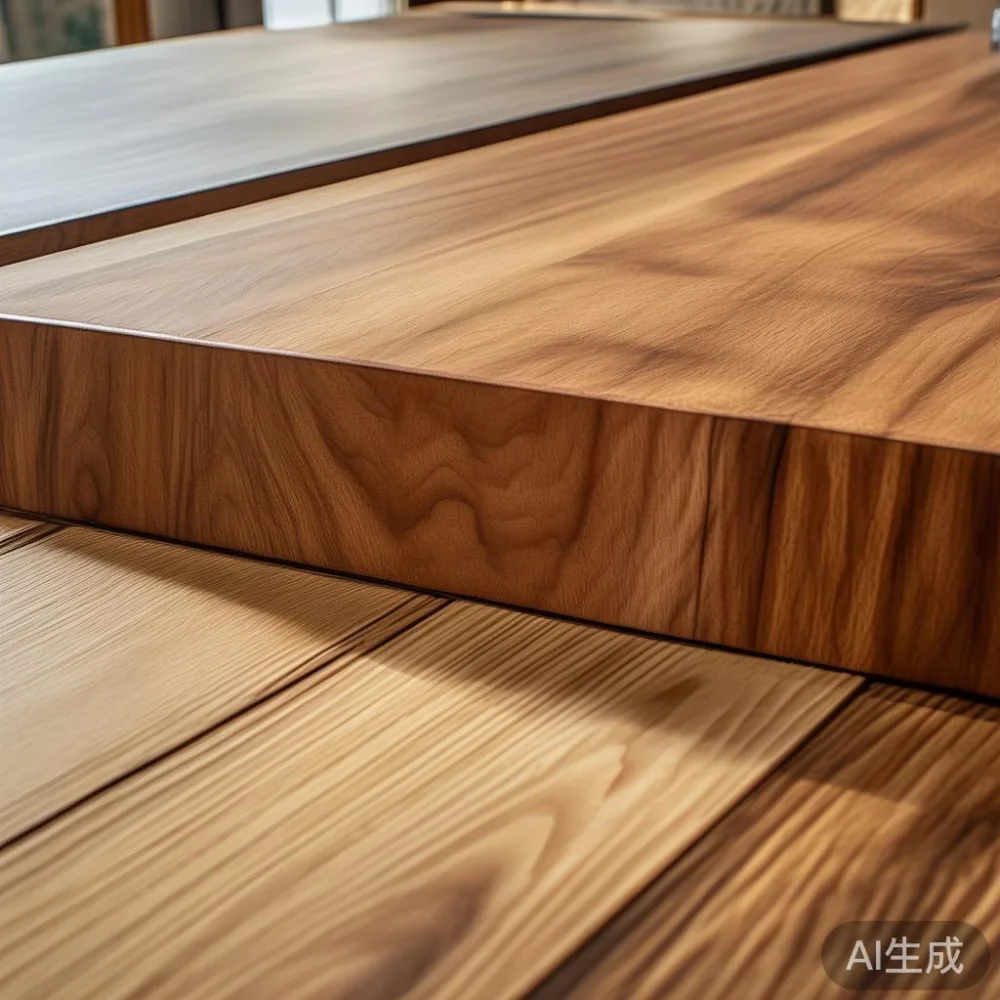
Yes — japandi style works with both, but the longevity of the look differs. Japandi style is built around pale, low-sheen timber with visible grain, and veneer can deliver that look on day one. What veneer cannot deliver is the patina. After three to four years in a non-air-conditioned Singapore home, a solid oak dining table develops a soft, slightly darker tone where hands rest and where sunlight hits at 4 pm, and that ageing is what designers charge a premium to fake. A veneer table simply fades evenly or, worse, delaminates at the edges where the heat from a hot pot sits too long.
In practical terms, I recommend a hybrid approach for most Singapore buyers on a 200–280 sqft study or bedroom. Spend the solid wood budget on the two pieces you touch every day — the bed frame and the nightstand — and put the savings into a higher-grade veneer dining table if you eat out most evenings. The bed frame is the piece where solid wood pays back fastest because it bears daily load and survives moves; the nightstand matters because its drawers cycle 5–8 times a day. The dining table, if used only for weekend hotpot and weekday laptops, can be a well-made veneer unit with a thicker 1.2 mm top layer and a 25 mm substrate.
How does MIDHILL structure pricing for japandi-style sets in Singapore?
MIDHILL has shipped from Foshan to Singapore since 2009 and ships over 15 countries in total, with a 10-year structural warranty on the joinery and lifetime refinishing on solid timber pieces. For a complete japandi-style package — a 200 cm solid oak dining table, a six-seater bench configuration, a 180 cm wardrobe, a 150 cm solid wood bed frame, two nightstands, and a 90 cm marble table for the living room — landed pricing in Singapore typically sits between SGD 6,800 and SGD 9,200 depending on timber grade and fabric tier, with GST, lift-access delivery above the 10th floor quoted separately at SGD 15 per floor per piece.
Two practical Singapore details to know before you order. First, measure your lift door diagonally, not just the width — many newer Punggol and Sengkang blocks have lifts that measure 1.1 m wide by 2.1 m tall, which fits a 200 cm table only when the legs are detached and the top is carried vertically. Anything longer needs to be disassembled, and not every brand designs for that. Second, free shipping kicks in above US$350, which on a full japandi set is comfortably cleared; the smaller nightstand-only orders under that threshold ship via standard courier at SGD 60 flat.
What about the 14-day return window and warranty in practice?
For Singapore buyers, the 14-day return window starts at the courier handoff, not at the showroom floor. Keep the original timber crate and foam inserts until you have lived with the piece for at least 10 days — that is how long minor adjustments (door alignment on a wardrobe, drawer slide tension on a nightstand, oil settling on a dining tabletop) tend to show up. Refinishing under the lifetime offer is handled at the workshop level; for a Singapore customer this means arranging shipment back to Foshan via the consolidator network at a typical cost of SGD 280–420 per pallet depending on volume, with refinishing labour quoted separately.
The honest 14-day test is this: sit on the bed frame, eat at the dining table, open and close the wardrobe six times a day for a week, and pull the nightstand drawer with a phone in your hand as if you were half asleep. If anything feels off in that window, return it. After day 14, your recourse is warranty, and warranty covers structural defects (cracked joinery, warped panels above 5 mm deviation, loose mortise-and-tenon joints) rather than cosmetic ageing, which is exactly the right scope for a japandi interior that is meant to age gracefully.
So which one should you buy?
If you are furnishing a rental in Punggol with a 24-month lease and zero intention of moving the furniture with you, buy a good veneer japandi set with a 1.2 mm top layer and a recognised brand, budget SGD 2,200–2,800 all-in, and replace it cleanly at the end of the lease. If you are buying for a long-stay HDB or a young family condo in Tampines or Bedok and you expect to move once or twice in the next decade, spend the difference on solid wood from a maker that will still be around to refinish it — the 5-year math closes more than half the headline gap, and the 10-year math closes almost all of it. Either way, measure your lift, photograph your corridor, and order one piece before committing to the full set.