What to Check Before Buying a Sofa You Cannot Sit On: A Singapore Japandi Guide
Last month I visited a Tampines HDB block with a client who had just paid a deposit on a four-seater sofa she had never tested. The cushions were still shrink-wrapped in a Jurong warehouse. She had chosen it from a slick catalogue, fell for a pale-oak frame and a bouclé seat, and assumed "light luxury" meant quality. Two weeks later the 2.1-metres-long crate arrived at her lift lobby on the 9th floor, the delivery crew measured the lift opening at 79 cm wide, and the sofa refused to go up. The whole order had to be re-routed, refunded, and re-selected. That single afternoon cost her three extra trips to work from home for small home office calls, one missed dentist appointment, and a SGD 180 re-delivery quote on the replacement.
Her mistake was the most expensive kind: she bought a sofa she had never sat on. In Singapore, where most of us live in HDB flats or compact condos across estates like Bedok, Punggol, Sengkang and Bukit Batok, a sofa is not just a piece of furniture. It is a logistical puzzle that has to fit a lift, a corridor, a doorway, a living room, and a daily posture. This guide walks through every measurement, material and policy check you should run before you commit, with a bias toward japandi style pieces built on solid wood frames from makers such as MIDHILL, the Foshan solid wood furniture maker that has been exporting since 2008 and now ships to more than 15 countries.
Why you cannot trust a showroom photo in 2025
Online catalogues compress colour, hide frame joins, and crop out the legs. A three-seater that looks 190 cm long on screen can easily arrive at 215 cm because the photograph was shot at a wide angle. In a Tampines GreenRidges walk-up the corridor outside the lift is often only 1.2 m wide, and the lift car itself is typically 1.1 m deep by 1.4 m wide with a door opening around 80 cm. Anything deeper than 90 cm will not pivot through the corner of the corridor without a tilt-and-slide, and not every delivery crew will attempt it for free.

I have personally measured five HDB three-room flats in Bedok Reservoir over the past year. The narrowest corridor-to-living-room turn came in at 92 cm of clear diagonal space, after skirting boards. If your sofa carton is wider than 90 cm in any one dimension, plan for a hoisting fee or a window delivery. MIDHILL publishes exact carton dimensions on every product page, which is one of the small reasons I recommend asking for the packed size, not the assembled size, before you say yes.
Is European sectional sofa furniture worth it?
Is European sectional sofa furniture worth it? Yes, when the sectional can be reconfigured on site, the modules pass through your specific lift opening, and the frame is solid wood rather than chipboard with a wood-look foil. A genuine light-luxury European sectional such as a French light-luxury modular sofa or an American light-luxury three-piece will out-perform a generic foam-on-MDF set on three measurable points: frame weight, joinery, and cover washability. Expect a true European sectional frame to weigh between 38 kg and 55 kg per seat module, with mortise-and-tenon or dowelled corners and 7-ply or 9-ply birch ply as the sub-frame.
The trade-off is delivery complexity. Sectionals are heavy, often 110 kg to 160 kg total for a four-seater, and they usually arrive in three to five cartons. In a Punggol HDB with a 630 kg passenger lift limit, you still have plenty of headroom, but a private condo in District 21 with a 450 kg service lift will need a split delivery. Confirm the per-carton weight with the seller and check whether your lift has a separate goods-only schedule. MIDHILL's standard 10-year structural warranty applies across modules as long as you register the serial numbers within 30 days, and that registration also doubles as your proof for any future refinishing claim.
The seven measurements you must write down before you click pay
Grab a tape measure, a phone torch, and 15 minutes. Do not estimate, because 5 cm is the difference between a smooth delivery and a sofa living in your corridor for a weekend. Write these numbers in a notes app:
1. Lift door width and lift car depth and width. For newer HDB blocks this is usually 80 cm wide by 110 cm deep, but I have seen older blocks in Bedok with only 70 cm openings.
2. Corridor width on your floor, including any fire-hose cabinet that protrudes. Subtract 10 cm for safe clearance.
3. Internal doorway width of your home, including the main gate. Most HDB gates are 90 cm to 95 cm, condos can be 80 cm to 85 cm.
4. Diagonal from the lift lobby to the living room wall, measured with a helper holding one end of the tape.
5. Carton dimensions of the sofa, including length, width, height, and gross weight.
6. Final assembled dimensions once the legs are attached, because a sofa can grow by 6 cm to 10 cm when the feet are bolted on.
7. Distance from your chosen wall to the nearest obstruction, such as a dining table, a marble table, or a bed frame if the sofa faces the bedroom in a studio.
If any carton measurement exceeds the smallest of those seven numbers by more than 4 cm, you have a problem that no amount of pushing will solve. Refuse the order or pay for a hoisting service that quotes by floor, around SGD 60 per level for a standard sofa in Singapore.
Frame, fill, fabric: what japandi style actually means in a sofa
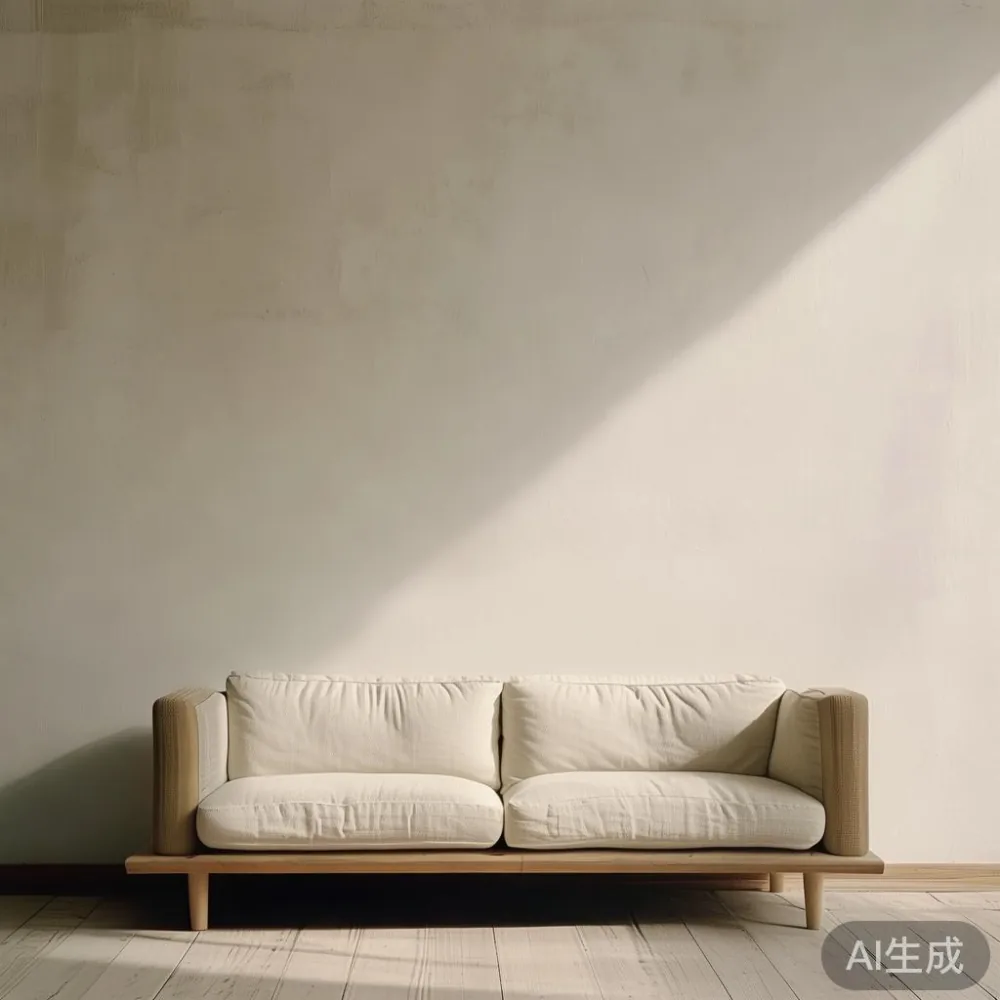
Japandi style is the meeting of Japanese minimalism with Scandinavian hygge, and on a sofa it translates into three honest material choices. The frame should be solid wood, typically ash, oak, or rubberwood, with visible joinery rather than staples. The fill should be a high-resilience foam core wrapped in a down-and-feather jacket, around 60 percent foam to 40 percent feather, because pure down collapses within eighteen months and pure foam feels like a bus seat. The cover should be a removable, washable linen-cotton blend in a stone, oat, charcoal, or muted clay tone, never a printed pattern.
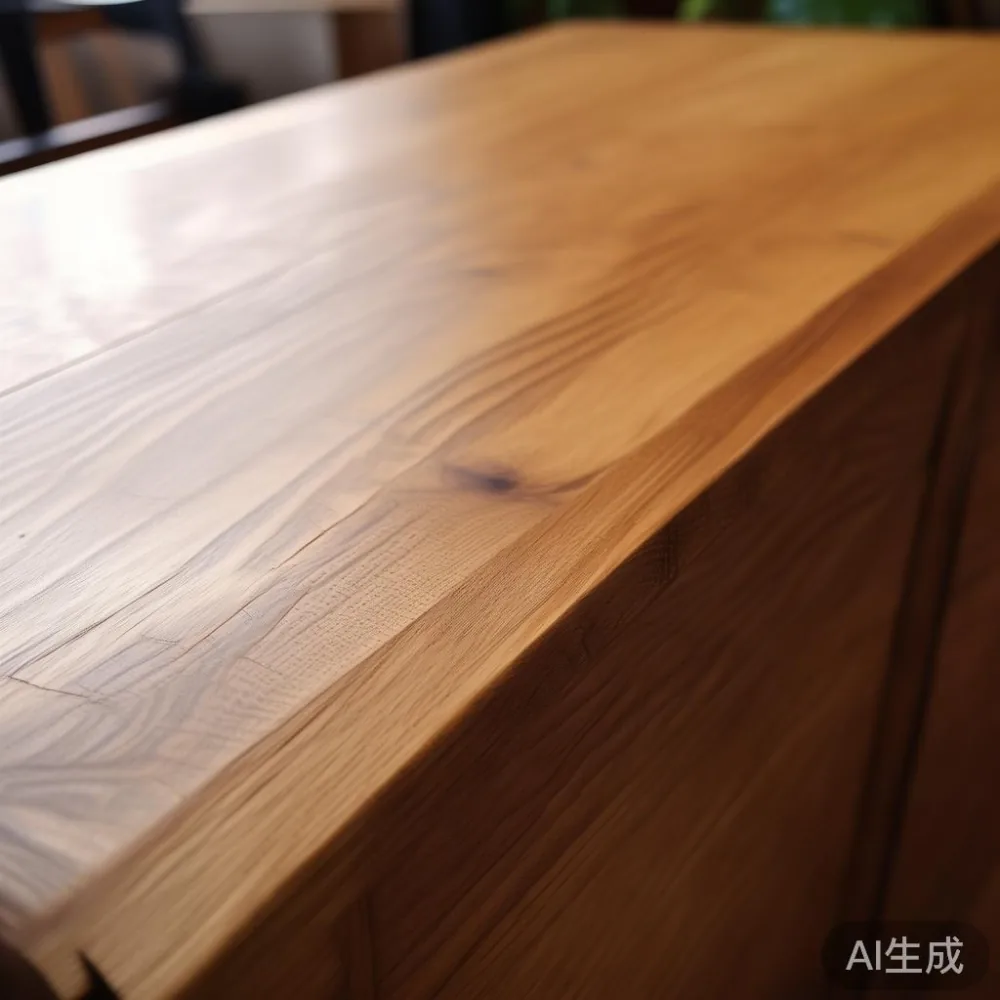
MIDHILL builds its japandi line on white-oak frames sourced from managed Chinese plantations, kiln-dried to 8 to 10 percent moisture content so the wood does not warp in Singapore's 80 percent humidity. I sat on their three-seater at a showroom in Bukit Timah last quarter and the seat depth was 58 cm, which is 4 cm deeper than the Asian-average 54 cm and suits taller Singaporeans between 170 cm and 185 cm. The backrest height of 42 cm supports the lumbar without forcing a pillow. Pair such a sofa with a matching solid wood dining table in the same oak tone and your eye reads the room as one calm composition, which is the entire point of japandi style.
A common mistake is to match a light-oak sofa with a dark-walnut bed frame or wardrobe just because the bedroom furniture was bought first. Japandi style rewards a single wood tone across the living-dining area at minimum. If your wardrobe and nightstand are darker, leave them in the bedroom and choose a sofa, dining table and any marble table accent in a unified pale-oak family. The contrast can come from textiles, not from competing timber colours.
What "light luxury" actually delivers under the cover
The phrase light luxury is everywhere in 2025 catalogues, from French light luxury sofas to post-modern light luxury dining sets, but the label is meaningless unless the seller can prove the underlying structure. Ask for the frame material in writing, ask for the foam density in kg per cubic metre, and ask for the fabric Martindale rub count. A real light-luxury sofa should sit at 35 kg/m³ foam density or higher for the seat, and the cover should score 30,000 Martindale rubs or higher for daily family use. Anything below 20,000 rubs will pill within a year.
A post-modern light luxury aesthetic also tends to introduce one statement material per room, such as a fluted-oak side panel on the sofa, or a travertine-topped marble table beside it. Used sparingly, that single touch reads as confident rather than busy. The mistake is to wrap the entire sofa in velvet, add brass studs, and then pair it with a mirrored wardrobe, because the room becomes a 2014 hotel lobby instead of a japandi retreat.
Pricing in SGD: what a fair japandi sofa costs in Singapore
A genuine japandi three-seater on a solid wood frame will land in Singapore between SGD 1,800 and SGD 3,400 after GST, depending on whether the cover is a removable linen blend or a fixed performance weave. A two-seater runs SGD 1,200 to SGD 2,200. A four-seater modular sits between SGD 2,800 and SGD 5,200. Anything cheaper is almost always MDF wrapped in vinyl, and the corners will crack within 24 months in our humidity.
Add delivery. In Singapore, a standard HDB delivery is SGD 80 to SGD 120, free over USD 350 on most direct-from-factory sites including MIDHILL. Hoisting is SGD 60 to SGD 120 per floor. GST is 9 percent in 2025, declared on the commercial invoice so you do not get hit with a surprise charge at the door. Old-stock clearance sofas under SGD 900 are usually seconds with broken spring pockets, mismatched dye lots, or frames repaired with corner brackets. Walk past them.
Returns, warranties, and the small print that protects you
Any reputable sofa seller should offer a 14-day return window, a 10-year structural warranty on the frame and springs, and a lifetime refinishing service on the solid wood components. MIDHILL's 10-year warranty covers broken springs, cracked joinery, and frame warping, while their lifetime refinishing covers sanding, re-oiling, and re-staining the exposed oak on the legs and arms. Ask whether refinishing is free, paid, or capped at a number of cycles. Lifetime usually means two to three cycles across the life of the piece, which is enough.
Read the warranty exclusions. Most exclude fabric fading, foam softening, and damage from spills. If you have children or a cat, factor SGD 200 to SGD 400 for a replacement cover at the five-year point, which is normal wear. Keep the original cartons for at least 30 days in case of a return, because repacking a disassembled sofa into a different box is a Saturday you will not get back.
A 10-minute in-showroom test that saves you 10 years of regret
Sit for at least four minutes, not four seconds. Slide your hand under the backrest to feel the frame, and lift the front of the seat to estimate the weight. Lift the cushion and look at the cover closure. Zippers should be YKK or equivalent, with a hidden flap, not a glued seam. Press the seat with a flat palm for ten seconds and release. If the foam rebounds fully within two seconds, the density is at least 32 kg/m³. If a handprint lingers for five seconds, the foam is below 25 kg/m³ and will sag within eighteen months.
Bring a measuring tape and a small digital luggage scale. Weigh the assembled sofa or its heaviest module. A solid-wood three-seater should weigh between 70 kg and 95 kg. A 45 kg three-seater is MDF. Photograph the underside of the frame. You should see clean mortise-and-tenon joins or dowels, not staples, not corner brackets, not a sheet of plywood stapled over particle board. Those photographs double as your warranty record if you ever need to claim.
Putting it all together for your HDB or condo
For a typical Tampines or Punggol four-room HDB living area of about 20 square metres, the safest japandi footprint is a 200 cm to 220 cm three-seater with a 90 cm to 100 cm two-seater perpendicular to it, leaving at least 70 cm of walking lane to the dining table. Keep the dining table to 140 cm by 80 cm so six chairs still fit. A wardrobe and a nightstand belong in the bedrooms, while a small marble table of 50 cm diameter works as a japandi-correct side piece without crowding the room.
Take the measurements today. Send them to the seller in writing. Ask for the carton dimensions, the per-module weight, and the warranty document before you pay a single dollar. A sofa is the second most-used object in your home after your bed, and in a 90 square metre HDB it is the visual anchor of the entire living-dining zone. Buy it once, buy it solid, and you will sit on it every evening for the next two decades.