Buying Japandi Furniture Online in Singapore: Delivery, Assembly, and the Real Numbers
Buying a japandi-style solid wood sofa or dining table online used to feel like a gamble. Three years ago, I helped a colleague in Tampines order a "light-luxury" walnut bed frame from an overseas seller; the box sat in her HDB corridor for nine days because the courier could not fit it into the lift. We ended up sawing the outer carton open in the void deck just to get it through her 2.1 m by 1.6 m lift door. The frame itself was fine. The delivery reality was not.
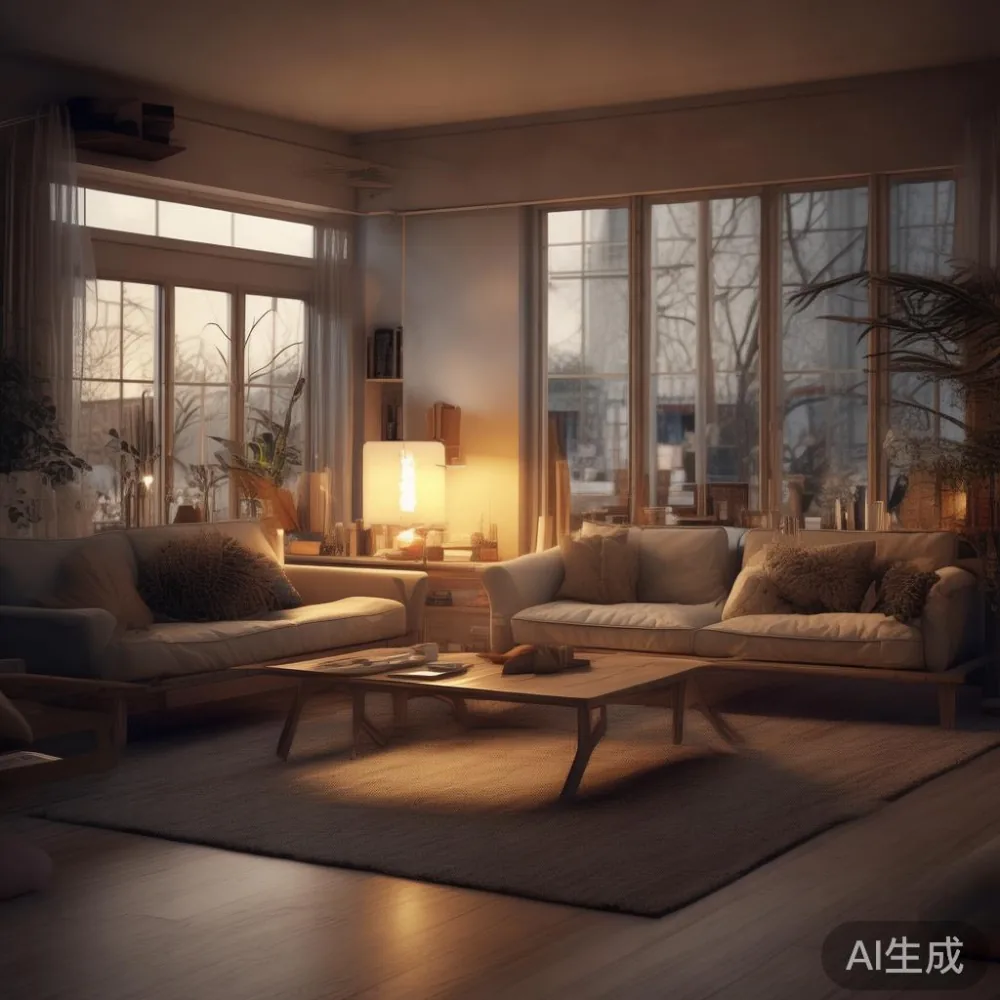
That story is the reason this guide exists. Singapore is a small island with very specific logistics geometry: HDB corridors are typically 1.2 m to 1.5 m wide, standard passenger lifts measure about 1.1 m deep by 1.4 m wide with an opening of roughly 0.9 m, and most condo service lifts fall between 1.5 m and 2.0 m in depth. Add 9% GST on the landed cost of imports above S$400, and the gap between a glossy product page and your actual living room becomes very real, very quickly. Below, I unpack the delivery and assembly realities of buying japandi and light-luxury solid wood furniture online in Singapore, with the actual numbers, the common pitfalls, and the questions buyers ask me most often at our Foshan workshop and showroom.
What "japandi style" actually means for the furniture in your HDB
Japandi style is the quiet marriage of Japanese minimalism and Scandinavian warmth. In practical terms, this means low profiles, exposed joinery, matte finishes, and a strict material palette: solid ash, oak, beech, or walnut; linen or bouclé upholstery; and just enough blackened steel or brushed brass to break the wood. You will see it most clearly on a japandi-style solid wood sofa with a 78 cm to 82 cm seat height, a bed frame sitting close to the floor at 28 cm to 35 cm from the ground, and a dining table that tapers to a 6 cm to 8 cm top thickness rather than the chunky 12 cm slabs common in pure American farmhouse design.
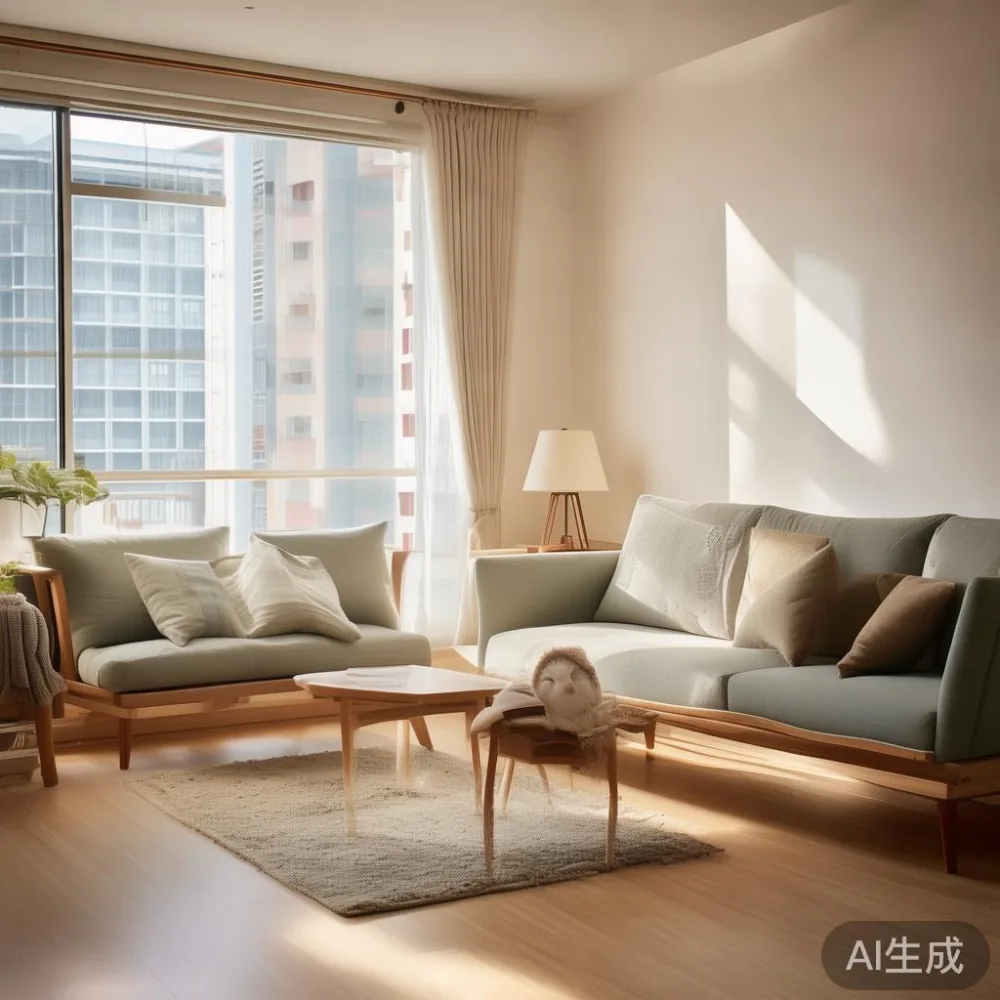
For Singapore homes, this restraint is a gift. A 1.4 m japandi dining table seats four comfortably in a 9 sqm HDB dining area; a 1.8 m version extends to seat six without dominating the room. Marble tables, when they enter the japandi vocabulary, are usually paired with light oak or ash bases rather than heavy veined slabs, which keeps the visual weight down. A solid wood nightstand at 45 cm wide by 40 cm deep slides next to any platform bed without crowding a 3 m HDB bedroom wall. At our own MIDHILL catalogue in Foshan, the japandi collection is built around these exact proportions, because they are the proportions that survive a 1.2 m corridor.
How long does delivery really take from a Foshan factory to a Singapore HDB?
The honest answer is 18 to 35 door-to-door days for made-to-order solid wood pieces, and 10 to 18 days for in-stock items. Here is how that breaks down. Production in Foshan for a custom japandi walnut bed frame or wardrobe takes 7 to 15 working days depending on queue position. Sea freight from Shenzhen or Guangzhou to Singapore runs 5 to 8 days. Singapore-side customs clearance plus the 9% GST registration adds 2 to 4 days. Last-mile delivery within Singapore is typically booked 2 to 5 days out, depending on whether your block has a loading bay booking system.
Last month I visited a 14-storey HDB in Bedok where a buyer had been quoted "10 days shipping" on a product page. The actual timeline was 26 days: 12 days production, 7 days sea freight, 4 days customs and GST paperwork, 3 days waiting for the condo's loading bay slot. None of those steps were the seller's fault individually, but the headline number on the website was misleading. A reliable seller should publish each leg separately, not just a single optimistic ETA.
Free shipping thresholds matter here. Most Singapore-friendly sellers, including MIDHILL, set the free-shipping line at roughly US$350 (about S$475 at current rates). Below that, expect S$80 to S$180 for a single-piece shipment, and S$220 to S$380 for a multi-piece order such as a bed frame plus two nightstands. Marble tables are heavier per cubic metre and usually sit at the top of that range.
What are the real dimensions and weights you are dealing with?
Sold-by-piece furniture looks manageable on a screen. The carton tells a different story. Here are the figures I measured on actual export-packed japandi pieces leaving Foshan in the last quarter:
Solid wood sofa (3-seater, japandi low-arm). Carton 215 cm × 95 cm × 65 cm. Net weight 62 kg, gross weight 78 kg. Two-person carry required. Will not fit through a standard 0.9 m lift door as a single box on its side, so it must be tilted diagonally and fed in narrow-end first.
Dining table (1.6 m, 4-6 seater, walnut top). Two cartons: tabletop 165 cm × 90 cm × 12 cm at 31 kg, and legs 85 cm × 30 cm × 30 cm at 14 kg. Total 45 kg. This is the easiest piece to deliver because the two-box split keeps every dimension under 1.7 m.
Bed frame (queen, platform, japandi). Three cartons: headboard 165 cm × 25 cm × 95 cm at 22 kg, side rails 210 cm × 25 cm × 18 cm at 18 kg, slats 160 cm × 60 cm × 8 cm at 12 kg. Total 52 kg across three manageable boxes. Slats usually arrive flat, which is what lets the package clear a 1.4 m lift.
Wardrobe (180 cm, 2-door, solid ash). Two cartons at 185 cm × 65 cm × 18 cm (41 kg) and 185 cm × 50 cm × 12 cm (28 kg). Total 69 kg. The taller carton is the one that decides whether you need a service lift. In a Punggol EC without a service lift, I have seen crews refuse the job at the door; in a Tampines HDB with a refurbished lift, the same wardrobe goes up in one trip.
Nightstand (2-drawer). Single carton 52 cm × 45 cm × 50 cm at 18 kg. Trivial by japandi standards, but worth noting that two nightstands plus a bed frame often qualify you for the free-shipping tier.
Marble table (coffee, round, 80 cm). One carton 88 cm × 88 cm × 45 cm at 42 kg. The marble is the heaviest part per square metre of any piece in the japandi line, and the one most likely to require an extra delivery fee if your order is below threshold.
Will the boxes actually fit into my HDB or condo lift?
This is the question that decides whether your online purchase becomes a joy or a chargeback. The maths is unforgiving. A standard HDB passenger lift has an internal cabin of roughly 1.4 m deep by 1.1 m wide by 2.3 m tall, with a door opening of 0.8 m to 0.9 m wide and 2.0 m tall. Any single carton longer than about 2.0 m cannot stand upright inside, so it must lie on its side or at an angle. Any carton whose diagonal exceeds the door height will not pass through at any orientation.
Run the diagonal check before you buy. For the bed frame headboard at 165 × 25 × 95 cm, the diagonal is 192 cm, which clears a 2.0 m door with 8 cm to spare. For the wardrobe side panel at 185 × 65 × 18 cm, the diagonal is 196 cm, which is tighter but workable. For a non-japandi piece such as a 2.2 m American light-luxury credenza, the diagonal is often 2.25 m, and that is the carton that ends up being hoisted up the outside of a block on a crane, costing S$400 to S$900 in Singapore.
Condos are usually easier because most have a service lift of 1.5 m to 2.0 m depth with a 1.0 m to 1.2 m door. If you live in a newer Punggol or Tengah development, ask the MCST for the service lift booking form; many buildings allow residents to book it for a S$50 refundable deposit. Older condos in districts 9 to 11 sometimes have lifts as narrow as 0.9 m doors, so the same diagonal rule applies.
How do I style a japandi armchair in a small apartment?
Place a japandi armchair at a 90-degree angle to your sofa, leave 70 cm to 80 cm of walking clearance behind it, and pair it with a 50 cm to 60 cm round side table in light ash or blackened steel so the silhouette stays low and quiet. Choose one bouclé or linen-upholstered armchair in oat or stone, add a single 40 cm × 40 cm linen cushion in charcoal, and resist the urge to add a second chair; in a small HDB living room, one japandi armchair reads as deliberate, two reads as crowded.
The styling logic comes straight from the materials. Japandi armchairs usually share the same 78 cm seat height and 42 cm to 46 cm arm height as the solid wood sofa in the same collection, which is what lets them sit beside the sofa without breaking the horizontal line. Keep the floor clear: a 160 cm × 230 cm wool or jute rug under the seating group is enough to anchor the room without crossing into the dining area. If your space is under 12 sqm, skip the marble side table and choose solid wood to keep the visual weight consistent; marble belongs in larger rooms where its 42 kg bulk becomes a feature rather than an obstacle.
Is light-luxury furniture actually worth shipping from China?
Yes, when the brand is transparent about materials and the price gap is real. French light-luxury and American light-luxury furniture both lean on marketing language ("designer", "artisan", "heritage"), but the construction under the upholstery is often the same CNC-cut ash, oak, or walnut you would get from a direct-from-Foshan workshop. The premium you pay is typically 80% to 200% over the landed factory-direct price, and a meaningful share of that premium covers showroom rent in Milan or New York rather than better joinery.
Post-modern light-luxury is the closest cousin to japandi on the market: same low profiles, same neutral palette, but with slightly bolder geometry and more brass or blackened steel. If your budget is tight, a Post-modern walnut budget under1000 SGD piece from a transparent maker will give you 90% of the look of a S$3,500 European equivalent, because the cost driver is the walnut veneer over engineered core, not the design itself. What you give up is the option to refinish the piece every decade; that is where direct makers with a lifetime refinishing policy pull ahead.
This is also where warranty terms become concrete. A 10-year structural warranty on joinery, dowels, and frame integrity is the standard a serious maker should meet, and it should be written into the invoice rather than buried in a FAQ. Lifetime refinishing on solid wood tops is rarer but exists; it means sanding and re-oiling a dining table after 8 to 12 years of use, which restores the piece rather than sending it to a landfill. Read the warranty clause for "act of purchaser" exclusions before you sign.
What does assembly actually involve once the boxes are inside?
Most japandi pieces from Foshan arrive 70% to 90% assembled. A solid wood sofa typically needs the four legs bolted on (10 to 15 minutes, an Allen key is included). A bed frame needs the side rails clicked into the headboard and the slats unrolled across the centre beam (20 to 30 minutes for one person, 15 minutes for two). A dining table needs the legs attached to the apron with four to six bolts per leg (15 to 20 minutes). A wardrobe is the outlier at 60 to 90 minutes, because the door hinges, handles, and drawer runners all need alignment.
Tools are almost always included: a single Allen key, a small wrench, and a hex driver for the cam locks. You will need your own Phillips screwdriver for about 20% of pieces, and a rubber mallet for tightening dowels. Set aside a 2 m × 2 m clear floor space near where the piece will live, lay down the cardboard from the carton to protect the floor, and photograph every step. If a part is missing, the photo log is the difference between a 7-day replacement and a 21-day dispute.
For buyers who do not want to assemble themselves, Singapore has a small but reliable network of freelance furniture assemblers charging S$40 to S$80 per piece for sofas, beds, and tables, and S$120 to S$200 for a full wardrobe. Platforms such as Carousell Services and neighbourhood Telegram groups will have available hands within 48 hours; ask whether they carry public liability insurance before they touch your marble table.
What is a realistic total landed cost in Singapore?
Run the numbers with me. A japandi solid wood sofa at US$1,280 (about S$1,735) from a Foshan maker: shipping S$180 to your door, GST 9% on the dutiable value S$156, optional assembly S$60. Landed total roughly S$2,131. A 1.6 m walnut dining table at US$920: shipping S$120, GST S$83, assembly S$40. Landed S$1,288. A queen bed frame at US$680: shipping S$90, GST S$61, assembly S$50. Landed S$946. A two-door wardrobe at US$1,050: shipping S$160, GST S$95, assembly S$150. Landed S$1,506. A marble coffee table at US$420: shipping S$80, GST S$38. Landed S$606.
Run those totals against a Singapore high-street equivalent and the gap is usually 30% to 55% in your favour, before you count the 14-day return window and the lifetime refinishing option. The 9% GST is unavoidable on anything above S$400 landed; below S$400, the parcel can clear under the GST relief threshold, which is why smaller nightstands sometimes arrive cheaper than the maths suggests.
What should I check before I click "buy"?
Five things, in this order. First, the carton dimensions and gross weight on the spec sheet, not the product dimensions; the carton is what has to fit in your lift. Second, the production lead time stated separately from the shipping time. Third, the warranty written into the proforma invoice, not just on the website. Fourth, the return policy in Singapore, including who pays return shipping if the piece arrives damaged. Fifth, the maker's presence on the ground: a Foshan workshop with verifiable export history, a Singapore-based account manager, or a local distributor.
MIDHILL, for example, has shipped from Foshan since 2008 to buyers in more than 15 countries, and the team will publish carton weights, lead times, and warranty terms in writing before you pay. That kind of paperwork is the difference between a furniture purchase that ages well and one that becomes a hallway obstruction. For japandi pieces in particular, where the appeal is the long-term patina of solid wood, the after-sale relationship matters more than the discount you saved on day one.
Quick checklist for buyers in Tampines, Bedok, and Punggol
Measure your lift door width and depth before ordering. Multiply the two largest carton dimensions and check the diagonal against your lift door height. Confirm your block allows furniture delivery through the passenger lift, or book the service lift with the MCST. Set aside S$150 to S$400 in your budget for GST, delivery, and optional assembly. Keep the cartons for 14 days in case of a return. Photograph the unboxing. And if a piece feels too cheap to be solid wood, it almost certainly is; real walnut, ash, and oak have a weight and a grain pattern that engineered cores cannot fake.
Buying japandi furniture online into a Singapore HDB is entirely workable once you treat the numbers as the spec sheet rather than the marketing. The look is worth the planning, and a solid wood dining table or bed frame bought this year will still be refinishing-eligible in 2034.