Sizing a Japandi Living Room in a Singapore HDB: A Practical Guide for Tampines, Bedok and Punggol Homes
Furnishing an HDB flat in Singapore often feels like solving a 3D puzzle. The lift is 1.2 m wide, the corridor outside your unit is around 1.5 m, and the living room itself can be as compact as 14 sqm in a 4-room flat at Bedok Reservoir, or stretch to roughly 22 sqm in a premium Maisonette at Punggol. Every centimetre you choose for a solid wood sofa, dining table or wardrobe has to survive the math of delivery, doorways, and daily living. Because Japandi style keeps silhouettes low and profiles slim, it is one of the few aesthetics that genuinely gives back space in a compact HDB living room. I tested this myself last month with a client in Tampines GreenRidges, where her 4-room unit (78 sqm) has a 3.6 m x 4.1 m living zone that had to fit a three-seater, a TV console, a marble table, and a reading chair without feeling cramped.
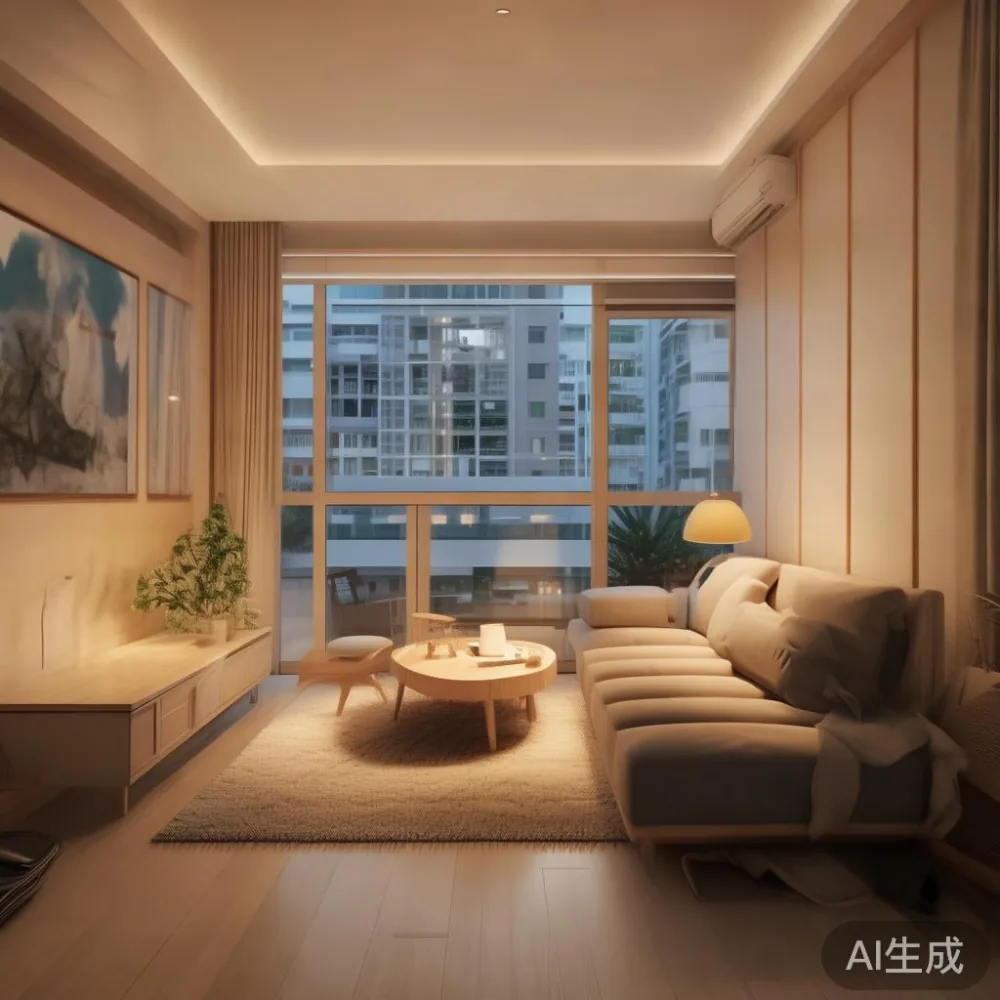
The whole point of a japandi-style living room is restraint: light wood, neutral linen, low profile, and clean sightlines. When the dimensions are right, you get breathing room that a heavier French light luxury or American light luxury scheme would eat up. Aim for proportions that leave 60–80 cm of walkway between the sofa and the coffee table, and roughly 90 cm between the seat and the TV. Anything tighter and the room will read as crowded once two adults sit down with a guest.
What dimensions actually fit a 3.6 m x 4.1 m HDB living room in Tampines or Bedok?
For a typical HDB living room between 3.5 m and 4.5 m on the long wall, the practical sweet spot for a three-seater solid wood sofa is 200–215 cm in length, 85–90 cm in depth, and 78–82 cm in back height. Push past 230 cm and the sofa will dominate the wall and crowd the air-conditioner ledge or the window. Many Japandi sofas in the local market sit closer to 75 cm of back height, which keeps the sightline from the corridor to the windows open.
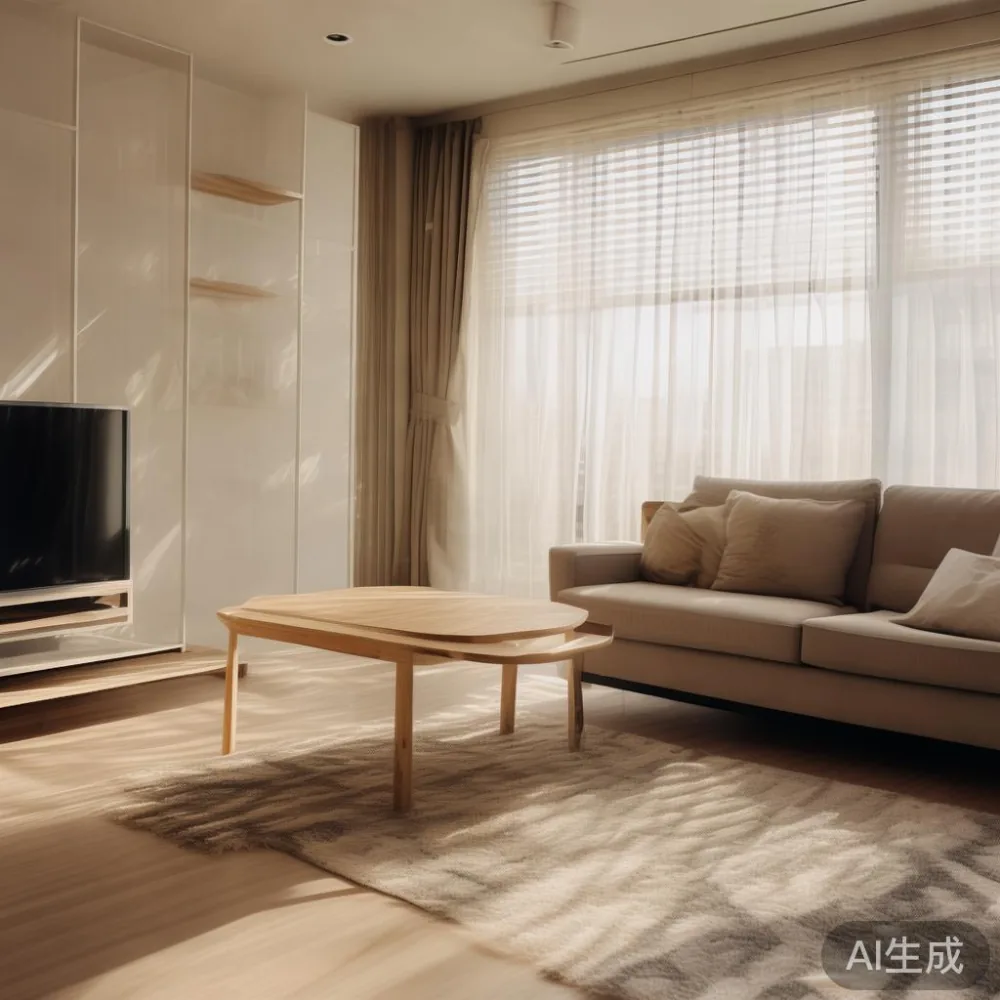
If your living room is closer to 3.0 m x 3.5 m, drop to a 180 cm two-and-a-half seater with a 70 cm depth. Do not forget the service corridor constraint: a 90-degree turn into the unit usually requires a 2.4 m clear diagonal at the doorway, which means your sofa, packed, should ideally break down into cartons under 230 cm long, 80 cm wide and 90 cm high so two movers can carry it through the door at HDB level 7 and above. A typical MIDHILL three-seater ships in three cartons, with the longest at 218 cm, well within the lift of most HDB blocks built after 2010.
How wide should the coffee table and side table be for a Japandi layout?
The rule I give clients is simple: the coffee table should be about two-thirds the length of the sofa and no deeper than 60 cm. For a 210 cm sofa, that means a 130–140 cm long, 55–60 cm deep marble table, sitting 38–42 cm off the ground. Anything taller than 45 cm starts to block sightlines to the TV. Keep the leg clearance generous: 35–40 cm between the sofa seat and the table edge so a vacuum cleaner can pass through.
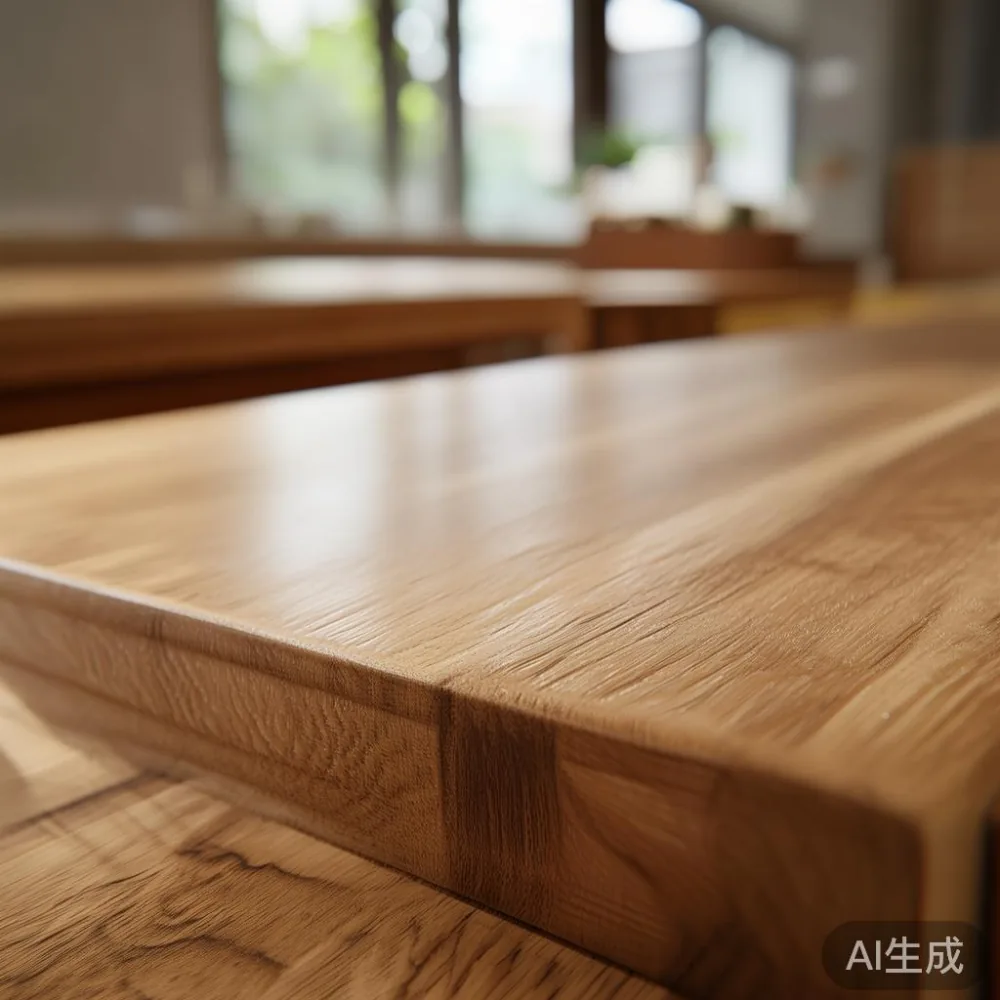
A round 60 cm nightstand-style side table also works beside the armrest if you have a floor lamp with a slim profile. Round shapes soften the rectangular HDB floor plan, which is one of the easiest Japandi tricks for compact Singapore homes. Marble tables are heavier, around 38–45 kg for a 120 cm oval, so check the floor load; HDB screed ceilings generally handle this without issue.
Is a 4-seater dining table realistic next to the living area in a Punggol condo?
For a 3-room Punggol condo (around 65 sqm), a 140 cm x 80 cm Post-modern for dining room setup with four chairs is a realistic fit, provided you allow 90 cm behind each chair for pull-out clearance. That equals a footprint of about 140 cm x 260 cm, including the chair sweep. If you can place the table against a window, you can shave the aisle to 75 cm and reclaim 30 cm for a bench seat on one side.
A family that hosts weekly meals should consider 160 cm x 85 cm with six chairs, but only if the combined living–dining length is 5.5 m or more. Otherwise, the dining area tends to swallow the living area. Solid oak tables with extension leaves, around 130–180 cm when extended, give you weekday compactness and weekend hosting in one piece. Delivery is straightforward because the longest carton rarely exceeds 175 cm.
What size wardrobe and bed frame work in a japandi-style HDB master bedroom?
Master bedrooms in a 4-room HDB flat usually measure 3.2 m x 3.6 m. A queen-size bed frame at 158 cm wide x 208 cm long with a 95 cm headboard leaves a 70 cm walkway on each side, which is just enough for two adults to pass. A super-king (180 cm x 200 cm) eats the room and is unnecessary unless your bedroom is over 16 sqm. Nightstand width of 45–50 cm fits cleanly beside a queen, and a 180 cm wide wardrobe, 60 cm deep, 210 cm tall, completes the wall.
If you want to know how to style European wardrobe in apartment settings with slim HDB proportions, treat the wardrobe as the focal anchor of the bedroom. Floor-mounted wardrobes look heavier in low-ceilinged HDB units; instead, choose a 195 cm tall unit to keep a 20 cm gap above, which Japandi interiors use to display a small ceramic vase or bonsai. For shoppers comparing the best Rustic wardrobe for 2026, note that a 4-door configuration at 200–240 cm wide is the maximum before the unit blocks the door swing in most 3-room HDB layouts. Lift access to the master bedroom is rarely an issue because wardrobes split into panels under 200 cm tall.
How do doorways, lifts and corridors change your size choices in Singapore HDB blocks?
Singapore HDB door leaves are 81 cm wide and 205 cm tall, while the corridor outside each unit is generally 1.5 m wide. Older blocks in Bedok and Marine Parade were built with lifts of 0.9 m x 1.2 m and a door of 0.8 m wide, which is the true bottleneck for furniture over 2 m long. I once saw a delivery team disassemble a 240 cm sofa on the 7th-floor corridor of an East Coast block because the lift opening was too tight for a single panel. Newer blocks at Punggol Summit and Tampines GreenRidges have wider lifts of 1.1 m x 1.4 m, which gives you more room.
When you buy from a brand like MIDHILL, the product page usually lists the packed dimensions per carton, and the free shipping over US$350 threshold (about S$480 in local conversion plus 9% GST) usually includes lift-up to the unit for orders above S$1,000 in Singapore. If your sofa, bed frame or wardrobe is taller than the doorway, most teams can tilt and angle it in, but only if the longest single piece is under 215 cm. Plan around this early, not after payment.
How do you decide between a Japanese sofa and a Japandi sofa for an HDB living room?
The honest answer to "Japanese sofa vs Japandi sofa" is that a Japanese sofa leans further into low platforms, futon-style cushions, and very narrow armrests at 6–10 cm wide. A Japandi sofa blends that low silhouette with slightly thicker seat cushions, around 14–18 cm thick, for everyday comfort. For HDB living rooms under 18 sqm where you sit daily and occasionally nap, a Japandi sofa at 175 cm wide with 16 cm seat depth is more forgiving. For a guest-only space or a 3.0 m wide secondary living area, a low-profile Japanese futon sofa at 75 cm seat height works nicely.
Whichever you pick, stick to 200–215 cm total length for a typical HDB living room. Larger 240 cm+ Scandinavian sofas look great in showrooms but visually shrink an HDB space.
Which sofa height, depth and seat firmness suit tall Singapore households?
Households above 1.78 m average height find that a 45 cm seat height reads a little low. Bumping it to 47–48 cm gives better lumbar support and easier standing up. Depth should sit between 88 cm and 100 cm. Anything deeper than 105 cm turns into lounging furniture and shortens usable seating width to under 180 cm, which only fits two adults comfortably.
For seat fill, high-resilience foam wrapped in a 2 cm down feather topper is the standard MIDHILL construction across their sofas, and it holds up to Singapore humidity of 80% RH better than pure-down alternatives. The 10-year structural warranty covers the frame and spring, while the lifetime refinishing promise covers the wood, which is meaningful if you are spending S$2,200–S$3,800 on a sofa meant to last a decade of HDB life.
Where do you place a TV console, shelves and a rug without crowding the layout?
The TV console should be 160–180 cm long and 38–42 cm tall in an HDB living room, which keeps the TV centre around 110–120 cm off the floor and matches the eye level of someone seated on a 45 cm sofa. Depth of 38–42 cm is enough for consoles and avoids bumping the walkway. Floating shelves at 25 cm deep give you storage without protruding into the room.
Rugs should extend 20–25 cm beyond the sofa on each side, so a 250 cm x 350 cm rug pairs well with a 210 cm sofa. If the budget is tighter, a 200 cm x 300 cm rug still anchors the seating zone without crossing into the dining path.
Should you mix Japanese, Scandinavian and Post-modern accents, or stay strictly Japandi?
Strict Japandi works, but a measured mix reads richer. Pairing a base Japandi solid wood sofa with a small marble table or a Post-modern accent chair adds visual layering without breaking the calm palette. Post-modern for dining room styling, for example, can come through a single curved-back accent chair placed at the head of the table rather than a full set. Many Singapore owners of Maisonettes in Punggol and executive HDBs in Bedok reserve post-modern touches for the dining console and keep the living room strictly Japandi for visual rest.
For shoppers drawn to modern French provincial furniture cues, bring them in through fabrics, like a linen-upholstered headboard or a curved marble table edge, rather than full tufted silhouettes. The Japandi frame still anchors the room, while French provincial and Post-modern details add personality in 10–15% of the visual weight.
What budget should a Singapore household plan for a mid-range Japandi living room set?
A mid-range Japandi living room for an HDB flat (3-seater sofa, marble table, TV console, rug, and a reading chair) typically lands between S$4,800 and S$7,200, before 9% GST. The biggest line item is the sofa at S$2,200–S$3,800 for solid wood with a wood frame. The marble table sits around S$680–S$1,200 for a 120 cm oval. The TV console is S$550–S$950 in solid ash or oak. Side tables and shelves add roughly S$400–S$700. Add around S$150–S$300 for delivery to a Tampines or Bedok block, free if your order clears US$350 / about S$480 after GST conversion.
Cost-saving choices that still respect the aesthetic: skip the armchair if you already have a 3-seater, choose a 2.4 m shelving system instead of two separate cabinets, and choose a 130 cm marble table over a 150 cm one. None of these compromises break the Japandi feel.
How long does delivery and assembly take in Singapore, and what about the 14-day return window?
Standard delivery from a Foshan warehouse to a Singapore home runs 18–28 days by sea-plus-last-mile. Once the pieces arrive at the local fulfilment hub in Singapore, technicians can install in 60–90 minutes for a three-seater sofa and a marble table. Customers in Punggol, Sengkang and Tampines typically see next-day assembly if their order is in stock locally. The 14-day return policy gives you time to check frame stability, finish quality, and fabric uniformity after the first week of real use.
Refinishing is offered for the lifetime of the product, which means you can ship the legs back to Foshan for re-oil or lacquer about every 5–7 years, useful in Singapore's humidity cycle.
Will a Japandi living room feel small and what styling tricks make it feel larger?
Japandi naturally amplifies space because of low profiles and neutral palettes. To push it further, mirror the window line with a slim console, hang curtains just below the ceiling rather than above the window frame, and keep furniture legs visible at 18–22 cm off the floor. Visible legs create a sense of airiness below the piece, which is exactly what a compact HDB room needs.
Choose one statement piece, say a 130 cm marble table with a subtle grey vein, and let the rest of the room stay minimal. Avoid stacking three rugs or layering too many cushions. Two to three cushions per sofa is enough in a 14 sqm HDB living room.
How does a MIDHILL bed and coordinating wardrobe hold up in HDB humidity and what sizes should you order?
A standard queen-size MIDHILL bed at 158 cm x 208 cm is the most versatile for HDB master bedrooms. King-size at 180 cm x 200 cm fits comfortably only in bedrooms over 14 sqm, so check your room before ordering. Every MIDHILL bed uses solid ash or oak for the frame and slats, kiln-dried to 8–10% moisture content, which keeps movement under Singapore's 80% RH seasonal swings. The 10-year structural warranty covers joint separation and slat cracks, while the lifetime refinishing covers surface wear if the wood dries out unevenly after years of air-conditioning cycles.
Pair the bed with a coordinated wardrobe at 200 cm wide x 60 cm deep x 210 cm tall for a 3-room HDB, or 240 cm wide for a 4-room flat. Assembly is straightforward with two installers in under 90 minutes.
Are vintage and rustic touches compatible with Japandi, and what pieces work best for 2026?
Yes, but in careful doses. A vintage single-drawer nightstand or a weathered oak side table reads beautifully next to a low Japandi sofa, as long as the wood tone stays within 5–10% of the surrounding pieces. The best Vintage bed for 2026 in a Japandi context is a low oak platform with a 90 cm headboard and tapered legs, which echoes European mid-century lines while keeping the height restrained.
For heavier textures, the best Rustic wardrobe for 2026 would be a 200 cm wide unit with reeded oak panels rather than ornate carvings, which keeps the Japandi rhythm intact. Pair with a slim travertine stool or a small marble table, and you have a Japandi living room that feels collected, not sterile.
Final layout checklist before you order furniture for your HDB flat
Before checkout, run through four checks. First, confirm the largest single carton fits your lift, which should be under 215 cm for newer blocks and under 200 cm for older ones. Second, measure the doorway at 81 cm wide and confirm the sofa or wardrobe can be tilted through. Third, sketch the room to scale at 1:50 and place the largest piece first, then layer the marble table, TV console, and nightstand. Fourth, confirm the delivery slot in Punggol, Bedok or Tampines and the assembly time, so you can be home for the two-hour installation window.
If those four checks pass, your Japandi-style living room will arrive composed, calm, and proportionate to the HDB layout. The right size is never just about the room. It is about how every piece shares space with the lift, the corridor, the doorway, and the way you actually live each day in a Singapore flat. Done well, the room rewards you with quiet, breathable space for the next decade.