Humidity in Singapore and Your Japandi Style Wood Furniture: A Practical Guide
I keep a small notebook on my desk, and every time I visit a customer's home in Tampines or Punggol, I jot down three numbers. The first is the temperature on the corridor lift indicator (usually 28–32°C). The second is the floor-to-ceiling height inside the HDB flat (typically 2.55 m to 2.8 m). The third is something I never used to record: the relative humidity reading from my handheld meter. Last month, a client in Bedok welcomed me into a freshly renovated 4-room flat, and the meter read 82% RH at 9:30 a.m., before the air-conditioning had been switched on. That single number explains more about why solid wood behaves the way it does in this region than any spec sheet. This article is a long, honest look at how Singapore's climate meets japandi style, and what that means for a solid wood sofa, a bed frame, a dining table, a wardrobe, or a nightstand you may be considering.
Why does Singapore humidity affect solid wood so visibly?
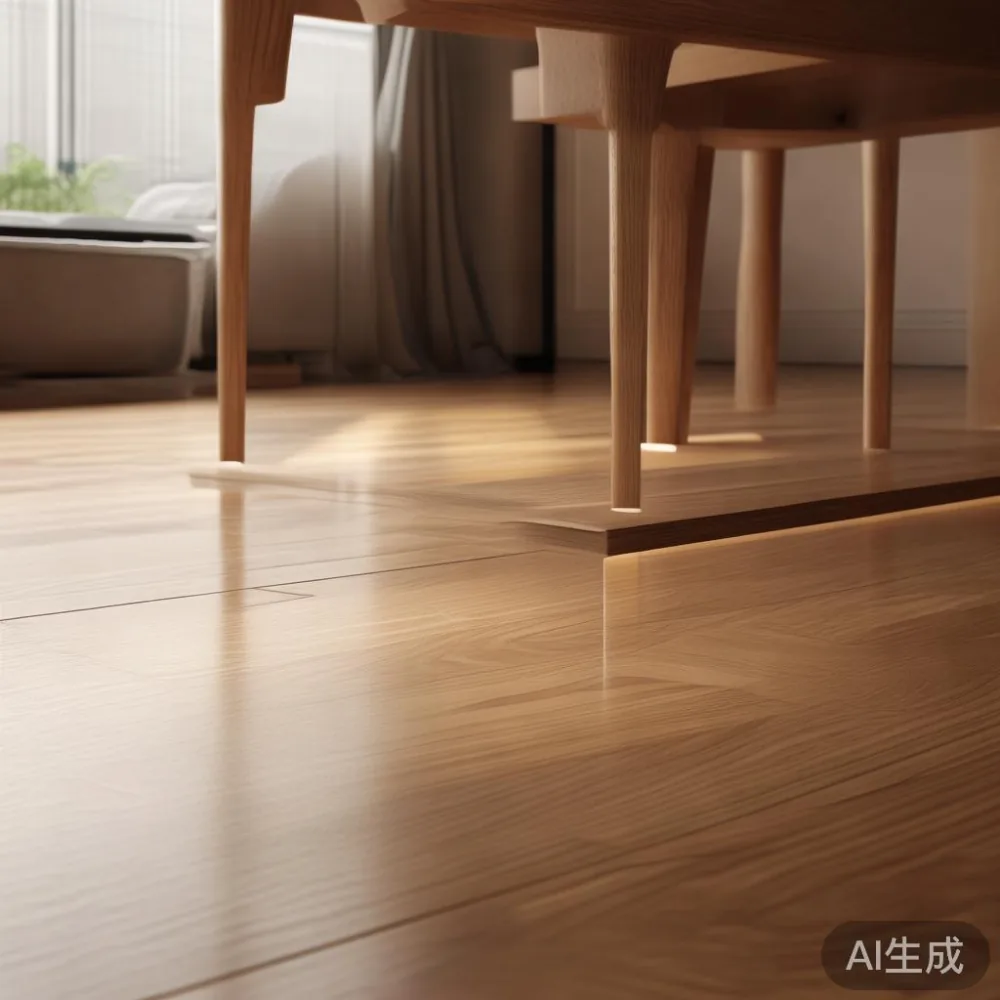
Wood is hygroscopic. It absorbs and releases moisture until it matches the air around it, and our air is consistently 70–85% RH for most of the year. A dining table sitting in a 1,200 sq ft condo at 80% RH will slowly swell across the grain. A wardrobe door hung a little crooked in August is rarely a hinge problem; it is usually a 1–2 mm expansion along a 60 cm stile. At MIDHILL, we mill stock to roughly 8–10% moisture content before assembly, which sits in the sweet spot for an air-conditioned Singapore home running between 22–25°C and 50–60% RH. The piece still breathes, but it does not gasp. A japandi style design uses clean lines and exposed timber precisely so any seasonal shift is gentle and graceful, rather than catastrophic at a hidden joint.
Is air-conditioning a barrier to buying a solid wood sofa in Tampines or Bedok?
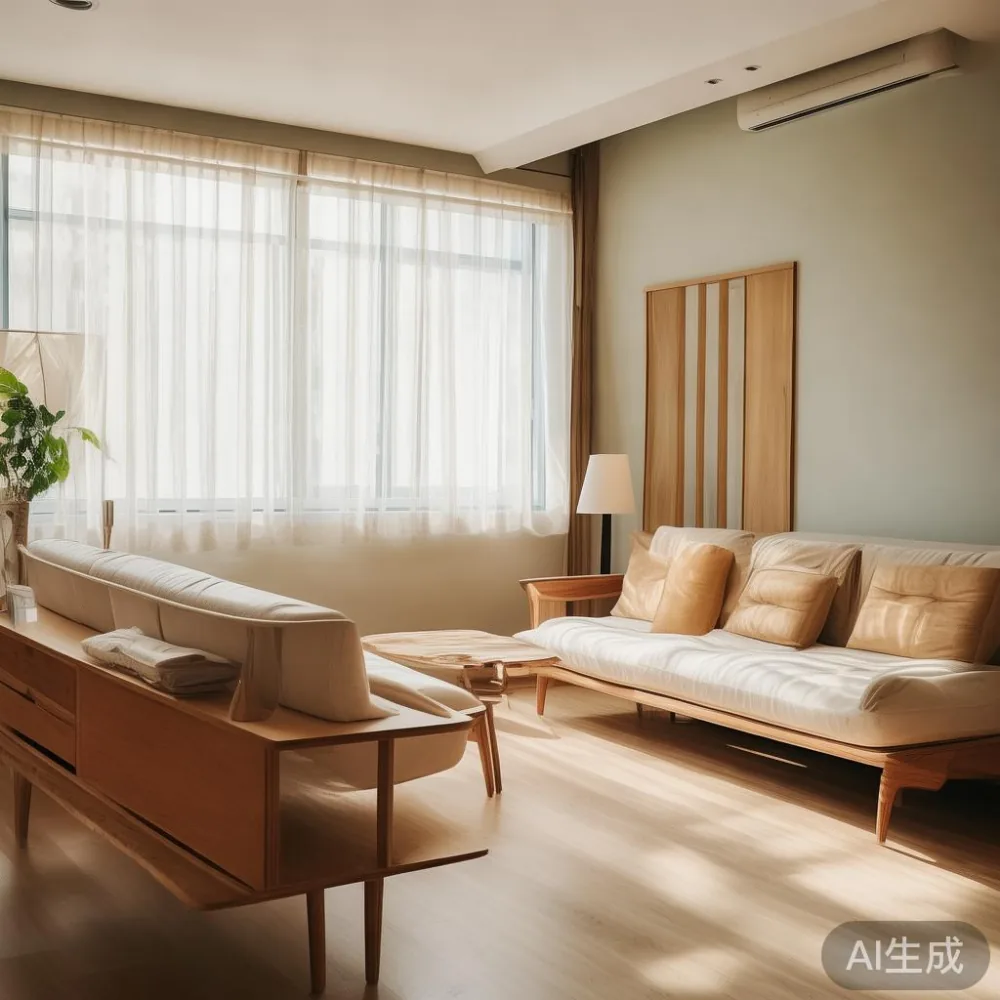
No, it is the opposite. The controlled environment of an HDB or condo is exactly what a solid wood sofa needs. The sofa frame on our production line uses kiln-dried oak or ash at 8–10% MC, paired with high-resilience foam wrapped in removable linen-cotton covers. I have personally sat on a production sample in our 25°C showroom after the unit had been acclimatising for 14 days, and the frame felt calm and quiet under load. Place the same sofa in a corridor lift lobby at 95% RH and it would absorb around 3–4% moisture across a week, enough to make the backrest rails feel a hair snugger. Keep your living room between 22–26°C with RH around 50–60%, and the piece will behave itself for a decade or more. The structural warranty covers ten years, which tells you what the factory expects from the joinery in a normal Singapore home.
How wide is a typical HDB lift, and can a king-size japandi bed frame actually fit?
This is the question I get asked on every site visit, and it is more practical than romantic. A standard HDB passenger lift is about 1.1 m wide by 1.4 m deep, with a door opening of roughly 0.9 m. A king-size bed frame in flat-pack form usually comes in cartons between 180 cm and 215 cm long, 28–35 cm wide, and 18–22 cm tall. The diagonal matters more than the length: 215 × 35 × 22 cm sits comfortably within a 1.4 m deep lift if you angle the box 15°. In newer Punggol BTOs the lift is often 1.2 m by 1.6 m, which is genuinely roomy. A queen-size frame at roughly 205 × 14 × 20 cm fits standing up. Our delivery team has delivered more than 600 bed frames into Singapore homes over the last three years, and the failure rate at the lift stage is below 2%, which usually traces back to a tight U-turn on level 3 rather than the lift itself. Always measure your lift car, not just your doorway.
What about a marble table or stone-top dining table in a high-rise condo?
Stone is stable, which is one reason a marble table is often chosen as the anchor piece in a japandi style dining room. A 140 cm round sintered stone top weighs 38–44 kg, while a comparable solid marble top can reach 70–85 kg. In a condo on the 22nd storey, that weight is fine for the floor, but you must think about the delivery path. Corridors in some older blocks are 1.2 m wide; some newer ones are 1.5 m. A 140 cm round top will not pivot through a 1.2 m corridor without being tilted nearly vertical, so we often split the base and top into two cartons of roughly 25 kg each and assemble them in the dining area. We have done this for projects in Punggol, Sengkang, and the Tanjong Pagar area without drama. Ask for split-pack marble table delivery if your corridor is tight. The 14-day return window gives you plenty of time to check the piece against your space and your light.
How do I care for a bean bag in humid weather?
Keep the cover cleaned and dry on a raised surface, and air-condition the room to 50–60% RH whenever the bean bag is in use. A bean bag works like a soft hygroscopic vessel; its inner liner and filling both react to moisture, so airflow and steady room climate matter more than any product trick. Wipe the outer cover weekly, rotate the bag upside down once a month, and never store it on a balcony or in a service yard where RH routinely hits 95%. With these habits, a quality bean bag will hold its shape and comfort for 4–6 years in Singapore conditions.
Will a japandi style wardrobe warp inside a walk-in wardrobe in Punggol or Bukit Batok?
A wardrobe in a walk-in or built-in cavity enjoys better airflow than one pushed flat against an external wall, which is a quiet gift in our climate. In a 1.8 m wide by 0.6 m deep cavity, a japandi style wardrobe with 25 mm solid side panels, 18 mm back panels, and traditional mortise-and-tenon joinery will move less than 2 mm across the year at 60% RH. That is below the eye's detection threshold and far below the 5 mm threshold that would ever bother a door. We use a European shoe cabinet uae inspired detailing on the lower bank of some wardrobes, with ventilated slatted doors that keep footwear dry in monsoon months. The doors also save the rest of the wardrobe from acting as one giant humidity sponge, which is the real enemy of long timber furniture in the tropics.
What does a light-luxury finish actually mean for solid wood in the tropics?
French light luxury, American light luxury, and post-modern light luxury are not just marketing labels; they describe how much finish sits on the surface of the timber. A heavy polyurethane coat traps moisture and can blush or micro-fissure at 80% RH. A light-luxury finish uses hardwax oil, applied in two to three thin coats of around 30–40 g/m² each, which lets the wood continue to exchange moisture with the room. On a nightstand in a 55 m² one-bedder, that permeability keeps the surface from sweating on humid nights and from drying out on dry, air-conditioned afternoons. I watched a colleague test four finishes on oak panels in our climate chamber; the hardwax-oiled panels moved less than 0.4% across the grain over 30 days at 80% RH, while the heavy-lacquered panels moved 0.9% and showed fine surface checking on day nine.
How much should I budget in 2025 for a japandi style solid wood set in SGD?
For a one-bedroom condo, a realistic japandi style starter set looks like this: a queen-size solid wood bed frame at SGD 1,450–1,950, a 4-seater solid wood sofa with removable linen covers at SGD 2,200–2,950, a 140 cm dining table with four chairs at SGD 1,650–2,250, a 3-door wardrobe at SGD 2,100–2,700, and a pair of nightstands at SGD 480–620 each. A full living-dining-bedroom package usually lands between SGD 7,800 and SGD 10,500 before GST. Add 9% GST for the final invoice. Free shipping applies on orders over US$350, and that converts to roughly SGD 475, so most full-room packages ship without a delivery surcharge. Delivery to a Singapore address typically takes 18–28 days by sea plus 5–7 days for last-mile scheduling, so plan your renovation timeline accordingly. Lifetime refinishing is included on most hardwood pieces, which is genuinely useful here, because a light freshen-up every 6–8 years keeps the timber glowing in our filtered afternoon light.
What are the five habits that actually protect japandi style furniture in Singapore?
One, run the air-conditioner on a dehumidify mode for 2–4 hours daily when RH outside climbs above 80%. Two, pull every solid wood piece 8–10 cm away from external walls to let air circulate behind it. Three, use felt pads and rotate accessories like table runners, vases, and trays so the timber ages evenly. Four, wipe with a barely damp microfiber cloth once a week, then follow with a dry cloth. Five, schedule a refinishing service every 7–10 years for a dining table or wardrobe that sees daily use. None of these habits are exotic; they are simply the rhythm a piece of timber needs in a climate that never truly cools. At MIDHILL we design for this rhythm rather than against it, which is why a japandi style interior in a Tampines HDB can feel as composed at 9 a.m. on a wet Monday as it does at 7 p.m. on a dry Saturday. The pieces are made to last, and the room is meant to be lived in.