How to Style a Small HDB or Condo with Japandi Style Without Making It Feel Crowded
I live in a 689 sqft two-bedder in Punggol, and last month I helped my colleague Mei Ling re-style her 452 sqft one-bedder in Bedok after she inherited a bulky rosewood dining set from her parents. Within ten days we cleared 2.4 cubic metres of clutter, returned two pieces that did not fit the 0.9 m wide corridor outside her unit, and rebuilt her living room around a 160 cm solid wood sofa in light oak. The whole process cost her S$1,840 including a new linen slipcover. That is the budget reality of small-space Japandi style in Singapore, and the rest of this article is the playbook.
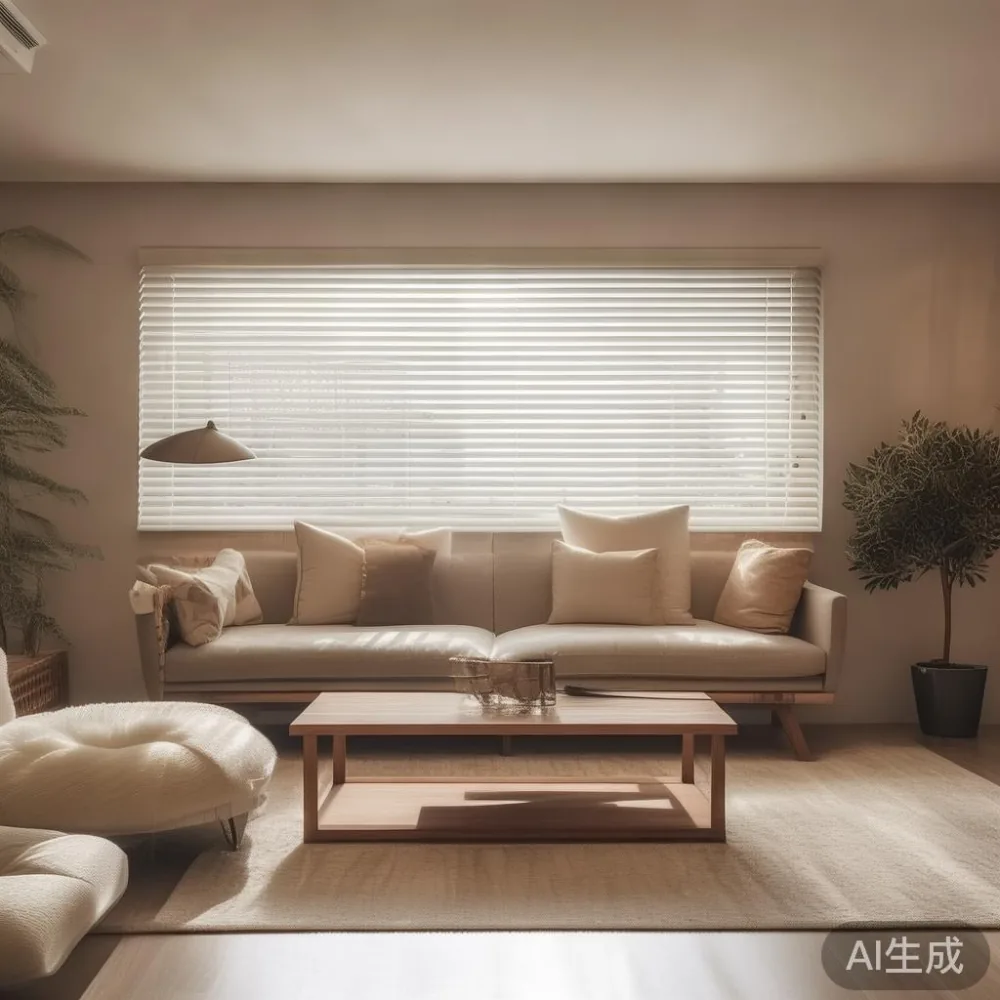
Japandi style, the calm union of Japanese restraint and Scandinavian warmth, has become the default design vocabulary for new HDB flats in Tampines, Punggol and Sengkang, where rooms often measure 2.9 m x 3.2 m and every centimetre counts. Done right, the look makes a 452 sqft flat feel like a 600 sqft condo. Done badly, it becomes a pile of pale wood on top of a pile of pale wood, and your lift landing becomes a showroom for things you cannot fit through the 0.9 m door of a resale HDB. Below is what actually works, measured in centimetres, kilograms and weeks.
Measure First, Buy Second: The 90 Centimetre Rule
Before anything else, pull out a tape measure. The single most common mistake I see in Tampines four-room flats is owners buying a 220 cm dining table for a 2.4 m x 2.8 m dining corner. The walkway shrinks below 70 cm, you bump your hip on the chair every time you stand up, and the room feels 20 percent smaller than it is. For a small Japandi-style flat, the minimum comfortable circulation gap between a piece of furniture and the next wall or door is 60 cm, and the comfortable gap is 90 cm. Anything tighter reads as crowded.
Write down three numbers before you shop: ceiling height (usually 2.8 m in newer BTOs, 2.6 m in older resale blocks), the width of your lift car (typically 1.2 m deep x 1.6 m wide in HDB blocks, narrower in some condo service lifts), and the corridor turning radius outside your unit door. A solid wood dining table longer than 180 cm rarely makes it up a Punggol HDB stairwell if the lift is being serviced, and that is a S$120 mistake you do not want.
Build the Layered Backdrop of Japandi Style: Three Materials, No More
Japandi style is a study in restraint, and the easiest way to keep a small room calm is to limit materials. Pick three: light oak or ash solid wood, one woven texture (linen, jute, paper-loom), and one matte ceramic or stone accent. Anything beyond those three starts to feel busy and the room visually contracts. In my own Punggol flat, I run whitewashed oak across the bed frame, the 140 cm dining table and the floor, plus a single beige linen curtain panel and a 30 cm ceramic vase. That is the whole palette.
The reason this matters in a 452 sqft flat is contrast: the more finishes you introduce, the more edges the eye has to process, and the smaller the room reads. A japandi-style bedroom with four wood tones, three metal finishes and a marble slab nightstand will feel like a furniture showroom, not a retreat. Stick to two wood tones at most. If you want a stone element, use a 60 cm marble table as a coffee table, not as a dining top, because marble tops above 120 cm become heavy (typically 38-45 kg) and hard to move when you need to wax the floor.
How do I furnish a 452 sqft HDB flat in Japandi style for under S$2,000?
This is the exact question Mei Ling asked me, and the breakdown that worked for her Bedok one-bedder in September 2024. The core japandi-style shopping list was:
1. A 160 cm solid wood sofa in light ash, three-seater, weight 42 kg. Roughly S$720. 2. A 120 cm x 60 cm solid wood dining table for two, height 75 cm. Roughly S$460. 3. Two solid wood dining chairs with paper-loom backs, 4.6 kg each. Roughly S$180 for the pair. 4. A queen-size solid wood bed frame, 158 cm x 208 cm. Roughly S$540. 6. One solid wood nightstand, 45 cm wide x 40 cm deep. Roughly S$160. Total furniture: S$2,060 before GST. Mei Ling brought it down to S$1,840 by skipping a separate wardrobe (she used her existing built-in) and adding a single linen slipcover from a Tampines tailor for S$45. Delivery was free because her order crossed the S$350 threshold, and the team carried everything up to the 9th floor on a Saturday morning in under 90 minutes.
For readers who want a more compact dining corner, a 90 cm round solid wood table seats two at 60 cm per diner and frees up a 1.2 m turning circle in a 2 sqft nook. For readers who entertain, a 140 cm extendable table seats four at 70 cm each and stores at 100 cm when not in use. Pick the smallest table your daily life needs, not the largest one your imagination paints.
Where Can I Find Japandi-Style Solid Wood Furniture That Actually Fits a Singapore Lift?
Not every piece that looks good on a 4K screen will physically reach your Tampines flat. The bottleneck is almost never the lift car width. It is the corridor turning radius at your floor, which in many HDB blocks built before 2010 is under 2.4 m. A 220 cm wardrobe on its side will not clear a 90-degree corner. Measure the diagonal of every large piece before you confirm delivery.
Look for suppliers that publish exact outer dimensions, internal drawer depth and net weight in the product spec sheet, and that ship with two-man delivery inside the home. MIDHILL, the Foshan solid wood maker that exports to more than fifteen markets, publishes those numbers for every bed frame, dining table and wardrobe on its Singapore catalogue, and its team will confirm corridor access by WhatsApp before they load the truck. I have watched them refuse a Bedok delivery last month because the lift was under maintenance, then reroute the same 180 cm sideboard through a service staircase at no extra charge. That kind of pre-check is rare in this category and saves you a S$80 redelivery fee.
One quick rule: if a piece is taller than 2 m or longer than 1.8 m, ask the supplier to confirm the packed box dimensions before payment. Most HDB passenger lifts allow a box up to 2.1 m tall if stood on end, but a 2.4 m wardrobe door panel cannot travel vertically in a lift car that is only 2.3 m internal height. This is the kind of detail that separates a smooth Saturday delivery from a Sunday spent returning a S$900 piece.
Is the Sofa Really the Centrepiece, or Can a Marble Table Be?
In a 452 sqft flat, the sofa does 70 percent of the visual work in the living zone, so it deserves the biggest line in your budget. A japandi-style solid wood sofa in light ash with removable linen covers will outlast three fast-fashion couches and age into a softer beige after about 18 months of weekly sun in a west-facing Tampines unit. The frame is the part that fails in cheap sofas, so spend on kiln-dried ash or oak and save on the foam density if you need to.
If your living room is more of a pass-through to the kitchen, consider skipping the traditional three-seater and using a 140 cm two-seater solid wood sofa plus a single 60 cm round marble table as a coffee surface. A marble table in this size range weighs 9-12 kg, is easy to wipe, and gives you the stone accent without the heaviness of a 90 kg slab. Pair the marble with a paper-loom pendant above it at 150 cm drop height, and you have the Japandi-style focal point without a single wall-mounted shelf.
For shoppers comparing different design languages, note that modern French provincial furniture tends to run heavier in silhouette and darker in wood tone, which can read as formal in a small HDB. American light luxury and post-modern light luxury both push softer curves and lighter finishes, but the japandi-style vocabulary is still the lightest visually, because the legs of a Japandi-style piece are usually 18-25 cm off the floor and the frame is open rather than upholstered to the ground. That visible floor space underneath is what makes a small room feel larger.
Can I Mix Japandi Style with Other Design Languages Without It Crumbling?
Yes, but only one accent per room, and only on a piece smaller than 60 cm. The trick is to keep the Japandi-style base calm, then add one moment of contrast. In my own living room, the base is ash solid wood and beige linen, and the single accent is a 45 cm dark walnut jewellery box from a Taobao light-loom maker that I picked up in Chinatown for S$38. That dark walnut is the entire contrast budget for the room. Two accents and the eye starts to bounce.
The same logic applies to dining. If you already have a japandi-style solid wood dining table in light oak, you can layer in a single nordic light luxury sofa in the living area if the silhouette matches: low arms, exposed wood frame, removable covers. What you cannot do is pair a Scandinavian-pale dining table with a heavy carved mahogany China-cabinet-style display unit and still call the look Japandi-style. The visual weight breaks the calm. For readers browsing for sale Scandinavian furniture, look for pieces labelled with the exact dimensions and net weight, not the aesthetic vibe, because Scandinavian and Japandi-style share the pale-wood look but differ on joinery detail and edge softness.
One useful reference: many buyers in the light-luxury category now ask for sale European light luxury furniture alongside japandi-style pieces, but the two languages disagree on leg height and metal accents. European light luxury often runs to brass-tipped legs and darker walnut, which fights the Japandi-style ash floor visually. Pick one language per room. For the dining room specifically, Modern light luxury for dining room usually means a marble-top table plus velvet chairs, which is a different temperature from japandi-style ash. If you want the dining room to feel Japandi-style, keep the marble out and use a 140 cm solid wood top with paper-loom chairs instead.
What Should I Skip to Keep the Room Calm?
Skip wall-to-wall built-ins in a flat under 600 sqft. They cost S$3,500-S$6,800 for a 2.4 m run, they lock you into one layout for ten years, and they visually shrink the room by 8-12 percent because the wall stops breathing. A freestanding 120 cm solid wood wardrobe on 18 cm legs, by contrast, leaves 18 cm of visible floor under it and reads as lighter. The same goes for floor lamps with a 30 cm drum shade rather than a built-in ceiling fixture cluster.
Skip dark wood stains above 60 percent coverage. Anything darker than walnut reads as heavy in a small room. Stick to natural ash, white oak, or a 5 percent grey-washed finish. Skip high-gloss lacquers; they bounce light too sharply and show every fingerprint in a flat where the air-con runs daily. Skip glass-top dining tables in a 452 sqft flat, because the reflections double every object in the room and the visual noise climbs fast.
Skip a TV console longer than 120 cm in a 452 sqft flat. Anything longer pushes the sofa 15-20 cm closer to the opposite wall, and that 15-20 cm is the difference between a room that breathes and a room that feels like a corridor. If you need storage, go vertical: a 35 cm-wide x 180 cm-tall solid wood shelving unit holds more than a 150 cm console and uses 70 percent less floor space.
How Long Does Delivery Take, and What About the 14-Day Returns Window?
For Singapore HDB and condo addresses, sea freight from a Foshan factory typically takes 12-18 days door-to-door, plus 2-3 days for the local delivery team to schedule a lift inspection and a corridor walk-through. Total realistic order from purchase to your living room floor is 14-21 days. Ask the supplier for the exact shipping schedule before you pay; a supplier who promises 7-day delivery from Foshan is either overstocking locally or fudging the dates, and that tends to mean the piece is not actually solid wood.
Returns matter even more for small flats. MIDHILL, for example, runs a 14-day return window on pieces that arrive damaged or that physically do not fit the lift or corridor dimensions you declared at order time, and they will replace at no delivery fee. The 10-year structural warranty covers frame cracks and joint failures, and lifetime refinishing covers the surface scratches that happen when you vacuum around a solid wood bed frame for ten years. None of this matters if you do not keep the original packaging for the first 14 days, so keep the foam corners and the wooden crate until you have lived with the piece for at least two weeks.
Putting It All Together for a 452-689 sqft Flat
For a one-bedder around 452 sqft, the layout I would recommend is a 160 cm solid wood sofa against the longer wall, a 60 cm marble table in front of it, a 140 cm extendable dining table by the kitchen, and a queen-size solid wood bed frame with one 45 cm nightstand. Total furniture weight roughly 180 kg spread across six pieces, all of which will clear a standard HDB lift and a 0.9 m corridor without disassembly. For a two-bedder around 689 sqft like mine, add a second 45 cm nightstand, a 90 cm desk in the study nook, and a 120 cm solid wood wardrobe in the spare room, taking the total to roughly 280 kg across nine pieces.
Run the numbers yourself before you pay. Measure ceiling height, lift depth, corridor width and the diagonal of your front door. Pick one Japandi-style accent per room. Choose the smallest dining table your daily life needs, and choose a solid wood sofa with a frame warranty that runs longer than your tenancy. Keep the original boxes for 14 days. And remember that japandi-style is not a furniture list, it is a restraint discipline, and the room gets larger every time you remove something rather than add something. If a piece does not earn its 60 cm of floor space, it has to go.