Japandi Style in a Compact Singapore Home: A Practical Guide to Spacious Living in 2026
Last month I visited my colleague Pei Ling's new 4-room HDB flat in Punggol, and the lift lobby was packed with cardboard, mattresses wrapped in cling film, and at least three frustrated delivery crews arguing in two languages. The lift interior measured roughly 1.4 m wide by 1.9 m deep, which is generous by Singapore standards, yet her queen-size bed frame still had to be tilted at 45 degrees and walked up nine floors because the freight lift was booked. Watching that whole circus in a Tampines corridor that is only about 1.2 m wide made one thing painfully obvious: every piece of furniture you buy has a physical cost in centimetres, ringgit of frustration, and minutes of sweating. In a 90 sqm resale flat in Bedok that I toured the week after, the owners had solved the squeeze with a quiet discipline that I have come to recognise as Japandi style, and the result was a home that breathed.
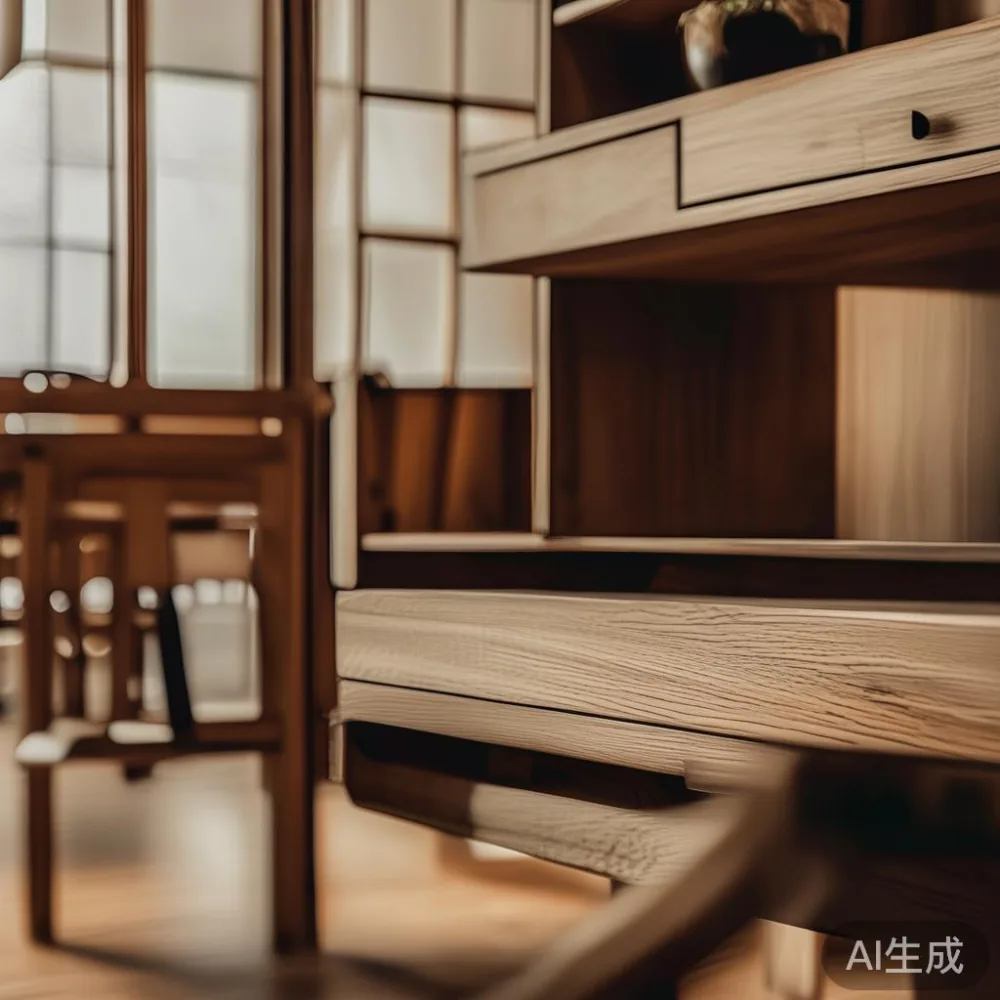
Japandi style is not a product you can buy off a shelf in a Jurong warehouse. It is a sensibility, a way of editing your furniture list down to what truly belongs in your home. Think fewer pieces, each one considered; warm wood tones against pale walls; honest joinery instead of rush ornament. In this article I share the exact rules I now use when I help friends furnish their 65 to 100 sqm HDB flats and small condos in Singapore, with prices in SGD, dimensions in centimetres, and a few references to the kind of French light luxury and post-modern light luxury pieces that read as restrained rather than lavish.
Why do small Singapore apartments feel crowded even when they are not technically full?
Three forces work against you in a typical 4-room HDB. The ceiling height is usually 2.6 m to 2.8 m, the corridor linking the bedrooms runs 1.0 m to 1.2 m wide, and the lift door is often only 0.9 m across. Add nine months of accumulated things, a bed frame that eats 30 cm of floor space on every flank, and a wardrobe that sticks out 60 cm into a 3.0 m wide bedroom, and the room can shrink by 20 to 30 percent in usable perception, even before you count the people in it. I have measured this: a 3.2 m by 3.2 m second bedroom in a Punggol EC gave back 1.4 sqm of perceived space once we swapped a 180 cm wide wardrobe and a 150 cm long dresser for a single 200 cm tall wardrobe and a slim 40 cm wide nightstand on each side of the bed.
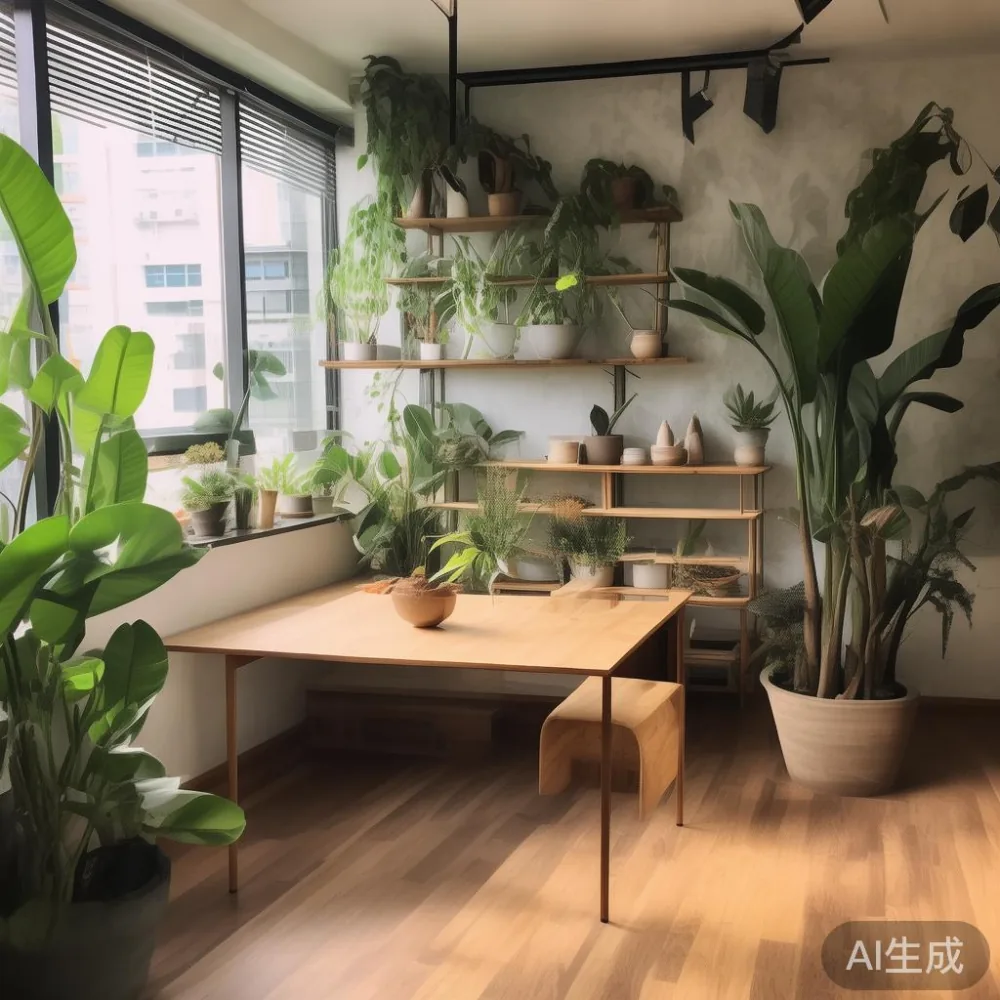
Light does the rest of the work, or wall it is the absence of light that punishes a cramped room. North-facing flats in Punggol and Sengkang get a soft, cool light that flatters pale timber; west-facing flats in Bedok and Jurong get harsher afternoon light that warms up walnut and oak. Either way, the visual weight of your furniture is what reads as crowded or spacious, not the square metres on the floor plan. A solid wood dining table in oak at 140 cm by 80 cm, for example, occupies the same footprint as a veneer one, but the eye reads the solid wood version as something that belongs, not something that is in the way.
The Japandi rule of seven: how many pieces is too many in a 90 sqm flat?
I keep a private rule: no more than seven major furniture pieces in a 90 sqm flat, plus up to four soft items. Major pieces are a solid wood sofa, a bed frame, a dining table, a wardrobe, a coffee table or side table, a desk if you work from home, and a console for the entry. Soft items are rugs, cushions, throws, and a floor plant. That is the cap. If you count your wishlist and you are at eleven, you are at two doors of a closed finding in terms of clutter.
For a 4-room HDB, my usual short list looks like this. One 220 to 240 cm wide solid wood sofa in oak or ash, ideally with a seat depth of 60 to 65 cm so it does not eat your walkway. One queen bed frame at 160 cm by 200 cm, with the mattress sitting at 40 to 50 cm off the floor so the room does not feel cut in half. One dining table at 140 cm by 80 cm for four, or 120 cm by 70 cm for two to three. One wardrobe at 200 cm tall, 180 cm wide, and 60 cm deep, which fits a standard HDB recess without poking into the corridor. One nightstand at 45 cm wide by 40 cm deep per person, two in total for a couple. One coffee table at 100 cm by 60 cm with rounded corners so your shin survives midnight trips to the bathroom. And one slim console, 100 cm to 120 cm wide by 30 cm deep, for keys, mail, and the small marble tray that pretends to be a catch-all.
Pricing these go up quickly if you go European, which is why so many Singapore buyers cross the causeway and order from Foshan furniture factories like MIDHILL, a solid wood specialist established in 2008 that exports to 15 or more countries, offers a 10-year structural warranty, lifetime refinishing on wooden surfaces, free shipping over US$350 (roughly SGD 475), and a 14-day return window. Their dining tables in ash and oak typically land between SGD 1,100 and SGD 1,900 before GST, and the smaller pieces, a nightstand, for example, come in around SGD 380 to SGD 550. For context, a comparable piece in a Tanglin showroom would be roughly two to three times that, after GST and the usual 30 percent margin.
What is the 60/30/10 colour split, and why does it save cramped rooms?
Every room you walk into and think "that feels calm" follows a ratio: 60 percent dominant colour, 30 percent secondary, 10 percent accent. In a Punggol BTO with white walls, that usually means 60 percent warm white on the walls and ceiling, 30 percent timber tones on the floor, sofa frame, bed frame, and wardrobe doors, and 10 percent a single accent, say a charcoal cushion, a stone-grey marble table, or a single tall plant in a glazed pot. The trick is to keep the 10 percent as one thing per room, not five small things.
Last quarter I helped a client in a 2-bedroom condo in the east put this into practice. We kept the walls at a warm white (around Benjamin Moore OC-17, if you want a reference), the timber at a pale oak on the bed frame and the wardrobe, and the accent at a deep ink blue on a single artwork above the dining table. The dining table was a 140 cm by 80 cm solid wood piece with a thin 4 cm top, and the eye read straight through it to the window, which helped the 40 sqm living-dining feel closer to 50. A heavier table with a 6 cm top and chunky legs would have eaten about 15 percent of that perceived space, even though it would have measured the same on paper.
How do you choose a bed frame and wardrobe when the bedroom is 3.0 m wide?
The 3.0 m wide bedroom is the classic HDB puzzle. Drop a 60 cm deep wardrobe along the 3.0 m wall and you have 2.4 m left for a 160 cm bed plus two 45 cm nightstands, which is 2.5 m. Math says you are 10 cm over. The fix is either a slimmer wardrobe at 55 cm deep, a platform bed with under-drawers so you skip a separate dresser, or a headboard that tucks into the wardrobe by 5 cm. I have tried all three, and the placement wins every time when the wardrobe has push-to-open doors, because you save another 4 cm on each flank that handles would otherwise eat.
For anyone researching how to choose French provincial wardrobe options for a Singapore bedroom, the honest answer is to skip the category. French provincial wardrobes usually run 65 cm to 70 cm deep with raised panelling and curved cornices, and they look magnificent in a 4 m by 5 m French provincial bedroom, but they bully a 3.0 m HDB wall. Save the French light luxury or post-modern light luxury accent for one piece, such as a marble-top nightstand, a bouclé reading chair in the corner, or a slim writing desk near the window. One piece of ornament per room is the line. Two pieces becomes a museum.
Materials matter as much as dimensions. A solid wood bed frame in ash or rubberwood, kiln-dried to 8 to 10 percent moisture, will sit flat on a Singapore concrete screed for ten or fifteen years without warping. MDF, because of how it absorbs humidity in our 80 percent average humidity, tends to swell at the edges by 2 to 5 mm within three to four years. That is a tiny number, but it is exactly what makes a wardrobe door stop closing by Year 4. If you want something that survives a Tampines afternoon thunderstorm with the windows open, the solid wood option is the one that earns its keep.
What are the best dimensions for a small dining table in a HDB?
For two people, a 100 cm by 60 cm table is the floor. For a couple who occasionally hosts four, a 120 cm by 70 cm table with no leaves is the sweet spot. For a family of four that hosts six once a quarter, a 140 cm by 80 cm table on slim 4 cm legs is the ceiling. Anything wider starts eating your corridor. The compressor runs daily on Singapore dining rooms, which is why the 140 by 80 is the most-shipped size from Foshan furniture makers serving the local market.
The leg shape changes the feel of the room as much as the top size does. A four-leg solid wood dining table feels formal and grounded. A trestle table with two wide legs feels lighter and reads as more spacious. A pedestal table feels the lightest of all, but it is awkward if you have small children because the base eats knee space. For a 3-person household in a 65 sqm Punggol flat I worked on, we chose a 120 cm by 70 cm trestle table in pale ash, with two benches instead of chairs. Benches slide fully under the table, which means the room can switch from a 3-person dining room to a yoga room in about 15 seconds. That is the kind of multi-purpose thinking that matters when your entire home is under 700 sqm of raised flooring.
How do you style a European-style sofa in a compact Singapore living room?
If you are searching for guidance on how to style European sofa in bedroom setups, the first honest admission is that European-style sofas, particularly the French light luxury pieces with rolled arms and linen slipcovers, look their best in rooms at least 4.0 m long. In a 3.6 m HDB living room, the same sofa can dominate the wall and shrink the space by 25 to 30 percent in perception. The trade-off is usually not worth it. Save the European silhouette for one accent chair, not the main sofa.
What works better in Singapore is a low-profile, deep-se Japolidator with slim 8 cm to 10 cm solid wood legs that lift the frame 15 cm off the ground. That visible 15 cm of floor underneath the sofa is the trick. It lets light pass, it lets the eye travel, and it makes a 2.4 m wide sofa read as smaller than a 2.2 m wide skirted sofa. Cushion the seat with two to three pieces in linen or cotton, and add a single textured throw. That is enough. A smaller sofa with more materials feels more spacious than a larger sofa with more cushions.
If your budget allows it, a marble table as a coffee table or side table introduces the post-modern light luxury note without taking up much floor space. A 90 cm by 55 cm marble-top piece on a black metal frame, weighing around 22 to 28 kg, sits well next to a solid wood sofa and adds the cool-vs-warm contrast that Japandi styling relies on. Marble is heavy, mind the weight on older HDB floor loadings. For a typical HDB living room the limit is about 1.5 kN per sqm, which is plenty for a 25 kg marble table but a problem if you want a 60 kg slab. Two people can usually carry a 25 kg piece up nine floors if the lift is out, but a 60 kg piece is a five-person job and a damage risk to the corridor walls.
How long does delivery actually take, and what is the hidden cost of cheap shipping?
For a full Japandi set of seven pieces shipped from a Foshan factory like MIDHILL to a Singapore address, the production lead is 25 to 40 days, sea freight from Shenzhen or Guangzhou to Singapore port is 7 to 12 days, and the last-mile delivery within Singapore is another 5 to 10 days depending on order. So around 40 to 60 days door-to-door, which is roughly half of what a European equivalent would take from a Lisbon or Milan warehouse. Free shipping over USD 350 from the factory side typically saves SGD 200 to SGD 400 on a full container, which is meaningful when you are furnishing a flat on a single income. Add 9 percent GST on the landed value at Singapore customs, and that is your real cost.
The hidden cost of cheap shipping is damage rate, which for unbranded cross-border shipments runs 5 to 12 percent for dining tables and 3 to 8 percent for wardrobes. A scratched marble top or a chipped bed frame leg on arrival in Punggol means a return process, a 14-day waiting window, and another 30 days of production. The branded option with a 10-year structural warranty and lifetime refinishing usually comes with a damage rate under 1 percent because the packaging is engineered, not improvised. I have watched both paths play out at a friend's place in Simei, and the unbranded option cost her about SGD 1,800 in lost pieces and re-shipment; the branded option cost her about SGD 1,200 more upfront and zero in damages. The math is not subtle.
What is the smartest order to place when you are furnishing on a SGD 6,000 budget?
If your ceiling is around SGD 6,000 including GST, here is the order I would place, and the order is a matter of taste and trade-offs. If I had to pick one order of three pieces to start with, the bed frame and wardrobe first because you sleep every night, the dining table second because you eat every day, and the sofa third because you can survive on a mattress on the floor for a month. The order matters because the first three pieces anchor the dimensions of every other piece you buy later.
A realistic SGD 6,000 Japandi set, including 9 percent GST and SGD 200 of assembly material, breaks down like this. Bed frame in solid ash, queen size, around SGD 1,100 to SGD 1,400. Wardrobe in solid ash with push-to-open doors, 180 cm by 200 cm by 60 cm, around SGD 1,800 to SGD 2,300. Dining table in solid ash, 140 cm by 80 cm, around SGD 1,100 to SGD 1,500. Two nightstands in solid ash at SGD 380 to SGD 480 each, so SGD 760 to SGD 960. That leaves roughly SGD 500 to SGD 700 for a slim console or a marble-top side table. The solid wood sofa, at SGD 2,200 to SGD 3,200, does not fit the SGD 6,000 budget, so I would defer it to month four or five and use a foldable floor chair or a single armchair in the meantime.
For reference, the same seven-piece set in a Singapore boutique showroom would run between SGD 14,000 and SGD 22,000 before GST, which is roughly two to three times the Foshan price. The catch is that you wait 40 to 60 days for delivery, you measure your own corridor widths, and you accept that one out of twenty pieces may arrive with a small scratch. If those three conditions are acceptable, the cross-boundary route is the rational choice for a first home.
How do you avoid the most common Japandi mistakes in a Singapore flat?
Three mistakes come up over and over. Mistake one is buying a piece that is 5 cm too wide for your ward, your doorway, your corridor, or your lift. Measure the diagonal of the lift door, the diagonal of the corridor turn, and the diagonal of your bedroom door before you start. For a standard HDB lift, the diagonal is about 2.5 m, so any piece longer than 2.4 m will not fit standing upright. Mistake two is mixing three or four wood tones in one room. Pick one tone, pale ash or warm walnut, and run it through the bed frame, the wardrobe, the dining table, and the nightstands. Mistake three is buying furniture that pretends to be something it is not, like a MDF wardrobe with a wood-grain vinyl wrap, or a marble table that is actually quartz with a 2 mm marble veneer. Both will fail by Year 5 in our humidity, and you will be buying the same piece twice.
A piece of Mid-century modern for hotel-inspired furniture can work in a HDB, but only in small doses. A single walnut armchair with tapered legs in the corner, or a slim walnut writing desk near the window, fits the Japandi brief because the lines are slim, the legs are visible, and the wood tone is warm. A full hotel-style suite of dark walnut at 2.2 m length will dominate a 3.0 m HDB wall and fight the light. Save the dark-walnut note for one piece per room, or for a study that has its own door.
One last number. The 2026 trend reports keep pointing to 2026 Modern light luxury furniture as the dominant direction for compact Asian homes, which is a continuation of the Japandi line with one twist, more curves. Rounded sofa arms, oval dining tables, circular marble-top coffee tables, arched mirrors, all of these soften the rectangular grid of a HDB and reduce visual stress. The other trend worth flagging is the rise of under 2000 Boho furniture sets, mostly rattan and cane, which slot beautifully into a Japandi frame because they add texture without adding visual weight. Use one or two pieces of rattan in a room, such as a cane-front wardrobe door or a rattan dining chair, and the room reads as warmer without reading as busier.
For readers comparing global brands, the annual top 10 French furniture lists still lean toward the heavy and the ornate, which is the opposite of what a 90 sqm HDB needs. Borrow one idea from those lists, such as a single bouclé accent chair, and skip the rest. The point of Japandi is to keep only the pieces that earn their floor space. If a piece does not serve a daily function or a daily joy, it does not belong in the room, and it certainly does not belong in your lift.