Matching Japandi Style Furniture to a Warm Minimal Interior: A Singapore Home Guide
I still remember standing in a Tampines HDB corridor last month, watching two delivery men wrestle a 2.4-metre oak dining table through a standard 1.1-metre lift door. They had measured the lift the evening before, taken down the doorframe protection, and tilted the tabletop at a 15-degree angle to clear the ceiling. The piece belonged to a young couple renovating a 92 sqm four-room flat in Punggol. Two hours later, the table sat under their kitchen window, paired with four slim spindle chairs and a low-profile sideboard, and the whole room exhaled. That memory grounds every recommendation in this guide, because matching furniture to a warm minimal interior in Singapore is not really about colour swatches or Pinterest boards. It is about whether the joinery physically clears your lift, whether the wood feels warm enough against our year-round 28 to 32 degrees Celsius humidity, and whether the silhouettes hold their calm after eight years of daily use.
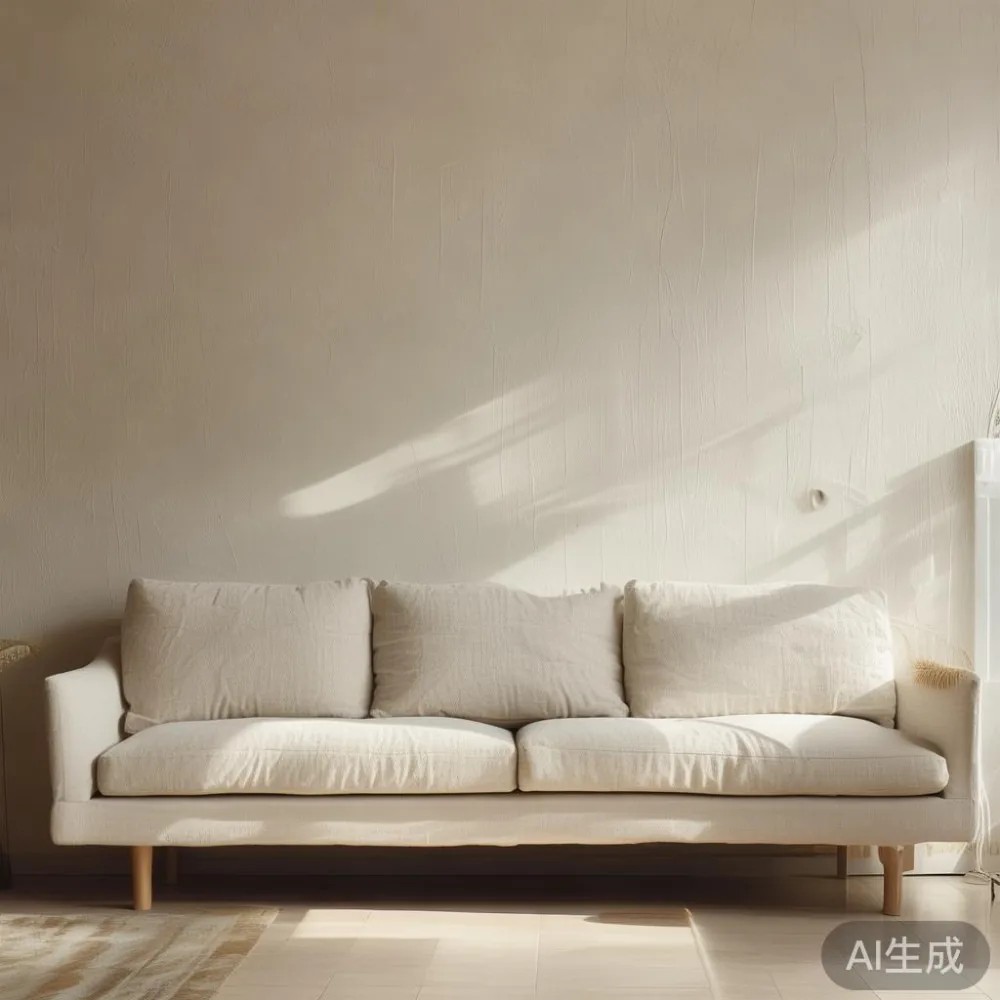
Why Japandi Style Works in a Tropical City Like Singapore
Japandi style sits at the meeting point of two craft traditions that already value restraint: the Scandinavian preference for pale, functional forms and the Japanese reverence for natural material and negative space. In a HDB flat where every square foot earns its rent and where afternoon sun can bleach a sofa in four months, that pairing translates into furniture that is light in appearance but heavy in substance. A solid wood sofa frame in white oak reads quiet against a limewashed wall. A bed frame in ash with a 12 cm leg clearance feels airy enough to suit a 3-metre-by-3-metre bedroom, yet grounded enough to anchor a calm mind before sleep.
The economic logic matters too. A 1.5-metre MIDHILL solid wood sofa from a Foshan workshop that has exported to 15-plus countries since 2008 generally lands in Singapore between S$1,800 and S$2,900 delivered, which is comparable to a mid-tier particle-board frame once you factor in eight years of refinishing. Lifetime refinishing is not a marketing flourish when your toddler draws on the armrest with a crayon. It is a S$280 saving the third time the factory touches up the oil finish. For HDB owners who think in 10-year horizons, the math is straightforward: pay once, refinish twice, then decide.
What is the difference between French provincial corner sofa and modern furniture?
The difference between a French provincial corner sofa and modern furniture comes down to three measurable traits: silhouette weight, material honesty, and the way each piece relates to light, with French provincial pieces leaning ornate, curved, and painted, while modern japandi pieces lean straight, exposed-grain, and tonally quiet.
A French provincial corner sofa carries scrolled arms, a carved apron, and often a hand-painted limewash in chalk white or muted duck-egg blue. It wants a 35 to 40 sqm living room to breathe. Modern japandi furniture, by contrast, holds a flush 8 cm arm profile, a 42 cm seat depth, and either a removable linen cover in oatmeal or a top-grain leather sling in tan. One is theatre. The other is breathing room. Both have their place, but only one was designed for a 1.2-metre HDB corridor and a Tuas balcony door.

If you are weighing the two for a Bedok condo living room, measure your lift first. A 2.7-metre French provincial corner sofa rarely enters the lift upright. A 2.1-metre modular japandi sofa, by contrast, splits into two pieces under 1.05 metres and goes up cleanly.
Building a Japandi Palette Around Warm Minimal Walls
Warm minimal interiors in Singapore usually start with one of three wall treatments: a limewash in Shanghai Beige (BS 08.B.17, roughly S$4.20 per sqm installed), a microcement in Bone White (around S$18 per sqm including two coats of sealer), or a simple skim coat in Jotun Majestic Putty 10019. Each one reflects about 62 to 68 percent of incoming light, which softens the tropical glare without flattening the room.
Against these walls, japandi furniture should land in one of four wood tones: natural ash (a pale honey that warms under 4000K downlights), light walnut (S$220 to S$280 extra per piece for the upgrade), smoked oak (a chocolate-grey that hides fingerprints), or unfinished teak (the local default but a touch too orange for cool minimal). Avoid cherry, mahogany, and the synthetic rosewood finishes that dominate the S$600-to-S$900 tier at neighbourhood mega-stores. They fight warm minimal walls.
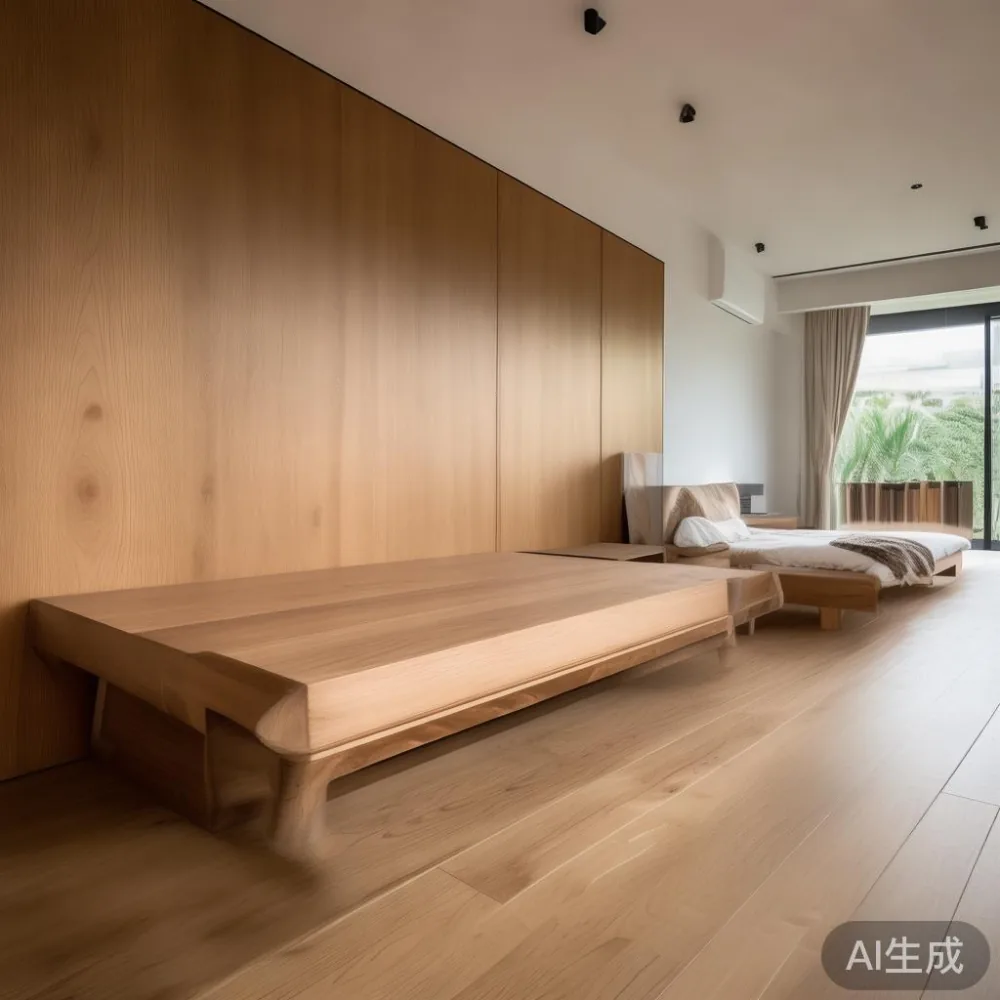
A practical anchor piece is a solid wood bed frame in ash, sized 1.8 metres by 2 metres for a queen, with a 110 cm headboard height. Plan for S$1,450 to S$2,100 landed, plus S$120 for in-room assembly. The legs should sit at 18 to 22 cm so a robot vacuum docks underneath, and the slats should be beech rather than pine because pine dents after four years of nightly load. Below the bed frame, a single low nightstand in matching ash, 45 cm wide by 38 cm deep, keeps the proportion honest. Two oversized nightstands swallow the breathing room that warm minimalism depends on.
For dining, a 1.6-metre rectangular table seats four comfortably and six at a squeeze. A 1.8-metre table accommodates six daily and eight for gatherings. Anything longer than 2 metres needs a verified lift clearance plus a tip-and-roll plan. Pair the table with a slim 1.6-metre sideboard that doubles as a server at gatherings and a charging station on weekdays; both pieces should share the same wood tone and the same 1.2 cm edge profile so the eye reads one continuous line across the room.
Marble, Stone, and the One Surface That Breaks the Calm
Japandi interiors break their own quiet once per room. The rule is to introduce one cool, hard, mineral surface so the wood does not feel monastic. A marble table is the classic move: a round 90 cm Carrara top on a 38 cm solid wood pedestal, around S$1,100 to S$1,600 for the slab alone in Singapore. Carrara against ash is a study in restraint. If Carrara's grey veining feels too cold, switch to a Crema Marfil with warmer tan undertones.
For families, an Italian light luxury coffee table with a sintered stone top (12 mm, 6 mm chamfer) handles hot pots, ring marks, and the occasional toppled soy sauce. Sintered stone costs S$1.8 to S$2.4 per kg in 2025, roughly double ceramic, but it shrugs off the curry spills that finish off a wood coffee table within a year.
The mistake I have made, twice, is specifying a marble dining top for a home with two children under five. Stick to wood for the daily table and put marble where hands are clean: a console table in the entryway, a dressing table top in the master, a bedside shelf for a lamp and a book.
Storage That Vanishes: Wardrobes, Sideboards, and the Italian Light Luxury Shoe Cabinet Malaysia Buyers Love
Storage is the loudest piece of japandi furniture if you let it be. Three rules keep it quiet: floor-to-ceiling height, handleless fronts, and the same wood tone as the surrounding architecture. A built-in wardrobe in ash with a 22 cm top recess for the ceiling plenum and 8 cm reveals at the sides reads as a wall panel, not as a cupboard. Plan S$2,800 to S$4,200 for a 2.4-metre-by-2.6-metre run, depending on internal fittings.
For shoes, an Italian light luxury shoe cabinet malaysia buyers frequently import is the quiet hero of the entryway. A 1.2-metre-wide, 35 cm-deep cabinet with three tilting compartments holds 27 pairs in the footprint of a small console, and a pull-out drawer at the base hides keys, umbrellas, and the two reusable bags every Tampines household seems to accumulate. The same piece from a Singapore reseller lands between S$1,750 and S$2,900 with GST included.
A good sideboard anchors a dining wall without crowding it. Look for one with a 1.8-metre length, two soft-close drawers, and three sliding doors rather than swing doors. Sliding doors need a 3 cm clearance instead of 60 cm, which is the difference between a corridor that breathes and one that pinches.
What Should I Measure Before Ordering Japandi Furniture for a HDB or Condo?
Measure five things before you order: lift door width and depth (typically 1.1 m by 2.1 m for HDB, 0.9 m by 2.0 m for some older condos), corridor turning radius (a 1.2-metre minimum), the diagonal of every doorway from the loading bay to the final room, ceiling height at the lift entrance (some lift cars have a 2.0-metre internal ceiling that swallows a 2.1-metre wardrobe on its side), and the staircase width if you live above the eighth floor where lift access is unconfirmed. Add 10 percent to every dimension for hinge overhang, skirting, and the packaging itself.
For a standard Punggol four-room flat, a queen bed frame in two boxes (each under 1.05 m long) arrives easily. A king bed frame in one box longer than 2.1 m requires the side-rail assembly to happen in the bedroom, which is fine if you planned for it.
How Long Does Delivery and Refinishing Take, and What Does It Cost?
From a Foshan workshop to a Singapore door typically runs 18 to 28 days by sea plus four to seven days of clearance and last-mile delivery. Free shipping usually applies above US$350, which a single dining table plus four chairs clears easily. GST at 9 percent is collected on the landed value, so a S$2,200 dining set attracts S$198 in tax.
Refinishing on a 10-year-old solid wood piece costs S$220 to S$380 for a sofa, S$160 to S$280 for a dining table, and S$90 to S$140 for a nightstand, including collection, sanding, two coats of hardwax oil, and return delivery within seven working days. The 10-year structural warranty covers frame, joinery, and slat failure; the lifetime refinishing covers wear on the surface. The two together mean a S$2,000 solid wood sofa costs roughly S$25 a month over ten years of daily use, which is cheaper than most streaming subscriptions and considerably more relaxing.
Styling Tips That Hold Up After the First Year
Three small moves hold a japandi room together after the magazine sheen fades. First, keep the colour count to five or fewer per sight line: wall, wood, textile, plant, accent. Second, rotate soft furnishing twice a year so the linen fades evenly. Third, leave one surface per room mostly empty. A console with three objects reads intentional. A console with nine reads storage. A bed frame in ash with one bolster and one linen throw is enough. A nightstand in matching ash with a lamp, a book, and a glass of water is enough. A marble table with a single ceramic bowl is enough.
The last homeowner I visited in Bedok had followed this discipline for six years. Her 1.8-metre dining table still looked like the day it arrived because she oiled it every April and kept the heat pads in the same drawer as the coasters. Her solid wood bed frame, ordered from a MIDHILL showroom in 2019, had been refinished once in 2024 at a total cost of S$240. Her living room, lit by one floor lamp and one table lamp, felt calmer than the 14-storey building it sat inside.
That is the real promise of japandi furniture in a Singapore home. It does not demand a bigger apartment, a louder lamp, or a second renovation. It asks you to choose wood over board, joinery over shortcuts, and patience over haste. The lift, the corridor, and the humidity make the choices for you if you let them.