Japandi Styling for Singapore HDBs: How to Furnish a Small Apartment Without Making It Feel Crowded
I spent last Saturday in a 678 sq ft three-room flat in Bedok with my colleague Priya, who had just taken over the lease. The previous tenant had left a bulky four-seater fabric sofa, a glass coffee table, and a wardrobe that blocked the corridor to the kitchen. The lift at her block measured 1.1 m wide by 1.4 m deep, which is the standard HDB passenger lift, and her old wardrobe would not have cleared the lift door diagonally. Within four hours we had cleared the space, brought in one solid wood sofa frame in oak, a slim walnut dining table 120 cm long, and two low-platform bed frames. The flat felt 30% more open by eye-line alone, and the furniture had come up in a single lorry from a Jurong warehouse. That afternoon is the starting point for everything in this guide: japandi style for Singapore HDB flats and small condos in Tampines, Punggol and Bedok, where every centimetre of corridor width and every dollar of GST matters.
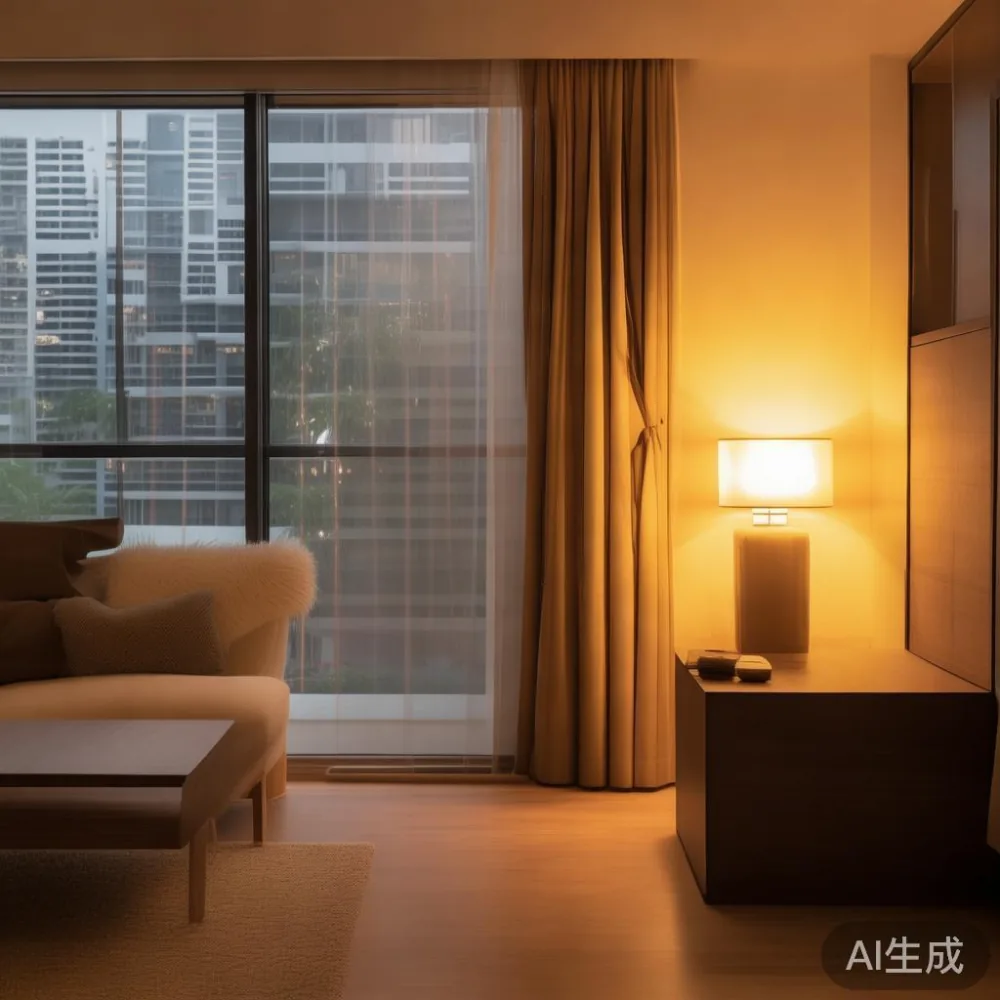
Why japandi style suits a Singapore HDB more than Scandinavian or modern luxe alone
Japandi is the quiet marriage of Japanese restraint (low profiles, exposed joinery, natural timber) and Scandinavian warmth (linen, off-white walls, soft boucle). For a 60-90 sq m HDB or a compact condo in Punggol, that hybrid is more forgiving than full Scandinavian, which can read cold under our LED downlights, and more humane than pure Japanese minimalism, which sometimes feels under-furnished for a family of four. The japandi palette - pale oak, warm walnut, off-white, charcoal, and one accent of stone or aged brass - holds up against Singapore's strong tropical light at 12,000 lux on a clear afternoon. A solid wood sofa in light oak with a 92 cm seat depth sits comfortably against a 2.4 m wall in a standard HDB living room, leaving a 90 cm walkway behind it. That is the magic number: anything below 80 cm and the room starts to feel pinched.
Measure your flat before you measure your budget: the 90 cm rule
Before picking a dining table or a bed frame, walk every room with a tape measure. The pieces that crowd a small apartment are almost always the pieces that were never measured against the corridor and lift. HDB corridors inside the flat are typically 90-110 cm wide. The narrowest door from corridor to bedroom is usually 75-80 cm. A queen-size bed frame at 152 cm x 188 cm sits fine, but a king at 183 cm x 213 cm blocks the wardrobe door in most three-room layouts. I have seen buyers in Tampines regret a super-king bed within a week. For dining, a 120-140 cm table seats four without chairs; a 160 cm table seats six but needs a 70 cm pull-out zone on at least one side. If your dining area is only 2.2 m wide, stay at 120 cm. For wardrobes, the rule is ceiling height minus 15 cm for top clearance and minus 5 cm for floor breathing. A 240 cm tall wardrobe will fit under a standard 2.55 m HDB ceiling with a small soffit gap for LED strip lighting.
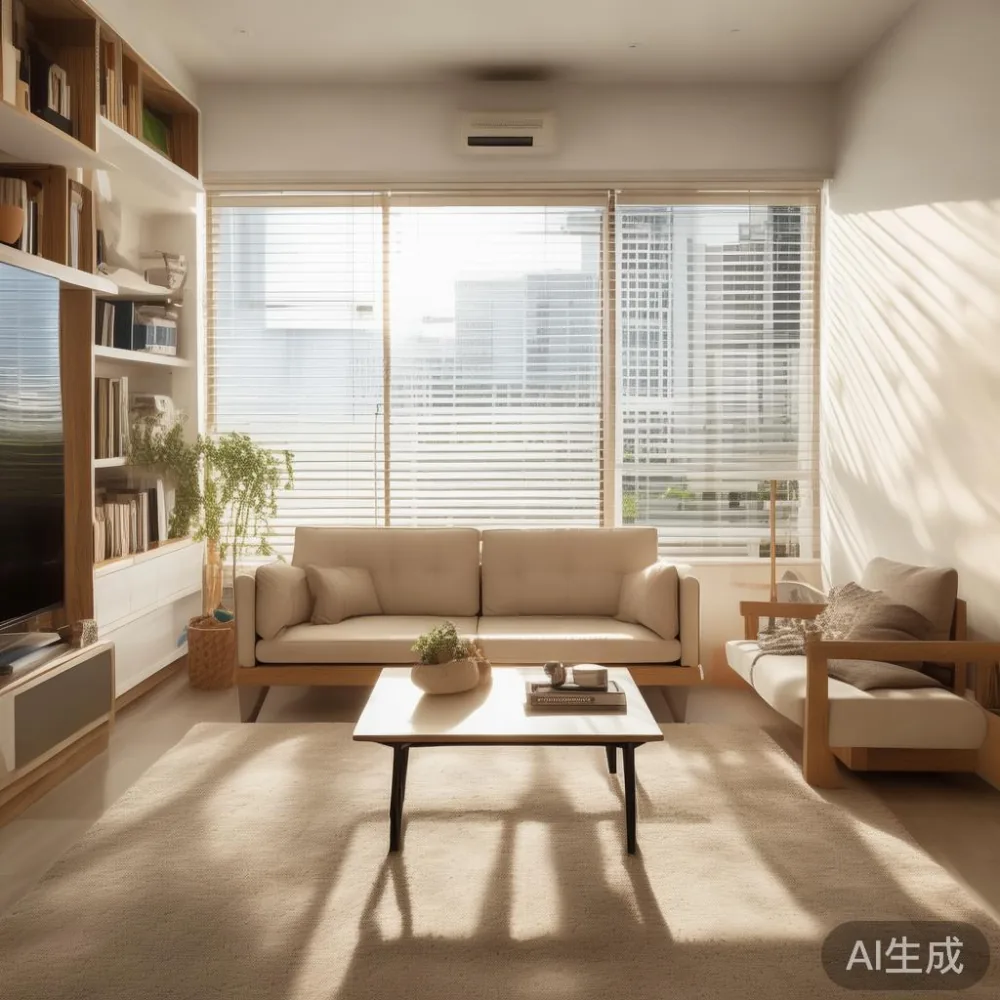
How do I choose a industrial style for a bedroom?
Pick raw materials, not the look: a low-profile solid wood bed frame in oak or walnut, one blackened steel bedside lamp, one textured linen throw, and one piece of dark-stained timber - usually a nightstand or a wall-mounted shelf - then stop. Industrial is metal-and-reclaimed-wood by origin, so the easiest way to keep japandi discipline is to limit black metal to under 15% of visible surfaces and let warm wood do the heavy lifting. A queen-size japandi bed frame at around 165 cm x 210 cm outer dimension leaves 60-70 cm of walkway on each side in a typical 3.2 m x 3.0 m HDB master bedroom, which is enough to open drawers without hitting the wall.
The five-piece japandi starter kit for a small Singapore apartment
If you are kitting out a flat from scratch, I would start with five pieces, in this order: one solid wood sofa (three-seater at 200-220 cm, or a two-seater at 150-160 cm for a 2-seater armchair for entryway pairing by the door), one low-platform bed frame at queen or super-single depending on the room, one dining table in walnut or white oak (120-140 cm for four, with butterfly leaf extension to 160 cm when parents come for the weekend), one floor-to-ceiling wardrobe in light oak with sliding rather than hinged doors (a 240 cm tall x 180 cm wide sliding unit saves a full 60 cm of swing clearance), and one marble table - either a round 80 cm coffee table or a 50 cm square side table - because japandi needs one cool stone surface to anchor warm wood. Total budget for these five pieces sits between SGD 4,800 and SGD 7,200 from a direct-from-factory maker like MIDHILL in Foshan, where the same brief in a Singapore retail showroom often lands at SGD 8,500 to SGD 11,000 once GST, delivery, and three layers of margin are added. At 9% GST, the savings are not cosmetic.
Post-modern light luxury, French light luxury, or American light luxury - which suits a Punggol condo?
Each of these three trends has a different footprint, and that matters when every square metre costs about SGD 16,000-18,000 in a new Punggol condo. American light luxury tends to be wider and lower: deep seat sofas at 100-105 cm depth, chunky marble tables, oversized brass lamps. It is generous, almost hotel-like, and it needs at least a 3.6 m living room wall to breathe. French light luxury is the opposite - it is small in scale, with slim Louis-style legs, cane-back chairs, and tapered marble side tables around 45 cm wide. For a 90 sq m flat, French light luxury often slips in more comfortably than American. Post-modern light luxury sits in the middle: curved silhouettes, travertine or book-matched marble, lacquered timber in muted colours. A round 90 cm post-modern marble dining table seats four and fits a 2.4 m x 2.4 m nook that a rectangular table would dominate. My honest read, after watching Priya try samples on her Bedok corridor floor: japandi takes the structure (low wood, neutral walls) and post-modern light luxury lends one or two hero pieces (a curved marble coffee table, a brass-framed mirror) so the room feels current without becoming busy.
Light, colour and the 7-foot rule for ceilings
Singapore HDB ceilings are 2.55 m to 2.8 m depending on the block era. Anything tall - a floor lamp above 160 cm, a wardrobe above 240 cm, a ceiling pendant with a 40 cm drop - will start to crowd the eye-line. Keep two-thirds of your pieces under 95 cm tall: sofas at 78-82 cm back height, dining tables at 73-75 cm, nightstands at 55-60 cm, bed frames at 90-100 cm including mattress. Let one taller element anchor each room: a single 150-160 cm floor lamp by the reading chair, a 180 cm tall open shelf in the study nook, a ceiling pendant at 28-32 cm diameter above the dining table. Walls do most of the colour work: a warm off-white (Benjamin Moore White Dove or a local match at NCS S0500-N) for the main walls, a slightly deeper putty tone (Dulux 30YY 46/036 or similar) for the feature wall behind the bed, and ceiling in pure flat white to push the ceiling visually higher. Keep contrast below 30% - too much dark timber in a small flat reads as cramped, especially in a Punggol north-facing unit that sees less direct sun.
Storage that disappears: wardrobes, sideboards and the lift-door problem
The single biggest mistake I see in HDB flats is buying a wardrobe that is too deep. Most bedroom walls allow only 55-60 cm of wardrobe depth before you lose the bed's walkway. A custom-looking wardrobe at 55 cm depth, with sliding doors and internal drawers, holds as much as a 60 cm hinged unit if you add a 30 cm overhead cabinet. Lift doors in most HDB blocks are 90 cm wide and the cabin is 1.4 m deep. A flat-pack wardrobe box longer than 180 cm will not enter the lift upright; it must come in two halves and be joined inside. Confirm this with the maker before paying - MIDHILL, for example, ships most wardrobes in two pre-drilled halves that join with cam locks, so installation in a Tampines flat takes about 90 minutes for a 240 cm unit. Sideboards follow the same rule: 35-40 cm depth is enough for dinnerware, and a 160 cm wide unit fits a standard 2.6 m dining wall without crowding.
Shipping, GST and the 14-day window: how direct-from-factory buying actually works in Singapore
Buying solid wood furniture from a Foshan factory and having it land in a Singapore flat is not exotic any more, but the numbers should be on the table. A typical five-piece japandi set weighing around 280 kg ships by sea to Singapore in 18-25 days, then by lorry to your door with two men and a trolley. Lift landings and corridor turns are the choke points: a 2.4 m wardrobe box has to be tilted to clear the lift, and the corridor outside your unit is usually 1.2-1.5 m wide. Free shipping above US$350 (about SGD 475) is common among direct makers, which a five-piece order clears comfortably. GST is 9% on the landed value, payable before delivery or on a deferred basis depending on the forwarder. A 14-day return window covers fit and finish issues - warped panels, mismatched grain, dented edges - but not change-of-mind, so measure twice. A 10-year structural warranty on joinery and a lifetime refinishing option on solid timber pieces are the two clauses I always ask for in writing; MIDHILL publishes both, which is one of the reasons I send friends there.
Real numbers for a 90 sq m Punggol condo: what the order sheet looks like
For a 90 sq m three-bedder in Punggol, here is the order sheet Priya and I settled on. One 210 cm three-seater solid wood sofa in white oak with washable linen cushions, around SGD 1,950. One queen-size japandi bed frame in walnut at 165 cm x 210 cm, around SGD 1,150. One 130 cm round marble dining table with a sintered stone top in travertine finish (lighter than real marble, child-friendly), around SGD 1,650. One floor-to-ceiling wardrobe at 240 cm x 200 cm with two sliding doors, around SGD 1,450. One marble table - a 50 cm square side table in Carrara-style sintered stone - around SGD 480. Two nightstands in matching walnut at 45 cm wide, around SGD 320 each. Total pieces, seven; total weight, about 310 kg; total cost, around SGD 7,320 before 9% GST, shipping included on the ocean leg. Comparable pieces across three Singapore retail showrooms came in between SGD 11,400 and SGD 13,800 for the same specification. The difference is roughly two months of condo mortgage service for a young couple, which is why the direct route is worth the longer wait.
Common mistakes that make a small HDB feel crowded - and the quiet fixes
Three mistakes come up in every Tampines and Bedok viewing I do. First, too many small pieces instead of one larger one: three little side tables fight for attention where one 80 cm round coffee table would calm the room. Second, curtains hung at the ceiling line instead of just above the window frame - dropping the rod 15 cm lower makes the window look smaller and the wall heavier. Third, a rug that is too small: a 140 cm x 200 cm rug under a 210 cm sofa looks like a bath mat; the rug should extend at least 20 cm beyond the sofa on both sides. The fix for each is a single number, not a redesign. A japandi room reads as calm when the eye can land on three materials at most - oak, linen, stone - and the brain is not busy counting objects. That is the underlying logic of japandi style in a small Singapore apartment: fewer pieces, each one doing real work, each one made from solid timber so it can be sanded and re-oiled in twenty years when the lease turns over again.