Matching Solid Wood Furniture to a Warm Minimal Interior: A Practical Guide for Singapore Homes
I still remember the Saturday I spent measuring a wardrobe up a Punggol HDB corridor. The lift opening at block 258 was 80 cm wide, the corridor between units was a tight 1.2 m, and my client's bed frame in walnut had to be tipped sideways just to clear the lobby mirror. That was the moment I stopped recommending furniture by look alone and started recommending it by clearance path, weight, and grain pattern. If you are styling a warm minimal interior in Tampines, Bedok, or Punggol, this article will save you the same headache. We will walk through how to match a solid wood sofa, bed frame, dining table, wardrobe, and nightstand to soft beige walls, lime-wash finishes, and the calm palette that defines japandi style — the Nordic-meets-Japanese vocabulary that Singapore homeowners keep gravitating toward.
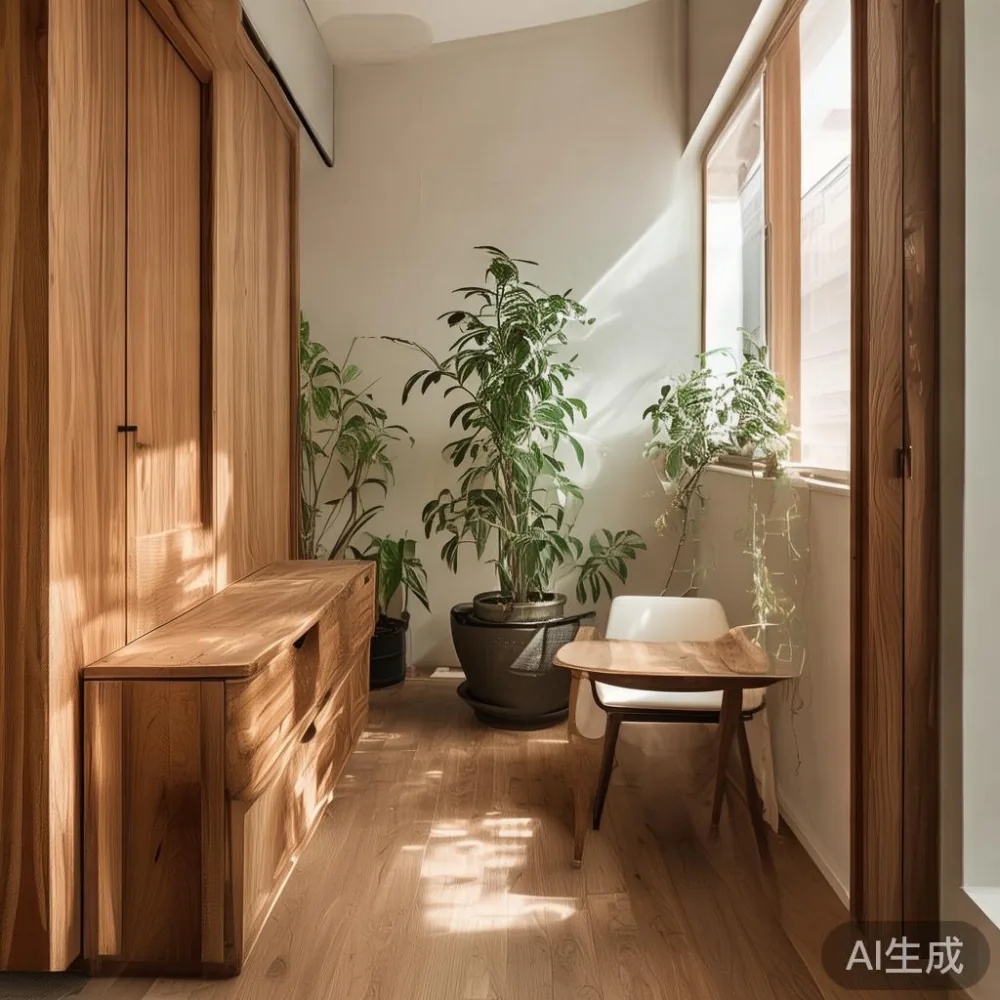
What does "warm minimal" actually mean in a Singapore HDB or condo?
Warm minimal is not white-on-white Scandi austerity. It is a base of off-white plaster or warm white emulsion, one natural timber (usually walnut or white oak), one soft textile layer (linen, bouclé, brushed cotton), and one quiet stone accent — often a marble table, travertine lamp base, or limestone-look ceramic. The lighting is 2700K, the metal is brushed brass rather than chrome, and nothing in the room shouts. In a 90 sqm BTO or a 1,050 sqft condo in the Bedok Reservoir area, that translates into roughly 6 to 8 anchor pieces: one dining table, one dining bench or two chairs, one bed frame, two nightstands, one wardrobe, one sofa, and one lounge chair. Anything beyond that starts to fight the palette. The japandi style that drives most Singapore interiors in 2024 and 2025 is really warm minimal wearing a kimono — same restraint, more warmth.
How do I pick a solid wood bed frame that does not fight a warm minimal palette?
Start with the wood species, not the design. White oak and walnut read warm on their own; ash reads cooler and is closer to true Scandi. For warm minimal in Singapore humidity (often 70 to 85 percent at night), kiln-dried white oak with a 7 to 9 percent moisture content is the safer bet — it moves less than ash and patinas to a honey tone over 3 to 5 years. A queen-size solid wood bed frame typically weighs between 55 and 80 kg, and a king-size between 70 and 110 kg. That matters for two reasons: first, your lift load limit (most HDB passenger lifts are rated 630 kg to 1,000 kg, so a single frame is rarely the problem); second, your floor load, which for a standard HDB slab is 1.5 kPa and handles a king bed easily, but a storage hydraulic lift-up frame can push past 120 kg when filled with luggage — worth checking if you live above the 15th floor in a Punggol or Tampines tower.
Headboard height is the next decision. In a warm minimal room with 2.8 m ceilings, anything above 110 cm will feel heavy. I tested a 95 cm curved oak headboard in a Sengkang three-room flat last month — it sat perfectly under a 60 x 80 cm unframed linen print and left a calm 90 cm of wall above. Avoid button tufting and nailhead trim; they belong to American light luxury, not japandi style. Look instead for a 5 to 8 cm reveal between the headboard and the wall — that shadow line is what reads as quiet and intentional. As a rule of thumb, allow SGD 1,800 to SGD 3,200 for a queen solid wood bed frame in walnut or oak from a Foshan workshop like MIDHILL, including GST and delivery in 14 to 25 working days.
Which dining table shape works for a 4 to 6 person HDB dining area?
Measure the wall your table will sit against, then subtract 90 cm on each end for chair pull-out and walk-through. In most four-room HDB flats that gives you a usable dining zone of 2.1 to 2.4 m wide, which is exactly where a 1.6 to 1.8 m rectangular or oval solid wood dining table lives comfortably. Round tables under 1.2 m diameter only seat four, and any round above 1.4 m starts to feel oversized when a Bench (120 x 35 x 45 cm) slides in opposite two chairs. Oval is my usual pick for warm minimal — the curve softens the rectangle of the room, and there are no sharp corners for a toddler to hit at eye level.
Thickness matters more than people think. A 4 to 5 cm top on a trestle base looks elegant but will warp in Singapore if the wood is not properly kiln-dried; a 6 to 8 cm top with quarter-sawn joinery is heavier (around 45 to 70 kg for a 1.8 m table) but stays flat. The base should clear 65 cm at the apron so a chair with arms can tuck under, and the legs should sit no further than 15 cm from the table edge to stop knee-knocking. Walnut tops at 1.8 m typically run SGD 1,500 to SGD 2,800 ex-GST from a Foshan factory, with freight to Singapore by sea adding around SGD 280 to SGD 420 per piece and arriving in 25 to 35 working days. A pedestal base is easier to live with than four legs if you entertain more than four — no chair collisions mid-meal.
Where can I buy a bookshelf in Singapore?
You can buy a bookshelf in Singapore through three reliable channels: local solid wood makers (3 to 6 week lead time, SGD 1,200 to SGD 3,500 for a 180 to 220 cm tall unit), regional Foshan factories that ship direct (SGD 600 to SGD 2,200 ex-GST, 25 to 40 working days by sea, plus SGD 80 to SGD 150 doorstep delivery on orders above SGD 350), and Scandinavian walnut bean bag retailers who pair low shelves with floor seating for a relaxed japandi reading corner.
For a warm minimal room, skip the 240 cm floor-to-ceiling built-in look — it overpowers a 2.8 m HDB ceiling. A 180 to 200 cm open shelf with a 30 cm solid base, three fixed shelves and two adjustable ones, in the same walnut or oak as your dining table, will hold roughly 60 to 80 hardcovers without bowing if the shelves are 2.5 cm thick. Wall-anchor every bookshelf above 120 cm; a loaded unit weighs 80 to 130 kg and will topple in a tremor or when a toddler climbs it. Most direct-ship options from a workshop like MIDHILL include wall-anchor brackets and a 10-year structural warranty, which matters more in Singapore humidity than the initial price. Allow SGD 450 to SGD 900 for a single 90 cm-wide module and you can build a run of two or three to fill a 2.7 to 3.6 m wall.
How do I style a wardrobe and nightstand so they feel like one family?
Treat the bedroom wall as a single composition. A 2.4 to 2.7 m wardrobe in the same wood species as the bed frame ties the room together; a contrasting wood breaks the warm minimal spell instantly. For sliding-door wardrobes, allow 65 to 70 cm depth including the track; for hinged-door, 58 to 62 cm is enough. Internal fit-outs are where most Singapore owners overspend — you only need three zones (long hang, short hang, shelves) and one drawer bank of 4 to 6 drawers. Anything fancier is post-modern light luxury territory, not japandi style.
Nightstands are where the room either settles or stays restless. Two identical units, 45 to 55 cm wide, 40 to 50 cm tall, with one drawer and one open shelf, will outlast any trend. The top should sit 0 to 5 cm below the mattress top — that single alignment is what makes a bedroom feel calm. A wireless lamp, a small ceramic dish, and one book are all you need on top; the open shelf holds the charger and a single hardback. A pair in walnut runs SGD 480 to SGD 900 from a Foshan workshop, and the same piece in oak is usually SGD 80 to SGD 150 cheaper. Stick to identical pairs; mismatched nightstands are charming in country houses and disruptive in warm minimal Singapore flats where the eye needs rest.
Do I really need a marble table if the room is already wood-heavy?
One stone accent is usually enough. A small marble table — round 45 cm diameter or rectangular 50 x 110 cm — next to the sofa, or a marble-top coffee table in the living zone, gives the eye a cool counterpoint to the warmth of oak or walnut. Travertine, Carrara, and Emperador all work; the key is to match the veining intensity to the wall tone. If your walls are warm white, a cream travertine reads softer; if the walls are cooler, a grey-veined Carrara will feel intentional. Avoid high-gloss polished marble — it pulls in too much reflection for japandi style. Honed or leathered finishes sit more quietly in a warm minimal room and hide water rings from cold glasses, which is a daily reality in Singapore.
Sizing the marble table to your sofa matters. For a 2.1 to 2.4 m three-seater, the table should be 110 to 130 cm long and 55 to 65 cm deep, sitting 5 cm lower than the seat cushion. Anything larger crowds the walkway; anything smaller forces you to lean. A round 80 cm pedestal works beautifully between two armchairs. Marble-topped pieces are heavier than solid wood of the same size — a 120 x 60 cm marble coffee table can weigh 60 to 90 kg — so plan your lift access before ordering, especially if you live above the 20th floor and the service lift is the only option on weekends.
What about the solid wood sofa — does it have to be a frame or can it be upholstered?
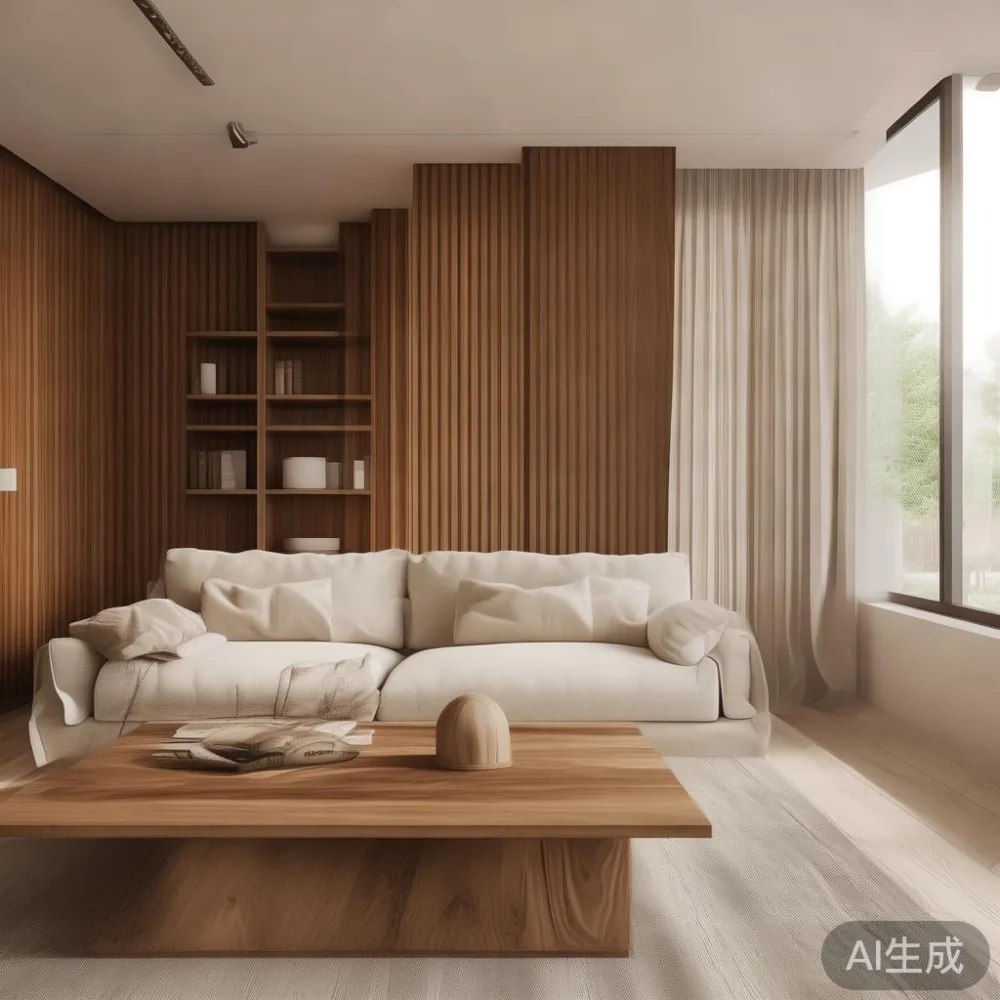
A solid wood sofa in warm minimal is usually a wooden-frame piece with linen or cotton-blend cushions, often with a low back and exposed timber arms. Think Japanese-engawa proportions: seat height 38 to 42 cm, seat depth 55 to 60 cm, back height 70 to 80 cm. A three-seater frame runs 200 to 230 cm wide and weighs 60 to 95 kg depending on the wood. Walnut frames are SGD 1,800 to SGD 3,500, oak frames SGD 1,500 to SGD 2,900, both ex-GST. The cushions should be removable and washable — Singapore humidity and daily use will demand it.
Upholstered sofas can sit in a warm minimal room, but they shift the language toward French light luxury or American light luxury, with deeper seats, higher backs, and brass-tipped legs. That is a valid choice for a larger condo in the 1,300 to 1,500 sqft range, especially if you entertain often, but it is not japandi style. If you go upholstered, keep the fabric in one of three families: oatmeal bouclé, sand linen, or a quiet sage — and skip patterns. A 2.2 m upholstered three-seater in performance linen runs SGD 2,800 to SGD 5,200 in Singapore retail, with direct-ship equivalents at SGD 1,800 to SGD 3,400.
How do I plan delivery and clearance so the furniture actually reaches my flat?
Measure three things before you click order: the lift door width (HDB passenger lifts are typically 80 cm wide and 2.1 m tall, service lifts 90 to 110 cm wide), the corridor width between the lift and your door (HDB common corridors are 1.2 to 1.5 m, some condo corridors 1.6 to 1.8 m), and the door width of your unit (HDB doors are 0.9 m standard, fire-rated doors 0.95 m). A 2.4 m wardrobe will not fit through a 0.9 m door standing upright — it has to come flat-packed or in two halves. A solid wood dining table at 1.8 m is fine as one piece, but a 2.2 m sofa will not fit in a standard HDB lift unless it ships in two boxes.
Plan for stairs. Most Foshan-to-Singapore sea freight arrives in 25 to 40 working days, clears Singapore customs in 3 to 5 days, and is delivered door-to-door on weekdays. Free shipping usually kicks in above SGD 350, with GST 9 percent added at checkout. Allow SGD 60 to SGD 150 per flight of stairs if your lift cannot be used, and ask whether the supplier includes that in the quote or bills it separately. A pre-delivery site survey — even a quick video call where you walk your corridor on camera — saves more money than any coupon. It is the single step most Singapore buyers skip and most regret.
What is a realistic total budget for a warm minimal japandi style home in SGD?
For a four-room HDB or a 1,000 sqft condo, a complete warm minimal japandi style package — one solid wood bed frame, two nightstands, one wardrobe, one dining table with four chairs, one solid wood sofa, one marble table, one bookshelf, and one lounge chair — lands between SGD 9,500 and SGD 18,000 ex-GST if sourced directly from a Foshan workshop like MIDHILL. The same package at Singapore retail is SGD 18,000 to SGD 35,000 once you add local showroom margins, which often run 40 to 80 percent over factory price.
Add 9 percent GST on top, SGD 350 to SGD 800 for doorstep delivery on multiple trips, and SGD 200 to SGD 500 for in-home assembly if you do not want to do it yourself. A 10-year structural warranty and lifetime refinishing on timber pieces will outlast any three-year local warranty, and that long-horizon thinking is what makes direct-ship worth the wait. Buy the bed, wardrobe, and dining table first — they are the structural pieces. Add the marble table, bookshelf, and lounge chair over the next six to twelve months as you settle in. The room will feel finished from day one and only get warmer as the wood patinas, which is, after all, the whole point of japandi style in a Singapore home.