Veneer vs Solid Wood: A 5-Year Cost Comparison for Japandi Homes
Choosing furniture for a Singapore HDB flat or condo often comes down to 2 practical questions: what will the piece cost over 5 years, and will it still look composed after daily use? Veneer can offer convincing grain, a lighter budget, and easier movement through lifts and corridors. Solid wood carries a higher purchase price but may age differently, repair more readily, and suit a japandi style interior for decades.
This comparison looks at realistic ownership costs in Singapore, including GST, delivery, maintenance, replacement, and resale effects. The examples cover a 180 cm dining table, a 150 cm bed frame, a 200 cm solid wood sofa, a 120 cm wardrobe, a 45 cm nightstand, and a 90 cm marble table. Prices are indicative planning figures in SGD, not quotations. For MIDHILL, structural warranty terms, refinishing support, delivery rules, and returns should be checked against the current product listing.
What is the real difference between veneer and solid wood?
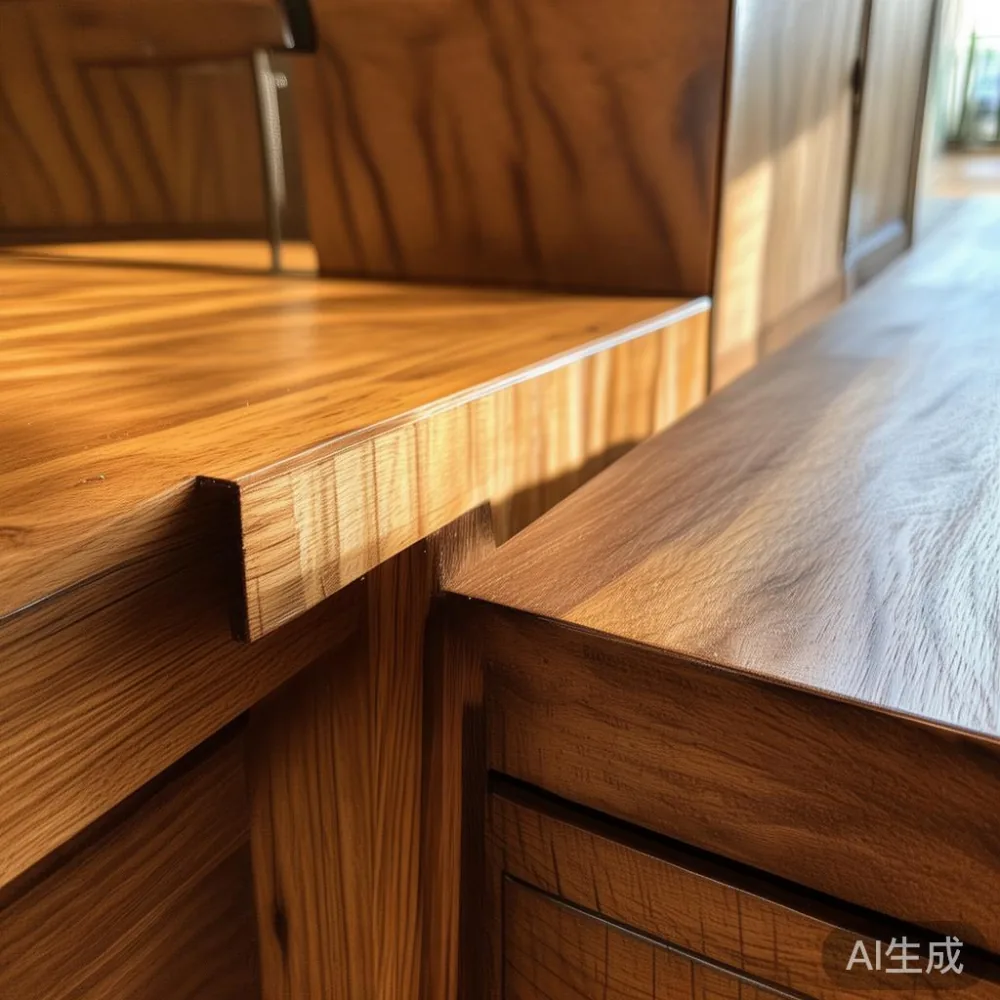
Veneer is a thin layer of timber, usually about 0.3–1.2 mm, bonded to a engineered board or plywood core. A dining table may use a veneered top of 18–25 mm, with chipboard or plywood beneath. Solid wood uses timber through the visible component, so a 20 mm solid oak dining top has a different material profile from a 20 mm veneered top over engineered wood.
The appearance can be close because veneer is sliced or rotary-cut from real logs. It may also show repeating grain patterns. Solid wood generally has more variation, but its finish, thickness, and moisture control matter more than the species label alone. A 4 cm solid wood tabletop does not automatically outperform a 3 cm well-built veneer top; stability, joint design, and the supporting frame are equally important.
For a Singapore home, the construction environment is significant. Relative humidity commonly moves through roughly 65–85% during humid periods. Engineered panels can move less across their width than solid timber, while solid wood can expand, contract, and occasionally check with seasonal changes. Air-conditioning and ventilation help both choices. Keep pieces about 20–30 cm from an exterior wall and avoid direct placement against bathroom or kitchen moisture.
One real first-person experience came from my visit to a colleague’s 3-room HDB flat in Tampines last month. She had a 180 cm veneer dining table with 4 matching chairs, delivered through a common corridor around 105 cm wide. The table was lighter to carry than the comparable solid wood set my client had chosen for a Punggol condo. After 18 months, one veneer edge had chipped near the dining table’s service hatch. A local repairer sanded and filled it for about SGD 85, while a full refinishing job would have cost approximately SGD 280. My colleague also noticed that lifting the table into the lift required 2 people, even though it weighed 28 kg; the solid wood version was 46 kg and required a third helper.
What does a typical veneer furniture set cost over 5 years?
A practical comparison needs more than a single retail price. Below is an indicative 5-year ownership model for common japandi style pieces. It includes a 6% GST assumption where applicable, normal delivery, estimated routine care, one repair scenario, and the likely residual value after 5 years. Shipping over US$350 is a MIDHILL export condition, so local delivery must be priced separately for Singapore orders.
A 180 cm veneer dining table with 4 chairs may retail around SGD 1,280 including GST. A comparable solid wood dining table may retail around SGD 2,080 including GST. Allow about SGD 80–160 for delivery inside Singapore, depending on the building, parking, and lift booking. A 150 cm veneer bed frame might cost SGD 680, compared with SGD 1,080 for a solid wood frame. A 200 cm solid wood sofa may range from SGD 1,980 to SGD 3,280 depending on the timber and suspension, while a comparable veneer sofa may be SGD 1,380–SGD 2,280.
The ownership figures are approximate, but they show where costs arise. A veneer wardrobe of 120 cm width may start near SGD 890 and lose about 40% of its purchase value over 5 years. A solid wood wardrobe may cost SGD 1,490 and retain about 50–60% if the finish remains sound. The nominal difference of SGD 600 becomes approximately SGD 340–450 after accounting for different repair and residual-value assumptions.
Cleaning products are modest. A USD-style microfibre cloth and pH-neutral cleaner can cost SGD 12–25 per year for a dining set. Solid wood may need re-oiling every 12–24 months at roughly SGD 120–260 per piece. Veneer should not be treated like solid timber. Excessive oil, steam, or solvent can darken or lift the veneer skin. For engineered panels, use a lightly damp cloth and dry immediately.
A 5-year calculation is not a promise that every item will depreciate by an exact percentage. It is a planning model. The assumptions still help compare 2 purchases that look similar in a showroom. One important adjustment is the service life of the home: a 5-year period is shorter than the 10-year structural warranty offered on eligible MIDHILL products, so warranty duration should not be confused with expected finish life.
How much does solid wood cost over 5 years?
Solid wood tends to make more sense when a piece is touched every day, moved infrequently, and intended to remain in place. Examples include a 150 cm bed frame, a 120 cm wardrobe, and a 45 cm nightstand. The higher material cost buys thicker repairable surfaces in many constructions, although manufacturer quality still needs checking.
For a 150 cm solid wood bed frame, assume a purchase price of SGD 1,080, delivery of SGD 90, and 5 years of care at SGD 180–360. If minor scratches occur, budget about SGD 100–220 for filling and refinishing. Residual value might be SGD 450–600. Total cash spent over 5 years could therefore be around SGD 1,450–1,750, with an effective cost after resale of SGD 850–1,300.
A veneer bed frame priced at SGD 680 may require SGD 60–120 of care, about SGD 100 for one edge repair, and could have a residual value of SGD 180–250. Its 5-year cash outlay might be SGD 900–1,020, leaving an effective cost of SGD 650–840. On a narrow cost basis, veneer can still be sensible, but the repair process differs.
A 45 cm solid wood nightstand may cost SGD 220–320, compared with SGD 120–190 for veneer. The solid version may be refinished rather than replaced after a drawer rub. A veneer nightstand may be more economical to replace if its skin is badly damaged, especially because the component is small and relatively light.
For a 200 cm sofa, upholstery may obscure most of the timber, so the frame material is only one part of the cost. A solid wood sofa may have a kiln-dried hardwood frame, webbing, foam, and fabric. A veneer sofa may use a stable engineered frame with some solid timber supports. Seating comfort depends more on the suspension, foam density, stitch method, and clearance than on whether every visible rail is solid timber.
Owners comparing European light luxury sofa vs Mid-century modern sofa should check the frame warranty, seat depth, and module weight before focusing on veneer labels. A useful showroom test is to sit for 10 minutes, then lift the front edge lightly and inspect whether the frame feels rigid without creaking. For product language, solid wood sofa, bed frame, dining table, wardrobe, nightstand, and marble table all describe different construction choices rather than a single style category.
Which material offers lower repair, replacement, and resale costs?
Solid wood normally wins where local scratches and edge damage are involved because a thin layer can often be sanded and refinished. A 4 cm solid wood dining table may accept a 1–2 mm repair cycle without changing the profile. Veneer cannot be repaired in the same way once its paper or skin is cut deeply, because sanding through the 0.3–1.2 mm layer exposes the core. A local furniture technician might charge SGD 180–450 for a veneer repair, depending on colour matching and access.
Replacement cost changes the calculation. If a Singapore family expects to replace a dining set every 5 years, veneer’s lower purchase price is rational. If the same household expects to keep the same bed frame, wardrobe, and dining table for 10–15 years, solid wood can distribute its cost across a longer period. MIDHILL’s 10-year structural warranty and lifetime refinishing service are relevant to that decision, provided the customer follows the care instructions and the service terms apply to the item.
Resale value also depends on design. A plain solid wood dining table in a quiet japandi style may appeal to buyers who want to re-oil it. A dated veneer finish may have a smaller audience, even if the underlying board is sound. Local online resale platforms show strong interest in matching solid wood dining tables, while used wardrobes often sell only when the doors, tracks, and dimensions are clearly described.
Transport creates hidden costs. A Bedok HDB lift may have an internal door width near 80–90 cm, while corridor sections can be narrower. A 180 cm table cannot turn corners easily, so dismantling matters. A veneer dining table might have 4 separate pieces weighing 12–20 kg each; a solid wood set may have a top of 38–52 kg. Moving a solid table upstairs can require 2–3 people and a SGD 100–300 service charge, while a modular veneer table may fit through the lift in 2 protected sections.
That last point can outweigh a small refinishing difference. Before buying, measure the lift door, lift car depth, corridor turns, stair width, and the route from the loading area. Leave at least 5–10 cm of clearance around large panels. For a 120 cm wardrobe, flat-pack construction can be useful, but a fully assembled solid wood wardrobe may not fit past a 75 cm corridor turn.
How should Singapore buyers compare a 5-year budget?
Begin with the total purchase price, including 6% GST where applicable. Then add delivery, assembly, access charges, and expected maintenance. Subtract a conservative resale value rather than assuming the item will recover its full price. Keep a separate 5–10% contingency for hardware, moving damage, and repairs; SGD 100 on a SGD 1,500 table is a realistic allowance.
A condensed veneer example for a 180 cm dining table, 150 cm bed frame, and 120 cm wardrobe is approximately SGD 2,850 before accessories. Add about SGD 250 for delivery and assembly, SGD 450 for a 5-year care and repair allowance, and subtract roughly SGD 760 in residual value. The effective 5-year cost is near SGD 2,790.
A comparable solid wood bundle may begin around SGD 4,650. Add SGD 350 for access and delivery, SGD 700 for care and repairs, and subtract approximately SGD 1,800 in residual value. Its effective 5-year cost is near SGD 3,900. The difference is about SGD 1,110, or roughly SGD 222 per year. The initial gap feels larger than the long-term gap because the solid wood pieces retain more value.
This is why material choice should follow use. Veneer can be a practical choice for a 120 cm wardrobe in a Punggol rental flat if the resident may move after 2–3 years. Solid wood may suit a Tampines family home with children, where a dining table edge receives frequent knocks and can be refinished. A marble table is neither veneer nor solid wood: a 90 cm marble top adds substantial visual weight and can place SGD 250–500 on delivery. Marble also needs different care because acids can etch the surface and impact can chip the edge.
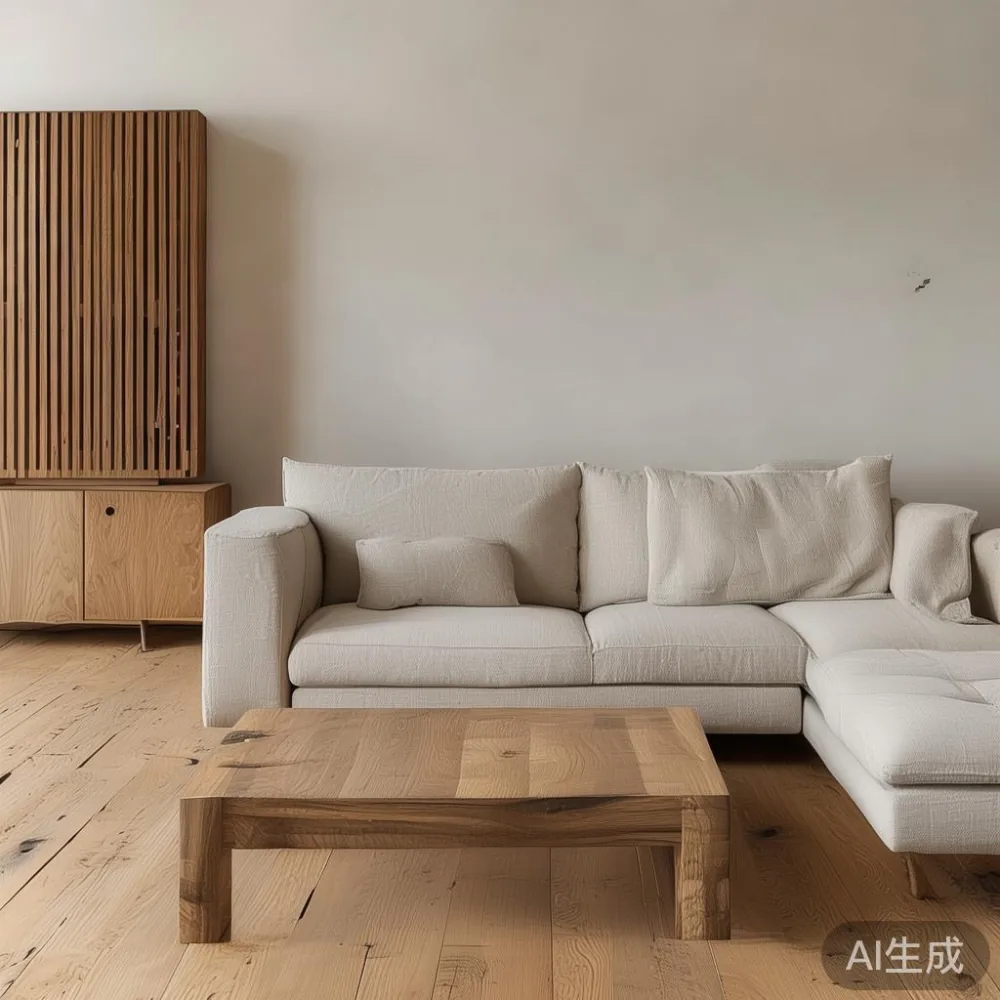
For a japandi style dining area, start with proportion and restraint. The Minimalist for dining room approach can use 1 timber table, 4 clean-lined chairs, pendant lighting, and 2–3 neutral accessories. Light tones such as pale oak can make a 90–120 cm condo dining zone feel larger, while a 180 cm table needs about 90 cm of circulation behind occupied chairs. A French light luxury mood can be introduced with curved chair backs, linen textures, and aged bronze details without filling every surface.
Is veneer less sustainable than solid wood over 5 years?
The answer depends on the board, adhesive, timber source, service life, and end of life. Veneer can use a smaller volume of decorative timber while producing a stable core. Solid wood can be more repairable and may last through several ownership cycles. A narrow veneer wardrobe replaced after 5 years can have a different environmental profile from a solid wood wardrobe refinished and kept for 15 years.
Singapore buyers can ask specific questions: Is the veneer 0.6 mm or 1.2 mm? Is the core FSC-certified or otherwise documented? What adhesive is used? Are exposed edges sealed? Can the finish be renewed? Is the solid wood kiln-dried to a stated moisture range, often around 8–12% for indoor furniture? These details are more informative than a broad environmental label.
For a japandi style bedroom, a solid wood bed frame can be paired with low-profile linen bedding and a restrained timber nightstand. Clients researching light luxury bed vs Modern bed often compare visual profiles rather than ownership cost. The light luxury approach typically adds upholstered surfaces and gentle curves; the Modern route relies on cleaner planes, integrated storage, and minimal ornament.
Likewise, French bed vs French provincial bed is partly a design distinction, but dimensions and construction still determine long-term cost. A French bed often refers to a light, upholstered frame, while French provincial styling suggests carved details, curved legs, and decorative hardware. The frame may use solid wood, veneer, metal, or a combination. Check the slat spacing, centre support, and headboard fixing rather than relying on style wording.
For an upholstered bedroom piece, guides to how to style light luxury sofa in bedroom can be useful because the sofa’s function affects clearance and care. A 180–200 cm sofa needs around 75–90 cm behind it for circulation. In a compact HDB bedroom, a 150–170 cm model may be more practical. Give a solid wood sofa 15–20 cm from a window if curtains will brush it, and avoid daily sunlight on pale veneer.
What should you buy for a japandi style home?
Choose veneer when the budget is limited, the furniture is lightweight, the room may change, and the surface will not receive heavy impact. Choose solid wood when the piece is a long-term fixture, receives frequent touch, has visible edges, or needs to be restored. Neither label guarantees quality. A poor solid wood joint can outlast a well-made veneer panel, and a high-grade veneer core can be more stable than poorly seasoned solid timber.
For a condo, confirm delivery access before checkout. A lift car of 100 × 120 cm may accept a disassembled 180 cm table, while a 90 cm-wide corridor can require turning the panel on edge. Protection should include corner guards, floor blankets, and lift booking. Delivery may take 7–14 days after production, with stock items commonly taking 3–7 days; the seller should confirm the actual lead time.
MIDHILL also reduces some ownership uncertainty through a 10-year structural warranty, lifetime refinishing, and 14-day returns, while local delivery and GST should still appear clearly on an order summary. Check www.midhill.co for current dimensions, finish choices, and service conditions. Ask for a written 5-year cost sheet if the budget is sensitive.
A balanced japandi style home often mixes materials rather than insisting on one. A veneer wardrobe can sit beside a solid wood dining table and a marble side table. The marble top introduces cool veining, the timber adds warmth, and the lighter veneer reduces visual weight. The result can borrow from American light luxury, French light luxury, or post-modern light luxury while remaining suited to Singapore apartments.
Over 5 years, veneer may require less capital and can be lighter to move, but solid wood often costs less per year when repair and resale are included. Make the decision with the room, the household, and the expected move date in view. Measure the route, compare total ownership cost, and select construction that can be maintained for the years ahead.