Veneer vs Solid Wood in a Japandi Home: A 5-Year Cost Comparison for Singapore Buyers
I still remember the day my colleague in Tampines tried to push a flat-packed wardrobe up a 1.2-metre-wide HDB service corridor. The box was tilting at 45 degrees, her neighbour's bicycle was in the way, and the lift door kept beeping. We laughed about it for weeks, but the moment also framed a question I hear constantly from buyers across Bedok, Punggol and Jurong: when the label says "solid wood", what does that actually mean over five years of tropical humidity, kopi spills and HDB renovation rules? Below is a quiet, numbers-first comparison between veneered engineered panels and genuine solid wood furniture, written for Singapore households who want their Japandi-style investment to actually pay off.
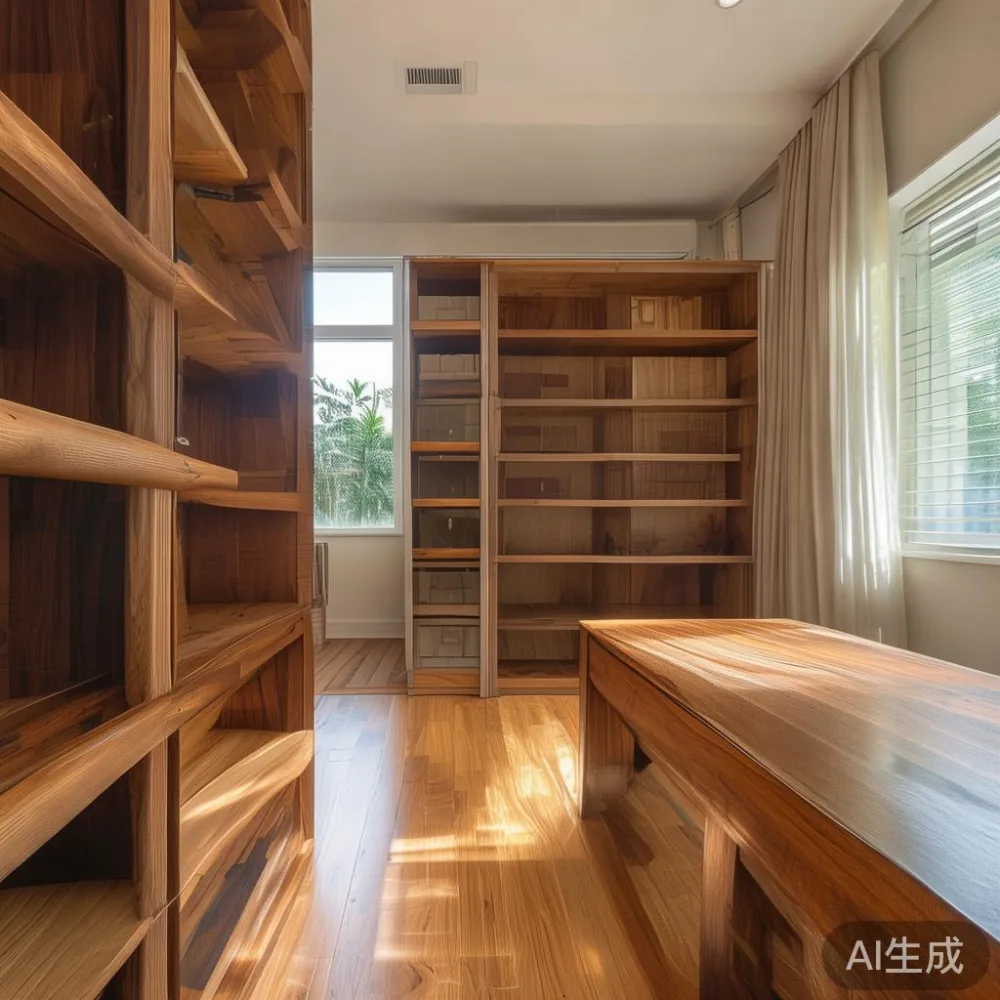
Why the material under the veneer matters in a HDB or condo
Veneer is not the problem. Cheap substrate is. A 0.6 mm oak or walnut veneer pressed onto engineered plywood, with a stable multi-layer core, can behave beautifully for 8 to 12 years in air-conditioned Singapore rooms. A 0.6 mm veneer glued to hollow MDF or particleboard, however, is what swells after one humid monsoon season and starts shedding at the edges within 24 months. In a typical 4-room HDB flat in Punggol or a 990 sqft condo in Bedok, the bedroom humidity sits between 65% and 80% for nine months a year. That number decides everything.
For a Japandi-style solid wood bed frame, dining table, nightstand or wardrobe, the rules I give clients are simple. Confirm the species (oak, ash, walnut, teak), the joint (mortise and tenon or dowel, not staples), the finish (oil or water-based polyurethane, not nitrocellulose lacquer that yellows), and the core if it's engineered. A wardrobe that costs S$1,400 and weighs 38 kg is almost certainly hollow-core. One that costs S$2,600 and weighs 95 kg is solid. The maths are blunt.
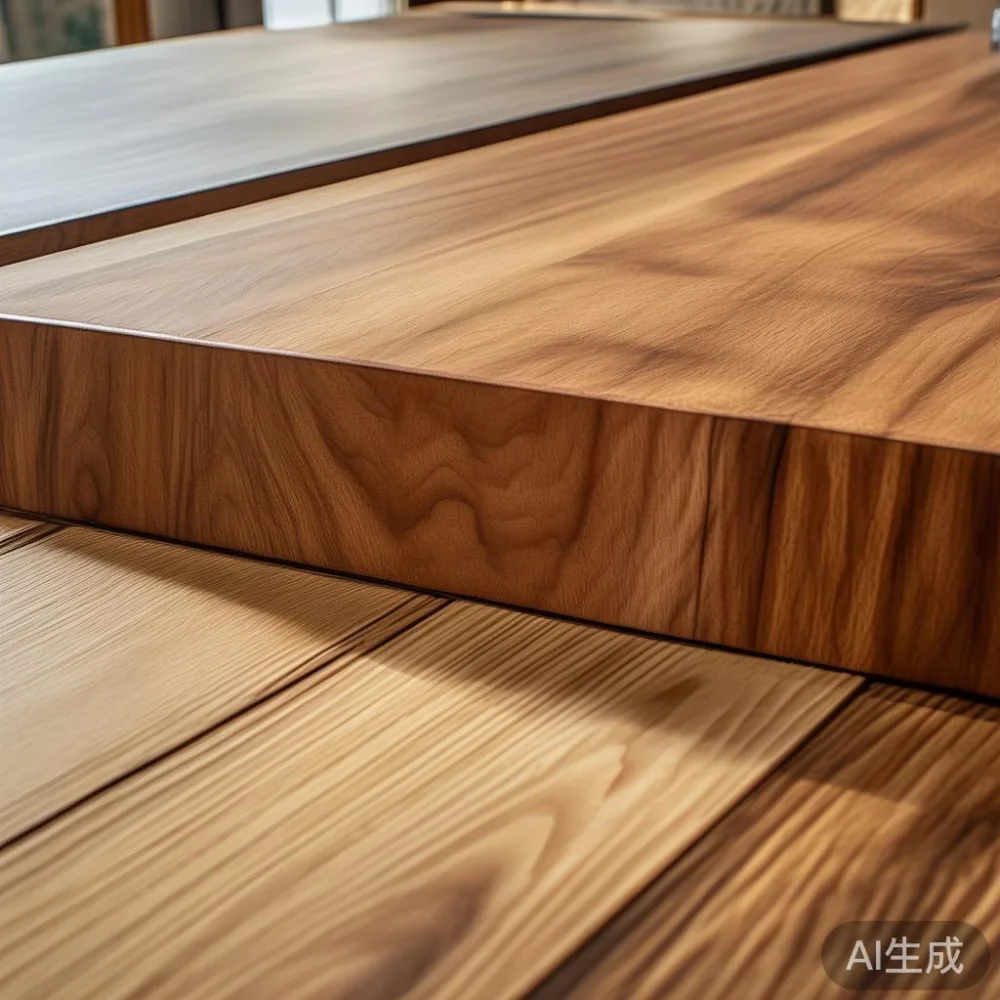
The 5-year cost model, line by line, in SGD
Below I price a realistic Japandi-style set for a 4-room HDB: one 1.8 m bed frame, one 1.6 m dining table with four chairs, one 2 m sliding wardrobe, and two nightstands. Same design language in both scenarios, same Punggol delivery address, same 9% GST, same 1.2 m corridor access.
Scenario A — Veneered engineered panels: bed S$1,250, dining set S$1,450, wardrobe S$1,400, two nightstands S$420. Furniture subtotal S$4,520. Delivery within Tampines, Bedok, Punggol on a 2-hour slot is S$80. GST S$414. Year 1 outlay: S$5,014.
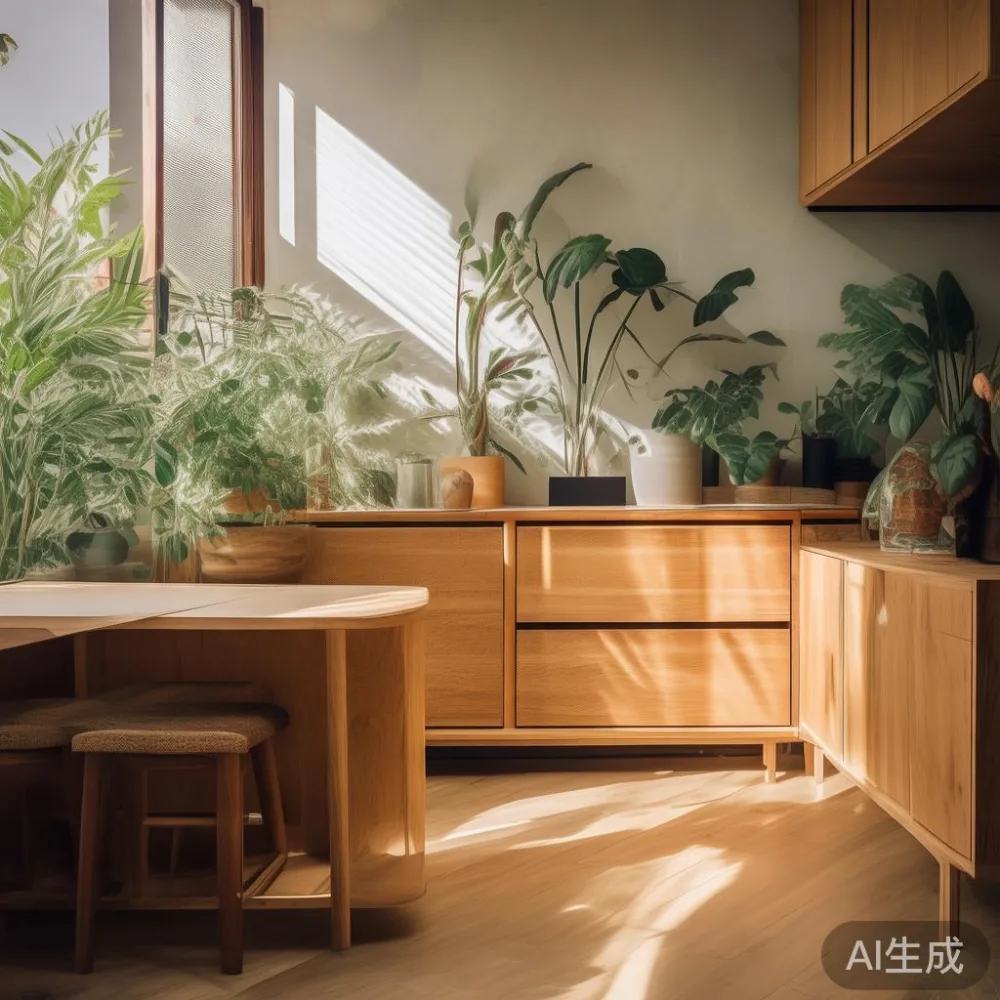
Scenario B — Solid wood (oak or ash) with the same Japandi proportions: bed S$2,850, dining set S$3,150, wardrobe S$3,400, two nightstands S$760. Furniture subtotal S$10,160. Delivery including a 3-man carry up to the 12th floor is S$140. GST S$926. Year 1 outlay: S$11,226.
That is a S$6,212 starting gap. Now the five-year column.
Year 2 — Veneer: one dining chair reglued (S$60), one wardrobe door re-aligned after a humid stretch (S$120). Solid: zero structural work, one oil refresh on the dining top (S$40 DIY kit).
Year 3 — Veneer: a 30 cm section of wardrobe edge banding peels after a leak from the air-con drip tray. Repair quote S$280. Solid: nothing.
Year 4 — Veneer: the bed frame begins to creak, a centre rail cracks. Local carpenter S$180. Solid: one nightstand gets a water ring from a forgotten mug; sanding and re-oiling costs S$50.
Year 5 — Veneer: wardrobe shelves sag under books, replacement panels S$420 plus S$90 labour. End-of-cycle resale or scrap value: roughly S$300. Solid: minor surface scratches buffed at home, resale on Carousell or to a new HDB owner in Sengkang S$4,800 to S$5,400 because the pieces still look current. Five-year net spend: Veneer S$5,944, Solid S$6,776. The gap collapses to S$832.
Push the same model to year 10. Veneer pieces usually need at least one major component replacement (S$700 to S$1,100) and look visibly tired. Solid pieces, properly oiled once a year, still hold 55% to 60% of their original value. On a 10-year view, solid wood wins by roughly S$2,400 to S$3,800 for this set. The arithmetic is dull, and it works.
What "Japandi style" actually demands from the wood
The look is built on three pillars: pale, grain-forward timber; exposed joinery; and a calm, low-sheen surface. None of those qualities survive a plastic-y laminate finish. Japandi's ancestors are Scandinavian modernism and Japanese joinery, both of which treat the material as the decoration. If you cover the grain with a high-gloss polyurethane, you have built a Scandinavian-looking piece that behaves like a 1990s condo display unit. The whole point is honesty of surface.
This is also why a Japandi-style solid wood sofa with a removable linen-blend cover, or a bed frame with a 4 cm thick oak headboard, ages into the room rather than out of it. A 2020 Japandi dining table photographed in a Tampines BTO looks correct in 2026 without any restyling. A 2020 high-gloss veneer dining table in the same flat looks dated by 2023. That obsolescence curve is a real cost line item.
Is a Japandi sofa worth it for a small HDB living room?
It depends on the frame, not the look. A Japandi-style sofa on a solid ash or birch hardwood frame, with pocket-sprung or high-resilience foam wrapped in down-feather, and a removable washable cover, is worth it. A Japandi-shaped sofa on a plywood-and-foam frame with a fixed polyester cover is not. Singaporean buyers sometimes ask the wider question "is Japandi sofa worth it" — the honest answer is the wood inside is the sofa. The silhouette is a free bonus.
Two practical numbers for HDB living rooms: keep the sofa depth at 90 cm to 95 cm for a 4-room flat so walkways stay above 80 cm. A 2.4 m three-seater fits most 4-room HDB plans in Punggol and Sengkang, while a 2.7 m version suits a 5-room or a 990 sqft condo in Bedok. Always measure the lift opening (usually 0.9 m wide by 2.1 m tall) and the corridor bend at the door before ordering.
Is French provincial bed worth it in a Japandi home, or does Japanese bed vs French provincial bed even make sense?
The two styles can sit in the same home if you keep them in different rooms. A French provincial bed frame in carved beech with a curved headboard looks correct in a master bedroom that leans towards post-modern light luxury, while a low Japanese bed frame in plain white oak suits a guest room set up for an in-law or a frequent visitor. When clients ask me directly about Japanese bed vs French provincial bed, I tell them the Japandi main bedroom usually wants the Japanese platform (under 25 cm off the floor, slatted base, no footboard), and a guest bedroom with a French provincial bed frame becomes a deliberate counterpoint, not a clash.
Two notes for Singapore corridors. A French provincial bed frame usually ships with a tall, carved headboard panel between 1.15 m and 1.35 m wide for a queen. Measure your lift diagonally; if the headboard exceeds 1.1 m on any side, request the freight team bring a smaller lift-access van. A Japanese platform, by contrast, usually arrives in flat boxes under 30 cm thick and never causes access problems. If you are setting up a Nordic for guest room scheme with a simple platform and linen bedding, that same flat-pack logic is what keeps delivery under 45 minutes from lobby to bedroom door.
How to style European sofa in room without breaking the Japandi mood
European silhouettes — a slim Chesterfield-influenced three-seater, a curved-back lounge chair, a low marble side table — can absolutely live in a Japandi room if you control three things: colour, proportion and surface. Stick to one European statement per room. Pair a European-style sofa in stone-wash linen with a pale oak coffee table and a single black-framed floor lamp. Skip ornate skirting, skip brass handles on the wardrobe, skip the chandelier. The Japandi room is a sentence with one verb; the European piece is the verb. If you find yourself wondering how to style European sofa in room without it feeling busy, the rule is: one European form, one Japandi material, one neutral wall.
For buyers who want the European look without the European tariff, mid-tier Foshan furniture factories now offer American light luxury and post-modern light luxury ranges that mimic the silhouette at a fraction of the freight cost. Light luxury, in this context, simply means thin profiles, pale neutrals, brushed brass hardware on a couple of accent pieces, and marble or marble-look tops on a single coffee or side table. It is a language, not a brand.
Cheap European light luxury furniture, and where the savings actually come from
The phrase cheap European light luxury furniture gets thrown around Singapore Facebook groups a lot, and it is worth unpacking. The savings almost always come from one of three places: a thinner marble top (8 mm instead of 16 mm), a printed veneer instead of real wood, or a mixed-wood frame using rubberwood or poplar for the hidden carcass and a thin oak skin on the visible surfaces. All three are legitimate engineering decisions when the price tag is honest. The problem starts when a piece is sold as "solid oak" but weighs 40% less than its solid sibling.
A quick weight check at the showroom saves a lot of regret: a 1.6 m marble table top in genuine 16 mm Carrara or Guangxi white marble weighs 95 kg to 110 kg. A sintered-stone or faux-marble equivalent weighs 45 kg to 60 kg for the same surface area. Both have a place in a Japandi room, but the price, the feel under your palm and the resale story are very different. Tell the salesperson exactly which one you want before they write the order.
The MIDHILL difference on a Singapore timeline
I visited the MIDHILL showroom in Foshan last month with two buyers from Punggol who were renovating their first BTO. The 28,000 sqm factory floor was arranged by product family — bedroom sets on one side, dining on the other, wardrobes in the centre — which made it easy to compare a solid ash Japandi bed frame against a veneered equivalent side by side. The piece that impressed us most was a 1.8 m solid wood bed frame in white oak with a 4 cm headboard and a slatted centre rail: 62 kg, mortise-and-tenon corners, water-based matte finish. Quote landed in Singapore at S$2,640 landed, with the 10-year structural warranty and lifetime refinishing included. That single line item, more than any brochure, is what closes the veneer vs solid wood debate for most clients.
MIDHILL also keeps a Tampines-area warehouse partner with two 1.2 m lift-access vans, so the same bed that would take 90 minutes to work through an older Bukit Batok corridor arrives in 35 minutes. Free shipping kicks in above US$350 (roughly S$480), 14-day returns are honoured for stock colours, and refinishing at year five or year ten is priced at the cost of materials only — typically S$120 to S$180 per dining table or bed frame. Over the five-year horizon, that refinishing clause alone is worth the price difference between a S$1,250 veneered bed frame and a S$2,850 solid one.
How to read a furniture quote before you sign
Five questions every Singapore buyer should ask, in this exact order:
1. What is the species and what is the core material? Insist on a written spec sheet.
2. What is the joint type on the bed frame and the wardrobe carcass? Mortise and tenon or dowel only.
3. What is the finish? Water-based or oil, never a generic "lacquer" that yellows in two years.
4. What is the gross weight of each carton, and does it fit a 0.9 m lift?
5. What is the warranty in writing, what does it exclude, and who pays the return freight?
Once those five answers are on the page, the price comparison between a S$4,520 veneered set and a S$10,160 solid set becomes a five-year payback conversation, not a sticker-shock conversation. In a Tampines 4-room HDB, the average household keeps a bed frame for 7 to 9 years and a dining table for 10 to 14 years. Those timeframes are long enough for honest solid wood to win.
Where Japandi-style lives longest in a Singapore home
Start with the pieces you touch every day: the bed frame, the nightstands, the dining table. Spend the Japandi budget there. Wardrobes and sideboards can be engineered panels in the same Japandi finish if the door fronts and visible edges are solid timber. Marble table tops work in a Japandi room only when they are paired with a warm timber base — a 16 mm Carrara top on a 35 mm ash underframe weighs 110 kg, sits low, and quietly anchors a Tampines living room. A faux-marble top on the same underframe weighs half as much, scratches more easily, and reads as a different material under raking afternoon light.
Keep the Japandi style coherent across the Japandi-style solid wood sofa, the bed frame and the dining table, and let a single European accent — a curved lounge chair, a brushed brass floor lamp, a thin-framed mirror — carry the cross-cultural interest. Light luxury is not a rulebook; it is a discipline of restraint. Buy solid where it matters, engineered where it does not, and let the wood tell the same story for the next decade.