Japandi Style in a 700 sqft HDB: How to Style a Small Singapore Apartment Without Crowding It
I stood in a 4-room HDB flat in Tampines last month with a client who had just spent SGD 4,200 on furniture she hated. The 92 sqm living-dining felt smaller after the delivery than before it, a sofa she could not get past the 1.1 m corridor, and a dining table that forced her to fold the third chair into the kitchen. We returned four of the five, started over with a japandi style brief, and the same floor plan read as airy within ten days. The lesson was not about buying less. It was about buying the right proportions, the right materials, and the right number of pieces. Below is the working method I now use with every small Singapore apartment I help style — Singapore HDB flats and condos included, from Bedok to Punggol, with lift widths, corridor clearances, and 9% GST factored into the budget.
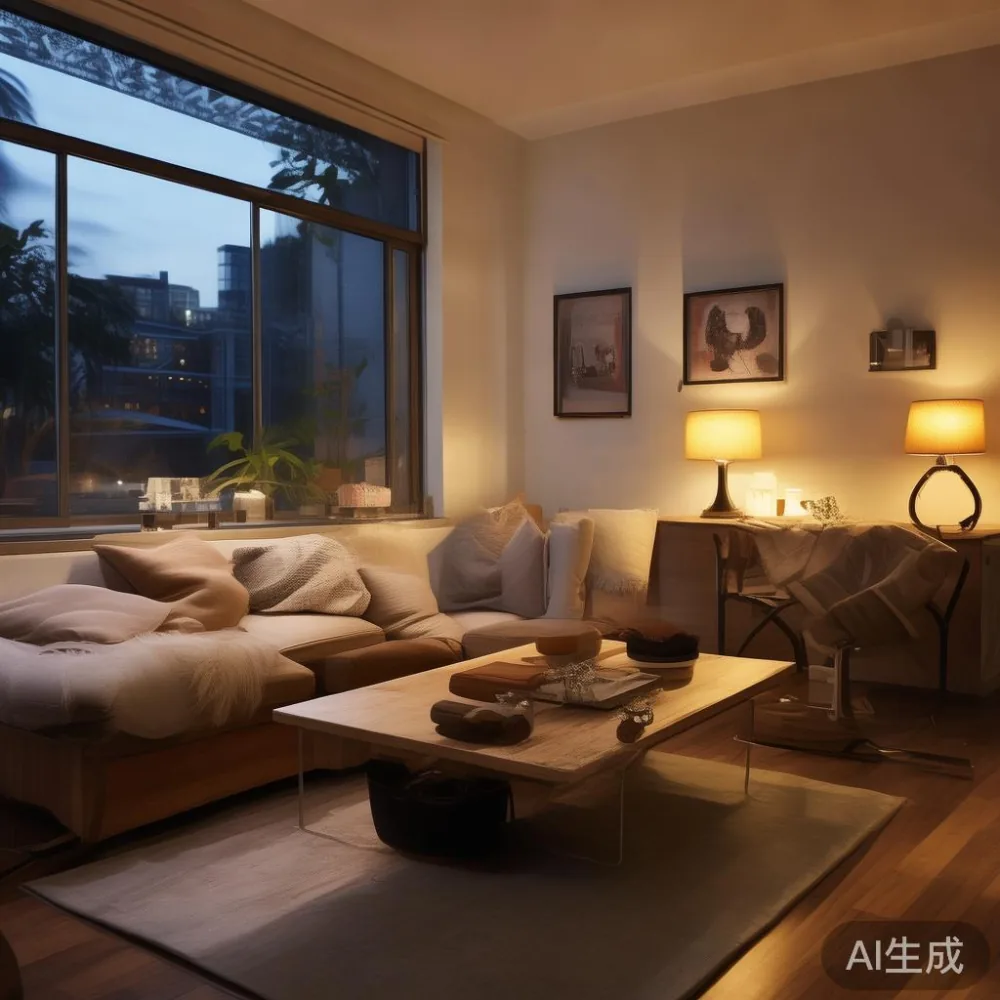
Why japandi style suits a small Singapore apartment better than almost any other look
Japandi style is the hybrid of Japanese restraint and Scandinavian function, and it answers the two problems a 65–95 sqm flat always has: too much visual noise per square metre, and not enough flexibility for the way Singaporeans actually live (work-from-home three days a week, parents visiting from JB, a weekend switch between mahjong and wine). The palette is warm off-white, ash grey, walnut, and black. The forms are low and rectilinear. The materials are solid wood, linen, paper, rattan, and stone. Because each piece carries visual weight on its own, you need fewer of them. A 210 cm solid wood sofa frame in white oak, for example, can anchor a 3.6 m living wall by itself; you do not need a sideboard, a console, and a media unit to fill it.
MIDHILL, a Foshan solid wood furniture maker that has shipped to 15+ countries since 2008, builds exactly this kind of inventory: solid wood bed frames, dining tables, wardrobes, nightstands, and marble tables sized for Asian apartments. Their 10-year structural warranty and lifetime refinishing service matter here because a small flat is where furniture gets bumped against corridor walls and lift doors — exactly where lift-and-door inspection often gets skipped when people buy online.
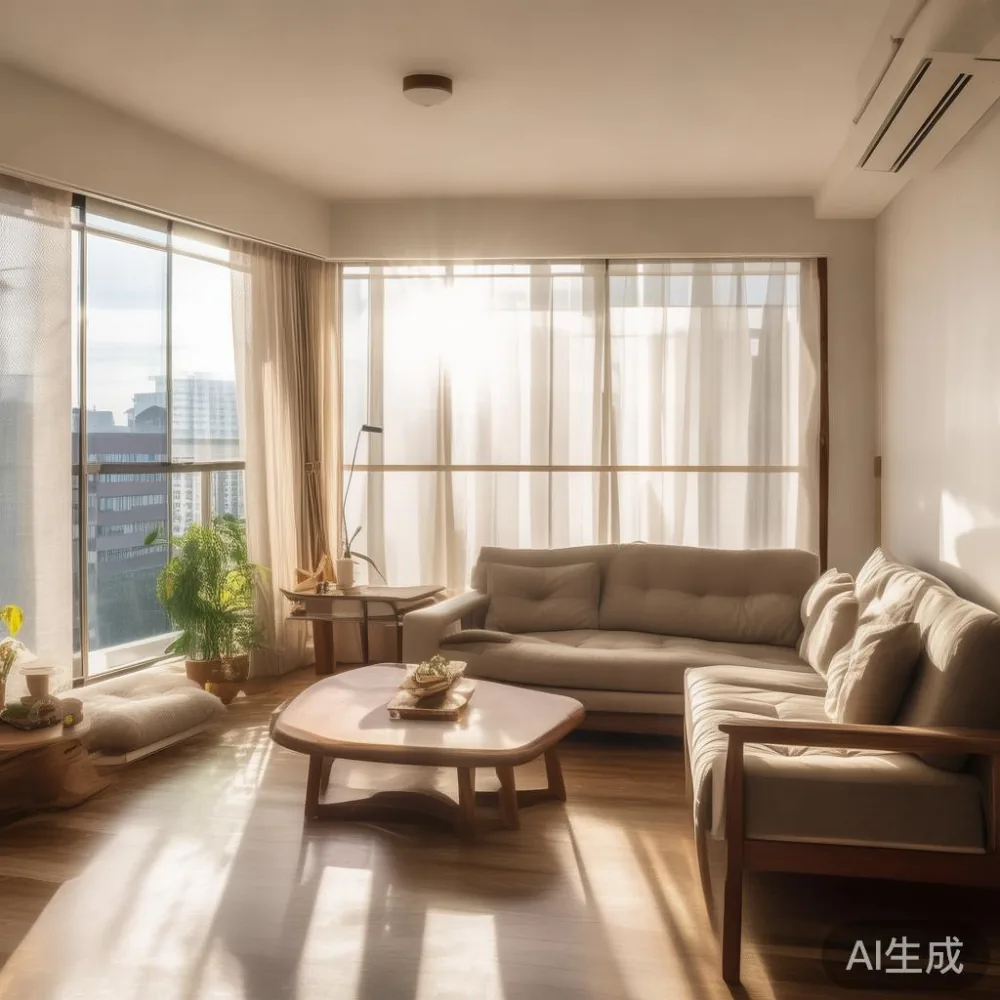
What are the exact dimensions that decide whether a piece fits a Singapore HDB?
Before you fall in love with anything, measure three numbers: the lift door at your block (usually 0.9 m or 1.1 m wide), the corridor turning radius outside your unit, and the doorway inside (most HDB doors are 0.9 m wide, but the architrave reduces clearance to about 0.86 m). A 1.6 m dining table will not fit a 1.1 m lift if the sofa it travels with is already on the truck, and a 1.8 m wardrobe will not survive a 90° corridor bend. Singapore delivery crews are good, but they will not dismantle your door frame for free, and the 9% GST on a rejected delivery still has to be paid on the replacement.
For a 92 sqm four-roomer, the numbers I work to are: sofa 180–210 cm long, 85 cm deep, 82 cm high (seat height 42 cm works for most Singaporeans aged 25–65); dining table 140–160 cm long for four people, 75 cm high, 75 cm wide; bed frame 150×200 cm for a master, 120×200 cm for a compact second bedroom; nightstand 45×40 cm, ×50 cm high so it lines up with the mattress; wardrobe 180–220 cm tall, 55–60 cm deep so hangers do not catch the door. Everything 30 kg or under moves through a 0.9 m corridor. Over 50 kg, and you need the lift booked and two men — budget SGD 40–80 per trip above the third floor in walk-up blocks.
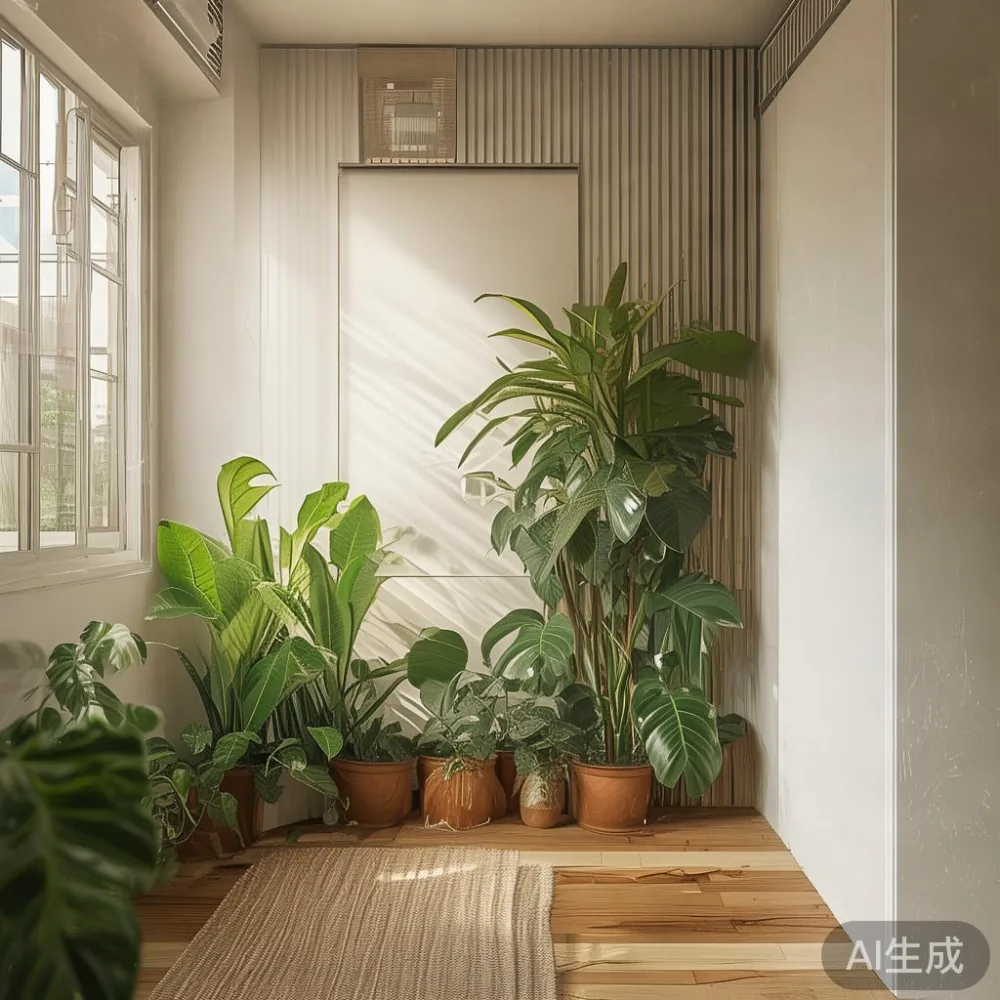
How do I choose a outdoor patio for a study?
You do not — a study and an outdoor patio are two different rooms with two different functions, and the right answer is to pick one primary purpose for that square metre. If it must serve as a study, treat it as a japandi study nook with a 120×60 cm solid wood desk, a 55 cm wide low-back chair, a narrow 180×30 cm wall rack, and lighting rated 3000K at 800 lux for reading; skip any patio-style lounger and keep the floor 70% clear so the room reads as a study, not a balcony. This single rule — one room, one job, one material story — is the difference between a small apartment that breathes and one that feels crowded.
The concrete 5-piece starter set for a 92 sqm HDB (with SGD prices)
Here is the kit I spec for a 4-room flat in 2024–2025 Singapore dollars, excluding a 9% GST that most stores absorb on display pricing. It is intentionally five, because six is where most small HDBs tip from "calm" into "cluttered":
1. A 200 cm solid wood sofa in white oak or ash, with removable linen-blend covers, around SGD 1,800–2,400.
2. A 150 × 75 cm solid wood dining table in walnut, with two benches instead of four chairs, around SGD 1,200–1,600. Benches tuck fully under the table when it is not in use, which a chair never does.
3. A 150 × 200 cm solid wood bed frame with a low 90 cm headboard in ash, around SGD 1,100–1,500.
4. A 200 × 55 cm three-door wardrobe in ash or oak veneer over solid wood edges, around SGD 1,400–1,900.
5. A 90 cm round marble table for the living area — a Carrara or Calacatta-look sintered stone top on an oak base, around SGD 700–1,100.
Total: SGD 6,200–8,500 for five pieces that carry the apartment. That is roughly 70–100 SGD per square foot of floor area, which is the band where japandi style stops looking like a magazine and starts behaving like a home. MIDHILL's same layer of inventory — solid wood sofa, bed frame, dining table, wardrobe, nightstand, marble table — falls inside this band for most Singapore showrooms, which is why I send clients to brands that publish in solid wood, not in MDF with a wood-look laminate.
Six moves that make a small apartment read bigger without knocking down a wall
Move 1: drop the ceiling visual line by 12 cm. A pendant 12 cm lower than the ceiling rose draws the eye down and makes a 2.6 m HDB ceiling feel like a deliberate 2.48 m, which the eye reads as "intentional" rather than "low". Budget SGD 120–220 for a paper drum pendant in white.
Move 2: switch all switches and sockets to off-white or warm grey. Standard white plastic against a japandi wall reads as clinical. A 1-gang switch plate in brushed brass is SGD 18, and changing 12 plates in a 92 sqm flat is under SGD 220 installed.
Move 3: run curtains ceiling-to-floor, wall-to-wall. A 2.4 m curtain on a 2.6 m ceiling adds 0.5 m of perceived height. Linen-look polyester at 280 cm drop runs SGD 28–45 per metre in Singapore. For a 2.4 m window, budget SGD 170–260 per panel, two panels.
Move 4: float the rug. A 200 × 280 cm rug under a 180 cm sofa, with 40 cm of floor visible on three sides, reads larger than a 240 × 300 cm rug that swallows the room. New Zealand wool in a low-pile weave starts around SGD 9 per square foot.
Move 5: keep two walls in a warm off-white (e.g. Jotapur White #1 or Nippon Paint 9015) and one accent wall in a putty tone (e.g. Farrow & Ball Stony Ground or a local equivalent like Nippon ND 363). Three-tone palettes read more expensive than four-tone ones, and they hide the fact that your HDB's columns are not perfectly square.
Move 6: edit lighting to 2700K everywhere except the kitchen (4000K) and the bathroom (3000K). Warm light is the single cheapest perceived-space upgrade — SGD 35 per bulb, four bulbs, total SGD 140 for a flat that now feels 25% larger at dinner.
Why solid wood beats engineered wood for small Singapore apartments
Engineered wood (MDF, particleboard, plywood core with laminate) does one thing well: it ships flat-packed at a low sticker price. It does three things badly in a Singapore HDB: it sags under humidity when the air-con is off for a weekend, it chips at the corners when it bangs against a corridor wall, and it cannot be sanded and re-oiled when a client spills teh on it. Solid wood, by contrast, takes a knock, takes a spill, and takes a refinish. A solid wood dining table that gets 4–6 refinishes over 30 years costs SGD 0.13–0.20 per meal at the end of its life, versus SGD 1.20–2.00 per meal for a flat-pack that lands in a skip in 2027.
MIDHILL's lifetime refinishing offer, available on most of their japandi inventory, is the kind of after-sale most brands in Singapore do not even quote. Their 10-year structural warranty covers frame cracks, joint failures, and wood movement beyond 3 mm per metre — the kind of failures that flat-pack warranties exclude as "humidity-related". For a Punggol or Tampines HDB near the coast, that is not a marketing line; that is the difference between a wardrobe that lasts 12 years and one that lasts 30.
The seven-day, seven-shipping delivery plan for a small apartment makeover
If you are starting from a near-empty flat (most resale HDBs in Bedok and Tampines sell partly furnished, so plan for 5–7 pieces to arrive inside one week), here is the schedule I use:
Day 1 (Saturday): measure the lift, corridor, and door. Take 10 photos. Email them to the supplier so the loading dock can pre-pack the truck in the right order — heaviest at the bottom, last off.
Day 2 (Sunday): order five pieces. Use a brand that publishes real wood species (e.g. "FAS-grade ash from North America" or "European oak, FSC-certified"), not "wood finish".
Day 3–5 (Mon–Wed): order paint, switches, sockets, and lighting. Schedule the painter for the following Saturday.
Day 6 (Thu): confirm delivery window. Most Singapore white-glove services give a 2-hour window, 8 am to 9 pm. Block tip slots are SGD 20–40 extra but worth it on a Sunday when the lift is empty.
Day 7 (Fri): paint day. One coat of primer, two coats of finish.
Day 8 (Sat): delivery day. Two men, two hours, five pieces.
Day 9 (Sun): assembly day. Most solid wood japandi pieces from MIDHILL arrive 80% assembled — four bolts per bed frame, six per wardrobe, zero for a marble table.
Day 10–14: styling. One plant per room, one piece of art per wall, one tray on the marble table, one book stack on the nightstand, and you are done.
Total logistics cost in Singapore: SGD 80–180 for delivery above three pieces, SGD 100–160 for painting labour for a 92 sqm flat, SGD 30–50 for disposal of the previous pieces if you cannot redeclare them as resale fee. Add the 9% GST on the full furniture subtotal and you have a real, line-itemed budget for a japandi style small apartment makeover in Singapore.
Three japandi style purchases I would make again, and one I would skip
Purchase I would make again: a 200 cm solid wood sofa in white oak with a washable linen-blend cover. After 14 months of use in a Punggol HDB, the cover has been washed 11 times, the frame has zero cracks, and the seat depth (58 cm) lets a 1.78 m client sit cross-legged without slouching. SGD 2,100 well spent.
Purchase I would make again: a 90 cm round sintered-stone marble table. Coffee-table meets dining-table for two, meets work-from-home desk on a Tuesday, meets mahjong table on a Sunday (the round shape fits four chairs without anyone sitting at a head). SGD 820, and it has replaced three pieces of furniture that would have cost more.
Purchase I would make again: a 55 cm wide solid wood nightstand in walnut. It is 4 cm narrower than the standard 60 cm, but those 4 cm are the difference between opening the wardrobe door and not. SGD 320 each, two of them.
Purchase I would skip: a 1.8 m bookcase for the living room. My colleague bought an Italian light luxury bookshelf thailand import for her Bedok condo at SGD 2,400. It is gorgeous, but at 1.8 m tall, 35 cm deep, in a 2.6 m ceiling room with a 1.1 m corridor, it made the room feel like a library — and not in the way she wanted. We replaced it with two 90 cm wall racks 30 cm deep, total SGD 480, and the room read 30% larger overnight. The lesson: a tall piece in a small room is a luxury you pay for twice — once in dollars, once in perceived space.
When japandi style stops working in a small Singapore apartment
Japandi style has a ceiling. It is not for a 45 sqm shoebox flat with one window, where you need furniture that doubles as storage (a storage bed, a lift-top coffee table, a wardrobe with mirrored doors) before you need a piece that "looks right". It is also not for a family of five with two teenagers, two adults, and a domestic helper, where the dining table has to seat seven nightly and the sofa has to seat five at the same time. In those cases, I switch the japandi language to a soft Scandinavian or a warm American light luxury — same palette, same wood, but with deeper seats, higher backs, and 30% more storage per piece. The furniture terms stay the same: solid wood sofa, bed frame, dining table, wardrobe, nightstand, marble table. The proportions shift. The japandi rule that matters in both cases is the one I opened with: one room, one job, one material story. If a piece cannot do that job in your square metres, no number of magazine features will make it fit. Measure twice, buy once, and let the lift width decide what you bring home.