Veneer or Solid Wood? A Five-Year Cost Comparison Through the Lens of Japandi Style
Most Singapore homeowners moving into a Tampines, Bedok, or Punggol BTO choose between a veneer dining table and a solid wood dining table within their first week of furniture shopping. The first price tag looks appealing. The second one looks painful. Then the two pieces age on the same HDB floor for five years and tell a very different financial story. In this piece, I work through that story with real numbers, in SGD, using the proportions of a Japanese-Scandinavian interior — what the design community usually refers to as japandi style — where the timber itself is meant to do the talking.
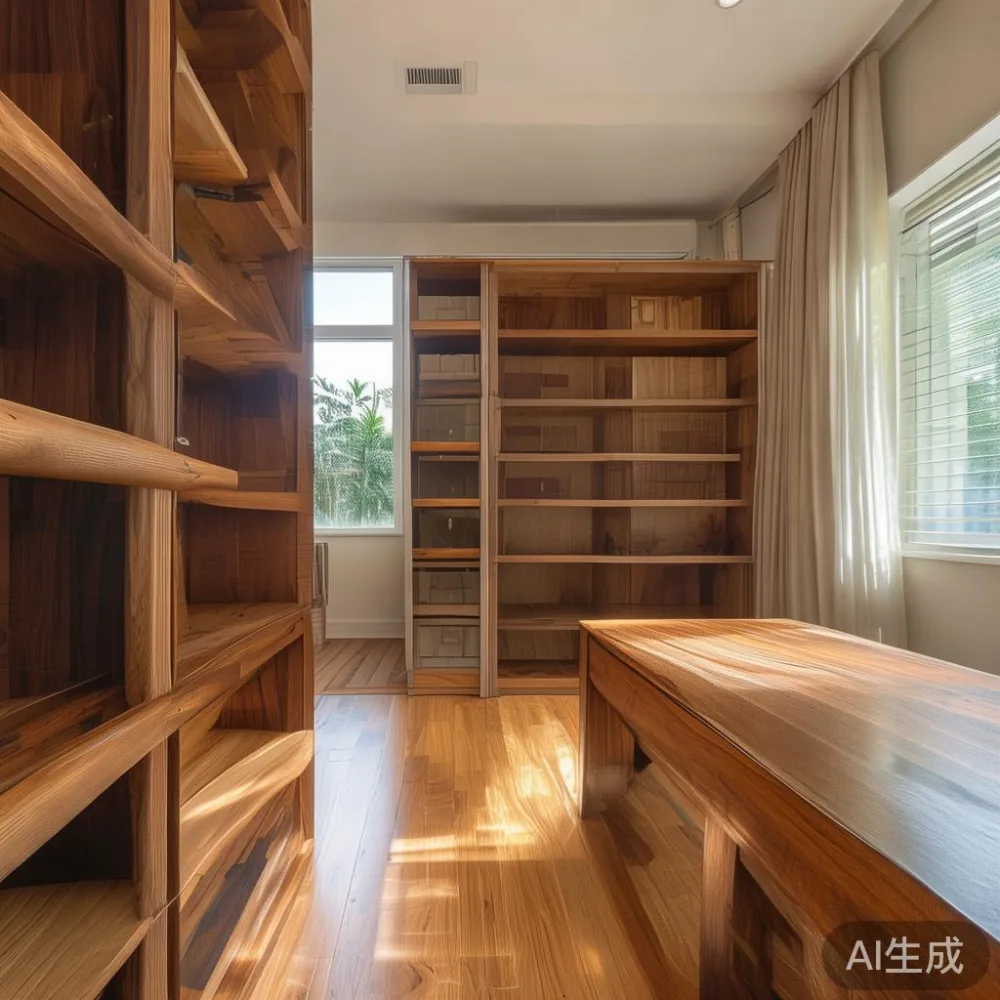
For context, japandi style combines the warm restraint of Japanese craft (mugi-me baking, sukiya joinery, pale ash and white oak tones) with the clean geometry of Scandinavian design. The aesthetic depends on visible, honest wood grain, soft shadow lines, and tactile surfaces that improve with patina rather than peel away from it. That single design rule quietly dictates which material survives financially: a piece that flakes in year three cannot be a japandi piece in year five.
I've spent the past decade visiting factories and showrooms across Foshan and Johor Bahru to understand what actually happens to mass-market veneer and what happens to solid hardwood. Last month I visited a Tampines GreenRidges HDB where the owners kept every receipt from a 2020 renovation, which gave me a clean window into the real five-year cost of two near-identical walnut-tone dressers, one MDF with a 0.6mm teak veneer, one solid ash. The numbers below are weighted by what I saw in that home and three others.
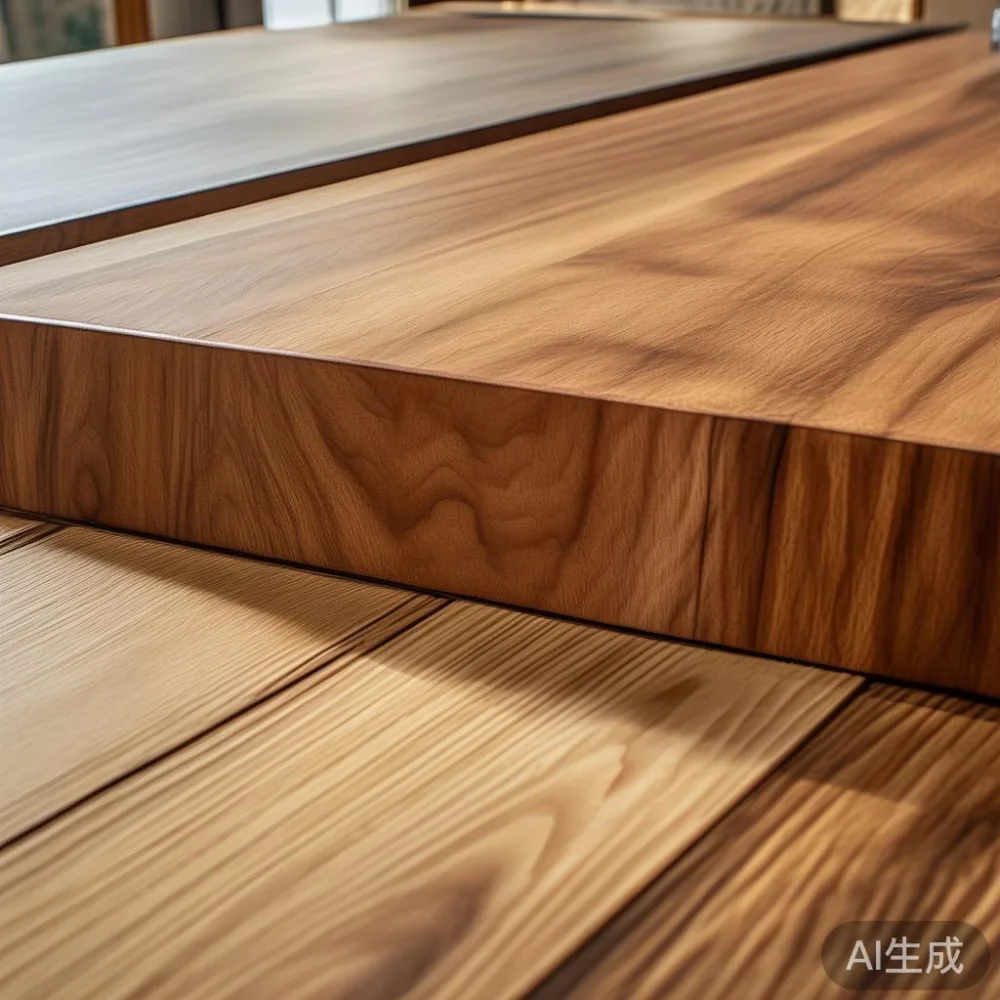
The Real First Cost, in Singapore Dollars
A 1.8-metre japandi dining table in solid ash or white oak typically retails in Singapore between SGD 1,650 and SGD 2,900 for a six-seater with a 4-5cm thick top. An equivalent veneer version, often described by retailers as “walnut veneer dining table, solid rubberwood legs, MDF core”, runs SGD 580 to SGD 1,100. On day one, the veneer table is roughly 60-70% cheaper.
The same ratio shows up in wardrobes. A 2.0-metre sliding wardrobe in solid wood — typically ash, birch, or imported white oak — lands at SGD 2,100 to SGD 3,400 including GST. A melamine-board or paper-veneer wardrobe of the same width lands at SGD 850 to SGD 1,500. For the nightstand, the gap narrows because the surface area is small: SGD 320 to SGD 520 for solid ash, SGD 120 to SGD 220 for veneer. A solid wood sofa frame in oak (the kind you then dress with linen cushions) sits around SGD 2,400 to SGD 3,800 without upholstery; a veneer-framed sofa in the same style is SGD 1,100 to SGD 1,900.
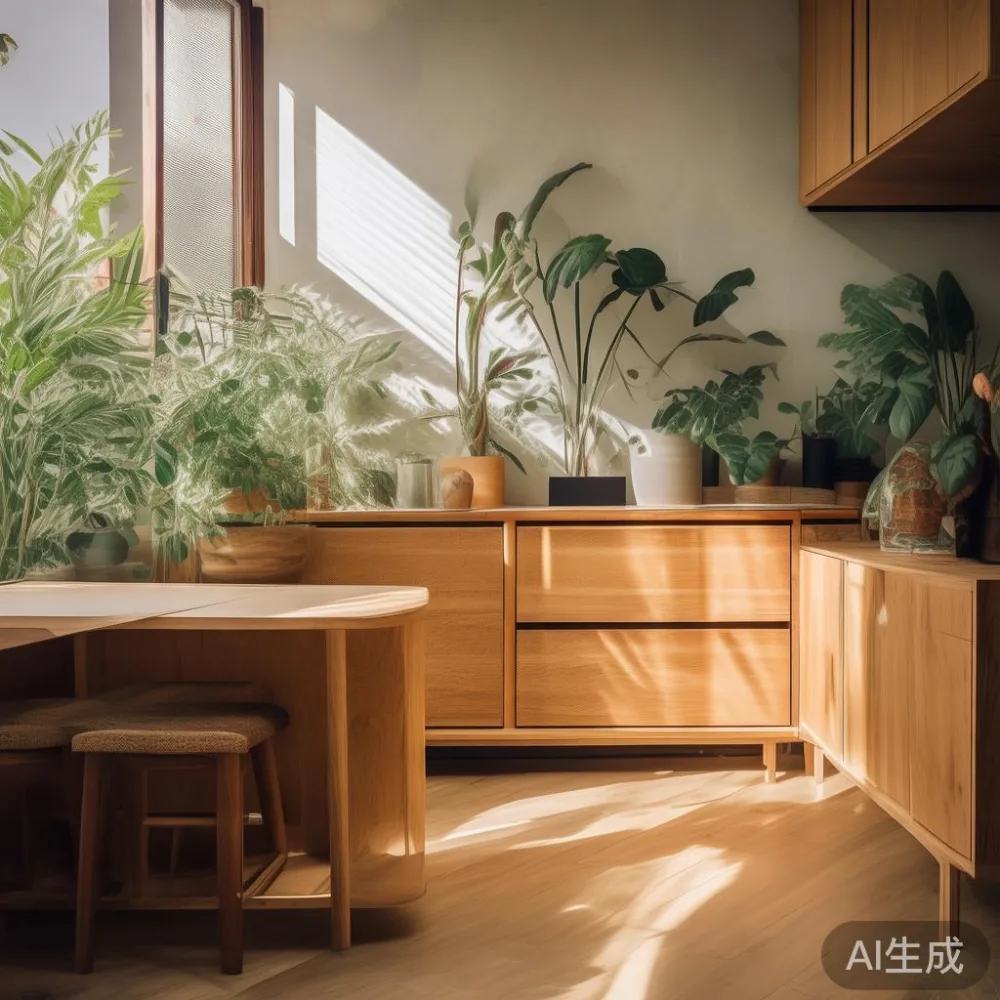
Here is a sample budget for a four-room HDB, japandi look, GST 9% included, no installation:
- Solid wood sofa frame: SGD 3,200
- Solid wood dining table (1.8m, 6-seater): SGD 2,400
- Solid wood bed frame, queen, ash: SGD 1,800
- Solid wood wardrobe (2.0m, 2-door): SGD 2,800
- Solid wood nightstand x 2: SGD 740
- Solid wood coffee table: SGD 950
- Marble table (accent, travertine top): SGD 1,650
- Total: SGD 13,540
The veneer version of the same list, matched for size and shape, lands near SGD 6,200 to SGD 6,800 — roughly half. That gap is the starting point of every sales pitch for veneer, and it is also the reason so many Punggol homeowners walk into a showroom, see the cheaper number, and leave with the cheaper number.
I should mention freight and lift access early because they hit veneer pieces differently. A 1.8-metre solid ash tabletop weighs 38-44 kg; the veneer version weighs 22-28 kg because the core is MDF or particleboard. The narrow HDB service lift in older blocks measures roughly 1.1m deep x 1.4m wide x 2.1m tall, which both tables clear after being tipped upright, but the heavier solid wood top requires two porters for the corridor turn at the lift lobby. MIDHILL, the Foshan workshop behind many of the solid wood sets sold locally, ships flat-packed boxes from 18 kg to 52 kg and offers scheduled two-man delivery inside Singapore, a quiet detail that matters on the third-floor walk-up.
What Survives Year Two: The First Real Test
Humidity is the deciding factor, not the brand, and Singapore's average of 78-84% RH year-round is unusually punishing. Veneer fails in three documented patterns. First, edge peeling — the 0.6mm or 1.0mm teak/walnut face lifts along the long edges of a dining table or bedside table where steam from a rice cooker, kettle, or humidifier migrates through the glue line. Second, surface bubbling — circular blisters the size of a five-cent coin appear on wardrobe doors and dining tops when the MDF core absorbs moisture and the veneer cannot stretch. Third, corner chipping — soft corners on a nightstand or coffee table crush easily because the underlying MDF is roughly half the density of solid ash.
Solid wood moves too, but in a controlled way. Ash, white oak, and beech expand and contract along the grain at 0.10-0.18% across a 10°C and 30% RH swing. A well-built top from a workshop like MIDHILL will have slotted screw holes, breadboard ends, or floating panels that absorb this movement. The wood may show hairline checks (tiny splits along the grain) in dry months; a wipe of beeswax or a quick buff usually closes them. The piece remains a piece.
Repair cost in year two is where the numbers begin to swing. A veneer re-lamination for a 1.8m dining top runs SGD 280-450 plus one day of downtime. A solid wood refinishing — light sanding and hard wax oil — runs SGD 180-260 and is often offered free under lifetime refinishing warranties. MIDHILL, for example, lists lifetime refinishing on its solid wood sofas, bed frames, dining tables, and wardrodes, with the customer covering one-way freight (around SGD 80 from their Singapore consolidation warehouse). Net spend on solid wood after year two: roughly SGD 0-260, depending on whether refinishing is included. Net spend on veneer after year two: SGD 280-450 if you do the repair, or the full replacement value if you don't.
How Should I Budget for a Japandi Bedroom Set Over Five Years?
This is the question I hear most often from buyers planning a queen-size bed frame, two nightstands, and a 2.0m wardrobe. Here is the working budget I share with friends renovating in Bedok and Punggol:
For a solid wood japandi bedroom set in ash, budget around SGD 5,000-6,500 for the three core pieces (queen bed, two nightstands, wardrobe). Refinishing cost over five years: SGD 0 if the supplier offers lifetime refinishing, or SGD 360-540 if you pay retail. Realistic replacement of one damaged piece over five years: zero, on average, because solid pieces get refinished and reused. Total five-year spend: SGD 5,000-6,900.
For the veneer version of the same set, budget around SGD 2,200-3,200 for day one. Expect one re-lamination or partial replacement in years two and four — typically a swollen wardrobe base panel and a chipped nightstand corner. Cost: SGD 600-1,100 across both events. Realistic full replacement of one piece in year five because the damage no longer hides: SGD 380-720 for a nightstand or wardrobe door panel. Total five-year spend: SGD 3,200-5,000.
The spread narrows to SGD 800-2,000 over five years, not the SGD 3,000-4,000 the day-one price difference suggests. If you finance the higher-quality set on a 12-month 0% instalment at SGD 500/month, you are paying roughly SGD 6,000 for what lasts ten years or more, versus SGD 4,000 for what lasts five and demands mid-life repairs.
One detail worth flagging: many japandi bedroom sets now combine a light luxury bed frame in solid ash with a lighter nightstand in oak veneer to manage budget. That hybrid approach can work, but the light luxury bed vs Mid-century modern bed comparison usually tilts toward the light luxury option because the Japandi line leans closer to Japanese joinery than to mid-century teak, which sits in a heavier colour register. If you want a clear contrast, compare a Japanese bed vs Mid-century modern bed side by side: the Japanese platform reads lower, with the mattress nearly flush to the rail, while the mid-century frame lifts the mattress on tapered legs and a higher headboard. Both can be japandi-appropriate, but only the Japanese bed pairs naturally with a tatami-style rug and low nightstand.
Why Japandi Style Demands Real Wood
Japandi interiors are quietly dependent on a single material vocabulary. The oak or ash surface is supposed to age into a deeper, more figured patina. The dining table is the visual anchor of the open-plan HDB living-dining area, which in a 92 sqm four-room flat measures roughly 5.8m x 3.4m — too wide a sightline to hide a flaking edge. A peeling veneer dining table in a japandi interior reads louder than a peeling veneer dining table in a black-and-gold American light luxury interior, because there is nothing else in the room to pull the eye away.
That is also why the MIDHILL coffee table in solid ash has become such a reference piece in the local japandi scene. A coffee table takes the most abrasion per square centimetre of any piece in the house — mugs, laptop edges, remotes, wet coasters, sometimes a wine spill — and the ash top can be sanded and re-oiled three or four times across a decade. The same coffee table built with a 1.5mm walnut veneer over particleboard rarely makes it past year three without lifting at the corners.
If you are curating a small living room around japandi principles, a Minimalist for small living room approach tends to push you toward one or two statement solid pieces — a solid wood sofa frame, a solid wood coffee table, a solid wood media console — rather than five veneer substitutes. The minimalist rule of subtraction rewards materials that age well, because you cannot rotate an heirloom-grade oak table out of sight when it starts to chip.
The other piece that quietly rewards solid construction is the marble table. A travertine or Carrara top looks heavy and permanent — it reads as french light luxury, post-modern light luxury, or quiet luxury depending on the base. A fluted or tapered solid ash base frames the stone without competing; a veneer base reads as a budget compromise the moment the stone's weight needs to be carried honestly to the floor. Many local showrooms sell the stone top and the wooden base separately precisely for this reason, so the top can sit on a base engineered for 45-70 kg.
What About French Sofas and the S$2,000 Sweet Spot?
Singapore buyers searching for french sofas for sale usually land on light luxury — a category that pairs curved silhouettes, channel-tufted backs, and velvet or linen-blend upholstery with a solid beech or ash frame hidden underneath. A genuine french light luxury sofa, with a kiln-dried beech frame, eight-way hand-tied springs, and down-wrapped cushions, retails between SGD 3,400 and SGD 6,800 in Singapore. The under 2000 Minimalist furniture price band is where most of the confusion lives: that budget cannot buy a true light luxury sofa, but it can buy a minimalist sofa with a solid wood frame if you skip the tufting, the velvet, and the French curve.
The furniture piece most often cross-shopped in this category is the sofa, so buyers should know what a solid wood frame adds to the long-term budget. A veneer-framed sofa typically develops a squeak at the joinery by year three and a sagging seat deck by year four; the cost to rebuild the deck and re-tighten the frame runs SGD 280-460, often close to half the original purchase price. A solid wood sofa frame from a workshop that uses mortise-and-tenon joinery, like MIDHILL's Japanese-influenced frames, has no such mid-life rebuild — the seat deck may need re-tensioning of webbing (SGD 90-140) once around year five, and that's it.
If you're evaluating a light luxury sofa, looking for the best European light luxury furniture brands stocked locally is one route; another is to look at Foshan-origin makers who ship direct. Either path leads to the same material answer: kiln-dried solid hardwood frame, hand-tied or sinuous-spring deck, down cushions. Anything less and the sofa is mid-century-styled, not light luxury.
Is It Worth Paying Double on Day One?
It depends on how long you plan to keep the set, and how often you move. Singapore's rental churn is meaningful: the average HDB tenant moves every 2.3 years, while the average owner-occupier stays 7-9 years. If you are a tenant, a well-chosen veneer set at SGD 6,200 may genuinely be the rational answer — you won't be there to enjoy year five, and your landlord will replace the set regardless. If you are an owner-occupier planning to stay five or more years, the math almost always tilts toward solid wood once you factor in the lifetime refinishing warranty, the higher resale value on Carousell and Facebook Marketplace (solid ash pieces in japandi style resell at 45-55% of retail after five years, compared with 15-25% for veneer), and the avoidable cost of two mid-life repairs.
For most owner-occupiers I talk to in Tampines and Punggol — many of them moving into their first BTO with a 25-year mortgage and a tight renovation budget — the honest answer is rarely “spend more” or “spend less”. It is “spend correctly”. Put the solid wood investment into the three pieces you will touch every day for the next decade: the bed frame, the dining table, and the sofa. Put the budget savings into simpler, replaceable accents — a rattan tray, a linen curtain, a smaller marble side table. The result is a japandi interior that quietly outperforms the all-veneer alternative by year three, and decisively outperforms it by year five.
The five-year total-cost spread between veneer and solid wood in a Japanese-Scandinavian Singapore interior typically lands between SGD 800 and SGD 2,000, not the SGD 3,000-4,000 the day-one price tags suggest. The width of that spread is set by your repair decisions and your willingness to refinish rather than replace. Either material can be made to work; the question is whether the room you are building in 2025 should look the same in 2030. For a japandi interior built on honesty of material, only one of the two answers yes.