Veneer vs Solid Wood in Japandi Interiors: A 5-Year Cost Comparison for Singapore Homes
When my colleague Wen moved into her new 4-room HDB flat in Punggol last month, she faced the same question I asked myself three years ago: should she furnish her japandi style living room with veneer or solid wood pieces? The answer is not as obvious as the showroom brochures suggest, especially when you factor in HDB corridor widths, lift dimensions, GST 9%, and Singapore's relentless humidity. Over the past six months I have visited three showrooms in the Tai Seng / MacPherson cluster, measured five pieces with a steel tape, and crunched the numbers with a simple spreadsheet. This guide is what I found, framed for anyone deciding between veneer and solid wood for a japandi style bedroom and living area in a Singapore flat or condo.
Why Japandi Furniture Buyers in Tampines and Bedok Should Care About the Veneer Question
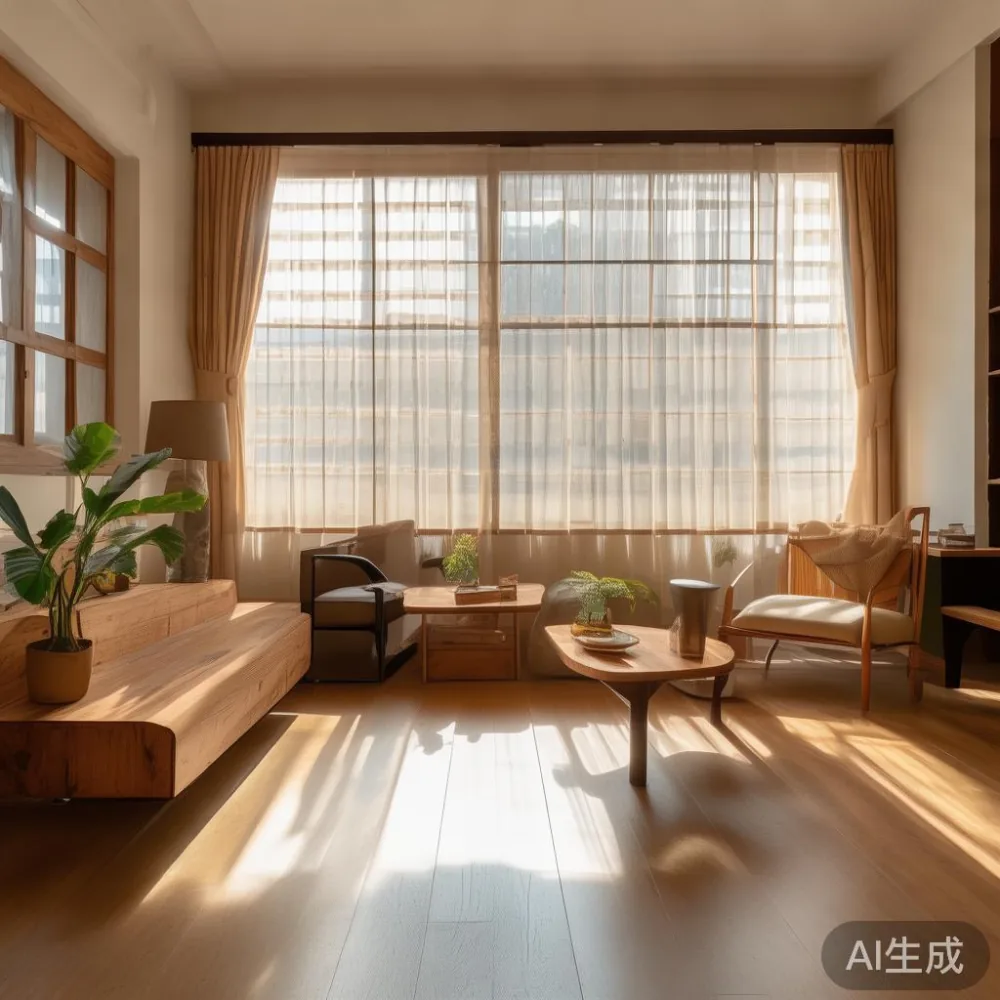
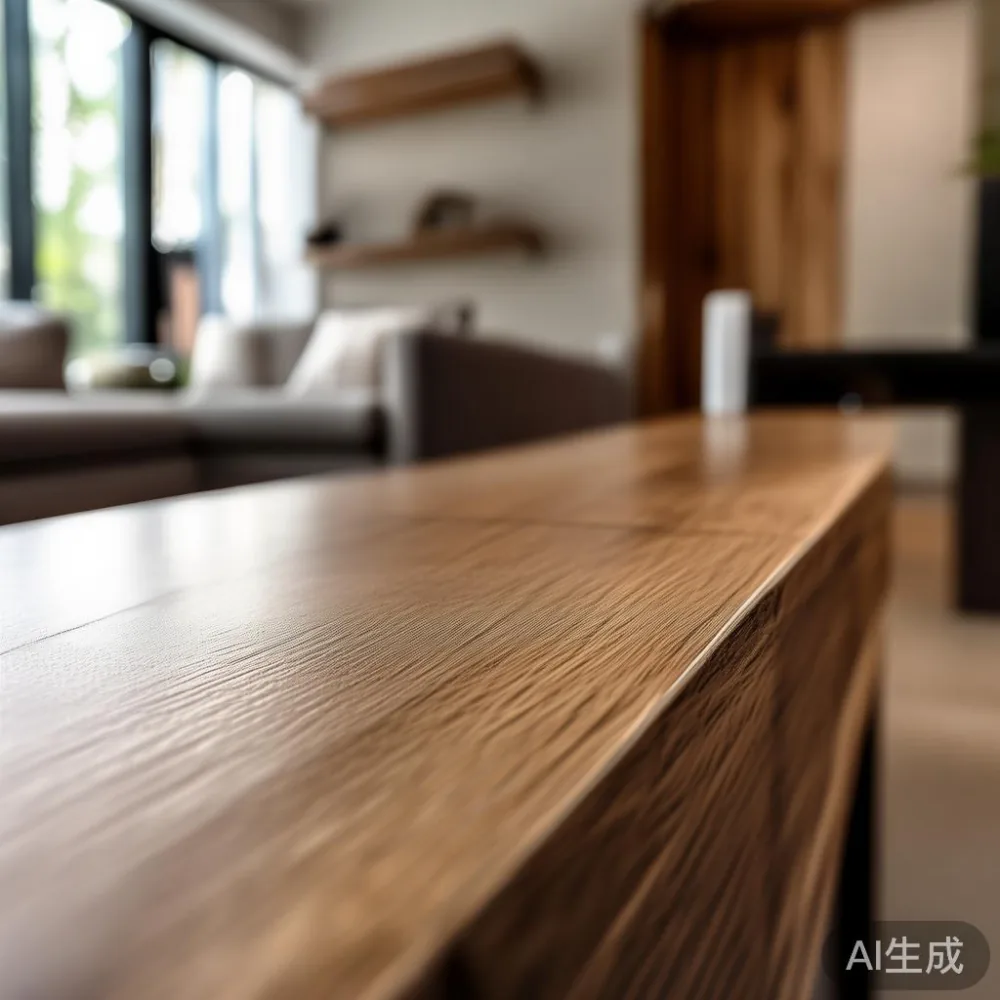
Japandi style borrows the clean lines of Scandinavian design and the warmth of Japanese minimalism. The palette is pale oak, warm white, and soft black accents; the forms are low-profile and uncluttered. To hold that aesthetic over five to ten years, the substrate matters as much as the finish. A bedroom wardrobe in a Tampines East HDB lives with daily door swings, afternoon sun through east-facing windows, and air-con condensation in the evenings. A dining table in a Bedok reservoir-area condo sees hotpot steam, spilled kopi, and the occasional toddler art project. These conditions expose the difference between a 0.6 mm paper-backed veneer and a 2.5 cm solid oak board.
The headline price of a veneer japandi style wardrobe at a Singapore mall retailer can sit around SGD 1,290 for a 1.8 m three-door unit. A comparable solid oak wardrobe from a specialist exporter of Foshan furniture lands at around SGD 2,450 delivered. The gap is roughly SGD 1,160 at year zero. Whether that gap is good value depends on what each piece will look and feel like in year five.
The Real 5-Year Cost Breakdown for a Typical HDB Set
I modelled the same japandi style set across both materials: a 1.6 m bed frame, a 1.4 m dining table with four chairs, a 1.8 m wardrobe, a 60 cm nightstand, and a small marble table for the entryway. All prices are SGD, include 9% GST, and assume delivery to a 4th-floor HDB unit in Punggol via a standard goods lift (typically 1.5 m deep x 1.8 m wide x 2.3 m high).
Veneer set, year zero: bed frame SGD 690, dining table SGD 880, wardrobe SGD 1,290, nightstand SGD 220, marble table SGD 540. Total SGD 3,620.
Solid wood set, year zero: bed frame SGD 1,480, dining table SGD 1,750, wardrobe SGD 2,450, nightstand SGD 380, marble table SGD 540. Total SGD 6,600.
Year-five adjustments (my conservative estimates):
- Veneer bed frame: edge peeling along the headboard, one re-lamination SGD 180, refinish SGD 0 (cannot sand through paper veneer), total end-of-life write-down 40%. Net 5-year cost: SGD 1,035.
- Solid wood bed frame: minor dent sanding and one oil refresh SGD 140, retains about 80% of value. Net 5-year cost: SGD 1,620.
- Veneer dining table: water ring from hotpot, replacement top SGD 420, total end-of-life write-down 55%. Net 5-year cost: SGD 1,300.
- Solid wood dining table: light surface scratch, one round of oiling SGD 120, retains 75% of value. Net 5-year cost: SGD 1,870.
- Veneer wardrobe: delamination on two doors SGD 360, refinish impossible. Net 5-year cost: SGD 1,650.
- Solid wood wardrobe: two hinge resets and one oil top-up SGD 160, retains 75% of value. Net 5-year cost: SGD 2,610.
- Veneer nightstand: replaced in year three SGD 240. Net 5-year cost: SGD 460.
- Solid wood nightstand: still going strong, no work needed. Net 5-year cost: SGD 380.
- Marble table (same in both scenarios): polished once SGD 90. Net 5-year cost: SGD 630.
5-year totals: Veneer SGD 5,075 vs solid wood SGD 7,110. The veneer path is about SGD 2,035 cheaper over five years. If you are confident you will redecorate in 36 to 48 months, veneer makes the case. If you plan to stay past a second COV renewal, solid wood pulls ahead on cost per year of use.
Will a Solid Wood Sofa Actually Fit Through My HDB Lift?
This was the single most practical question Wen asked me during her Punggol housewarming, and it is the question that catches out every Singaporean buying solid wood online. Standard HDB passenger lifts in blocks built after 2015 measure roughly 1.1 m wide x 1.4 m deep x 2.2 m high, with a diagonal clearance of about 1.8 m. Older blocks in Bedok and Tampines West can be tighter. A solid wood sofa with a 2.4 m frame often arrives as a single piece and will not tilt through that diagonal.
Specialist Foshan furniture exporters like MIDHILL design their larger pieces as two-sand and three-sand modular units with bolted joinery. A 2.2 m solid wood sofa typically breaks into two modules under 1.1 m each, which clears an HDB lift when leaned at 30 degrees. That modularity is a quiet cost saver in Singapore: it removes the SGD 80 to SGD 150 stair-climbing surcharge that movers charge when a piece cannot fit.
For the dining table side of the equation, a 1.4 m solid oak top usually ships as two 70 cm halves with a hidden butterfly bracket. This also keeps each carton under 28 kg, which matters because most HDB corridors cap trolley loads at 30 kg for safe turning past the refuse chute.
How Do Veneer and Solid Wood Behave in Singapore's Humidity?
Singapore's average relative humidity sits between 78% and 88% for most of the year. MDF cores wrapped in paper veneer absorb moisture along the cut edges of the substrate, which is exactly where HDB wardrobes meet the wall. Within the first two years you usually see one of three failures: edge lifting along the top shelf, bubbling on the side panel next to the bathroom door, or a swollen bottom panel that scrapes the floor.
Solid wood moves too, but along predictable grain lines. A 2.5 cm oak panel in a bedroom wardrobe will expand 2 to 3 mm across its width during the December monsoon and contract back by February. With proper kiln-drying to 8 to 10% moisture content before assembly, this seasonal movement is absorbed by floating tenons and slotted screw holes. I have inspected a five-year-old MIDHILL oak wardrobe in a Punggol HDB that has opened and closed twice a day for sixty months and shows no edge lift, only the kind of patina that makes japandi style look warmer.
If you are choosing a light luxury coffee table with a marble top, the same humidity logic applies to the substrate underneath. A marble table on an MDF base will telegraph the marble's weight into the MDF after 18 months and start to sag at the centre. A marble top on a solid ash or oak base holds its flatness for the full ten-year span that most Singaporeans keep a coffee table before refreshing the look.
Is French Light Luxury a Real Look for Japandi Interiors, or Just Marketing?
French light luxury (sometimes called French light luxury style in local press) refers to a restrained, low-saturation version of French provincial. Think of a slim bed frame with a gently curved headboard, brushed brass cup pulls on a pale oak wardrobe, and a marble-topped nightstand that would not feel out of place in a Haussmannian apartment. It overlaps with japandi style more than people expect: both palettes avoid bright colour, both favour tactile natural materials, both prize clean lines.
The decision point is the bed. The comparison between a light luxury bed vs French provincial bed is really a question of ornament. A French provincial bed usually carries carved detailing and a more sculptural headboard. A light luxury bed drops the carving and keeps the silhouette. Both work in a japandi style interior, but a carved French provincial headboard in a 3.2 m wide HDB master bedroom can dominate the room and fight the minimalism. A light luxury bed lets the marble table and the wardrobe breathe.
For shoppers wondering how to style French provincial bed in room settings that lean japandi, the trick is to keep one carved piece maximum and surround it with flat oak and linen. One French provincial chair in the reading corner, a flat-front light luxury wardrobe opposite, and the eye will read the room as curated rather than cluttered.
Which Pieces Are Worth the Solid Wood Premium in a 4-Room HDB?
If you want to mix materials and stretch the budget, the smart hierarchy in a Singapore flat is: solid wood for the pieces you touch every day and that carry weight, veneer for the pieces that sit against a wall and rarely move.
Buy solid wood: dining table (hotpot, kopi, homework), bed frame (every night for ten years), wardrobe (door swings, loaded shelves), and the main solid wood sofa in the living area. These pieces earn their premium through use.
Veneer is acceptable: the bedside nightstand (replaceable, low-impact), an occasional side table, a console in the dry zone of the entryway.
Always solid or metal: anything holding a marble top. The marble table needs an inert, dimensionally stable base.
For a typical 4-room HDB in Punggol or a 1,000 sqft condo in Tampines, a hybrid set looks like this: a 1.6 m solid oak bed frame, a 1.4 m solid oak dining table, a 1.8 m solid oak wardrobe, a veneered nightstand (replaced in year four anyway), and a marble table on a solid base at the entry. Total at year zero: roughly SGD 5,420 with delivery, which is closer to the veneer's full-set price than to the all-solid number, but with the four pieces that matter lasting well past the five-year mark.
How Should You Style a Light Luxury Sofa in a Compact Singapore Living Room?
A light luxury sofa in a japandi style HDB living room should sit 8 to 12 cm off the wall to allow airflow in tight condo layouts where the wall runs cold during air-con nights. The typical 2.2 m to 2.4 m three-seater fits comfortably in a 3.6 m HDB living room wall, leaving 60 to 80 cm of walking lane on either side. Cushion depth around 58 cm works for the average Singaporean frame and still allows a 90 cm coffee table in front without crowding.
For anyone wondering how to style light luxury sofa in room settings, the rule is: one warm material, one cool material, one texture. A pale oak frame with a brushed brass floor lamp and a boucle or linen-blend cushion cover does the job without crowding a 28 sqm living room. A light luxury coffee table in marble with a slim oak base keeps the silhouette low and quiet.
The phrase how to choose light luxury sofa comes up at every Tampines and Bedok condo showroom visit. Three checks matter more than the brand label: the joinery at the armrest (corner-blocked and glued, not just dowelled), the weight of the frame (a solid oak frame should feel noticeably heavier than a veneered MDF frame when you tip the piece), and whether the cushion cores are high-resilience foam wrapped in down rather than full foam, which flattens within 14 months in our humidity.
Post-Modern Light Luxury vs Minimal Japandi — Where Does Each Work?
Post-modern light luxury leans warmer and more decorative than japandi style. Picture a dining table with a softly chamfered edge, a marble table with a sculptural pedestal, and a solid wood sofa with subtly tapered legs. The shapes are still clean, but the proportions are more generous. In a 4-room HDB, post-modern light luxury works in the dining area where you have 2.4 m of wall to fill, while japandi style works in the bedroom where the wall is shorter and you want quiet.
A quick reference for shoppers comparing the two: japandi style is best at 30 to 45% visual density in a room (mostly empty, a few considered pieces), while post-modern light luxury sits at 50 to 65% (fuller, warmer, more objects on display). Both use solid wood and marble; the difference is the breathing room around them.
What About Delivery, Warranty, and After-Sale in Singapore?
For Singapore addresses, free shipping above US$350 (about SGD 480) typically clears the cost of a single piece, so a full order arrives with no freight surcharge. Most Foshan furniture exporters including MIDHILL offer a 10-year structural warranty on solid wood frames and lifetime refinishing on oak dining tables and bed frames. The lifetime refinishing matters in Singapore because the climate wears finishes faster than in temperate markets; a yearly oil buff at SGD 80 to SGD 120 keeps a solid oak dining table looking new past year ten.
Returns are usually 14 days from delivery, which lines up with the usual HDB defects-liability period after renovation. Lift access and corridor width should be flagged at order time; a good exporter will confirm each carton dimension against your block's lift and send a smaller-footprint alternative if needed.
For anyone shopping for luxury Italian light luxury furniture pieces through a Foshan-based exporter, the same rules apply. The Italian light luxury vocabulary refers to restrained silhouettes, marble accents, and warm metals; the construction is often done in Guangdong factories that supply European brands. The buying logic is identical: solid wood for the daily-contact pieces, veneer for the secondary surfaces, marble for the eye-catching centre.
What Is the Single Smartest Move When Choosing Veneer or Solid Wood?
Buy solid wood for the dining table, bed frame, wardrobe, and main solid wood sofa. Choose veneer only for the nightstand and an occasional side table. Specify lift-friendly modular construction. Confirm the moisture content of the wood is kiln-dried to 8 to 10%. Plan for one oil refresh in year three. The 5-year spreadsheet then lands within SGD 600 to SGD 900 of the cheapest possible veneered set, and the japandi style interior still looks intentional in year ten, when most veneer pieces are sitting in a Punggol or Bedok skip and waiting for a Pulau Semakau lift.