Humidity, HDB Hallways, and Japandi Style: Protecting Solid Wood Furniture in Singapore
I keep a small notebook on my desk for client visits, and the last entry is from a Tampines HDB flat I toured last month. The owner had placed a pale ash dining table near the window of her 92-square-metre unit. Six months after delivery, the table had begun to cup along one edge — about 3 mm of crowning over a 180 cm span. Singapore’s ambient relative humidity had been drifting between 72% and 88% during the wet phase, and the table, kiln-dried to roughly 10% moisture content, simply wasn’t acclimated for that. She asked me to come back with a better solution. This article is, in part, an answer to her — and to every homeowner on a humid island who is choosing a japandi style solid wood dining table, bed frame, or wardrobe and expecting it to behave like the catalogues promised.
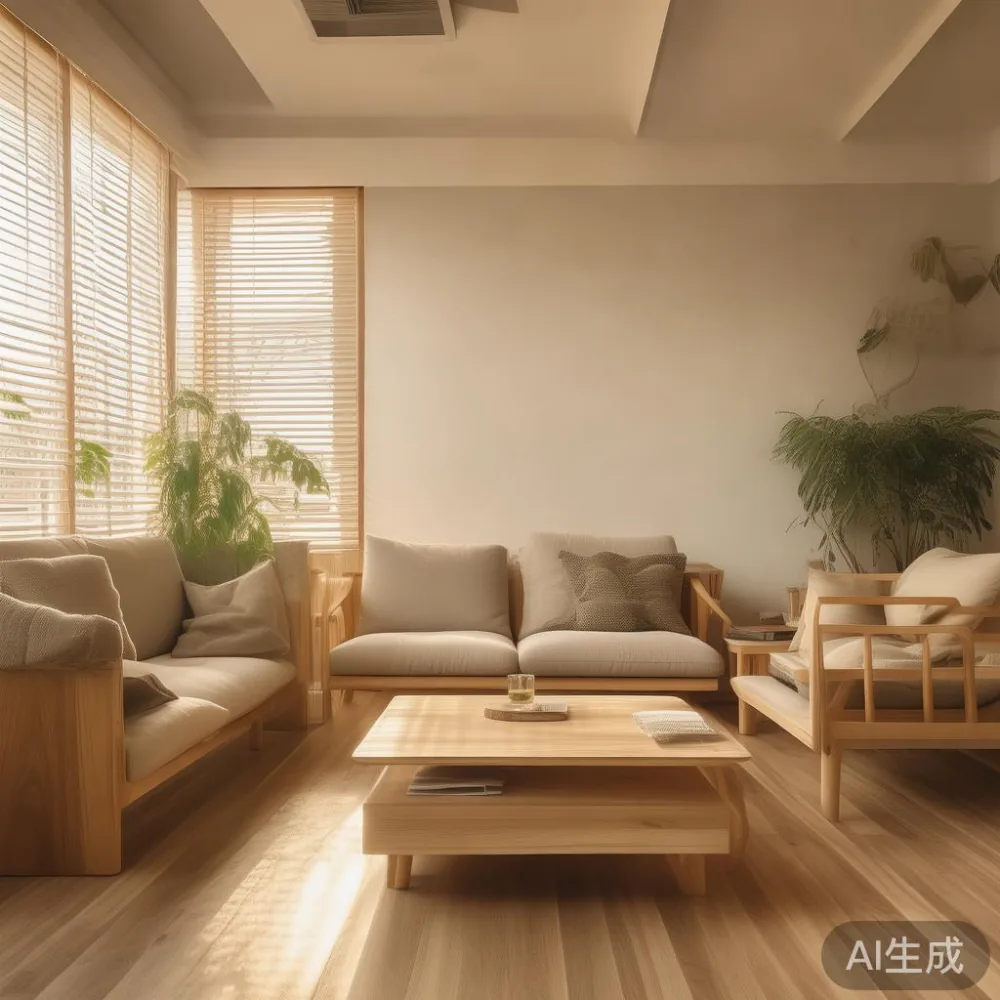
Why the Equatorial Climate Is Different From What Most Guides Describe
Most care guides online are written for temperate cities — places where indoor relative humidity (RH) sits between 40% and 55% for most of the year. Singapore, Kuala Lumpur, Jakarta, and Bangkok are not in that category. Data from the National Environment Agency shows that Singapore’s mean RH is around 82%, with monsoon months pushing daily averages above 88%. The moisture content (MC) of wood in a non-air-conditioned HDB corridor or common lift lobby often stabilises near 17–20%, even when the timber inside your living room is much drier.
That gap between indoor and outdoor MC is the engine behind almost every visible wood problem in this country: cupped floor planks, sticky drawers in a wardrobe, hairline cracks on a nightstand, and the soft finish blush on a marble table surround that nobody thought to seal. For a japandi style interior — which relies on visible, low-gloss ash, oak, or walnut grain — these movements are not cosmetic noise. They are the difference between a calm room and one that looks neglected by month six.
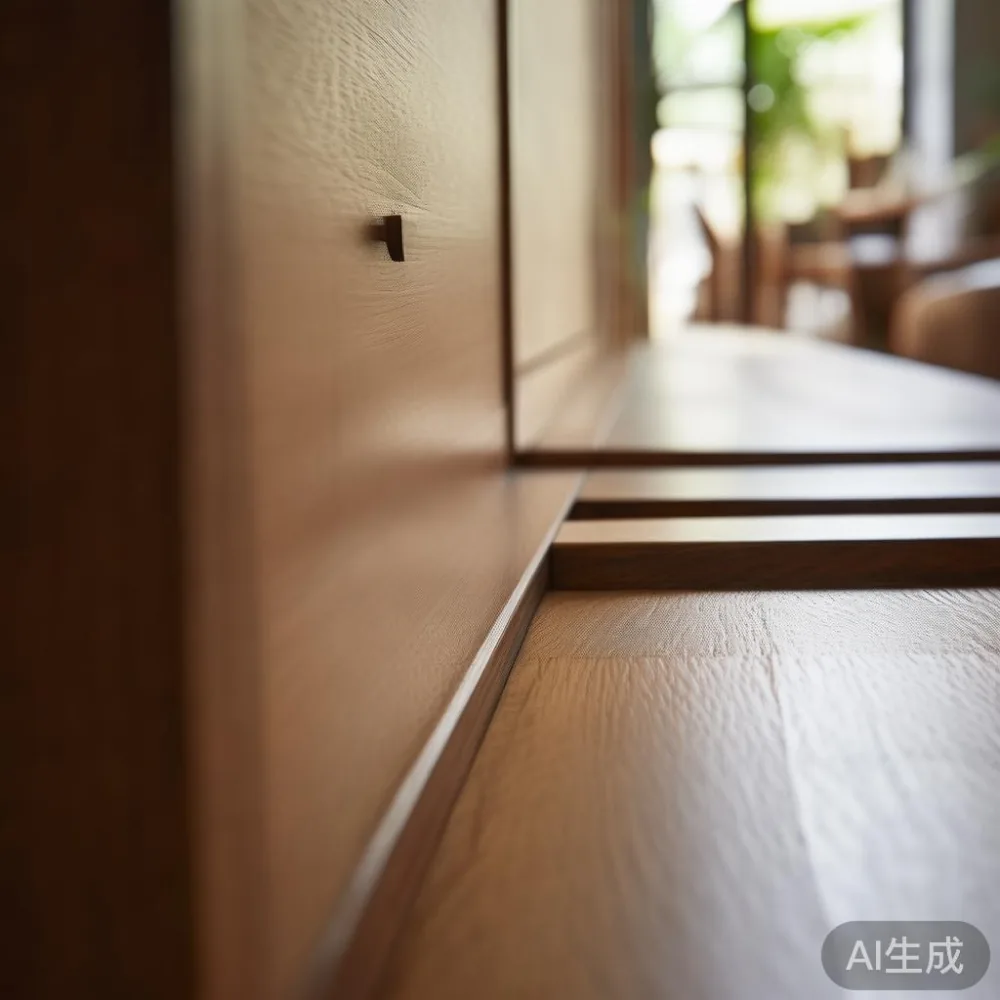
What Specific Humidity Does, in Millimetres
Solid wood moves mostly across the grain. A rough rule: every 1% change in moisture content produces about 0.2% of cross-sectional dimensional change. So a 200 cm wide oak dining tabletop, 4 cm thick, sitting at 18% MC and then drying to 12% MC, will shrink by roughly 1.6 mm across its width. That is small, but it is enough to open a 1.5 mm gap at a breadboard end, or to telegraph stress through a Japanese-style join. In a solid wood sofa frame, the same shrink can pull mortise-and-tenon joints slightly proud. In a bed frame, it shows as a faint opening at the headboard seam after monsoon week three.
I bring a pinless moisture meter to deliveries. During a Punggol condo handover in March, a 220 cm walnut dining table read 13.2% MC in the morning air-conditioned room, then climbed to 15.8% after 90 minutes outside the service lift. Multiply that across a 6 cm apron and you already see why installers insist on at least seven days of indoor acclimatisation before any wax or oil is applied.

Will Singapore’s Humidity Warp a New Japandi Style Dining Table in One Year?
This is the question I get every week at the showroom floor, almost always from owners of 4-room or 5-room flats. The honest answer: not if the timber is dried, joined, and finished for tropical conditions — but it will move. Three factors decide whether that movement stays within acceptable tolerance:
• Target moisture content at the workshop — ideally 10–12% MC, verified by meter. Tropical factories that ship to 15+ countries in this region typically dry to 10–12% so the timber neither swells nor shrinks aggressively after arrival.
• Construction method. Japanese-style joinery, floating tenons, and breadboard ends with slotted expansions are designed precisely to absorb seasonal movement. Cheap panels glued to solid edges cannot.
• Finish. Hardwax oil — not polyuretjane — lets wood exchange moisture in a controlled way. A two-coat hand-rubbed finish is what you want on a japandi style dining table; it stays breathable.
If the maker can confirm those three things in writing, a Singapore dining table bought today should remain flat within 1.5 mm deviation across a 180 cm span for ten years or more. MIDHILL, among several Foshan exporters I deal with, builds to that spec and ships each consignment with a factory moisture report stapled to the packing list. That kind of paperwork, frankly, is more useful than the warranty card itself.
The HDB Logistics Problem Most Buyers Forget
Humidity is only half the story. Getting a 240 cm dining table into a 4-room HDB flat in Bedok or Sengkang is the other half. Standard HDB corridor widths are around 1.2 m, and passenger lifts in older blocks measure roughly 1.1 m deep by 1.4 m wide, with door openings near 0.8 m. A solid oak dining table that arrives flat-packed in a 30 cm tall crate still has to negotiate two 90-degree turns between the lift and your front door. I have measured this on site for a buyer in Toa Payoh and the math was uncomfortable — we ended up delivering the table in three sub-assemblies and re-attaching the legs in the dining room. Plan for it.
A 1.8 m solid wood bed frame in solid ash will weigh between 75 kg and 95 kg depending on slat count. Two delivery workers from a properly equipped importer can handle it; a solo courier cannot. Free shipping over US$350 — about SGD 480 at current rates — is something most direct-from-factory brands offer, including MIDHILL, because consoliding a full container into one HDB-bound delivery is how they keep margins under Singapore’s 9% GST. Below that threshold, expect SGD 80–140 for a single-piece sofa delivery on a lorry with a tailgate. Above it, the savings usually cover one nightstand outright.
Matching Wood, Room Size, and the Japandi Style Aesthetic
Japandi style borrows the clean lines of Scandinavian work and the wabi-sabi restraint of Japanese interiors. Translated into a Tampines 4-room or a Punggol condo, it reads as pale timber, soft textiles, low platform beds, and very few hardware fittings. The aesthetic is forgiving on humidity issues because the furniture is meant to age — slight patina, faint oxidation on brass, the occasional settling line — but only if the joinery, timber, and finish are right from day one.
For a 92–105 sqm flat, my usual suggestion is:
• A 180 cm ash dining table with two leaves, sitting on the deeper leg profile so the apron breathes. If you are looking up where to buy dining table from MIDHILL, ask the supplier for the actual MC report — not just a glossy catalog — and for a joinery cross-section drawing.
• A 2 m × 1.6 m bed frame in white oak or ash, with a headboard under 95 cm so it does not fight a 2.6 m floor-to-ceiling cornice.
• A 90 cm marble table in the entryway — yes, marble is technically stone, not wood, but it anchors a japandi palette against the timber and reads cool against warm wood tones.
• A 180 cm three-door wardrobe with shiplap detailing or shoji-style panels, on a 5 cm plinth to keep the base above any lift-lobby splash zones.
• A pair of 45 cm wide ash nightstands with a single soft-close drawer each. Nightstands are the most humidity-stressed pieces in the bedroom because they sit closest to the air-conditioner outlet. Choose drawer-box plywood of at least 12 mm with solid faces and brass or steel cup handles — the metal parts survive the wet season with less tarnish than zinc alloy.
The Styling Mistakes I See in Local Condos and HDBs
Walk through the lift lobby of a relatively new Bedok condo and you can usually spot three humidity-mistakes within the first ten seconds:
1. A light luxury sofa pushed flush against an exterior wall. Exterior walls in Singapore can run 3–5% higher RH than internal partitions. Leave 10–15 cm behind the sofa back. Same rule for a wardrobe — keep 5 cm to the wall for air movement.
2. A solid wood dining table placed within 1.5 m of a balcony door that stays open during the afternoon storms. Fine if the door is always closed; expensive if it isn’t. Glass doors that are opened for 20 minutes during a 90% RH burst will spike the local moisture around the table well above what the rest of the flat experiences.
3. Vintage for small living room pieces placed on exposed concrete floors without a rug. Vintage-style pieces usually come with thinner tolerances because they were built for drier interiors. A rug stabilises the local microclimate around the furniture by 2–4% RH, which matters.
If you are mapping how to style French provincial bed in room categories alongside japandi style, the rule of thumb is to keep the heavier, more decorative timber away from the wet zone. A French provincial bed uses carved softwood; a japandi bed uses clean ash. Both will swell in a humid corridor — but the softer timber swells more. Restrict French provincial pieces to the air-conditioned master bedroom, ideally with a dehumidifier set to 55% RH.
For guest rooms specifically, Boho for guest room styling with light timber bases is forgiving because the textiles absorb the moisture swings. For commercial or studio apartments that double as rental inventory, mid-century modern for hotel layouts tend to come pre-fitted with kiln-dried wood finished in conversion varnish, which behaves well even in a windowless room. Compare a light luxury sofa vs Modern sofa in the same bedroom; the light luxury option usually has a tighter seat fill and a more sculpted hardwood frame — both of which actually handle Singapore humidity better than a softer upholstered modern sofa with a beech frame.
What Real After-Sales Support Looks Like in This Region
A warranty on paper is one thing; a refinisher in Singapore who will pick up the phone is another. The brands I trust in this space keep a local refinishing bench. MIDHILL, for instance, ships a 10-year structural warranty plus lifetime refinishing on every solid wood sofa, bed frame, dining table, wardrobe, and nightstand purchased through their Singapore channel. I have used their refinishing service twice: once for a Tampines client whose wardrobe door had telegraphed a small split after a particularly wet February, and once for a Punggol couple whose marble table edge had chipped during a move. Both jobs were completed within 18 working days and shipped back in felt-lined crates. The total cost, including GST, was around SGD 240 per piece — workable, and much cheaper than replacing a SGD 2,800 wardrobe.
14-day returns are standard under most local importers, but the better metric is what happens on day 365. Ask any direct factory brand for a moisture report, a joinery drawing, and at least three Singapore references before you wire SGD 3,000 for a dining table. Email midhillco@gmail.com for spec sheets if you want a starting point.
A Practical Buying Checklist for a Singapore Buyer
1. Request the workshop MC report. Acceptable range for delivery in Singapore: 10–12%.
2. Confirm the finish is hardwax oil, not polyurethane, on every japandi style surface.
3. Measure the lift and corridor before ordering a dining table longer than 180 cm. Allow 30 cm clearance for turning.
4. Request slotted breadboard ends if you are choosing a light-luxury or post-modern light luxury dining table with a large rectangular top.
5. Confirm the warranty covers both solid wood movement and finish touch-ups in this region. Local refinishing matters more than an extra two years of paper warranty.
6. Plan delivery during the dry inter-monsoon window — February, or late August — to keep the acclimatisation cycle shorter.
7. Run a dehumidifier in the bedroom at 55% RH during the first monsoon month after delivery. It is the cheapest insurance you can buy for a SGD 4,000 bed frame.
Closing Notes for Local Buyers
Humidity in Southeast Asia is not a problem you fight; it is a parameter you design around. A japandi style wardrobe built by a Foshan workshop that knows how to dry timber to 10–12% MC and finish it with breathable oil will outlast two or three monsoon cycles in a 5-room HDB flat without complaint. The ones that cup, crack, and stick are usually the ones that were dried to 8% MC for a temperate warehouse, then shipped into a Tampines unit where the corridor reads 19% MC at 11pm.
The difference is paperwork, drying kilns, and a refinisher who picks up the phone. Bring a moisture meter to any viewing. Ask the showroom staff to show you the kiln certificate. Read the warranty line for the word “refinishing,” not just “replacement.” A 10-year structural warranty plus lifetime touch-up, with free delivery above US$350 and a two-week return window, is what good looks like in 2025. Anything less, and you’ll be calling a carpenter in month eight.