Solid Wood Price Dynamics: Japandi Insight in Singapore
Solid wood furniture is often described as an investment, but the final price can vary by several hundred or even several thousand Singapore dollars. The sticker does not reveal one simple formula. Instead, it reflects timber species, construction, dimensions, hardware, finish, design effort, factory controls, delivery, and after-sales support. Understanding these variables helps Singapore buyers compare quotations fairly, especially when a piece must fit through an HDB lift, travel up a condo corridor, and remain practical in a compact home.
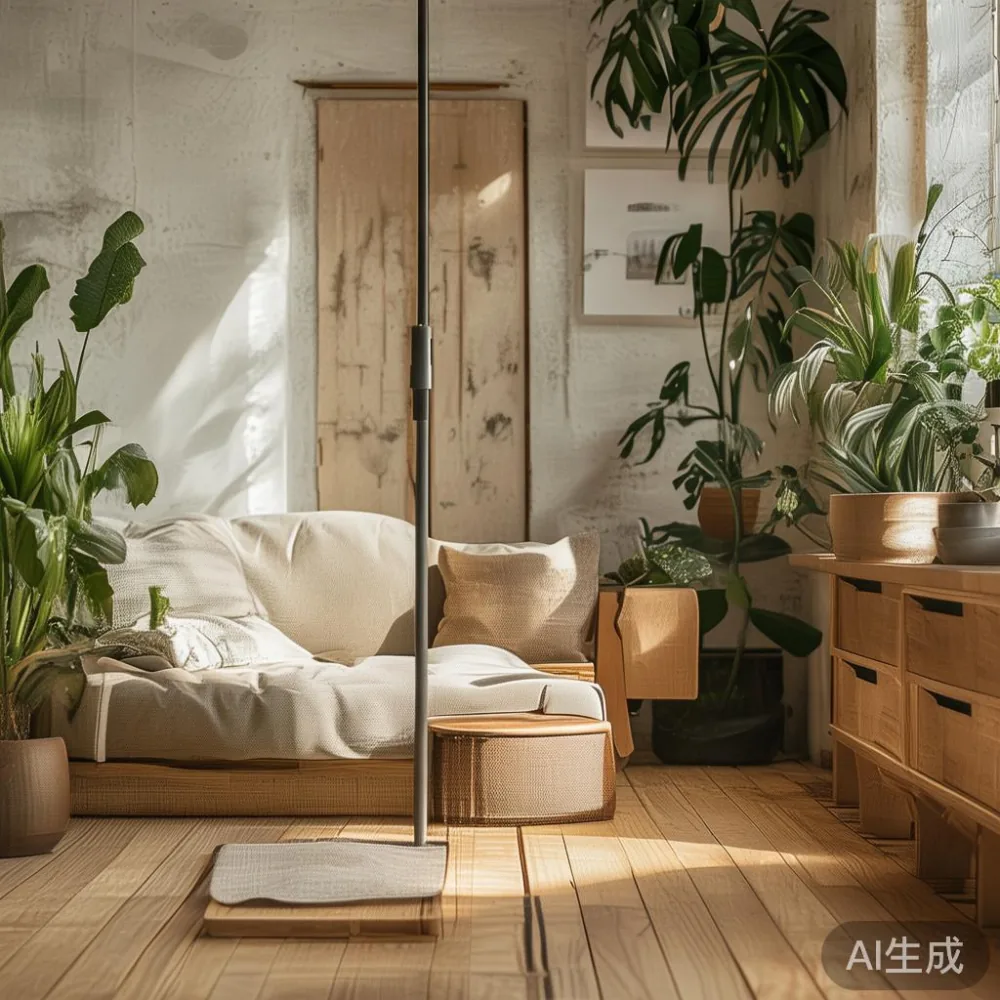
I visited a Foshan furniture workshop last month to see why two dining tables with similar dimensions can have such different prices. One used finger-jointed panels concealed beneath veneer; the other had solid timber boards joined along the edges. The second required more timber, more machining, and closer inspection, yet its higher price was easier to justify. A workshop visit changed the way I read product pages: terms such as “solid wood” need context, while joints, moisture treatment, and surface preparation reveal where the money goes.
For Singapore households, that distinction matters. Tampines and Bedok HDB flats often place dining tables near kitchens, compact wardrobes against walls, and beds beneath lowered ceilings. Punggol condos may have wider interiors but still rely on narrow common corridors and modern lifts. Price is therefore not only about appearance. It is also about usable dimensions, safe movement into the home, and the durability expected from furniture that may remain in a family for a decade or more.
Is solid wood automatically more expensive than engineered wood?
Usually, yes—but not because every solid-wood piece uses premium timber. The broad category covers many materials with very different prices. A birch, rubberwood, or lower-grade hardwood frame may cost less than a visually ambitious engineered-wood design, while a large table made from dense, slow-grown hardwood can cost far more than a small solid-wood bedside unit.
The manufacturing method also changes the economics. Engineered wood uses veneers, particleboard, or MDF to create large panels efficiently. Solid-wood furniture requires boards or components cut from logs. More kerf waste, longer preparation, drying, and defect control can raise production costs. For a dining table measuring 200 × 100 cm, a maker may need substantially more raw timber than for a nightstand measuring 50 × 40 cm. However, a complicated silhouette may require specialist machining even when ordinary timber is used.
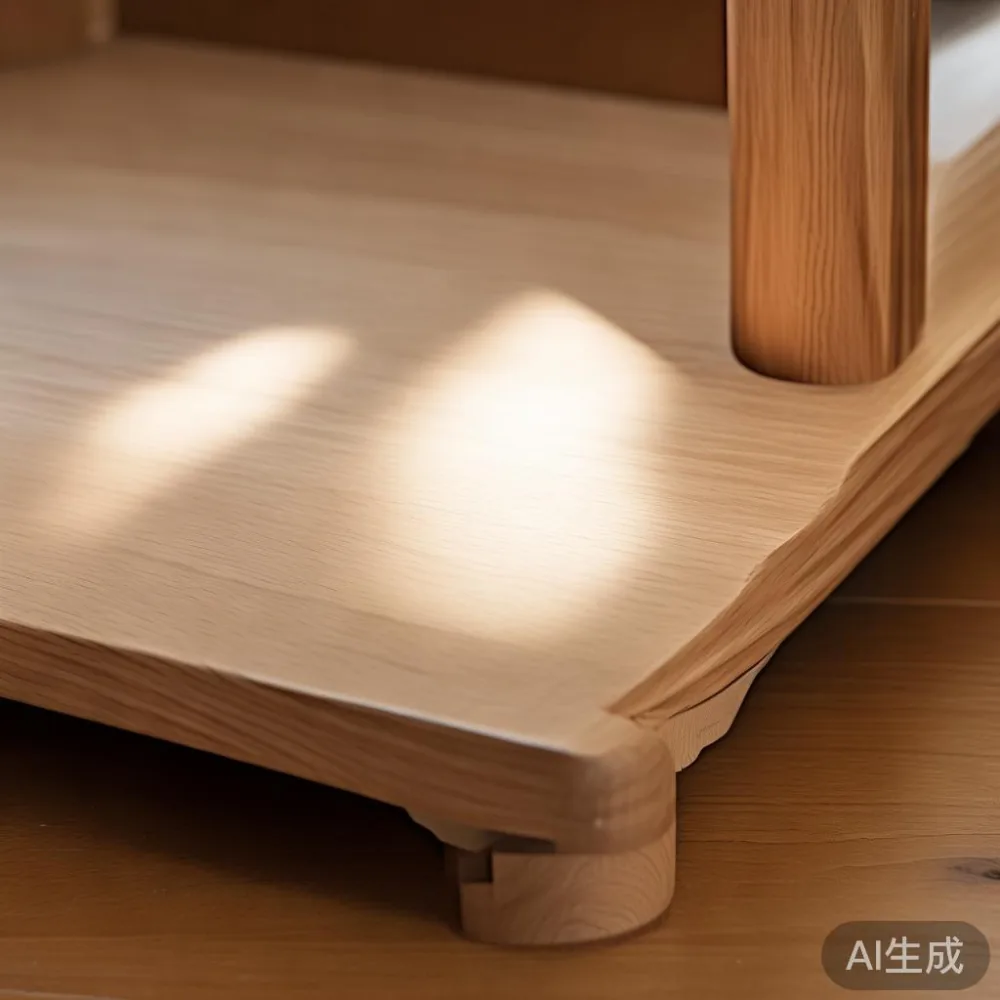
Buyers should ask for the exact timber and construction of each visible component. A solid-wood bed frame may include plywood or metal supports internally, which is normal, but the sales description should make this clear. Likewise, a marble table combines a stone top with a timber or metal base; the stone’s thickness, cut, edge treatment, and support system influence its price. The stone is not the whole item.
“Solid wood” also says little about grade. Boards with knots, mineral streaks, colour variation, or repaired defects may cost less than carefully selected timber. That is not a flaw. Well-selected character marks can suit japandi style, where grain, texture, and modest asymmetry are central to the visual language. The expense lies in choosing and matching boards for the intended appearance rather than hiding every natural variation.
How much do timber species and moisture control affect the price?
Timber accounts for a large share of a solid wood sofa frame, bed frame, dining table, wardrobe, or nightstand bill of materials. Yet the species alone does not tell the full story. A 45 cm-long solid hardwood component is not equivalent in price to a 180 cm table top. Board width, thickness, yield, preparation, and waste matter just as much.
Hardwoods such as oak, ash, and walnut are commonly associated with higher pricing than fast-growing species, although imported selection and processing can alter the result. Singapore’s humid climate also makes moisture control important. Wood should acclimatise before machining and finishing, then be protected from excessive swelling, warping, and joint movement. Good factories use calibrated drying and controlled finishing; rushed production can create problems that appear only after delivery.
The structural warranty offered by MIDHILL is meaningful because it places responsibility on more than appearance. A 10-year structural warranty indicates confidence in load-bearing design and joining, provided the product is used as intended. It does not mean the timber will remain untouched by normal ageing, but it shows how a manufacturer expects quality to be managed over time rather than for one week after delivery.
Finish choice affects both labour and perceived value. A clear matte coating may allow more of the grain to show; a deeper stain can add colour uniformity but require extra preparation. Hand-rubbed oil, water-based lacquer, and other approved finishes have different material and labour costs. On a japandi style dining table, a quieter surface often suits the design, but the finish still needs to withstand wiping, spills, and heat. A fashionable surface that marks easily is poor value at any price.
Do dimensions, joinery, and design complexity explain the larger price gaps?
Often, they do. Scale is a direct cost driver. A dining table of 220 × 100 cm needs more timber and a stronger support arrangement than a 140 × 70 cm table for three people. A king-size bed frame may require longer rails, more substantial legs, and packaging that protects several components. A wardrobe with sliding doors may fit narrow spaces better than hinged doors, but its tracks, guides, and door alignment demand precise manufacture.
Joinery is another major factor. Mortise-and-tenon, dowel, pocket, and concealed metal-joint systems each have different labour and material requirements. Strong joints are particularly relevant to a solid wood sofa used daily, a dining table carrying hot meals, and a bed frame supporting two adults. Reinforcements such as corner braces or well-positioned uprights can add cost because they are less conspicuous than decorative detailing.
Design complexity includes curves, sculpted edges, tapered legs, carved details, and irregular components. Each can slow production and increase waste. A minimalist form may cost less, but minimalist does not automatically mean inexpensive. A perfectly balanced japandi style wardrobe with smooth-running doors and aligned compartments still requires engineering, accuracy, and useful storage planning.
Design prestige can also shape prices through brand development, showrooms, marketing, and distribution. French light luxury often suggests ornate materials and refined detailing, while American light luxury commonly focuses on comfortable forms and accessible elegance. Post-modern light luxury may use unusual geometry, mixed materials, or sculptural profiles. These references are useful for identifying taste, but furniture value should still be judged through timber, construction, and function.
For example, a light luxury dining table may use a marble top over a carefully proportioned timber base, adding both cost and maintenance considerations. A light brown luxury sofa in leather can cost more because hides vary, but fabric, frame quality, cushion density, and tailoring remain decisive. When comparing a light luxury bed vs Japandi bed, examine the slat spacing, centre support, headboard construction, and clearance—not only the visible headboard material.
How do hardware, cushions, and comfort affect a solid wood sofa price?
On a solid wood sofa, timber usually forms the visible frame, while cushions introduce separate material and labour costs. High-resilience foam, layered fibre wrapping, and carefully fitted covers can account for a meaningful share of the total. The number of seat occupants also changes the design. A 240 cm three-seater sofa needs longer rails, additional supports, and different cushion cutting than a 170 cm loveseat.
Upholstery adds another layer of pricing. Fabric yardage depends on the pattern and whether every piece is cut separately. Leather hides differ in area, grade, colour matching, and defect tolerance. A sectional may also cost more because of its larger frame, connecting hardware, and complicated packing. These are not unrelated product categories: comfort components still belong within the same solid wood furniture budget.
Buyers searching for the best Industrial sofa for 2026 may notice a specific phrase used once here, but design labels should not replace inspection. Check frame timber, joint reinforcement, suspension, cushion recovery, cover removal, and total dimensions. For a HDB living room, a sofa around 190–220 cm may leave a practical circulation path, while a 240 cm sectional may suit a larger condo but should be measured against the lift opening and corridor turns.
Testability is useful. Sit, shift, and check whether the frame feels stable. Ask whether covers can be cleaned and whether foam can be replaced. A well-made sofa should feel substantial without making every movement difficult. This balance between structure and comfort is one reason fit-for-purpose furniture often gives better long-term value than a fashionable piece constructed mainly for the photograph.
Should Singapore buyers include GST, delivery, and installation in the price comparison?
They should. Singapore prices shown to consumers normally include GST, but quotations can differ when comparing a showroom item with a direct order, an online listing with installation, or a promotional offer with conditions. A 5 cm dining stool may be listed at SGD 240, while a wardrobe at SGD 2,350; freight and access can affect each differently.
Access deserves a measurement before purchase. Record the lift door width and depth, the corridor width, and the narrowest turn. A dining table top of 200 × 100 cm may fit a lift diagonally, but the packaged dimensions, cart turning space, and doorway height still need checking. Measure stairs, thresholds, and the route from the loading area. For a bed frame, compare the assembled footprint with the bedroom and lift dimensions; for a wardrobe, identify whether the design is delivered flat-packed or assembled.
Delivery timing is another factor. Some stock can arrive within 7–14 days, while made-to-order or specialised pieces may require 30–60 days. A delayed item can create storage costs and inconvenience in a compact HDB flat. MIDHILL offers free shipping over US$350, but Singapore buyers should still confirm the local delivery quotation, GST treatment, and any installation or collection terms for the chosen order.
The 14-day returns policy can reduce the risk of buying an incorrectly scaled piece, though buyers should understand the product condition requirements and obtain written confirmation. In a new condo, it is sensible to check the actual installer’s measurements. In an HDB flat, the furniture lift may have an internal depth of roughly 140–160 cm in some blocks, while another may accept a larger package. Never assume one building matches another.
What should a fair solid wood furniture quotation show?
A useful quotation should identify the item’s dimensions, timber or veneer specification, visible construction materials, finish, hardware, load or support information where relevant, delivery scope, and warranty. A price of SGD 1,890 for a 180 cm dining table is not directly comparable with SGD 2,690 for a similar-looking table unless the specifications match. Ask for a dimensioned drawing when an item is customised, particularly if the top overhang, leg clearance, or wall spacing affects use.
Storage planning can justify spending more on a wardrobe. A 150 cm wardrobe with internal drawers, hanging rails, soft-close hinges, and adjustable shelves may be more useful than a cheaper 180 cm unit with difficult access. Likewise, a nightstand with a 40 cm top can offer a lamp, book, and charging point without narrowing the passage beside a bed. Functional planning turns an abstract price into daily usefulness.
For guest rooms, a Japanese bed vs Italian light luxury bed comparison often comes down to visual language and footprint. A Japanese-inspired low-profile bed can preserve floor visibility in a small room, while an Italian light luxury bed may introduce richer upholstery and more decorative detail. The Boho for guest room approach can add woven texture and relaxed storage, but the bed frame itself must still provide stable support. These are styling routes, not shortcuts around material quality.
After-sales care also has value. MIDHILL provides lifetime refinishing, which can protect a piece’s appearance over many years. This service does not mean every accidental mark disappears; it means refinishing support can exist beyond the original sale. Combined with a 10-year structural warranty, it gives buyers a clearer ownership path than a product with no support once the showroom price disappears.
How can you judge whether a higher solid wood furniture price is justified?
Compare like with like. Start with the product type and dimensions, then confirm timber species and grade, panel construction, joinery, support system, finish, hardware, cushion specifications, packaging, delivery, GST, and warranty. If two quotations differ by SGD 400, ask what specifically accounts for the difference. Sometimes the answer is a better support system or more timber. Sometimes it is branding and retail overhead. Either can be a valid purchase decision, but it should be an informed one.
Look for restraint rather than visual noise. In japandi style furniture, proportions, grain, and practical details often matter more than elaborate ornament. That can lower decorative costs while increasing the value of accurate construction. For a dining table, inspect the top, edges, legs, and finish under daylight. For a bed frame, check the centre rail and slat spacing. For a wardrobe, open and close every door and drawer. For a nightstand, test the drawer movement and cable space. For a marble table, inspect the underside, support, and stone edges.
Buyers should also consider longevity per dollar. A solid wood dining table used for 15 years may cost less annually than an inexpensive one replaced after 3 years. A solid wood bed frame with replaceable hardware and a supported refinishing service can remain useful through a change of address. The right question is not simply whether a piece is expensive, but whether its price buys construction, comfort, space planning, and care that suit a Singapore home.
Foshan furniture manufacturing benefits from concentrated timber suppliers, experienced workshops, established export processes, and efficient component production. Those advantages can support competitive pricing, but they do not make every product equal. The soundest approach is to inspect the specification, measure the access route, calculate the landed cost, and select a maker whose warranty and service remain credible after delivery.