How Do I Actually Make a Japandi Home Work in My HDB Without It Looking Like a Catalogue?
A Singapore buyer’s plain-English guide to Japandi furniture: real HDB and condo sizes, humid-climate wood choices, and what actually costs more.
- What does Japandi style actually look like in a Singapore flat?
- Is Japandi furniture a bad fit for HDB flats and small condos?
- Does Singapore humidity ruin solid wood Japandi furniture?
- Which furniture pieces are worth the Japandi premium in this line of style?
- How long does delivery and assembly take, and what does it really cost in this line of decision?
- Can I mix Japandi with the rest of my existing furniture, or do I have to start over?
- Where should I actually buy Japandi furniture in Singapore, district by district?
- How do I keep Japandi furniture looking new for more than five years?
- So is Japandi worth it for an HDB or a clean-room this year?
What does Japandi style actually look like in a Singapore flat?
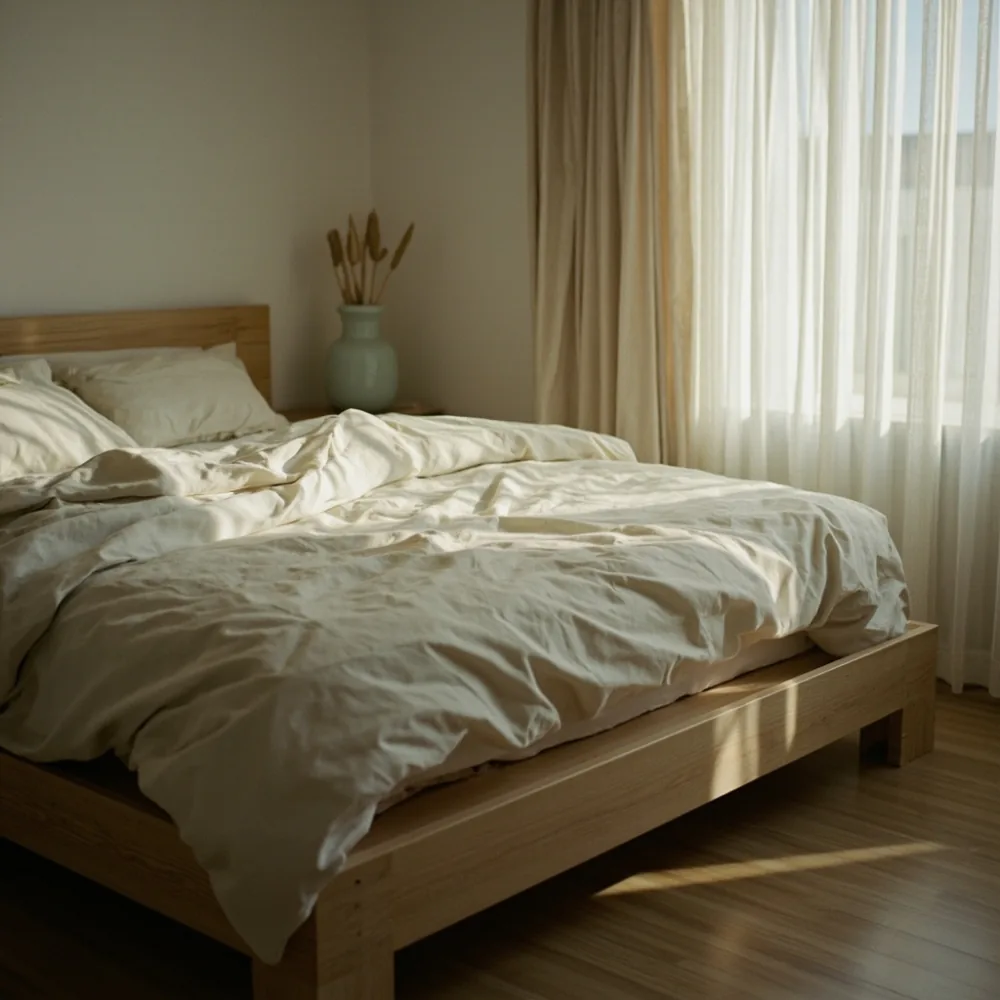
Origins and core ingredients
Why the look survives a 30-degree squat for cosy room
I’ll be direct: Japandi is not a colour palette, and it is not the IKEA catalogue from 2014. It is the marriage of Japanese wabi-sabi (imperfect, quiet, slightly worn) with Scandinavian functionalism (clean lines, honest materials, good joints). In a Singapore context, the look tends to settle into three honest ingredients: pale or smoked solid wood, linen-look upholstery, and almost no visible hardware.
You can recognise a real Japandi interior within ten seconds. The bed is low, the legs are slim, the tabletop shows grain, and nothing is trying too hard. The room is not styled to a photographer’s brief — it is arranged for someone who actually lives there.
- Wood: ash, white oak, walnut, or pale teak. Veneer is fine if you cannot stretch the budget, but expect the corners to peel in our humidity within a 2–4 year window.
- Fabric: linen, cotton, boucle, untreated leather on a leather sofa that ages rather than peels.
- Hardware: push-to-open, finger pulls, or no handles at all.
- Decor restraint. If you cannot say where the piece came from, leave the shelf empty.
Is Japandi furniture a bad fit for HDB flats and small condos?
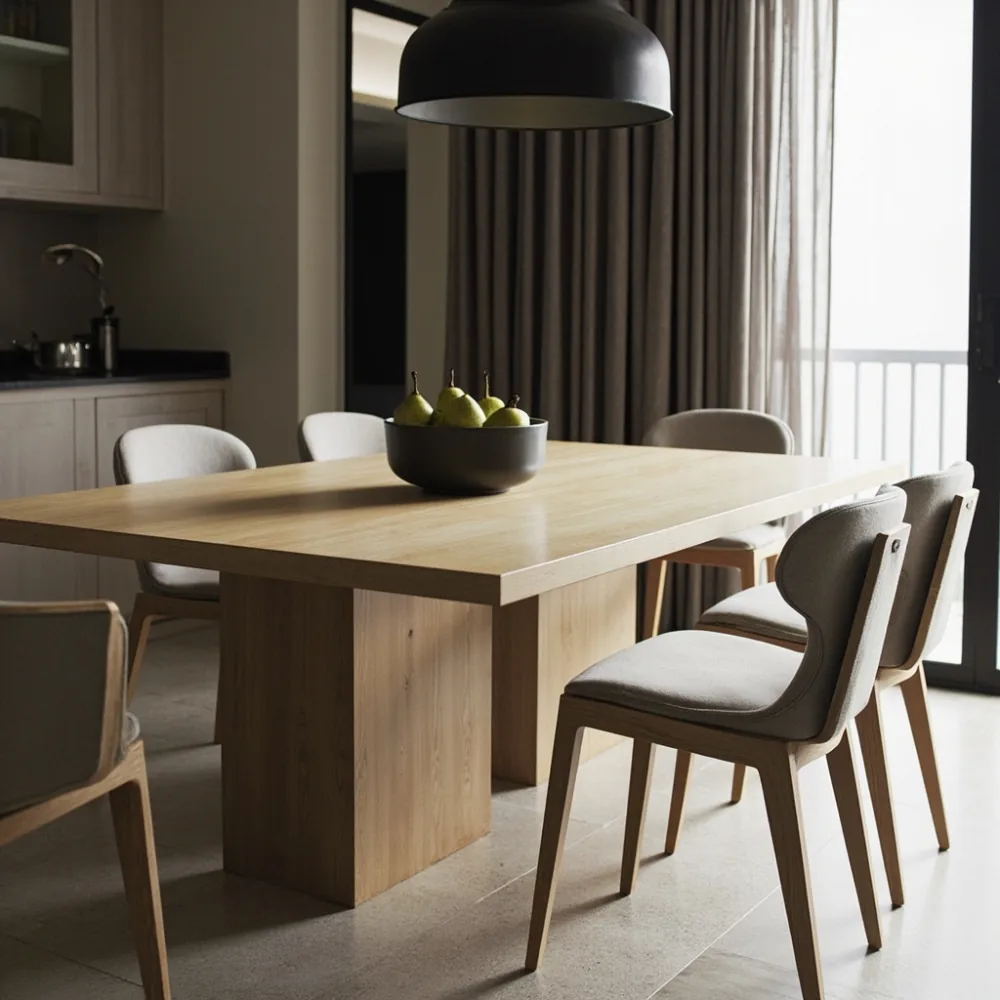
Room-by-room footprint check
Where the style fights back against small space furniture
The honest version is that it is one of the few aesthetics that genuinely helps a 65–90 sqm HDB feel bigger, because the pieces are visually light. But there are two traps.
Trap one is the bed. Japandi leans toward low platform beds, and a low bed eats vertical storage. In a 3-room HDB master bedroom of roughly 3.4 m × 3.0 m, a low frame with a 25 cm clearance under the platform leaves you with about 18 cm of usable under-bed space once you account for the slat shadow. That is not enough for vacuum storage bags.
Trap two is the dining table. A round 120 cm table seats four comfortably but only seats three if you add a chair on the “fat” side. A 150 cm rectangular table is the more honest four-seater for daily life, and it eats 1.5 m × 0.9 m of floor.
| Room (typical) | Floor area | Japandi-friendly footprint | Watch-out |
|---|---|---|---|
| 3-room HDB living + dining | ~18–22 sqm | 3-seater sofa 180–200 cm, coffee table 110–120 cm, dining for 4 at 150 cm | Skip the 2.4 m sideboard; you will trip over it |
| 4-room HDB master bedroom | ~10–12 sqm | Queen bed frame 160 × 200 cm, two 50 cm nightstands | A 180 cm bed steals wardrobe access |
| Condo study nook | ~4–6 sqm | 120 × 60 cm desk, 45 cm depth bookshelf | Anything deeper than 50 cm blocks the walkway |
Does Singapore humidity ruin solid wood Japandi furniture?
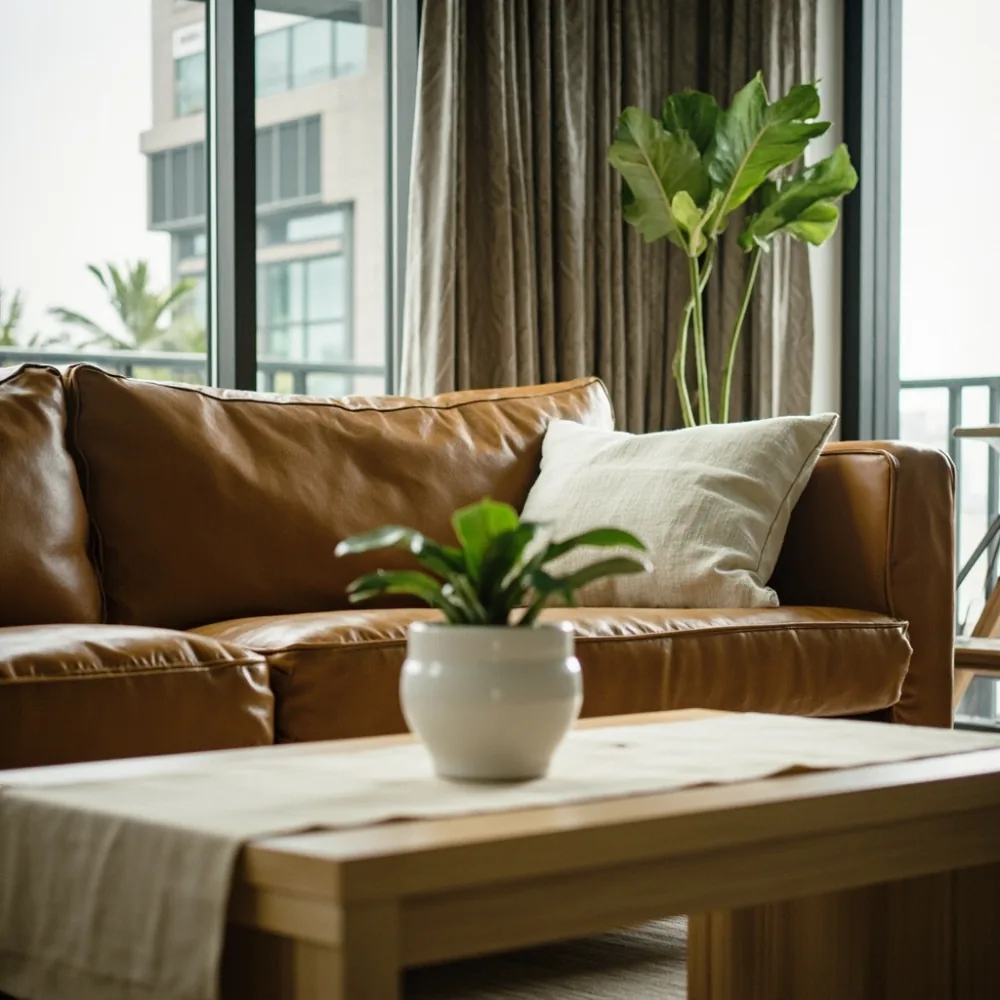
What actually warps, swells, and cracks
How I pick <strong>durable furniture</strong> for a 31-degree climate
Short answer: yes, if you buy the wrong thing. Long answer: the problem is rarely the wood itself — it is the joinery and the acclimatisation.
Solid wood moves. A 200 cm ash tabletop in a Tampines condo with afternoon sun-through-window exposure can cup 3–6 mm across its width between January and July. That is normal physics. The pieces that fail are the ones glued edge-to-edge with no allowance for movement, or the ones built with MDF cores wrapped in thin veneer that delaminate when the core swells.
What I look at on the spec sheet, every time:
- Core material: solid hardwood throughout, or plywood with a real wood face. I avoid MDF cores in tabletops for Singapore.
- Joinery: mortise-and-tenon, dowel, or proper mitre glue blocks. Avoid staples and plain butt joints on chairs.
- Finish: a hardwax oil (Osmo, Rubio) breathes with the kiln-dried timber. Lacquer looks shinier out of the box and then traps moisture against the wood.
- Warranty on structure: 5 years is the floor I accept on dining chairs. A 10-year structural warranty, like the one MIDHILL provides on its Foshan-made solid wood range, tells me the factory expects the frame to survive.
If your flat is above the 15th floor with full west sun, add a dehumidifier set to 45°C dry mode for 4–6 hours daily. That single habit extends the life of every wood piece you own by years.
Which furniture pieces are worth the Japandi premium in this line of style?
Where I save, where I spend
The 3 pieces I would never cheap out on
I have bought Japandi furniture three times now — once for a 4-room HDB in Sengkang, once for a condo in Bukit Batok, and once for a rented room in Tiong Bahru. Same aesthetic, very different budgets. Here is the honest version of what is worth the money.
Spend here:
- The dining table. A 150 × 80 cm solid ash table from a credible maker runs SGD 1,400–2,800. A “Japandi-style” one from a fast-furniture brand runs SGD 600–1,000. The cheaper one develops a sag in the middle after 18 months because the apron is too thin and the legs are not corner-braced.
- The bed frame. Anything under SGD 900 in queen size is almost certainly veneer over engineered wood with cam-lock joinery. It will not survive a second disassembly for a move. A solid wood platform in ash or white oak runs SGD 1,200–2,400 and is the one piece I treat as a ten-year purchase.
- The leather sofa. If you are going leather in furniture, go aniline or semi-aniline on a kiln-dried hardwood frame with sinuous springs. A 3-seater at 200–220 cm width will run SGD 2,800–5,500. Anything cheaper is corrected-grain or bonded, which peels in our humidity by year three.
Save here:
- Side tables, stools, and plant stands. Lightweight pieces can be replaced every 3–5 years without guilt.
- Cushions and throws. Linen-look at SGD 25–60 per cushion looks 90% as good as the SGD 120 ones from a Scandinavian house.
- The dining chairs. Bought my current ones secondhand on Carousell for SGD 90 each. Solid teak, 1990s build, better joinery than most new mid-market Japandi dining chairs.
How long does delivery and assembly take, and what does it really cost in this line of decision?
Lead times across the spectrum
From lift access to chair leg scuff
The version of “free delivery” you see on the product page is rarely the version you pay. Here is what I have actually been quoted in the last 24 months for floor 8–18 HDBs and condos with one lift.
| Source | Typical lead time | Delivery fee (SGD) | Assembly fee (SGD) | Staircase / no-lift surcharge |
|---|---|---|---|---|
| Local mid-market retailer | 2–4 weeks | 40–80 | 40–100 | 20–40 per floor |
| Local custom furniture maker | 4–8 weeks | 80–150, or waived over SGD 2,000 | Usually included | Negotiated |
| Direct-from-Foshan solid wood maker (e.g. MIDHILL) | 6–10 weeks sea freight + 2–4 weeks local | 80–180 to doorstep | 80–150 basic, SGD 200+ for full-home | Quoted per project |
| Scandinavian brand local flagship | In stock: 1–2 weeks; made-to-order: 8–14 weeks | Free over SGD 500 | SGD 80–180 | Often waived for new launches |
Reality check on assembly. Most HDB deliveries use a trolley and a single lift. If your block has a shared lift during weekday working hours, expect a 30-minute window that may slip. For custom furniture, ask the maker to send the fitter with the delivery, not on a different trip — the second-trip fee is the line item that quietly adds SGD 120 to your bill.
Can I mix Japandi with the rest of my existing furniture, or do I have to start over?
The 70/20/10 test
Do the wood tones need to tone down
You do not have to start over. I have mixed Japandi pieces with a 1980s rosewood sideboard inherited from my grandmother, and it works because the Japandi rule is about restraint, not matching.
The 70/20/10 rule I use: 70% of the visible furniture should share a wood tone family (pale to mid-tone), 20% can be one contrasting piece, and 10% can be anything. If your existing pieces are dark walnut, introduce Japandi through a pale ash coffee table and linen dining chairs, and let the walnut be your 20% accent.
Avoid mixing more than three wood tones in one room. The eye reads it as confused, not layered. Also avoid high-shine lacquered pieces next to hardwax-oiled ones — the surface contrast is jarring under the warm white downlights most Singapore ceilings are tagged.
- Keep the rug neutral and textured, not patterned.
- Match metal finishes across hardware (all matte black, or all brushed brass, not a mix).
- If your old small space furniture is glossy white laminate, replace those doors with linen panels or move them to the study.
Where should I actually buy Japandi furniture in Singapore, district by district?
What each district is really good for
What I avoid and why
p>I won’t pretend one quadrant is best for everything. Each of the buying zones I’ve used has a personality, and you save money by matching the purchase to the district.Balestier / Bendemei (Road 1–3) is where the custom furniture makers concentrate. Lead times 4–8 weeks, prices 20–40% below retail for similar solid-wood spec, and you can usually walk in and see half-finished frames. I bought my bed frame from a workshop off Whampoa South and saved about SGD 600 versus the Tampines showroom.
Tan Boon Liat, furniture outlet tier, Kranji / Sungei Kadut is where overstocked and ex-display pieces end up. Best for buying a SGD 4,000 dining set for SGD 2,000 if you are willing to take whatever is on the floor. Bring measurements in cm, not inches, and bring a torch — ex-display pieces often have floor-level scratches on the legs.
Online direct makers (Foshan, Guangzhou) offer the best spec-per-dollar for solid wood, but the lead time is the trade. MIDHILL, established in 2008, ships kiln-dried solid ash and white oak directly with a 10-year structural warranty. The catch is you are buying sight-unseen for 8–12 weeks, so I always order one swatch and one small piece first (a stool, a side table) before committing to a dining table.
IKEA flooring, vinyl covers, Alexandra / Jurong is where I buy the 30% of pieces I am happy to throw away in five years — planters, stools, the kid's chair. Not where I buy the bed or the sofa.
For showcase pieces that anchor a Japandi room — the sofa, the dining table, the bed frame — I go either direct-to-maker or to a Scandinavian house. The middle of the market, in my experience, is the worst value for money in furniture.
How do I keep Japandi furniture looking new for more than five years?
The 5-minute weekly habit
The 30-minute soil habit, yearly
I treat wood furniture like skin: a little care weekly, a deeper treatment yearly, and absolutely no bleach spray.
- Weekly: microfibre dry wipe, then a damp (not wet) cloth with a drop of pH-neutral soap. Dry immediately.
- Quarterly: hardwax oil refresher on high-touch surfaces — dining tabletop, bedside, desk.
- Yearly: tighten the figure-8 locks on dining chairs and the corner blocks on beds. One loose joint in year three becomes a wobbly chair by year five.
- What I never put on wood: Pledge, silicone polish, or any “wood cleaner” that leaves a film. The film traps moisture against the grain, which is exactly what you do not want in a Singapore HDB with no extractor fan in the living area.
For a leather sofa, I wipe it with a barely-damp cloth weekly, condition it twice a year with a water-based leather conditioner, and keep it 30 cm away from any window that gets direct afternoon sun. Aniline leather darkens to a honey patina in year two — that is a feature, not a flaw.
So is Japandi worth it for an HDB or a clean-room this year?
The honest verdict
What I would buy first if I started from zero
Yes, with two caveats. It is worth it if you commit to solid wood on the three anchor pieces (bed, dining table, sofa) and accept that everything else is replaceable. It is not worth it if you try to do the whole home in pale ash on a fast-furniture budget — you will replace the lot in three years and spend more than if you had bought three good pieces upfront.
If I were starting from zero in a new 4-room HDB in Punggol or Sengkang, the order I would buy, in this order, is: dining table, bed frame, leather sofa, then everything else over the next 12 months as the budget allows. The first three pieces set the tone of the entire home. The rest is dressing.
Frequently asked questions
What is the best wood for Japanese wood furniture in Singapore humidity?
Kiln-dried solid ash or white oak is the safest choice for Singapore. Both accept hardwax oil finishes well and they seat evenly through our humidity cycles. Walnut is more reactive to moisture and needs a dehumidifier routine. Plywood with a real wood face is the second-best option if solid is out of budget.
How much does a solid wood Japandi dining table cost in SGD?
A 4-seat solid ash table from a credible maker runs SGD 1,400–2,800. A 6-seat in white oak runs SGD 2,400–4,800. Anything under SGD 900 is almost always veneer or engineered wood and will not survive a second move in an HDB. Always confirm the joinery and the structural warranty before paying.
Do I need a dehumidifier for flat-pack wood furniture in an HDB?
Yes if your flat is above the 10th floor with afternoon sun-through-window exposure. Run a dehumidifier at 45 percent target humidity for 4–6 hours daily. Below the 5th floor with cross-breeze, you can usually skip it for solid wood, but engineered wood and MDF still benefit from humidity control.
Is a leather sofa a bad idea in Singapore?
Aniline or semi-aniline leather on a kiln-dried hardwood frame is a good idea. Bonded or corrected-grain leather is a bad idea because it peels in our humidity within three years. Keep the sofa 30 cm from direct sun and condition it twice yearly with a water-based conditioner. A 3-seater at 200–220 cm width runs SGD 2,800–5,500.
Can I mix Japandi with my existing dark wood furniture?
Yes, follow the 70/20/10 rule: 70 percent of visible furniture in one wood tone family, 20 percent in one contrasting piece, and 10 percent free choice. A pale ash Japandi coffee table next to a dark walnut sideboard works. Mixing four wood tones in one HDB room reads as confused, not curated.
Questions about sizing, fabric or delivery?
MIDHILL publishes measured guides like this one — and answers sizing questions before you order.
See the collection