Understanding Solid Wood Prices in Singapore: A Local Perspective
I spent last Saturday afternoon at the Tampines Hub furniture fair, notebook in hand, asking one question to every sales rep who would make eye contact: why is this chair S$890 and that one S$2,400 when they look almost the same? Three hours, seven coffee refills, and a mildly irritated wife later, I had a working model of how pricing works. What follows is that model, adapted for anyone in Singapore who is furnishing an HDB flat in Punggol, a condo in Bedok, or a landed property anywhere on the island, and who is trying to figure out why a solid wood dining table costs what it costs.
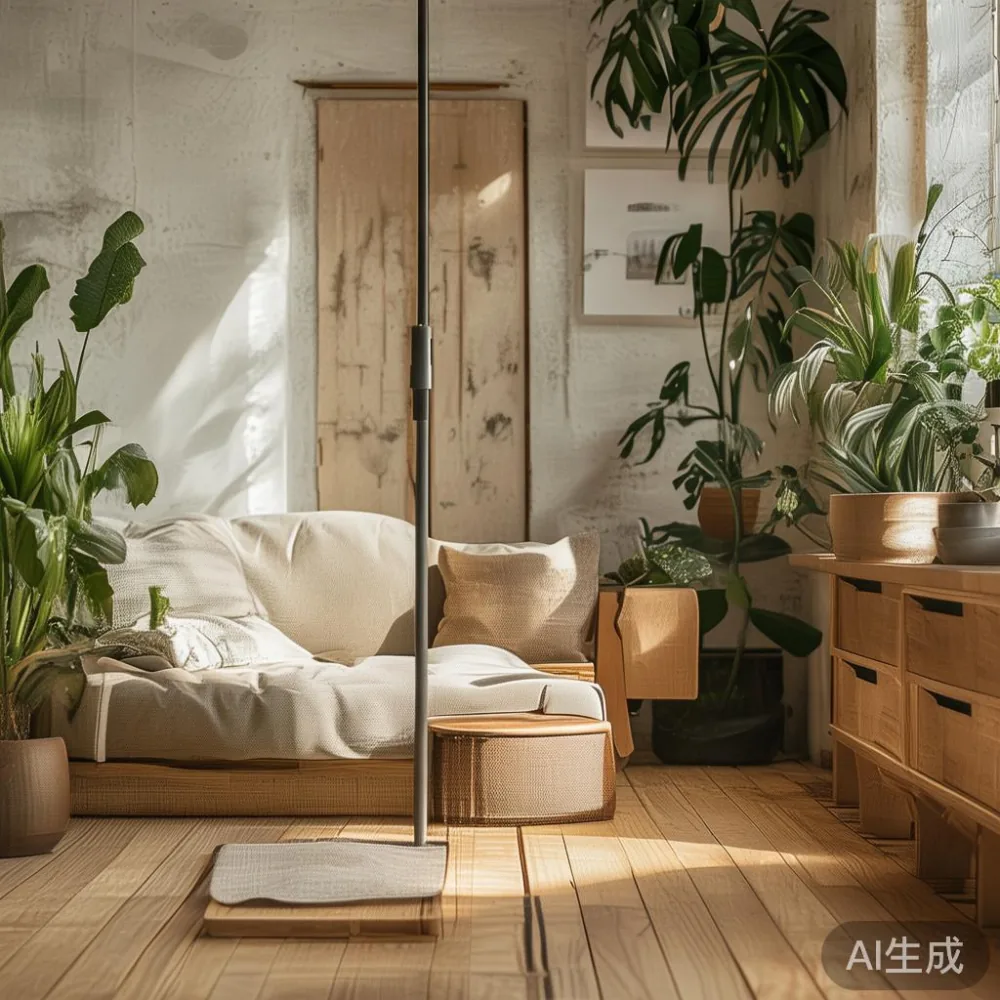
Solid wood is not a commodity. Two oak dining tables that weigh roughly the same, fit through the same Tampines lift, and ship in the same week can differ in price by 300%. The gap is not greed or branding alone. It is a stack of decisions made long before the piece reaches your living room, and once you see the stack, the numbers stop feeling arbitrary. MIDHILL, a Foshan manufacturer I had the chance to visit last year, walks customers through exactly this stack, which is why their pricing tends to hold up well against the light-luxury imports you see in local showrooms.
1. The Wood Itself: Species, Grade, and How Far It Travelled
Wood is the first lever, and it is the most misunderstood. In Singapore, the species you see most often on tags for japandi-style pieces are white oak, ash, walnut, and beech. White oak is the workhorse of the japandi look because its pale tone and straight grain pair cleanly with linen and plaster finishes; a white oak dining table in a 140cm x 80cm format will typically land in the S$1,800 to S$2,600 band before shipping. Walnut runs roughly 40 to 60 percent higher because the trees grow slower and the yield of usable heartwood is lower. Ash is cheaper than oak but visually similar, which is why so many mid-range solid wood sofa frames and bed frames use it without announcing it.
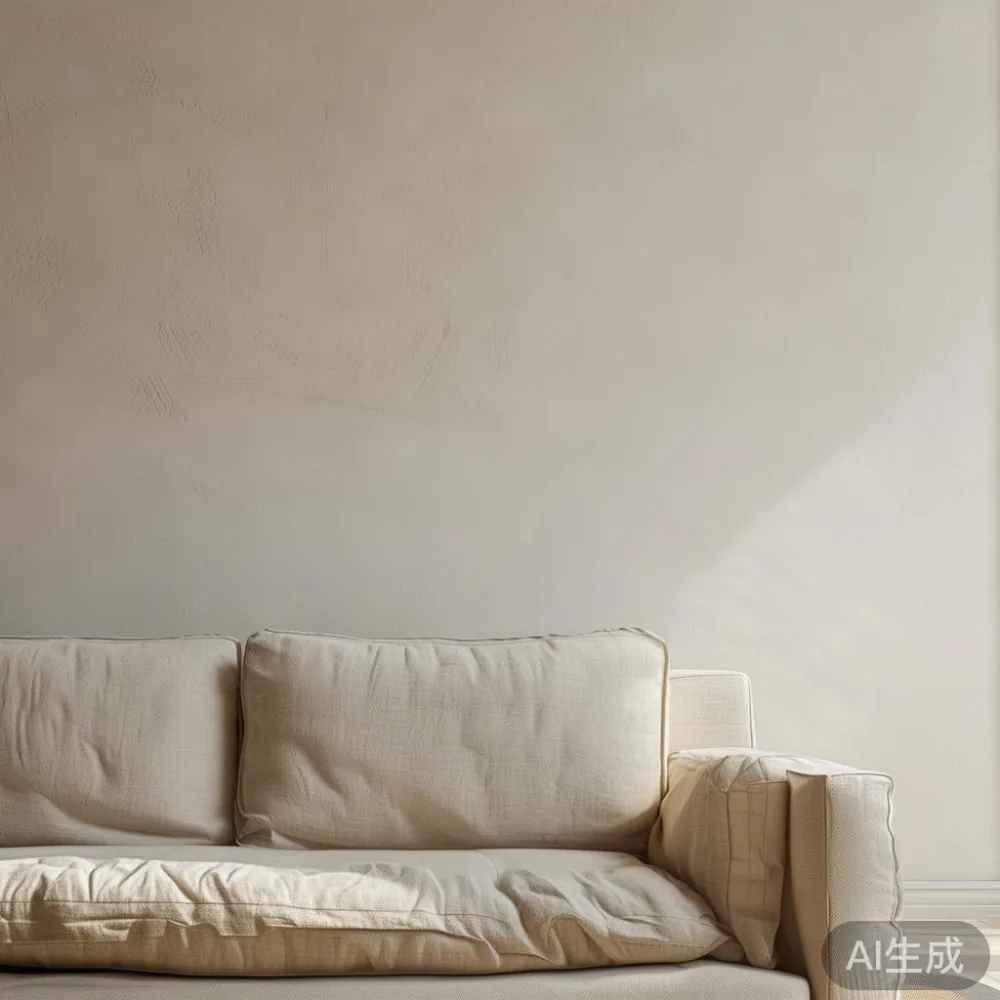
Then there is grade. FAS (First and Seconds) is the top tier under the NHLA grading system and gives you long, clear runs of grain with minimal knots. That grade costs roughly 30 to 50 percent more than the #1 Common grade that ships in flat-pack European imports. For a japandi-style bed frame where the headboard is one wide slab, the grade difference is visible from across the room.
Origin matters too. European oak (Quercus robur) is denser and tighter-grained than Chinese oak (Quercus mongolica), which is what most Foshan workshops, including MIDHILL, work with day to day. European oak commands a premium partly because freight from Bordeaux or Gdansk to a Port Klang yard, then overland to a Jurong warehouse, adds real cost. North American walnut from the Appalachians travels further still, which is one reason a walnut-and-marble coffee table from a French light luxury boutique at ION or Marina Square routinely sits above S$4,500.
2. Construction Method: Joinery, Thickness, and What is Actually Inside
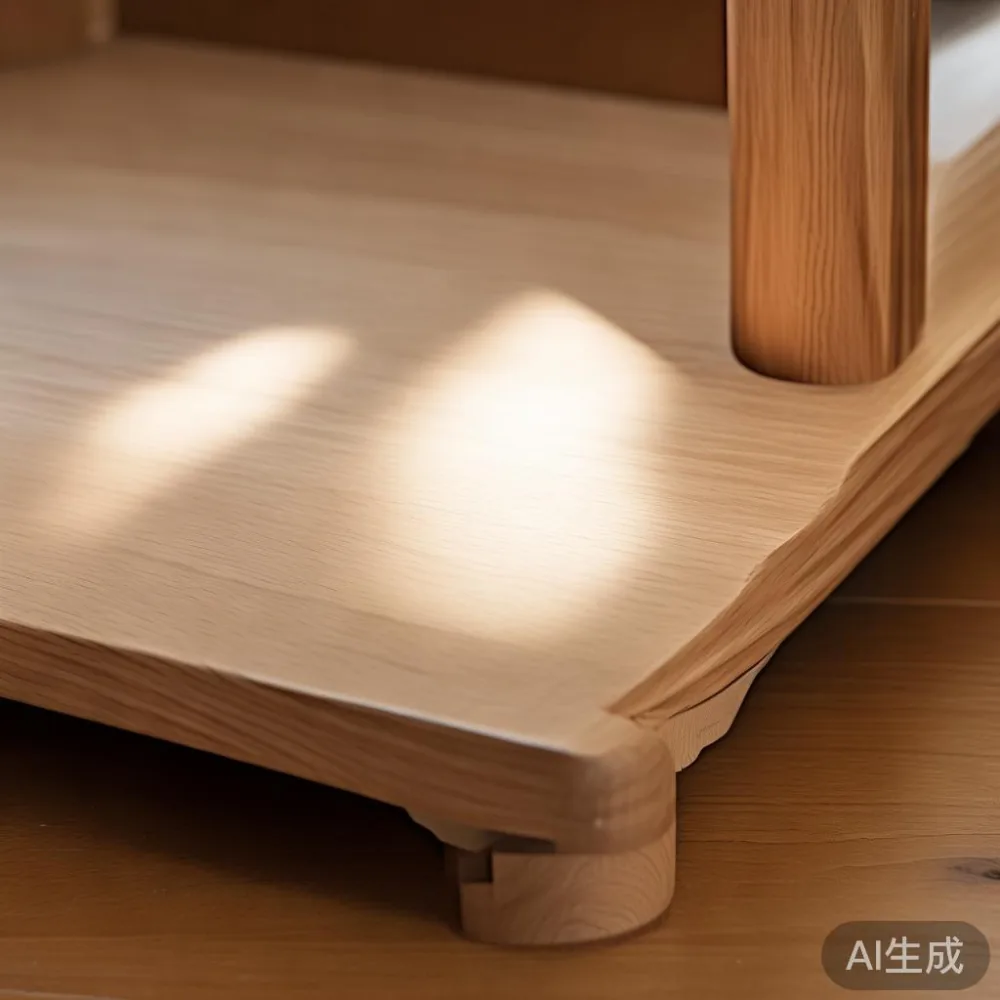
Look underneath. That is the only honest test. A solid wood dining table can be built three ways: with traditional mortise-and-tenon joinery, with dowels and glue, or with metal brackets and bolts. Mortise-and-tenon takes a skilled joiner roughly 40 minutes per corner versus 8 minutes for a doweled corner, and that labour compounds across a piece. A 200cm dining table has four leg-to-apron joints and a glued-up top with potentially five to seven glue lines. Multiply the per-joint time by the joint count and you can see why a properly joined table takes 18 to 24 workshop hours while a doweled equivalent finishes in 7.
Top thickness is the second construction tell. The thinnest a serious solid wood dining top should be is 25mm; 32mm is the comfortable middle; 40mm and above is the territory where the table begins to feel like furniture rather than a surface. Going from 25mm to 40mm does not just double the wood cost; it roughly triples the weight, which changes how the piece is dried, sanded, finished, and packed. A 40mm-top table in white oak at 200cm weighs around 65 to 75kg; that has implications for your HDB corridor turns and your lift booking that I will come back to.
Frame construction on upholstered pieces like a solid wood sofa is the same conversation in different clothing. A kiln-dried hardwood frame with mortise-and-tenon corners, sprung base, and hand-tied webbing will outlast a softwood frame stitched with staples and particleboard panels. The price gap between the two, on a three-seater, is usually S$900 to S$1,500 in the Singapore market, and the lifespan gap is roughly 7 years versus 15+.
3. Finish: Lacquer, Oil, Wax, and the Hours You Don't See
Finish is where a lot of the "what am I actually paying for?" confusion lives. There are three families: sprayed polyurethane lacquer, hardwax oil, and natural wax. Lacquer gives you the smooth, slightly plastic feel of a post-modern light luxury piece and is fast to apply (one coat per hour under a spray line). Hardwax oil sinks into the grain, highlights the figure, and requires two to four coats with 12 to 24 hours of curing between each. Wax is the slowest and most traditional, with hand-rubbed coats that can take a week of shop time on a single dining table.
For a japandi-style nightstand, hardwax oil is the right call because it lets the wood breathe and ages into a softer patina. For a high-traffic solid wood dining table in a Punggol family of five, a catalyzed lacquer is more practical. Either way, the finishing line in a serious workshop is a separate cost centre: filtered airflow, sanding between coats, and final hand-buffing all add labour hours. A S$2,200 table with a hand-buffed oil finish might have S$280 to S$340 of finishing labour baked into it; a S$1,400 table with a spray lacquer might have S$60. The pieces can look 80 percent similar in a showroom photo and diverge completely when you run a fingernail across them.
4. Hardware, Soft-Close, and the Small Parts That Are Not Small
A wardrobe has roughly 14 to 22 connection points per door: hinges, dampers, mounting plates, and runners. When those are German or Italian (Blum, Hettich, Salice), each hinge runs S$8 to S$14 retail and each soft-close damper adds another S$4 to S$7. A four-door wardrobe can carry S$380 to S$520 in hardware alone if the spec is genuinely soft-close across the board. A wardrobe that quotes cheaper usually has a partial soft-close: only the top hinges damp, or only the central pair. The MIDHILL spec sheets I have seen publish the hardware brand line by line, which is a quiet form of accountability that more local retailers could adopt.
Drawer runners are the same story. A 45cm undermount soft-close runner is S$22 to S$35 per pair; a generic side-mount roller is S$4. A five-drawer nightstand with the better runners has roughly S$110 more in hardware than its cheap twin, which is one reason the cheap twin feels rough to open on day one and falls out of alignment by year three.
5. Logistics to a Singapore Address: Lift, Corridor, GST, and the Last 50 Metres
This is the section most overseas price comparisons ignore. A Tampines HDB flat has a lift car that is typically 1.2m deep by 1.5m wide with a 1.95m door height, and corridor widths of around 1.2m. A king-size japandi-style bed frame in its packaging can exceed 2.2m in length, which means the box will not stand upright in the lift and may not make the corner into your flat without a sectional base or flat-pack disassembly. A 200cm dining table top at 40mm thick weighs 65 to 75kg and may require a two-person delivery team plus a third for staircase carry-ups in walk-up blocks, which still exist in parts of Geylang and Tiong Bahru.
Free shipping over a threshold (MIDHILL draws the line at US$350, which is roughly S$475 at current rates) absorbs the lift-and-corridor problem for buyers above it; below it, Singapore deliveries add S$60 to S$120 depending on floor and access. Then there is the 9% GST that applies at the border on CIF (cost, insurance, freight) value plus duty. Duty on finished wooden furniture into Singapore is 0%, which helps, but GST still adds 9% to the landed cost. A S$2,000 table becomes S$2,180 before it crosses your door. A 14-day return window is meaningful only if the piece actually fits your lift, which is why measuring first is non-negotiable.
What is the difference between Nordic corner sofa and modern furniture?
The shortest honest answer is this: a Nordic corner sofa is defined by its proportions, its low seat height (typically 38 to 42cm from floor to seat), its loose cushions with down-wrapped foam, and its solid wood frame in oak, ash, or beech that is meant to be visible at the arms and base, while "modern furniture" is a much wider category that includes any piece designed after roughly the 1920s with clean lines, regardless of frame material or construction method. A Nordic corner sofa will use a sprung or webbed base and removable, washable covers; a generic modern sectional might use plywood, foam-only cushions, and bonded leather that begins to peel at year four.
In Singapore showrooms the two terms get used loosely. A piece labelled "modern" at S$1,499 is often a softwood-framed corner sofa with polyester-filled cushions; a piece labelled "Nordic" at S$2,650 from a brand that publishes its joinery method and foam density (typically 32 to 35 kg/m³ for the seat, higher for the back) is a different animal. The visible design language is similar; the bill of materials is not. If the price gap between two similar-looking corner sofas exceeds S$700, the more expensive one almost certainly has a hardwood frame, real down wrapping, and a kiln-dried structure that a 10-year structural warranty can stand behind. The cheaper one has a 1- or 2-year warranty because the maker already knows what the frame will do in year three.
6. Warranty, Refinishing, and the Lifetime Math
A 10-year structural warranty on a solid wood bed frame or wardrobe is only as good as the workshop behind it. MIDHILL's 10-year coverage, for example, is supported by a lifetime refinishing service, which means that if the top of your dining table is water-stained or sun-bleached in year 12, you can ship it back (or in some cases have a tech visit) for re-sanding and re-oiling rather than replacement. That is the kind of after-sale structure that justifies a higher upfront number, because the unit cost over a 20-year ownership window drops dramatically when refinishing is on the table.
The arithmetic is straightforward. A S$2,200 dining table replaced every 12 years costs S$183 per year. A S$3,400 dining table with refinishing every 8 years costs S$140 per year once you amortise the S$280 refinishing fee. Add the 14-day returns window as a safety net for the first fortnight and the higher-spec piece is genuinely cheaper in real terms, even before you account for the fact that a 20-year-old white oak table with one refinish cycle looks better than most new pieces.
7. How to Read a Price Tag Without Getting Taken
Bring a small notebook when you shop. For each piece you are considering, write down four numbers: the species and grade, the joinery method, the finish type, and the hardware brand. If the salesperson cannot answer two of those four, that is information. If the price is below S$1,200 for a 180cm solid wood dining table in white oak with soft-close, the math is suspicious; the wood, joinery, and hardware budget alone barely fits. If the price is above S$3,800 for the same spec, you are paying for showroom rent in Tanglin or a brand premium that may or may not be worth it to you.
For japandi-style pieces specifically, lean on the discipline of the form: clean lines, exposed joinery where appropriate, no fake distressing, no plastic veneer dressed up as wood. A japandi-style wardrobe in genuine white oak with paneled sliding doors and finger-pull recesses will look better in year ten than a melamine alternative will look in year two. The point of paying more for solid wood is that the material rewards you across time, not on delivery day. Anything that interrupts that reward curve — particleboard cores, stapled frames, mystery finishes — is a price you pay twice.
FAQ: Singapore Buyers' Most Common Pricing Questions
Is solid wood worth the premium over veneer in a HDB flat? Yes, particularly for pieces that take punishment: dining tables, bed frames, and wardrobes. Veneer cores tend to delaminate in Singapore humidity (typically 70 to 85 percent year-round) within five to eight years, while solid oak, ash, or teak tolerates the same conditions for decades if the finish is maintained.
How do I know if a piece is genuinely solid wood? Look at the end grain, the underside, and the inside of any drawer. If the grain pattern continues across faces and the inside of a drawer matches the outside, it is solid. If you see a repeating printed pattern or a sharp seam at the edge, it is veneer over a softer substrate.
Does heavier always mean better? Not always, but for a given species and dimension, a heavier piece has been dried longer and contains fewer air pockets in the cell structure. A 200cm white oak table in the 65 to 75kg range has been properly kiln-dried; one in the 45 to 55kg range has likely been rushed.
What about a marble table versus a solid wood one? Both belong in the japandi vocabulary, but they behave differently. Marble is denser (around 2,700 kg/m³ versus 700 kg/m³ for oak), shows etching from acids, and demands coasters. Solid wood is more forgiving and easier to repair. A marble-and-oak combination on a coffee table gives you the visual weight of stone with the warmth of wood; expect to pay S$2,800 to S$4,200 for that pairing in a 110cm format from a serious maker.
Final Notes Before You Buy
Pricing solid wood furniture in Singapore is really pricing a stack of choices: species and grade, joinery and thickness, finish and hours, hardware and soft-close, logistics and lift access, warranty and refinishing. Once you can see the stack, two things happen. First, the S$1,200 versus S$2,200 comparison stops being mysterious and starts being legible. Second, you stop being loyal to a brand and start being loyal to a bill of materials, which is a much healthier place to be when you are spending four figures on something meant to last 15 to 20 years.
One last piece of context. The French entryway furniture usa conversation you may have seen online is really a conversation about light-luxury positioning: how a piece signals taste without shouting. A japandi-style entryway console in solid white oak with a single drawer, mortise-and-tenon corners, and a hardwax-oil finish ticks that box at a price a Singapore HDB owner can actually fund, which is the point of the category. Whether you buy from a local showroom, a regional workshop, or a Foshan maker like MIDHILL, hold the spec sheet to the same standard: real wood, real joinery, real hardware, real warranty, real refinishing path. The price will then take care of itself.