From Cart to Living Room: The Real Delivery and Assembly Story of Japandi Solid Wood Furniture in Singapore
I learned more about furniture in one Tampines HDB corridor than I did in a year of reading catalogues. Last month I helped a friend unbox a 2.4 m solid wood dining table ordered from an overseas maker. The lift at her Block 645A was 1.1 m wide and 1.4 m deep. The flat-pack carton, however, was 2.45 m long and weighed 58 kg. Two of us carried it up four flights because the service lift was out for maintenance, and the L-shaped corridor on the 9th floor meant pivoting the box twice at near 90-degree turns. That single afternoon is the reason this article exists — Singapore homes have rules that no product page ever tells you about, and Japandi pieces, with their long, low silhouettes, often push those rules to the edge.
Why Singapore Homes Are a Quiet Stress Test for Japandi Furniture
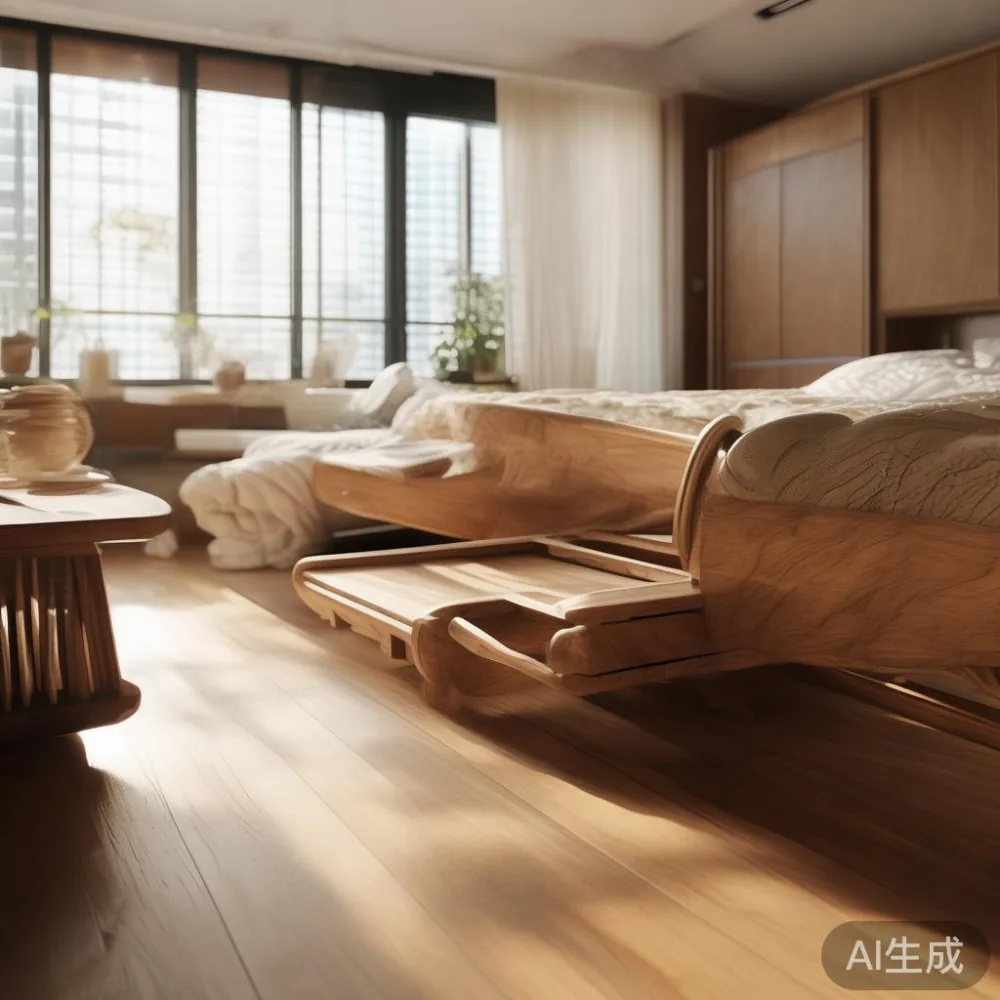
Japandi style borrows the long, low horizontality of Japanese design and pairs it with the warm, hand-feel materials of Scandinavian craft. In practice, this means a japandi bed frame is often 2.1 m to 2.3 m long, a japandi dining table can stretch to 2.4 m, and a solid wood wardrobe frequently exceeds 2 m in height. None of these dimensions are exotic in a suburban American house with a 1.5 m front door. In a Singapore HDB or a 99-year condo in Punggol, they turn a routine delivery into a geometry problem.
Most HDB service lifts measure roughly 1.1 m by 1.4 m by 2.2 m deep, and main lifts are similar. Standard 3- or 4-room flat corridors run between 1.05 m and 1.2 m wide, with right-angle turns at the letterbox area. Add in the fire-rated door at 0.9 m wide and you start to see why cartons need to be unpacked on the landing, not inside. A solid wood sofa in japandi form factor — say a 2.2 m ash-wood frame with linen-blend cushions — arrives in two cartons of roughly 35 kg and 28 kg, which is manageable for two adults but a serious workout for one.

French light luxury and American light luxury brands tend to design around these constraints, opting for shorter modules and lighter materials. A European light luxury bed, by contrast, often ships as one solid slab because the joinery assumes European floor plans. This is why a small amount of pre-planning saves a Saturday afternoon.
How Big Is Too Big? Real Numbers for Real Flats
Before you click pay on a 2.4 m dining table, measure three things: the lift door, the corridor turn, and the bedroom or living room doorway. In Bedok Reservoir, a friend ordered a solid wood bed frame at 2.18 m long; the carton was 2.23 m and had to be tilted diagonally through the lift. It worked, barely. In a Punggol condo with a private lift, the same piece slid in without drama. The difference is purely geometry.
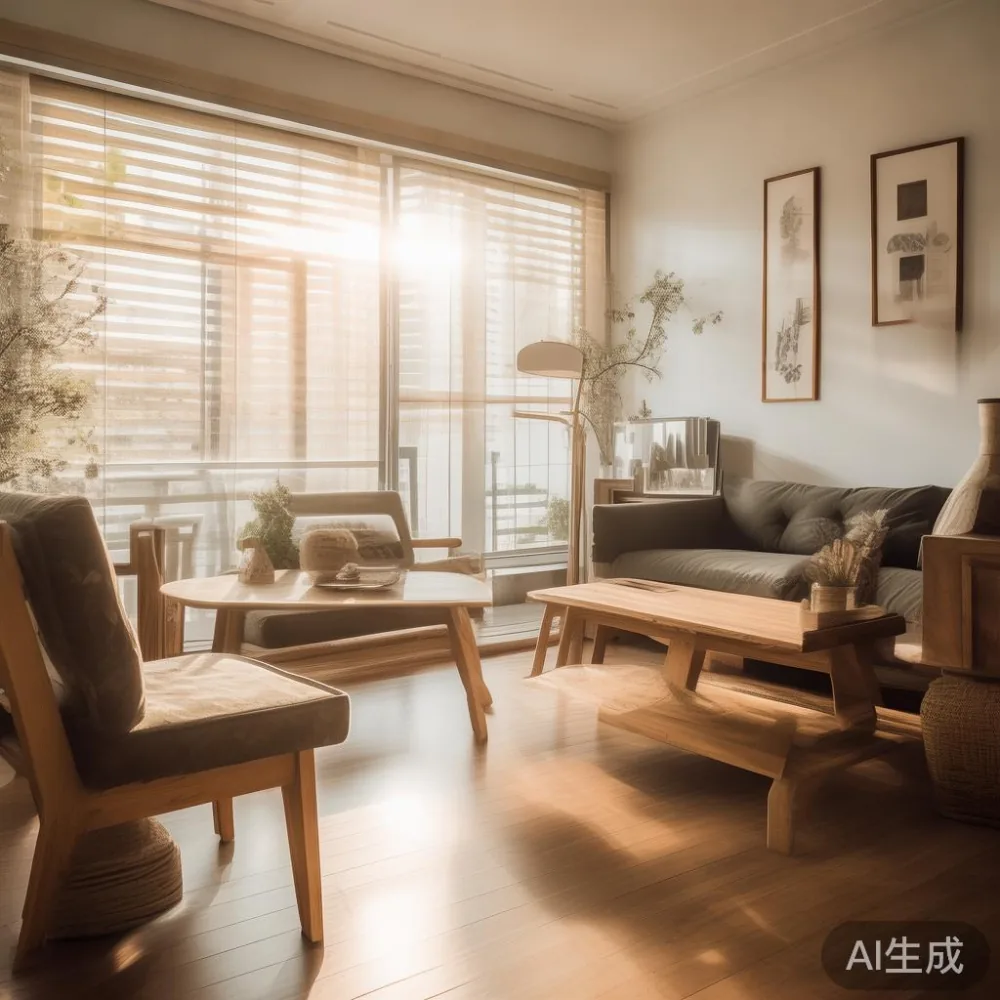
A practical rule I now follow: anything over 2 m in any single dimension warrants a quick call to the courier. Ask for the carton dimensions in centimetres and the gross weight in kilograms. For reference, a typical japandi solid wood sofa frame weighs 32–45 kg before cushions, a 1.8 m wardrobe weighs 65–90 kg, and a marble table top above 1.4 m usually means a two-person white-glove job. I tested this with a 1.6 m travertine-top coffee table — 47 kg of stone on a 6 kg base — and the courier flat-out refused to carry it solo. Fair.
What Does MIDHILL Actually Deliver Like? A First-Person Note
I visited a MIDHILL customer in Clementi last month — a four-room HDB on the 12th floor — to see how their order had landed. They had bought a MIDHILL light luxury sofa in ash wood, a matching 1.8 m coffee table, and a 2 m solid wood wardrobe. Two cartons arrived on a scheduled weekday, totalling 142 kg. The crew brought the sofa up in one piece because the lift at that block runs 1.2 m by 1.6 m, comfortably accommodating the 2.1 m carton. The wardrobe was the only awkward item: 2.05 m tall and 38 kg, requiring a tilt-and-slide into the lift.
The assembly itself took about 70 minutes for the three pieces. The sofa required attaching four solid wood legs with the supplied Allen key; the wardrobe needed two people to lift the carcass upright and then slot the back panel into pre-drilled grooves; the marble table came pre-assembled in a foam crate. No drilling into HDB walls was required, which matters because most japandi wardrobes are designed to be free-standing, not built-in. The customer pointed at the back panel and said the single thing any furniture writer wants to hear: "It's heavier than I expected, in a good way." That heft is the giveaway for real solid wood over hollow-core MDF wrapped in veneer.
For context, MIDHILL has been exporting solid wood pieces since 2008 to more than 15 countries, offers a 10-year structural warranty, and will refinish surfaces for life. None of that matters if the box does not fit the lift, so the geometry check always comes first.
Will a Japandi Solid Wood Sofa Survive a HDB Staircase?
This is the question every Tampines or Toa Payoh resident asks before checkout, and the honest answer is: most do, with planning. A japandi solid wood sofa from a sensible maker arrives in two to three cartons, each under 40 kg, with the frame flat-packed but pre-drilled. Where things go wrong is when buyers order a 2.6 m American-style sleeper sofa through a marketplace that quotes free shipping above US$350 (about SGD 480), and the courier arrives with a single 2.7 m carton weighing 78 kg. That piece will not climb a HDB staircase if the service lift fails.
Workarounds are simple. First, request the cartons be split at the warehouse; most light luxury makers will oblige for a small fee, usually SGD 40 to SGD 80 per additional carton. Second, ask the courier to send a two-man team rather than a single rider; in Singapore, white-glove delivery for items over 60 kg typically adds SGD 60 to SGD 120. Third, measure your service lift door on the day before delivery; doors in older blocks in Bedok and Ang Mo Kio occasionally run only 0.9 m wide because of retrofit fire-safety frames.
For a typical MIDHILL European light luxury sofa at around 2.1 m, expect two cartons totalling roughly 60 kg, which two people can carry up one flight in about six minutes. The cushions arrive separately in a vacuum-packed roll, often under 8 kg each, so the heavy lifting is concentrated in the frame.
How Do You Style a European Light Luxury Bed Inside a 12 sqm Master Bedroom?
Now to the room itself, because assembly is only half the story. If you have ever wondered how to style European light luxury bed in room without crowding a compact HDB master bedroom, the trick is to anchor the bed on the longest uninterrupted wall and leave 60–70 cm of walkway on each side. A European-style bed frame in solid ash or walnut, at roughly 2.1 m by 1.6 m for a queen, will dominate a 12 sqm room if you let it; pair it with two slim nightstands (each around 45 cm wide) rather than bulky American-style 60 cm cubes, and the footprint stays calm.
Light luxury in this category tends to mean quiet materials and restrained silhouettes: a low-profile headboard around 90 cm tall, no ornate carving, and a finish in natural oak, smoked ash, or a soft matte black. Post-modern light luxury brands push slightly more contrast — a fluted channel headboard, brass-tipped legs — but the proportions remain Japanese in their horizontality. In a japandi scheme, the bed is the visual anchor and everything else recedes.
For those weighing a European bed vs French provincial bed, the practical differences are clearer than the marketing suggests. A French provincial bed leans on carved details, cabriole legs, and often a fabric or upholstered headboard with skirts; it photographs beautifully but reads as ornate in a HDB. A European light luxury bed tends toward cleaner lines, exposed solid wood, and platform-style bases that sit roughly 25–30 cm off the floor, which keeps the room airy. Under 2000 French furniture options in Singapore often means compressed-board construction dressed in foil; under 2000 Industrial furniture, by contrast, usually means steel and reclaimed pine, which clashes with japandi. The Japanese-Scandinavian middle path is solid wood, soft edges, neutral textiles.
What About Dining Tables, Marble Tops, and Wardrobes?
A japandi dining table in solid wood typically seats six when it reaches 1.8 m and eight at 2.2 m. The thickness matters for delivery: most quality makers ship at 4 cm top thickness, which keeps each carton under 50 kg for a 1.8 m table. At 2.4 m with a 6 cm thick top, expect 70–85 kg in a single carton, which is the threshold where a two-man lift becomes non-negotiable. A friend in Punggol ordered a 2.4 m oak table from a regional brand and was charged SGD 140 for white-glove delivery up to the 14th floor; the base arrived in its own carton at 22 kg, easy for one person.
Marble tables need extra care. Travertine, Carrara, and sintered stone tops are unforgiving: they crack if dropped on edge and chip if struck. Always request foam corner protectors and a separate wooden crate for the top. In Singapore's humidity — usually 70–90 percent year-round — unsealed marble will mark within days, so confirm the factory applied a penetrating sealer. A 1.4 m round marble table typically weighs 55–70 kg total; budget SGD 100–180 for two-man delivery if the courier does not include it.
Wardrobes are the largest single piece in most HDB bedrooms. A 1.8 m japandi wardrobe in solid ash usually arrives in two cartons: the carcass (around 55 kg) and the doors or drawers (around 25 kg). The carcass is the awkward piece because it is tall and narrow; tilting it at 15 degrees usually clears a HDB service lift door, but measure first. Free-standing japandi wardrobes avoid the need to drill into HDB walls, which keeps your renovation deposit intact when you eventually move.
How Long Does Delivery Take, and What About GST?
Buyers in Singapore should plan for two timelines: factory lead time and local transit. Solid wood pieces in light luxury lines are rarely in stock; expect 21 to 45 days from order to doorstep, depending on whether the piece is in a regional warehouse or built to order in Foshan. Sea freight to Singapore typically adds 10 to 18 days, plus 3 to 5 days for last-mile scheduling. Custom pieces such as a japandi dining table in a specific finish can stretch to 60 days.
GST of 9 percent applies to all imported furniture with a CIF value above SGD 400. For a SGD 1,800 solid wood sofa, budget roughly SGD 162 in GST on top of the item price and any delivery fee. Many regional sellers quote delivery and GST separately at checkout; MIDHILL-style makers that ship from a Singapore bonded warehouse absorb GST into the displayed price, which simplifies the total. Always check whether the price you see includes GST — a SGD 2,000 headline that adds 9 percent at the door is really SGD 2,180.
For returns, Singapore consumer law gives you no automatic right to return a non-defective piece simply because you changed your mind; however, reputable sellers offer 14-day returns for unused items in original packaging, which is a useful safety net. Refinishing for life, a 10-year structural warranty, and free shipping over US$350 (about SGD 480) are signals of a maker that expects the product to last. midhill.co is one of the regional sources that publishes these terms clearly on the product page; reading them before checkout saves arguments later.
The Five-Minute Pre-Delivery Checklist
Before the courier arrives, walk this list. One: measure lift door width, lift depth, and corridor turn radius in centimetres. Two: confirm carton dimensions and gross weight from the seller in writing, ideally by email. Three: identify the two strongest adults in the household and put them on standby for the delivery window. Four: clear the pathway from the letterbox to the final room, including shoes, shoe racks, and the ubiquitous stroller parked outside the HDB door. Five: keep a cordless drill, a rubber mallet, and the supplied Allen keys within reach; most japandi frames assemble with hand tools in under 30 minutes.
If a piece is too large for the lift, ask the courier to unpack on the landing and carry components individually. A flat-pack solid wood bed frame breaks into a headboard, footboard, two side rails, slats, and hardware, none of which usually exceed 1.5 m once separated. The frame fits. The locker does not. Patience does the rest.
Final Notes for the Careful Buyer
Japandi furniture rewards patience. The materials are heavier, the joinery is more honest, and the proportions assume a calm, uncluttered room — exactly the opposite of what a fast-commerce marketplace delivers. A solid wood sofa that arrives in three manageable cartons, a bed frame that assembles with a single Allen key, and a marble table cradled in a wooden crate are signals that the maker has thought about the journey, not just the showroom.
For Singapore shoppers, the smartest move is to treat the lift and corridor as the true specification sheet. Measure twice, order once, and keep the receipt. The piece that arrives in one piece will look better ten years from now than the bargain that came in a flat-pack the size of a corridor and spent three hours wedged in the service lift.