Solid Wood Furniture Pricing: Why Quality Counts
I spent last Saturday crawling through a furniture showroom in Tai Seng with a tape measure, a kitchen scale, and a slightly annoyed sales associate. By the end of the visit I had weighed two "solid wood" dining tables, measured the depth of three sofa frames, and checked the underside of a wardrobe that was priced nearly double a near-identical piece across the corridor. That single afternoon is the reason I keep telling friends in Tampines and Punggol that the price tag on solid wood furniture is far more legible than it looks — once you know which numbers to read.
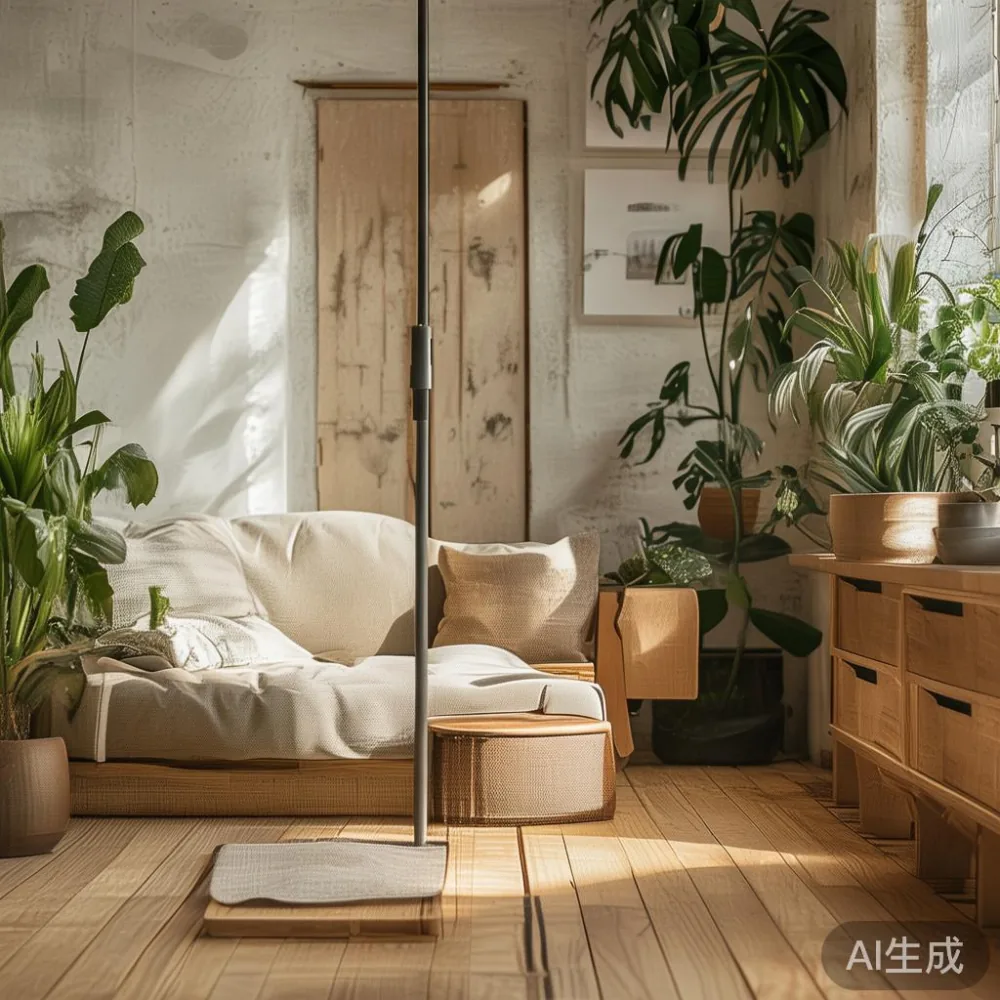
The Singapore market is a strange one for solid wood. We import roughly 90% of the hardwood used in mid-range furniture, so freight, GST (currently 9%), and a wet tropical climate all push prices in the same direction. At the same time, the typical HDB delivery scenario — a 3-door corridor, a service lift that maxes out at about 1.2 m wide and 2.3 m deep, and a unit door often only 91 cm wide — quietly rules out a lot of the oversized American light luxury pieces before you ever see the invoice. Understanding what you are paying for is the only realistic way to spend SGD 1,800 to SGD 6,500 on a sofa, dining table, or bed frame without regret.
Why does one solid wood dining table cost SGD 1,200 and another SGD 4,800?
This is the question I get most often from buyers in Bedok and Hougang, and the answer almost always sits in three layers: the species of timber, the joinery, and the finish. If two tables look identical in a photograph but one is built from fast-grown Chinese ash (about 480 kg per cubic metre) and the other is old-stock Burmese teak (around 660–750 kg/m³), the weight alone tells you a story. Heavier, denser timber costs more to ship, mills more slowly, and wastes more offcut during drying.
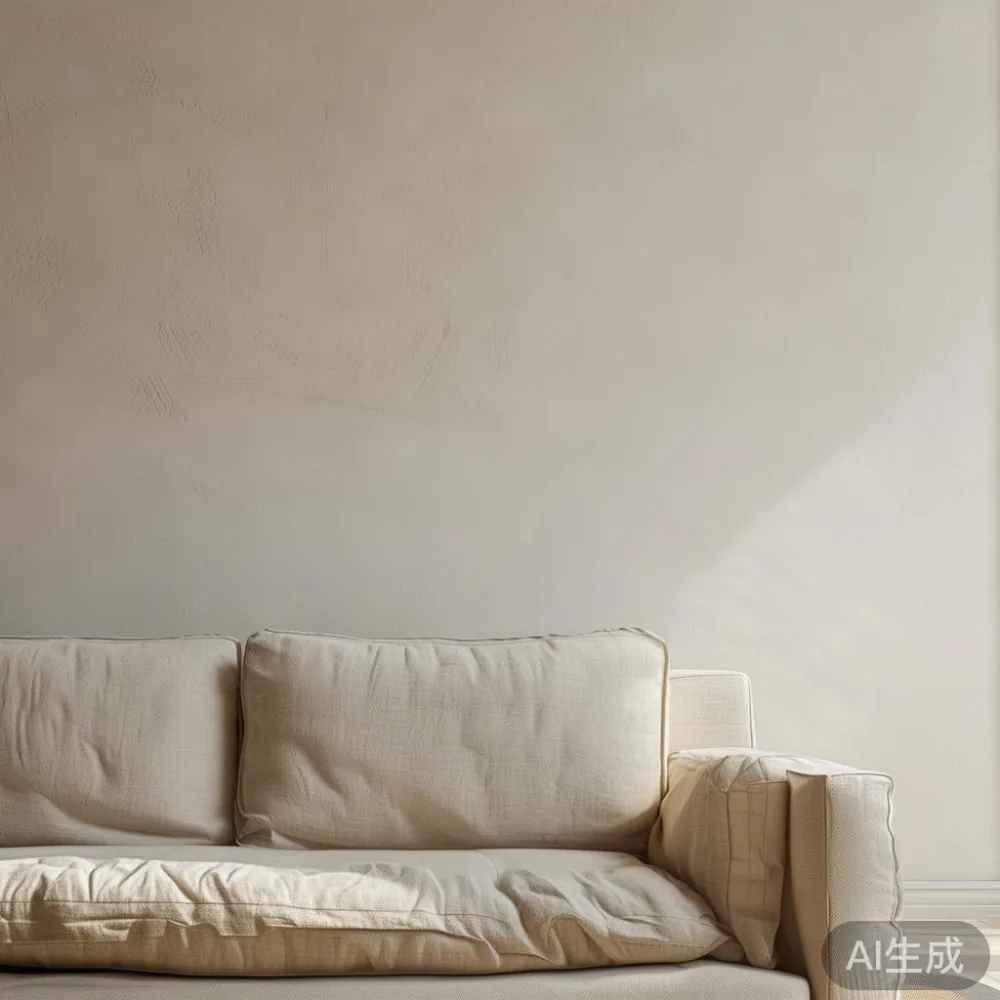
Then there is joinery. A solid wood sofa or bed frame built with mortise-and-tenon, dowel, or dovetail joints will outlast one held together with staples, biscuits, and a lot of glue. Any Foshan workshop serious about export will use a combination of traditional joinery and modern CNC-cut components; that dual approach is part of why MIDHILL pieces arrive in Singapore with a 10-year structural warranty — the engineering is graded for an entirely different climate and humidity swing than what the European or American retail market expects.
The finish is where things get slippery. A genuine oil-and-wax finish on a Japanese sofa frame is honest about its maintenance needs; a seven-layer piano-grade lacquer on a French light luxury inspired bed frame is honest about the time it took to apply. The price jump between the two is roughly 20–35% on the same wood base, and both are defensible — what is not defensible is a piece labelled "solid wood" that turns out to have a 4 mm oak veneer over an engineered core.
How much should a Japandi-style solid wood dining table actually weigh?
For a 1.8 m table seating six, the realistic weight range is 55 kg to 95 kg depending on the timber. A Japanese-style low-leg design in ash or beech will sit at the lower end; a 4 cm thick oak top with a trestle base will push past 90 kg. Weight matters more than most buyers in Punggol realise because it determines whether the piece can be carried up a 12-storey HDB without dismantling the lift lobby. If the table is over 100 kg, your mover will likely refuse to keep it in one piece, and reassembly at home always introduces micro-gaps over time.
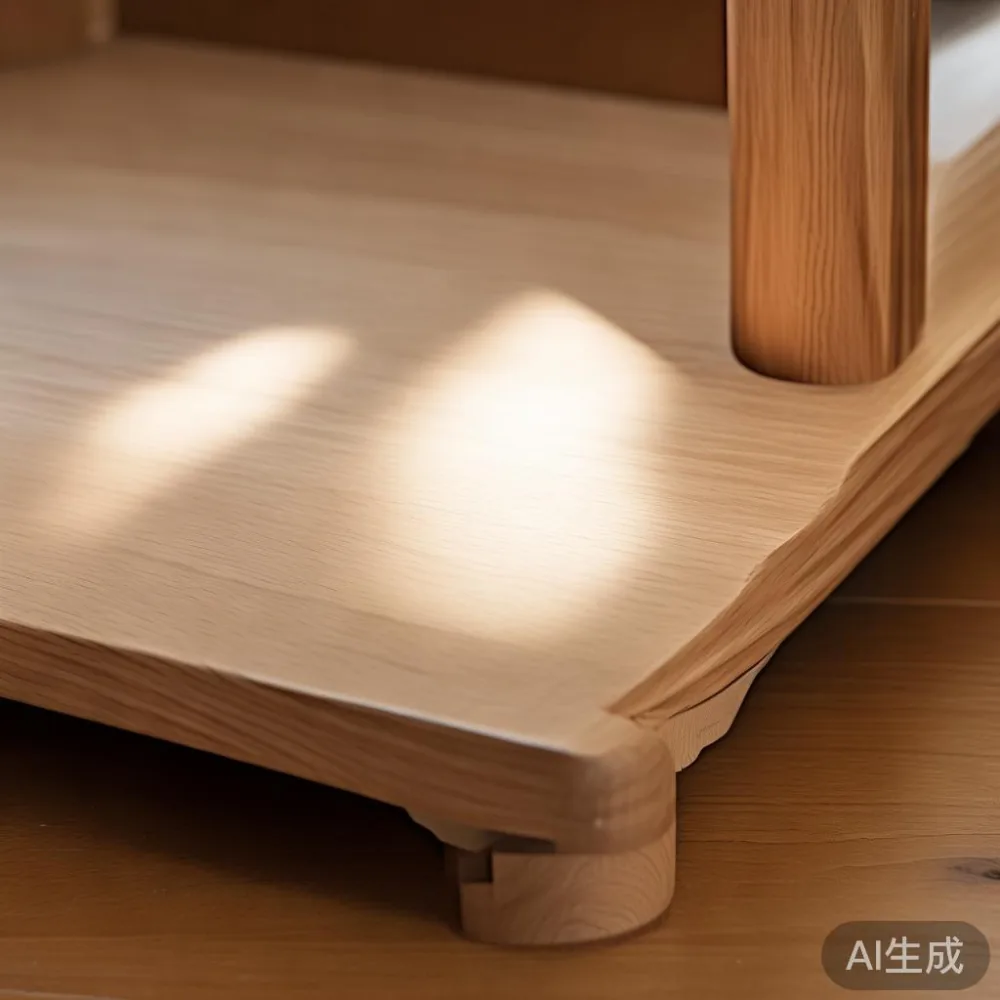
If you are browsing a japandi style collection and the table weighs under 40 kg at 1.8 m, the top is almost certainly a veneer. That is not a bad thing if the price reflects it (SGD 600 to SGD 900 is fair), but it should not be sold as a solid wood piece at SGD 2,400. The easiest in-store test is the underside: solid wood shows end-grain on the long edges, a continuous grain pattern across the top, and the same timber species on every visible surface including the inside of the legs and the apron.
What role does shipping and GST play in the final price on a Singapore sofa or wardrobe?
More than people expect. A 2 m wardrobe and a 2.4 m wardrobe look similar in a showroom photo, but the larger one cannot fit flat-packed through a standard 1.2 m service lift. It has to be shipped vertical, crated, and that crate adds about 18–22 kg of dead weight plus additional volumetric charges. For a buyer in a Punggol Waterway block or a new Tampines exec condo with private lift access, this sometimes means paying an extra SGD 180 to SGD 420 just for white-glove handling.
Free-shipping thresholds exist for a reason. If a brand offers free delivery above SGD 350 and a 14-day return window, they are quietly absorbing most of the risk you would otherwise pay for through a third-party logistics provider. Foshan exporters shipping into Singapore usually consolidate orders into 40-foot HQ containers (roughly 65–70 m³ usable), which is how they can offer flat rates of around SGD 80 to SGD 150 per piece for addresses below the 350-dollar threshold. When you see a "free shipping" badge, mentally add the freight cost back into the unit price; it is usually already there.
Is a marble table worth mixing with a solid wood dining set?
It depends on the household. Solid wood and marble play together very well in a japandi style setting, and the price ratio is interesting: a sintered stone or marble dining table for four typically runs SGD 1,300 to SGD 2,800, while a comparable solid oak dining table runs SGD 1,100 to SGD 2,200. Marble adds visual weight, but it also adds maintenance weight — acidic spills from sambal or kopi will etch an unsealed surface within seconds.
If you are weighing how to style European sofa in room settings alongside a solid wood dining table, the safer long-term move is to keep marble on the coffee table or side table where the surface is easier to wipe and replace, and let the dining table be the wooden anchor. I have a colleague in Clementi who replaced three chipped marble tops in five years before switching to solid ash; she now refinishes the wood herself once a year and the table looks better at year six than it did on day one.
What should you check before buying a solid wood bed frame or nightstand?
Four things, in this order: timber thickness on the slats, the weight of the headboard panel, the hardware under the mattress platform, and whether the nightstand drawers are dovetailed or stapled. A bed frame priced under SGD 900 in solid wood is almost always using 1.5 cm slats; a quality one will use 2.2 to 2.5 cm slats spaced no more than 7 cm apart. The headboard should weigh at least 15 kg for a queen — if it feels light enough to tip forward with one hand, the panel is hollow-backed, and that hollow back will telegraph every bump from the other side of the bed.
For the French bed vs Nordic bed comparison, the difference usually comes down to headboard height and detailing. French light luxury silhouettes lean toward an upholstered headboard 110–125 cm tall with gentle curves and brushed brass feet; a Scandinavian or japandi style bed frame typically sits at 80–95 cm with a low, flat profile and no metalwork. Both are valid; the price gap between them is mostly fabric and finishing labour rather than wood. If your ceiling height is 2.7 m — the most common HDB ceiling — the lower Scandinavian profile will make the room feel taller, which matters in a 3-room flat of roughly 65 m².
How long does a quality solid wood wardrobe or bed frame actually last?
Realistically, 18 to 30 years for a wardrobe, 15 to 25 for a bed frame, and 10 to 20 for a sofa frame before the cushions need replacing. That spans is what makes the difference between a SGD 950 piece and a SGD 2,800 piece worth measuring in months-per-dollar. A wardrobe at SGD 950 with a 3-year warranty works out to SGD 26 per month over its life; one at SGD 2,400 with a 10-year warranty runs SGD 20 per month, and that calculation assumes you would have to replace the cheaper one twice. Solid wood from a Foshan maker that also offers lifetime refinishing — something MIDHILL provides on its core collection — turns the math around again, because refinishing at year eight or ten is cheaper than buying new at all.
The other longevity factor is humidity. Singapore sits at 70–85% relative humidity year-round, and timber moves. Oak and ash move less than beech or rubberwood, which is why oak is worth the premium for wardrobes that face exterior walls in a Bukit Batok HDB. If the maker kiln-dries the timber to 8–10% moisture content before assembly (rather than the 12–14% common in cheaper Asian-made pieces), the wardrobe arrives dimensionally stable and stays that way. This is one of the quiet reasons a japandi style piece from a focused Foshan workshop beats a generic flat-pack alternative from a Swedish chain in Singapore conditions.
Which design language suits a small Singapore bedroom — Japanese, Scandinavian, or French light luxury?
Each one works, but the proportions are different. Japanese-influenced designs (often grouped under the japandi style umbrella) favour low headboards, exposed wood legs, and slimline wardrobes between 45 and 55 cm deep — ideal for a 3-room HDB master bedroom of about 12 to 14 m². Scandinavian pieces overlap heavily with this vocabulary. French light luxury tends toward taller headboards, narrower bed frames, and wardrobes at 60 cm deep with moulded detailing — better suited to a condo master bedroom of 16 m² or more. American light luxury tilts the other way: deeper sofas, taller footboards, and wardrobes that look oversized in any HDB.
For post-modern light luxury — a quieter third path that has been appearing in Singapore showrooms over the past two years — the vocabulary is even more compact, with thinner frames, matte finishes, and almost no exposed hardware. The right question is rarely "which style is best" and almost always "which style makes my specific room behave properly." A 22 m² living room in a Punggol EC can absorb a French light luxury sofa; a 16 m² living room in a 4-room Tampines flat cannot. The piece you already love will underperform the moment it crowds the corridor or the lift landing.
What is a fair SGD price to pay for a good Japandi sofa in 2026?
For a three-seater solid wood sofa with a removable linen-blend cover, a kiln-dried ash or oak frame, and high-resilience foam wrapped in down feathers, the realistic range in Singapore for 2026 is SGD 1,800 to SGD 3,200 for direct-import pieces, and SGD 3,400 to SGD 6,500 for pieces stocked by local retailers with showroom overheads. Anything below SGD 1,400 is almost certainly built around rubberwood or a hybrid frame, and that is fine if the warranty reflects it. Anything above SGD 4,000 from a Foshan direct exporter should at minimum come with a 10-year structural warranty, lifetime refinishing, and proof that the kiln-drying was done to 8–10% moisture, not the looser 14% that causes cracks within the first dry season your aircon creates.
If you are still choosing, my honest nudge is to decide first whether you want the best Japanese sofa for 2026 (low profile, exposed ash legs, removable cushion covers), the best European sofa for 2026 (deeper seat, higher back, brushed brass detail), or a sofa from the best Scandinavian bed for 2026 category stretched into the living room (which is really japandi style territory again). Any of those three directions, sourced from a maker who publishes weights, moisture content, and warranty terms, will age gracefully in a Singapore home. The number on the price tag will then read as the cost of the materials and the craft — which is what a fair furniture price is supposed to represent.
One last detail that often decides the outcome: visit the showroom, lift the sofa yourself, and check the underside of the dining table. Five minutes of physical inspection will tell you more than an hour of online reviews. I learned that the slow way, in that Tai Seng showroom last month, and I have not skipped the inspection since.