Veneer or Solid Wood? A 5-Year Cost Reality Check for Japandi Furniture in Singapore
I keep a small notebook of every piece I have bought for my own home in Punggol, and last month I finally sat down to add up the receipts. Two matching sideboards, a solid wood sofa frame I commissioned in 2020, a wardrobe re-skinned in 2022, and a Japandi-style dining table I have been quietly watching peel at the edges. The exercise was humbling, so I want to share it with anyone staring at a quote right now and trying to decide between a veneered panel at S$899 and a solid oak equivalent at S$2,100. Over five years, the gap is rarely what the showroom tag suggests.
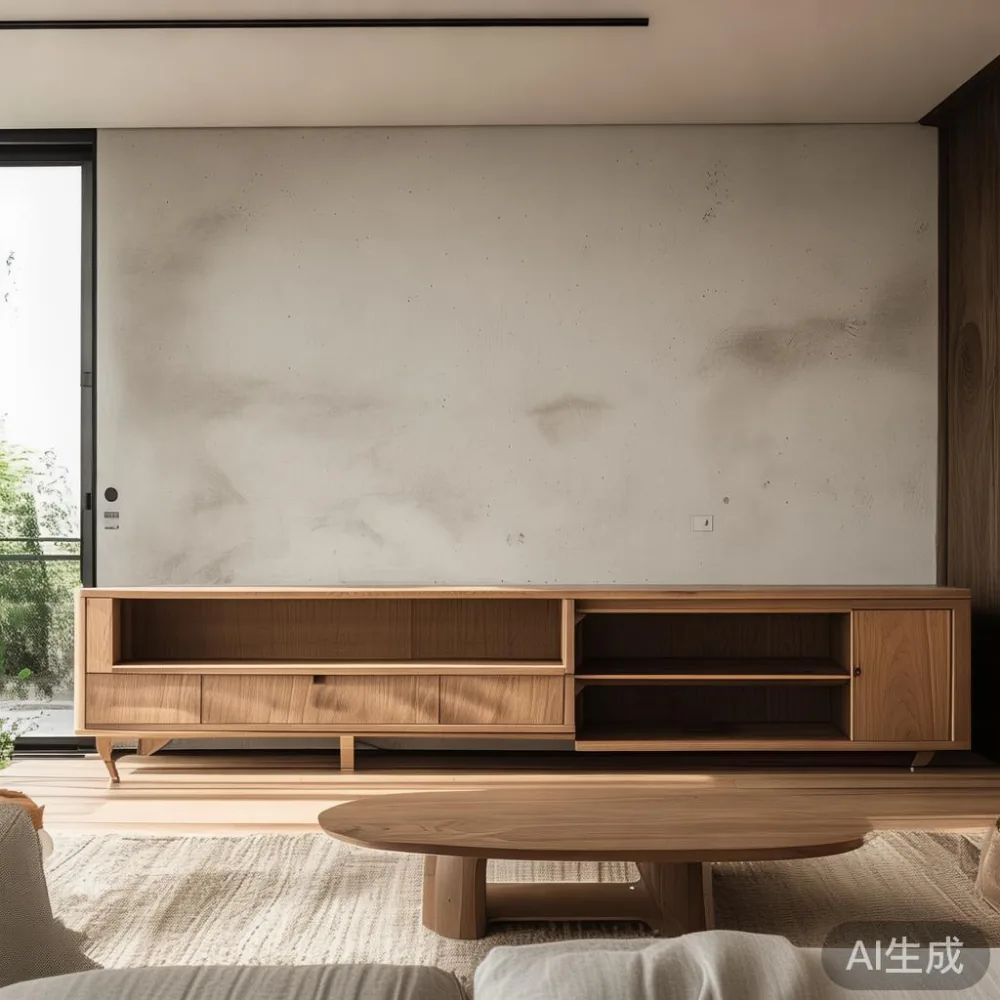
This guide is written for Singaporean buyers furnishing HDB flats in Tampines, Bedok, and Punggol, where 3-room and 4-room layouts swallow about 28 to 40 sqm of living space, lifts typically measure 1.1 m wide by 2.1 m deep, and corridor clearances can be as tight as 1.2 m. It also assumes prices in SGD, the 9% GST you actually pay, and the reality that your home runs an indoor humidity band of 60 to 80% for roughly nine months of the year. If you are weighing a Japandi-style bed frame, dining table, or nightstand, these are the numbers that matter.
What is the real price difference between veneer and solid wood furniture?
For a standard 1.8 m Japandi bed frame, expect to pay S$1,200 to S$1,900 for a quality engineered-wood or veneer option and S$2,800 to S$4,200 for solid oak or ash of similar dimensions. For a 1.4 m to 1.6 m dining table seating four, veneer pieces sit at S$900 to S$1,500 while solid wood runs S$1,800 to S$3,400. A 180 cm wardrobe lands in the S$1,400 to S$2,000 veneer band versus S$3,200 to S$5,500 in solid wood. Add 9% GST, plus S$60 to S$150 for HDB delivery if the supplier has to work through a third-floor walk-up, and the day-one delta is usually 60 to 110 percent.
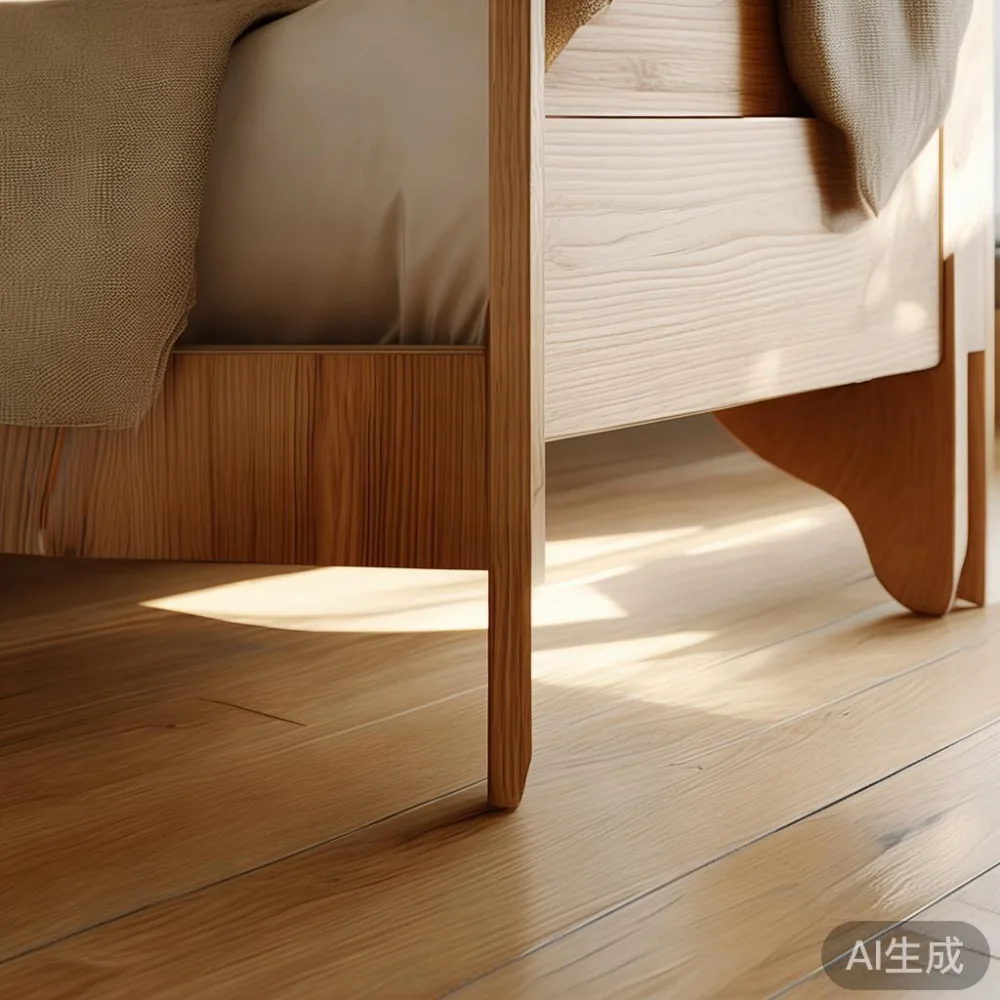
Light luxury positioning helps frame what you are actually getting. French light luxury design tends toward thinner profiles and book-matched veneer on stable substrates, which is gorgeous in a condo but punishing on the second hot, humid summer. American light luxury leans into chunkier solid frames with visible joinery, often heavier by 20 to 35 kg per piece. Post-modern light luxury blends the two and is where most Japandi pieces actually sit, mixing solid legs and aprons with veneer panels to keep weight and cost down without surrendering the silhouette. Knowing which category your quote falls into tells you how it will age.
How does humidity in Singapore affect veneer versus solid wood?
Singapore's climate is the single largest hidden cost in furniture ownership, and it treats the two materials very differently. Veneer is a 0.3 mm to 0.6 mm slice of real wood glued to an MDF, plywood, or particleboard core. When the core absorbs moisture and swells, the veneer cannot follow, so it telegraphs, bubbles, or lifts at the corners. In my own Punggol 4-room flat, a S$1,350 veneer coffee table developed visible bubbling along the long edge after 22 months, mostly during the December to February monsoon when my hygrometer consistently read above 78%.
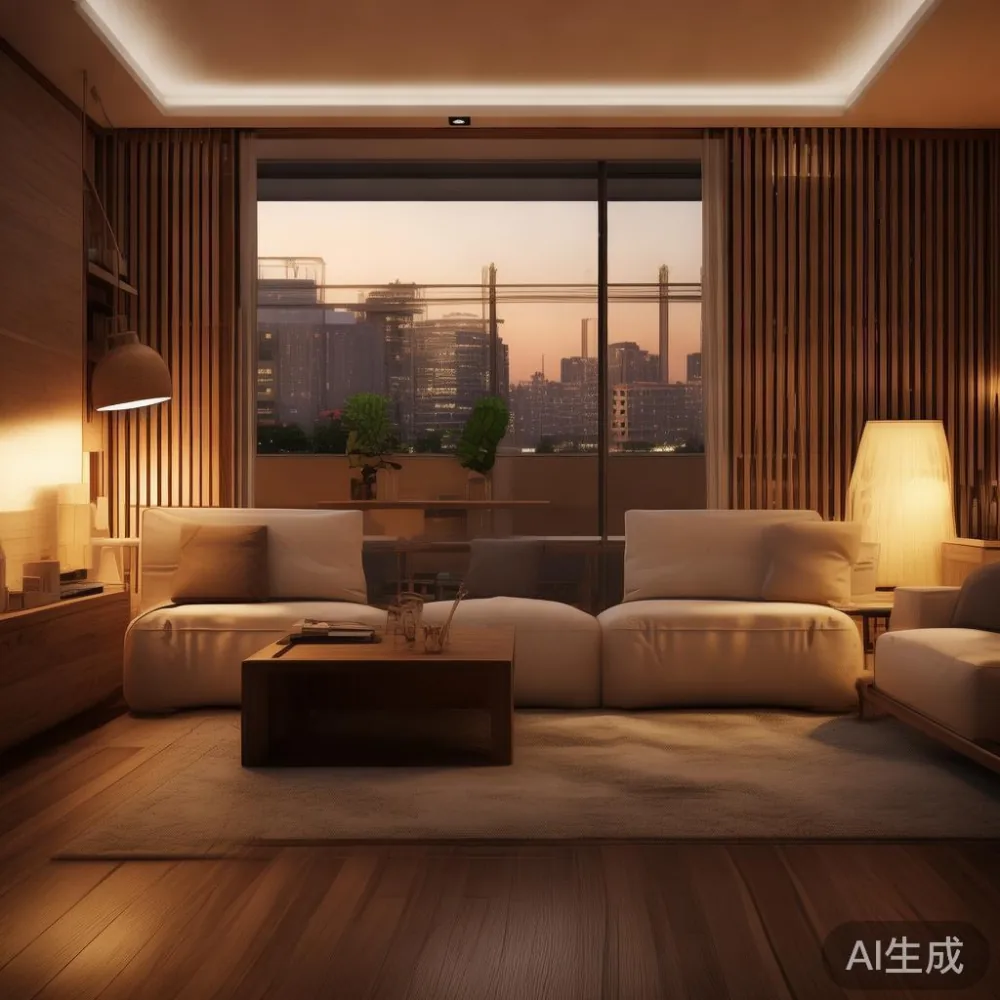
Solid wood moves too, but along its grain, and an experienced maker accounts for that with breadboard ends, floating panels, and seasonal gaps of 1 mm to 2 mm. A 1.8 m solid oak dining table will expand and contract by roughly 4 mm to 6 mm across its width across the year, and that movement is invisible if the piece was built correctly. A veneered equivalent expands identically in the substrate but the skin has nowhere to go, which is why so many wardrobes sold in Tampines show racking along the doors by year three. The lesson is simple: if humidity cannot be controlled, choose construction that is designed to move.
What does repair and refinishing actually cost over five years?
This is where the math flips. A veneered panel that has bubbled, chipped, or peeled cannot be re-skinned in your home; the piece usually has to go back to a workshop for a full panel replacement at S$280 to S$600 per door or drawer face, and most owners instead replace the whole unit. A solid wood piece, by contrast, can be sanded, re-stained, and re-oiled in situ for S$180 to S$350 per piece, or even free if your maker offers lifetime refinishing. MIDHILL, for example, includes lifetime refinishing on solid wood frames, which on a single dining table covers roughly S$400 to S$700 of maintenance value across a decade.
Day-to-day wear is also kinder to solid wood. Pet claw marks, a dragged suitcase, the iron mark from a forgotten shirt — all of these sand out of a 20 mm solid top in 30 to 45 minutes. The same damage on a 0.5 mm veneer is permanent; you are looking at the substrate. For a Japandi nightstand, which takes more knocks per square metre than almost any other piece in the house, I would only recommend solid wood or a solid-wood top with veneered sides.
How do delivery and HDB access change the final bill?
Singapore access rules quietly add 8 to 15 percent to the cost of larger pieces. A standard HDB passenger lift is roughly 1.1 m wide by 1.4 m deep by 2.1 m tall, and the door opening is usually only 0.9 m. A flat-pack 1.8 m bed frame in three boxes will fit, but an assembled solid wood frame at 1.8 m by 2.0 m will not, and disassembly-reassembly on site adds S$120 to S$280 to the invoice. Corridor turns in older Bedok blocks can also force a S$80 to S$160 manual carry surcharge if the lift cannot be booked at the right time.
Weight matters too. A solid oak dining table at 1.6 m typically weighs 55 to 75 kg; the equivalent veneer-on-MDF piece weighs 28 to 40 kg. Two movers can carry the lighter table, three are needed for the solid one, and that labour shows up as an extra S$40 to S$90 on the delivery note. The first piece of advice I give any neighbour buying a Japandi dining table in Tampines is to measure the lift door, the lift cabin, and the corridor turn before paying a deposit.
How do I care for a scandinavian furniture in humid weather?
Run a dehumidifier to keep indoor relative humidity between 45 and 60 percent, wipe solid wood monthly with a barely damp microfibre cloth followed by a dry one, and apply a hard wax oil or danish oil every 9 to 12 months to slow moisture exchange.
Beyond that baseline, a few habits are worth building. Keep Japandi pieces 10 to 15 cm away from air-conditioning vents so the wood does not see constant dry-then-humid cycling, which is harsher than a steady 65%. Lift, do not drag, chairs and stools — drag marks are the number one reason I see 1 mm to 2 mm veneer chips at the corners of dining tables within 18 months. For marble table tops or travertine accents paired with solid wood frames, blot spills within 5 minutes; the wood will not stain, but the seal between stone and timber can if acid sits. Finally, rotate wardrobe door usage so a single panel does not take all the racking stress during the humid months.
What does a 5-year cost comparison actually look like in Singapore dollars?
Here is a realistic five-year total cost of ownership for a Japandi-style dining table in a Punggol HDB, including GST, delivery, and one mid-life service.
- Veneer dining table, S$1,200 + 9% GST + S$90 delivery = S$1,398 day one. Bubbling at month 22, panel replacement at month 30 costing S$420. Total at year five: roughly S$1,820. Effective annual cost: S$364.
- Solid wood dining table, S$2,600 + 9% GST + S$120 delivery = S$2,954 day one. One in-home re-oil at year three, free under MIDHILL's lifetime refinishing, otherwise about S$220. Total at year five: roughly S$3,180. Effective annual cost: S$636.
The sticker shock is real, but spread the solid wood cost over ten years instead of five and the annual figure drops to about S$318, while the veneer piece is usually already on its second life or in a landfill. For a Japandi sofa frame, the gap is similar: a S$1,800 engineered frame typically needs reupholstery or retirement by year six, while a S$3,400 solid wood frame keeps its bones for 15 to 25 years and only needs new cushions, roughly S$600 to S$900 every 7 to 10 years.
Is veneer ever the right choice in a Singapore home?
Yes, in specific situations. Veneer is the right call for a wardrobe in a dry, air-conditioned master suite where humidity sits at 50 to 55 percent year-round, for a statement marble table where the top is the star and the base is hidden, and for a Japandi nightstand under 60 cm wide where the surface area is too small to justify the weight premium of solid timber. Veneer is also the right call if you genuinely expect to refresh your look every four to five years, which is common in shorter-stay condo rentals around the Punggol and Tampines growth corridors.
If you want a French rattan sofa guide approach to budgeting, treat the frame as solid wood (because the joints bear load), the panels as veneer (because they don't), and the cushions as replaceable consumables. That single rule will steer roughly 80 percent of buying decisions correctly, and it will save you from the worst failure mode I see in local homes: a fully veneered structural piece in a non-aircon utility room, where humidity does its worst work and nothing can be rescued.
Which Japandi pieces should be solid wood first if the budget is tight?
If you can only afford to upgrade two or three pieces to solid wood, prioritise the dining table, the bed frame, and the primary Japandi sofa frame — the three items that absorb the most load, the most movement, and the most daily use. Keep wardrobes, sideboards, and nightstands in quality veneer or engineered wood, provided the cores are exterior-grade plywood rather than particleboard, which swells irreversibly after a single wet cycle.
Ask any supplier for the core specification in writing, ask whether the drawers use solid wood or metal runners, and ask what the warranty actually covers. MIDHILL's 10-year structural warranty on solid wood frames, for instance, covers joint failure and wood movement but not surface scratches, which is the industry-standard split and worth understanding before you sign. Lifetime refinishing is the real value-add, because it converts a future S$300 to S$600 maintenance bill into a scheduled service you will actually use.
What I would buy today if I were furnishing a Bedok 4-room flat from scratch
If I were starting over in Bedok tomorrow, I would spend on a solid wood bed frame around S$2,800, a solid wood dining table around S$2,400, and one statement Japandi sofa with a solid inner frame around S$3,200. The wardrobe would be a plywood-core veneer at S$1,500 because humidity in a closed bedroom is manageable, and the marble table accent piece would be a S$600 travertine top on a metal base, deliberately not solid wood, because the look does the work. Total budget: roughly S$10,500, which sounds steep until you realise it covers fifteen years of daily use and three moves between HDB and a future condo.
The math on furniture is rarely about the day-one price; it is about year-five, year-ten, and year-fifteen. A Japandi home is supposed to be quiet, low-maintenance, and built to outlast trends, and the materials you choose set the clock. Pick solid wood where it counts, accept veneer where it does not, and ask the hard questions about humidity, weight, and access before you fall in love with a showroom piece.