The Anatomy of Price: Understanding Solid Wood Furniture Value
When furnishing a Singapore home, especially in compact spaces like a Tampines HDB flat or a Punggol condo, the choice of furniture is a significant decision. The pieces must be functional, aesthetically pleasing, and durable. The market offers a wide spectrum, from flat-pack options to artisanal solid wood creations. The price difference can be staggering, with a simple nightstand costing a few hundred dollars and a solid wood dining table running into several thousand. Many consumers look for specific styles, like the minimalist and warm aesthetic of japandi style, but are often left wondering what justifies the cost. This article moves beyond surface-level explanations to dissect the tangible factors that determine the price of solid wood furniture, providing a clear framework for any Singaporean homeowner.
Is Solid Wood Furniture Just Expensive Wood, or Is There More to It?
A common misconception is that the price of solid wood furniture is almost entirely dictated by the cost of the raw timber. While the wood species is a major component, it is only one piece of a much larger puzzle. A piece of furniture is the sum of its materials, the labour invested in its creation, and the business model behind the brand. For instance, a wardrobe made from Sheesham wood will naturally be more expensive than one made from Rubberwood, but a higher price tag doesn't automatically mean better wood. It could reflect superior craftsmanship, more durable hardware, a longer warranty, or the design's origin. Understanding this distinction is the first step to making an informed purchase. When evaluating a piece, consider the full picture, not just the type of wood listed on the label.
The Material Matrix: Beyond the Tree Itself
The primary material, solid wood, is foundational, but its quality and treatment significantly impact the final price. Solid wood comes in two main types: hardwoods and softwoods. Hardwoods, like oak, walnut, and maple, are denser, more durable, and often more expensive due to slower growth rates. Softwoods, such as pine and fir, are lighter and more affordable, making them popular for less formal pieces. However, the price isn't just about the species. The grade of the wood is important. A board with a clear, straight grain and minimal knots (a 'select' or 'first' grade) will command a higher price than a board with more character marks like knots and mineral streaks (a 'common' or 'second' grade). For a japandi style aesthetic, which values natural imperfection, a 'common' grade might be perfectly acceptable and even desirable, keeping the cost down.
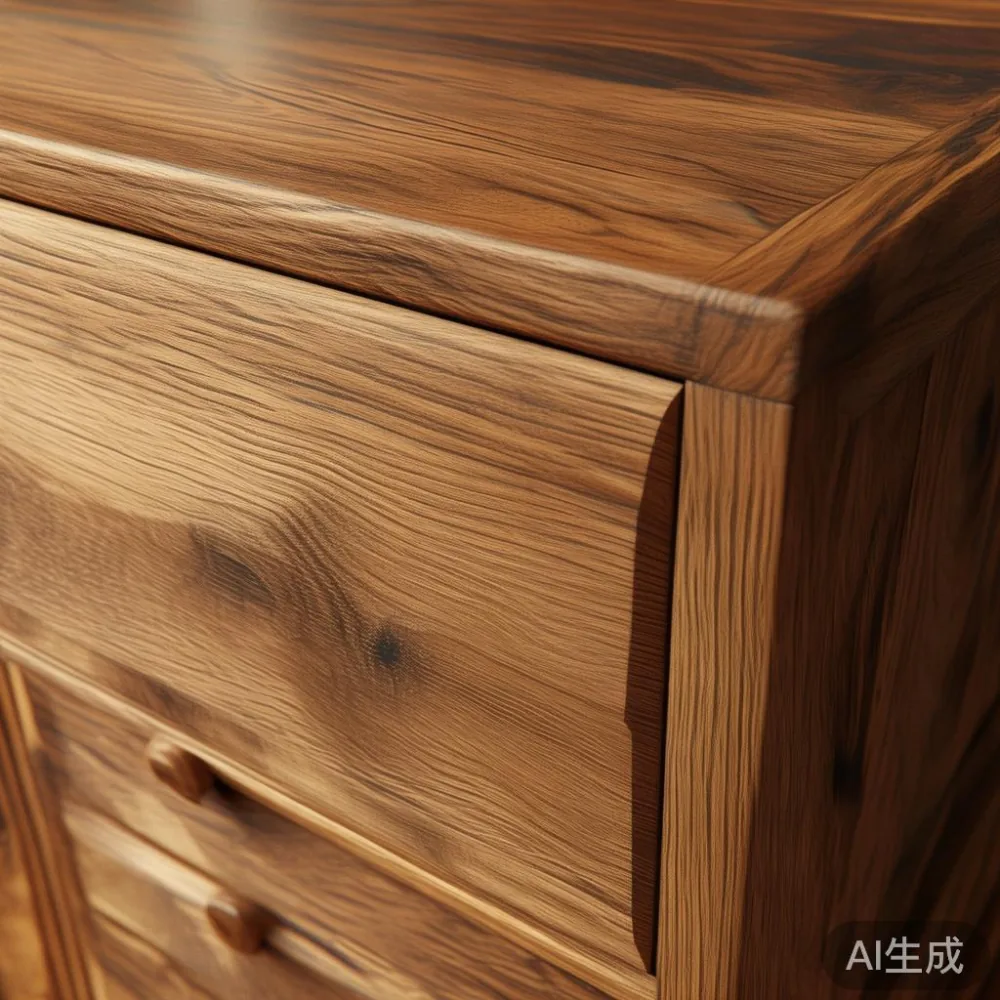
Beyond the wood itself, other materials contribute to the cost. The finish is a prime example. A simple lacquer or oil finish is less expensive than a multi-layered hand-rubbed varnish or a French light luxury-inspired painted finish with distressed details. Hardware is another factor. The drawer slides on a solid wood bed frame can be basic plastic or heavy-duty, self-closing metal mechanisms that glide smoothly for years. Similarly, the hinges on a wardrobe can range from flimsy to solid brass with a lifetime warranty. These components, often unseen, are critical for longevity and daily use, and their quality directly reflects in the furniture's price. The weight of the furniture is also a good indicator; a heavier, denser piece generally uses more substantial material and construction.
Labour and Legacy: The Hands That Build
This is where the most significant value is often added, and the difference between mass production and artisanal creation becomes stark. The process of transforming rough lumber into a finished piece of furniture is incredibly labour-intensive. It involves multiple stages of skilled work, each requiring time and expertise. The first step is milling, where the wood is planed, jointed, and cut to precise dimensions. This requires sharp blades and a steady hand to ensure the pieces fit together perfectly.
Next comes joinery, the backbone of quality furniture. This is the method by which the pieces are connected. The most durable and expensive joinery methods are those that use no mechanical fasteners like nails or screws. A dovetail joint, where interlocking wedge-shaped tabs hold two pieces of wood together, is a hallmark of high-quality drawer construction. A mortise and tenon joint, where a square peg (tenon) fits into a square hole (mortise), is used for chair legs and table aprons. These joints are stronger, more stable, and allow the wood to expand and contract with changes in humidity—a critical factor in Singapore's climate. A simpler, less expensive method might involve using dowels, biscuits, or even just glue and staples. My colleague visited a workshop last month and noted that the master carpenter spent over two hours hand-fitting the dovetail joints on a single drawer, a process a machine can do in seconds but with less precision.
After assembly, the piece must be sanded. High-end furniture is hand-sanded through multiple grits, starting coarse and ending with a very fine grit (e.g., 220 or higher). This creates a perfectly smooth surface that is ready for finishing and prevents any rough patches from snagging clothing or creating an uneven feel. A machine-sanded piece might miss subtle contours. Finally, the finishing process can take days. Each coat of stain or lacquer must be applied, allowed to dry, and then lightly sanded before the next coat is added. For a European light luxury sofa, this might involve applying 5-7 coats of a hand-rubbed lacquer to achieve a deep, lustrous sheen. This level of craftsmanship is not easily replicated and is a primary driver of price for high-end furniture.
Design, Origin, and the 'Light Luxury' Factor
The design of a piece is a major component of its value. Is it a timeless design, like a simple Shaker-style dining table, or a trendy, post-modern light luxury piece with clean lines and unique proportions? Original designs require investment in research, prototyping, and often, the services of an industrial designer. A brand that commissions exclusive designs will charge a premium for that intellectual property.
The origin of the design also plays a role. A European light luxury bed, for example, carries a certain cachet. Its design might be influenced by decades of European design principles, focusing on form, function, and subtle elegance. This perceived value is part of the price. Similarly, an American furniture piece might emphasize a different kind of grandeur or comfort. When comparing options like a light luxury bed vs French provincial bed, the difference lies in the design philosophy—the former is often more minimalist and streamlined, while the latter is more ornate and traditional. A japandi style bed frame, on the other hand, is a fusion of Japanese minimalism and Scandinavian coziness, a specific design language that appeals to a certain aesthetic.
Also, the brand's philosophy affects the price. A company focused on sustainability might use only reclaimed wood or certified sustainable timber, which can be more expensive and logistically complex to source. Others might prioritize artisanal methods over automation. This brand ethos is part of the value proposition. The term 'light luxury furniture china' often refers to a specific market segment that offers high-quality materials and sophisticated design at a more accessible price point than traditional Western luxury brands. It's a balance of quality and value that many consumers find attractive.
Business Model and After-Sales: The Hidden Costs of Ownership
The price you see on the tag doesn't just cover the materials and labour in the workshop. It also covers the entire business operation, from design and marketing to logistics and customer service. A small, independent workshop has different overheads than a large, multinational corporation. A brand that invests in sustainable practices, fair labour, and high-quality control will have higher costs, which are reflected in the price.
Logistics are a significant factor, especially for a company like MIDHILL that exports to 15+ countries. Shipping a heavy, fragile item like a marble table or a solid wood sofa from Foshan to Singapore involves specialized packing, freight forwarding, customs clearance, and local delivery. For Singaporean customers, this includes working through the specific requirements of HDB flats and condos. For example, delivering a large wardrobe to a Bedok HDB unit requires knowing the standard lift dimensions (approximately 110 cm wide x 210 cm tall x 95 cm deep) and the width of the corridor on the 10th floor. A reputable company will factor these complexities into their pricing and offer services like white-glove delivery, where the assemblers bring the item into your home and set it up for you.
After-sales support is a critical component of value that is often overlooked. A 10-year structural warranty is a powerful statement of confidence in the product's durability. It means the company stands behind its craftsmanship. This is a significant cost for the business, as it requires a system to honour these warranties, which is built into the initial price. Similarly, a lifetime refinishing service means that if the wood finish gets damaged over decades, you can have it professionally restored instead of replacing the entire piece. This long-term commitment to the customer's satisfaction is a form of value that cheap, disposable furniture simply cannot offer. Companies offering under 2000 American furniture or under 2000 Rustic furniture might have lower prices, but often come with shorter warranties and no long-term support, making them a less sustainable investment.
Why Does a Solid Wood Dining Table Cost More Than a Rustic One?
This is a question many consumers ask when browsing for a centrepiece for their dining area, whether in a Punggol condo or a landed property. The answer lies in a combination of the factors discussed. A 'rustic' style piece might use a more common wood species like reclaimed pine, which is less expensive than a high-quality oak or walnut used in a more refined piece. The construction might also be simpler, with more visible mechanical fasteners and less complex joinery.
Also, the finish on a rustic piece is often designed to look aged and distressed. This can sometimes be achieved with less labour-intensive processes, such as using a wire brush to create a worn texture or applying a single, heavy coat of stain. In contrast, a sleek, japandi style dining table with a matte black finish requires multiple coats of a specific, high-quality lacquer and meticulous sanding between each layer to achieve a perfectly smooth, uniform surface.
The design itself also plays a role. A simple, rustic trestle table might have a straightforward design that is easy to manufacture. A modern dining table with tapered legs, a precise inset top, and hidden hardware requires more complex design and engineering. When you compare a European light luxury sofa to a more basic sofa, the difference is often in the density of the cushioning, the quality of the leather or fabric, the internal frame construction, and the precision of the tailoring. These details accumulate to create a piece that is not only beautiful but also more comfortable and durable over its lifetime. The price reflects this comprehensive quality, from the materials chosen to the skill of the artisans and the strength of the brand's commitment to its customers.
Ultimately, the price of solid wood furniture is a reflection of its entire lifecycle. It is the cost of the raw material, the hours of skilled labour, the investment in design and technology, the logistics of global delivery, and the promise of long-term support through warranties and services. For a homeowner in Singapore, investing in a well-made piece of japandi style furniture is not just a purchase; it is an investment in quality, sustainability, and enduring beauty for the home.