How Humidity in Southeast Asia Affects Japandi Style Solid Wood Furniture
Singapore’s warm, humid climate can make unpainted timber furniture move more than owners expect. In an HDB flat, a solid wood dining table may gain several millimetres of width during a muggy week, while a bed frame can develop faint checking along a veneered edge. Condominiums near the coast add another layer of risk because air-conditioning lowers indoor humidity quickly, and the timber then contracts when the unit is left unoccupied for a weekend.
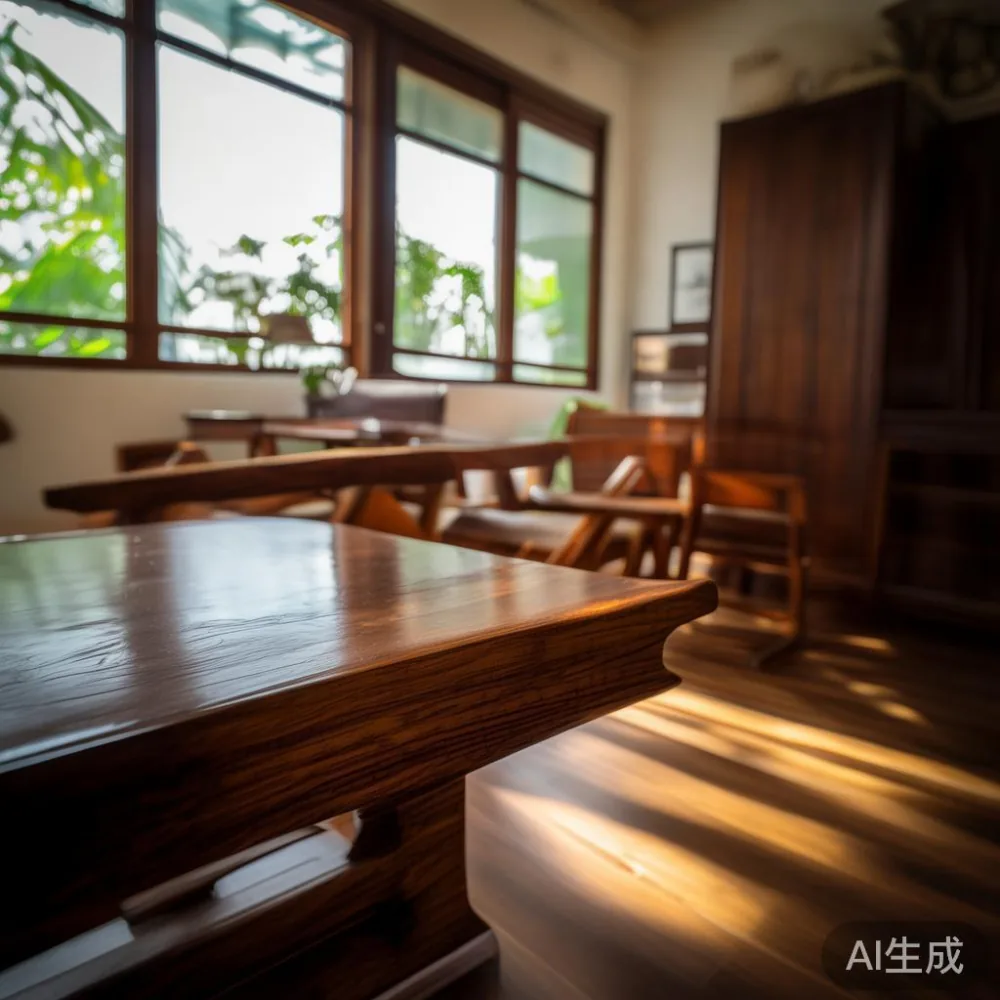
That does not mean solid wood is unsuitable here. It means material selection, finishes, dimensions and maintenance need to account for a tropical environment. For Japandi style interiors, the generous silhouettes and visible grain of solid timber can create calm, light-filled rooms without feeling heavy. Good specification turns that natural movement into a long-term advantage rather than a recurring repair problem.
MIDHILL designs solid wood furniture for international use, including Southeast Asian markets. The company was established in 2008, exports to more than 15 countries, provides a 10-year structural warranty and offers lifetime refinishing. Its practical support also includes free shipping above US$350 and a 14-day return window. For Singapore buyers, however, the local currency, delivery conditions and tropical humidity deserve careful attention before checkout.
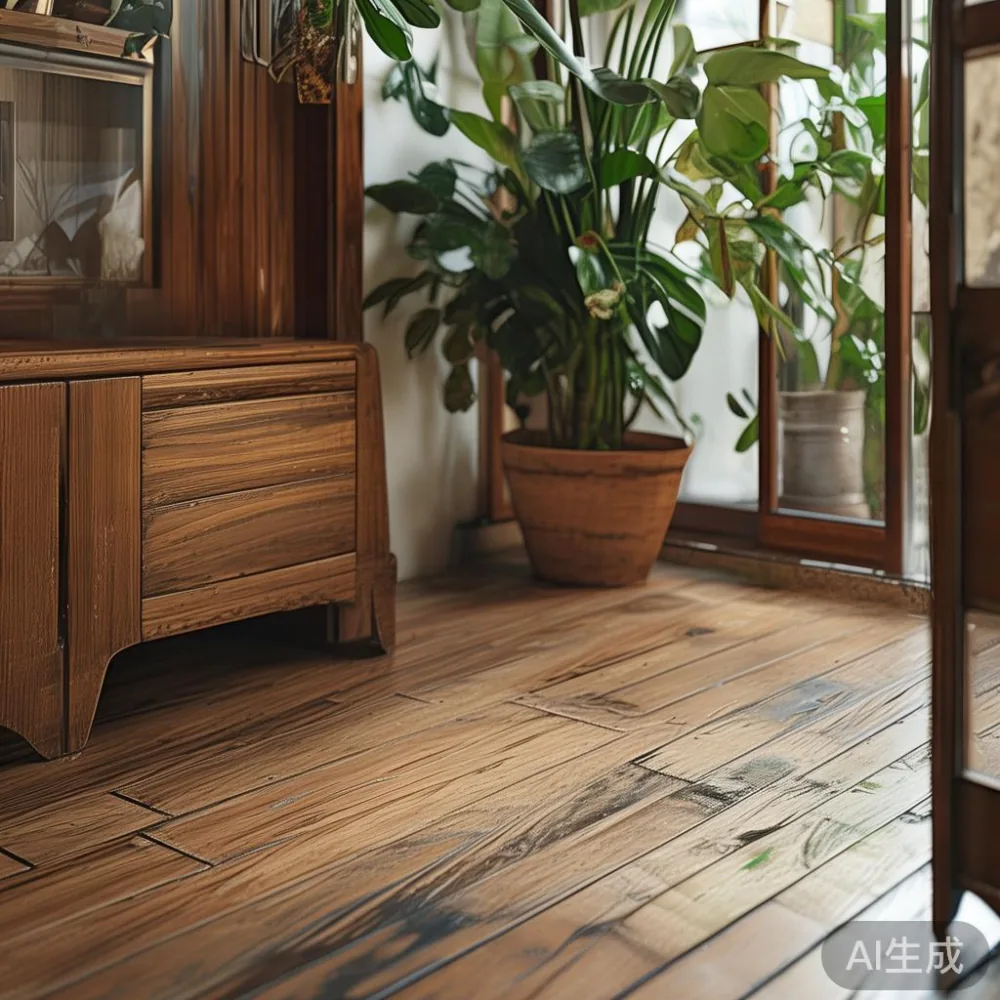
Why does humidity make solid wood furniture move?
Wood is hygroscopic: it absorbs moisture when the surrounding air is humid and loses moisture when the air becomes dry. The movement follows the grain, so a 200 cm oak dining table can expand across its width while changing very little along its length. Seasoning reduces the severity of the response, but it cannot remove the material’s behaviour entirely.
Singapore’s monthly relative humidity commonly ranges from roughly 65% to 85%, while daytime temperatures can sit near 30°C to 33°C. HDB rooms may fluctuate more than people realise because a compact flat heats rapidly after the air-conditioner switches off. At night, ventilation through windows can introduce damp air. Condo units may experience opposite swings: strong air-conditioning at 22°C to 24°C followed by rapid warming after the unit is switched off.
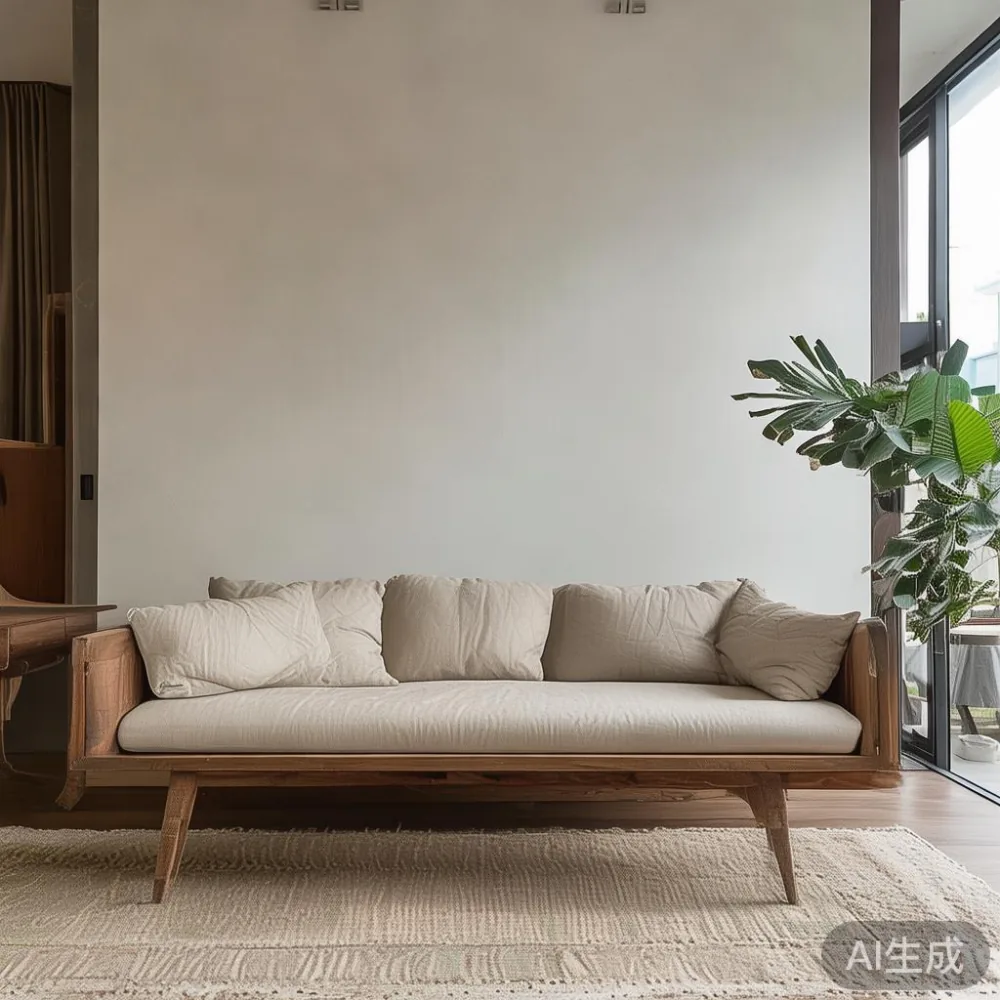
These cycles affect different furniture parts differently. A solid wood bed frame is exposed along broad rails and joints, a wardrobe has tall vertical panels under pressure, and a nightstand sits close to floors where damp can linger. A marble table has a different reaction because stone does not absorb atmospheric moisture in the same way as timber, although its supporting frame still needs stable construction.
Movement of about 1 mm to 3 mm across a 60 cm panel can be acceptable if the furniture was designed with that range in mind. Larger changes, sticking doors or split joints may indicate poor moisture control, unsuitable finishes or a design that did not account for seasonal movement.
What should Singapore buyers check before ordering?
Start with the timber species and its intended interior environment. Kiln-dried hardwood with controlled moisture content is usually easier to specify than generic “wood” descriptions. Ask for the expected equilibrium moisture range and the finish system used on all exposed faces. Dealers should be able to explain whether a surface is oiled, lacquered or sealed, rather than calling every treatment simply “waterproof.”
Measure the route into the home before selecting large pieces. A typical HDB lift interior may be around 100 cm wide and 120 cm deep, with a door opening close to 90 cm, although older blocks vary. Sofa boxes, wardrobes and dining tables should be checked in their assembled dimensions, not only their shipping dimensions. A 220 cm long solid wood sofa frame may fit along a corridor but still be impossible to rotate into a 90 cm doorway.
Allow at least 20 cm of clearance for handling where possible. For a bed frame, lift capacity is less often the problem than turning radius: a box that weighs 45 kg can be manageable on level ground but awkward in a narrow stairwell. Wardrobes should preferably arrive as modules no wider than 60 cm, while a dining table may need separate leaves if the household cannot store more than 300 cm of extension.
Check the warranty against local conditions. MIDHILL’s 10-year structural warranty covers structural integrity, but movement caused by direct wetting, extreme humidity or negligent maintenance should not be confused with a manufacturing defect. The lifetime refinishing service also depends on the company being able to supply or match the original finish when refinishing is requested.
How should a solid wood dining table cope with Singapore humidity?
A dining table receives condensation from cold drinks, food oils and frequent wiping, as well as changes in room humidity. A sealed solid wood dining table with a stable underside is more practical in a humid HDB kitchen than an untreated slab. Keep it away from an open balcony door, avoid placing chilled takeaway containers directly on the surface, and use a stable mat beneath hot pots.
Do not assume a thick tabletop is immune to splitting. Timber expands across its grain, while glue joints and finishes can restrict that movement. A table made from well-seasoned boards with restrained joinery can accommodate seasonal change. Feet should touch the floor cleanly so that the top is not supported at only two points, which can encourage warping.
For readers comparing European light luxury with storage, dining tables should include drawers sized for at least 30 cm by 40 cm if space allows. The useful test is whether cutlery, placemats and serving boards fit without forcing the drawer. A dining table in Japandi style often has a clear top and modest apron, so storage should improve convenience without visually crowding the piece.
How do I choose a bed frame that will not warp in a humid bedroom?
Bed frames should be judged by their joints, slat support and ventilation clearance rather than by weight alone. A 180 cm by 200 cm queen-size frame may use 14 to 16 slats, but the spacing and centre supports matter as much as the count. The frame should also allow air to circulate beneath the mattress; leaving roughly 10 cm between the mattress base and the floor can reduce trapped moisture in humid rooms.
Search results for best Minimalist bed for 2026 often favour clean outlines, low profiles and restrained hardware, but shoppers in Singapore should add climate checks to that visual shortlist. Look for solid side rails, sound corner joints and adjustable feet that can correct a slightly uneven HDB floor. Inspect every accessible underside for fungal marks before accepting delivery.
For a guest room, a slimmer frame can free circulation space, while a solid wood nightstand should have at least 5 cm clearance from the wall where practical. Searches for European for guest room may suggest ornate profiles and delicate legs; Japandi style usually works better with simpler supports that are easier to keep stable at changing humidity levels.
One real test during a recent showroom visit showed why underside design matters. I visited a colleague’s Tampines HDB flat last month, where a bed frame had been installed beside a window that was often left open after rain. Its side rail had gained about 2 mm of width, yet the slats remained aligned because the joints had been designed to move. A less considered frame in the same room had already developed a tight corner and a rubbing drawer front.
The practical lesson was not that one room caused the issue and another did not. It was that visible timber movement within a reasonable range is normal, while a joint that binds or a panel that opens unevenly needs investigation. The family adjusted the ventilation schedule, added a stable tray beneath the nightstand and stopped wiping the rail with a very wet cloth.
Can japandi style wardrobes and nightstands stay stable in air-conditioned condos?
Condominiums create a familiar humidity cycle. An occupied unit may stay between 24°C and 27°C with sensible dehumidification, but a holiday home can sit unventilated for 3 to 7 days. If the air-conditioner runs aggressively in a compact bedroom, the relative humidity may fall below 50% before warming again. The wardrobe should therefore be made from stable hardwood, not thin decorative panels that bow between rails.
For a HDB bedroom, leave a gap of at least 5 cm between a tall wardrobe and the wall where space allows. In a condo, inspect the placement of external walls and windows: a wardrobe directly beside a sun-facing wall can experience stronger temperature swings than one on an interior partition. Avoid direct contact with air-conditioning outlets, because concentrated airflow can dry a finish unevenly.
Door movement deserves a simple test. Open a hinged door fully and check whether it binds at approximately 20°, 60° and 90°. Slides should run smoothly in both directions with no scraping. Adjustable hinges can compensate for seasonal changes, but the carcass still needs to be built for the expected moisture range.
A nightstand should have a stable footprint, not narrow legs placed near the corners. A 45 cm wide model with four sound legs and a drawer opening of at least 25 cm will usually be more useful in a compact flat. Top 10 Nordic furniture guides often highlight pale timber and tactile surfaces; in Singapore, pale oak requires careful finish selection and more frequent dust control because its appearance shows marks readily.
What is the right finish for humid Southeast Asian interiors?
“Waterproof” is too broad a claim for a wood finish because water can still enter through exposed end grain, damaged coatings and joints. A purpose-built hardwax oil can enrich the grain and allow controlled movement, while a resilient lacquer offers easier cleaning but needs attention around scratches. For a frequently used dining table, a repairable oil-and-wax system can be maintained with a fresh coat every 12 to 24 months.
Apply care according to the finish rather than a fixed household formula. Dust with a soft cloth, wipe spills promptly and avoid leaving damp rings for more than 30 minutes. Use coasters and trivets, including under kettles and hot cookware. A lightly damp cloth may suit some oiled finishes, but excess water should be avoided around joints and edges.
Inspect solid wood furniture twice a year, ideally before and after the monsoon period. Look for changes of 1 mm or more around doors, pale patches beneath finishes and any lifting along grain lines. Tiny movement may settle as conditions change. A crack wider than 2 mm, a sagging rail or a joint that pulls away should be photographed and reported promptly.
Leather and upholstery require a different moisture strategy. When comparing how to choose American sofa, check that the frame is kiln-dried, the suspension is secure and the cushions are removable for drying. European light luxury designs may use elegant profiles that require more clearance than a compact HDB living room can provide. A sofa with a solid wood frame and removable covers can be refreshed more easily when humidity contributes to fabric odours.
Can a solid wood sofa work in a compact Singapore flat?
A solid wood sofa can work well in Japandi style interiors, especially when its frame is visually light and its cushions are not oversized. Check the external width before ordering: a 190 cm sofa may look suitable in a rendered room but restrict the walking route between the dining area and bedroom. A lift with a 100 cm internal width may not accept a packaged sofa wider than 85 cm without repositioning, depending on turning space.
Buyers examining a MIDHILL sofa should ask about frame moisture control, cushion removability and the effect of humid air on the upholstery. Seats and backs should dry completely after cleaning, and the frame should not sit directly against an exterior wall where condensation is possible. Leave at least 5 cm behind the sofa when the layout permits.
The phrase top 10 Italian light luxury furniture appears in plenty of online comparisons, yet the most persuasive evidence is still physical: joinery, finish consistency, hardware operation and a clear moisture specification. Italian-inspired pieces often emphasize sculptural form, while American light luxury and post-modern light luxury tend to pair comfort with clearer function. Japandi style can draw from all three approaches without copying any one of them exactly.
How are Singapore delivery, GST and returns handled?
Singapore orders should be shown in SGD so the buyer can compare the final payable amount without converting from another currency. GST is generally added at the applicable rate, and the checkout should distinguish product cost, shipping and taxes before payment. MIDHILL’s free-shipping threshold is stated in US$350, so the exact Singapore qualification depends on the converted order value shown at checkout rather than an assumed local-dollar limit.
Ask for a realistic delivery estimate. A production-ready in-stock item may be dispatched within 5 to 10 working days, while a made-to-order solid wood dining table or wardrobe may need 30 to 45 days, followed by roughly 3 to 7 days for international transit. These ranges are planning guides, not guarantees; peak production, customs clearance and the destination address can change them.
The 14-day returns policy should be reviewed alongside furniture and freight terms. Inspect the piece at delivery for impact marks, broken corners, finish defects and moisture-related movement. Photograph the packaging and the item before assembly where possible. A normal change in timber colour caused by warm, humid conditions is different from a coating defect, so reference the finish specification when recording issues.
Useful questions before paying include: What moisture content was specified for my climate zone? How many days is the quoted delivery? Will the wardrobe arrive as modules? Is the marble table’s base packaged separately? What happens if the lift is unavailable on delivery day?
What maintenance routine protects japandi style furniture in Singapore?
A 15-minute monthly care routine is usually enough for a well-finished dining table, while wardrobes need airflow and an occasional hinge check. Use coasters, keep timber at least 30 cm from open windows during heavy rain and maintain indoor relative humidity near 50% to 65% where the air-conditioner allows it. Avoid sudden surface changes caused by steaming hot water, direct sunlight or heating vents.
For solid wood sofa cushions, vacuum gently every 2 to 4 weeks and dry any damp fabric within 24 hours. Rotate seat cushions monthly to prevent uneven wear. Bed frames can be checked every 3 months for rubbing against the wall, while dining table joints should be inspected twice a year. Wardrobe runners can be cleaned with a dry cloth, and hinges should be tested after long periods of vacancy.
Plan refinishing according to use and exposure, not just a calendar. A lightly used nightstand may need no treatment for 18 months, while a dining table beside a frequently opened patio door might benefit from inspection every 12 months. MIDHILL’s lifetime refinishing service gives owners a route for restoring a surface when wear reaches the point where colour and texture no longer suit the room.
Humidity is not an enemy of well-designed solid wood furniture. It is an operating condition that should appear in the specification, the delivery plan and the maintenance routine. Choose stable timber, sound joinery and a finish suited to tropical use; measure every access route; and allow furniture to acclimatise gradually. Done properly, japandi style pieces can retain their calm proportions, tactile grain and useful proportions in Singapore homes for many years, not merely through the first humid season.