Veneer vs Solid Wood: A 5-Year Cost Comparison for Japandi-Style Singapore Homes
Furniture shopping in Singapore often starts with a showroom photograph and ends with a practical question: what will this piece cost me over five years? For HDB flats and condos in Tampines, Bedok, and Punggol, that calculation involves more than the sticker price. It includes delivery through a shared lobby, lift protection, GST, maintenance, repair risk, and the awkward dimensions of a corridor or lift entrance.
This comparison examines veneer and solid wood across the five furniture categories most commonly brought into a japandi style home: a solid wood sofa, bed frame, dining table, wardrobe, and nightstand. I have also included marble table decisions, because a stone top changes the cost and care profile of a dining setup. The figures are planning estimates in Singapore dollars, not quotations. Product sizes, timber, finishes, access conditions, and promotions can change the final amount.
My aim is to help buyers judge ownership value rather than simply compare two material labels. A lower purchase price can be sensible; a lower five-year cost is a different matter.
What Is the Difference Between Veneer and Solid Wood?
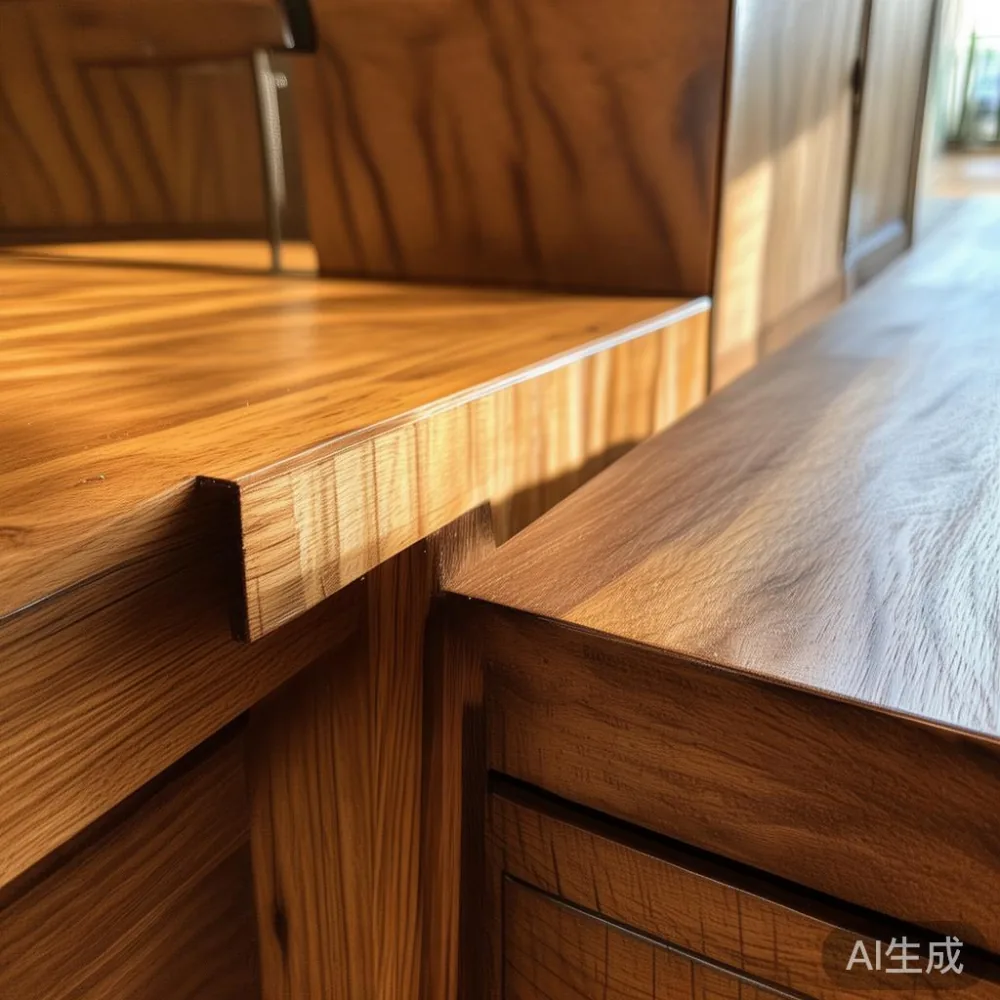
Veneer furniture uses a thin layer of real timber, commonly 0.6 mm to 1.2 mm, bonded to a panel core. A typical 180 cm dining table might contain a 20 mm to 25 mm engineered or plywood core. Solid wood furniture uses timber throughout its visible structural sections. A bed frame may use solid timber legs and rails with plywood or slats supporting the mattress, while a wardrobe can combine solid frames with engineered panels.
This distinction matters because the surface layer can look convincing while the concealed material determines stability. Solid wood expands and contracts more visibly as humidity changes. Veneer panels generally move less, which can be helpful in a compact HDB bedroom, but edge chipping, water marks, and core repairs depend heavily on workmanship and sealing.
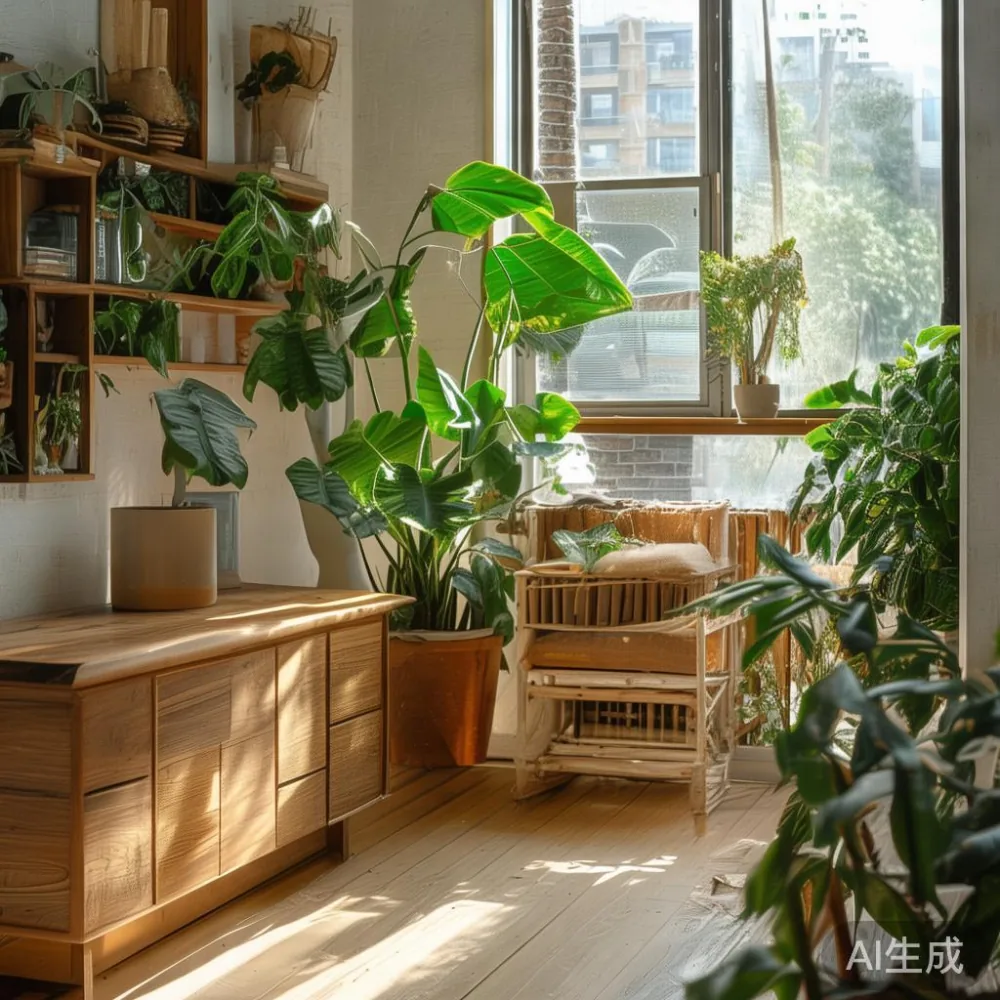
Singapore’s relative humidity is commonly around 60% to 80%, with higher readings during the monsoon periods. Air-conditioning keeps indoor conditions steadier, but furniture near an open window or on an exterior corridor can still be exposed to dampness. For a japandi style interior, pale oak, ash, walnut, and teak tones are popular, yet a pale finish shows dust, fingerprints, and small marks more readily than a darker or warmer treatment.
What Would a 5-Year Veneer and Solid Wood Budget Look Like?
For a practical Singapore household, the following worked budgets use a medium-sized set rather than showroom extremes. A 180 cm x 90 cm dining table, a queen bed frame, a two-door wardrobe, two nightstands, and a three-seat sofa create a coherent japandi style foundation. Prices include an indicative 9% GST where relevant and exclude curtains, mattresses, appliances, and decorative objects.
A veneer package might cost about SGD 3,450: SGD 950 for a 200 cm three-seat sofa, SGD 680 for a queen bed frame, SGD 620 for a 180 cm dining table, SGD 850 for a two-door wardrobe, and SGD 180 for each of 2 nightstands. A comparable solid wood package might cost about SGD 5,280: SGD 1,750 for the sofa, SGD 1,120 for the bed frame, SGD 980 for the dining table, SGD 1,050 for the wardrobe, and SGD 190 for each nightstand.
That gives a purchase difference of SGD 1,830 before delivery and aftercare. Over five years, the difference is not simply SGD 366 per year. Veneer may need one SGD 450 repair and one SGD 250 refinishing service, plus an SGD 80 polishing kit. Solid wood may need an SGD 140 waxing kit, minor touch-ups, and possibly one SGD 180 hinge adjustment. This produces estimated five-year totals of SGD 4,230 for veneer and SGD 5,600 for solid wood, a difference of SGD 1,370.
Those totals are not automatic guarantees. A well-built veneer table that avoids water could remain untouched, while a low-grade solid wood table stored beside a damp balcony door may check or split. The useful comparison is between expected ownership costs under normal household use, not a promise that one material will never need care.
How Much Do Delivery, Lifts, and GST Add in Singapore?
Delivery is where a nominal furniture price can become less useful in an HDB block. A full-size delivery van may be longer than the turning radius of a common corridor. For example, a 220 cm sofa packed for delivery may require a 220 cm door diagonal to be cleared through the home entrance, then a lift car measuring roughly 110 cm wide by 140 cm deep. Exact lift and lobby dimensions vary by block, so measurement should happen before dispatch.
For a Punggol or Tampines HDB flat, standard kerbside delivery might cost SGD 80 to SGD 160 for a small order, while furniture carrying upstairs to the unit might add SGD 100 to SGD 250 per bulky item. A lift booking fee of SGD 30 to SGD 80 may also apply. In a Bedok condo with a concierge loading area, a scheduled delivery window could cost SGD 60 to SGD 120, with SGD 20 to SGD 50 charged for additional insurance or placement. These are illustrative market ranges rather than fixed tariffs.
Large pieces need particular care. A 190 cm wardrobe may need to be assembled inside the bedroom and could add SGD 120 to SGD 220 in carrying charges if the lift is unsuitable. A 200 cm sofa can create a doorway problem even if it fits in the lift. Service lifts, staircase turns, corridor fire doors, and apartment door widths should all be checked. A company that offers free shipping over US$350 does not eliminate the physical constraints of a Singapore building.
GST adds 9% to taxable local sales. On an SGD 1,500 dining table, that is SGD 135. A veneer table at SGD 620 therefore carries about SGD 55.80 in GST, compared with SGD 88.20 on an SGD 980 solid wood table. Small differences still belong in the five-year ledger.
Is Solid Wood Always the Better 5-Year Investment?
No. Solid wood usually costs more because more timber is used, machining takes longer, and heavier pieces require more handling. It can also be repaired in a familiar way: a damaged table edge can be sanded, a small scratch can be filled, and a surface can be refinished. Veneer cannot be repaired as deeply because its real-wood skin may be only 0.6 mm thick. A 20 mm chip through the veneer exposes the core and calls for patching or replacement.
That repairability is a meaningful advantage for furniture intended to last. A solid wood dining table that receives weekly use may still need care after five years, yet a professional refinishing visit might cost SGD 280 to SGD 500 for a 180 cm table. The same job on veneered MDF or plywood could cost SGD 220 to SGD 400 if the surface can be sanded without exposing the core, but SGD 450 to SGD 800 if a section is veneered again.
Weight also changes the decision. A solid oak dining table might weigh 65 kg to 85 kg, while a visually similar veneer table may weigh 35 kg to 50 kg. A solid timber wardrobe can exceed 100 kg, compared with roughly 60 kg to 80 kg for a panel model. Greater weight can improve perceived stability, yet it raises moving costs and injury risk. In a compact HDB flat, a lighter wardrobe may be easier to rotate through a 90 cm doorway than a heavier one, even if it has a shorter expected service life.
This is where a manufacturer’s warranty deserves close reading. MIDHILL provides a 10-year structural warranty on eligible solid wood furniture, along with lifetime refinishing under its stated terms. A 14-day return window also allows a buyer to inspect scale, colour, and condition at home. Those policies can reduce the risk of an unsuitable purchase, provided the buyer understands what “structural” covers and what refinishing excludes.
What About a Marble Table and Other Mixed-Material Pieces?
A marble top introduces a different cost profile. A 180 cm light luxury dining table with a 20 mm marble slab might cost SGD 2,200 to SGD 4,500, while a comparable solid wood table might range from SGD 980 to SGD 2,200. Marble feels cool, stable, and hard under hot pans, but it is porous to the degree of the stone and can stain if a protective seal is neglected.
Over five years, budget around SGD 120 to SGD 300 for marble sealing and stone-specific cleaning supplies. Avoid acidic liquids such as lemon juice and vinegar, and use trivets rather than placing a warm dish directly on the surface. Marble also adds weight: a 180 cm top and base may weigh 70 kg to 110 kg. That can complicate delivery into a narrow corridor and increase the carrying charge by roughly SGD 100 to SGD 200.
A marble table can still fit japandi style when its shape and base are restrained. For many Singapore homes, the practical compromise is solid wood for the base and a compact stone element, such as a 90 cm side table, while retaining timber for a bed frame, wardrobe, nightstand, and sofa frame. Mixed material does not automatically improve value; it must solve a clear space or use requirement.
Is a Mid-Century Modern Sofa Worth It?
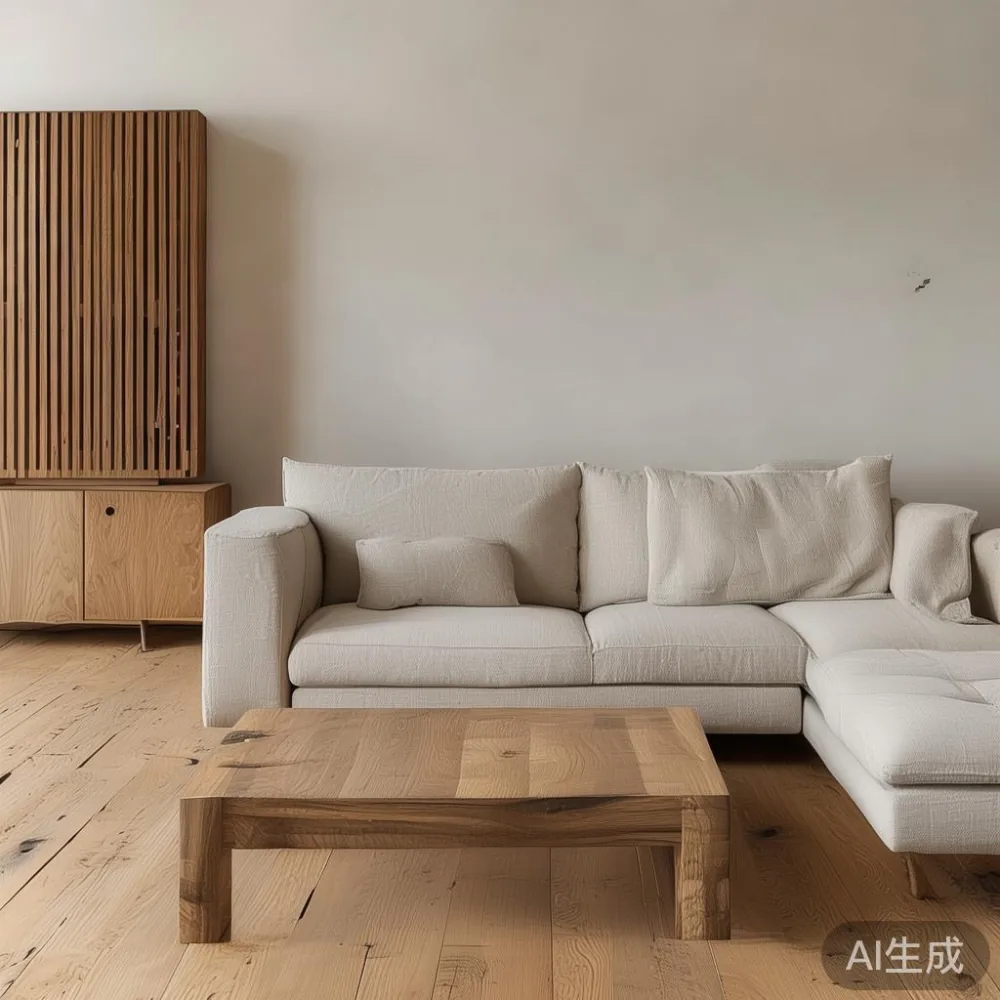
For a Singapore family, “is Mid-century modern sofa worth it” is a question about dimensions, comfort, and replacement cycles as much as style. A genuine mid-century silhouette may use slim arms, tapered legs, and a long profile. Those forms suit a japandi style living room, but a loose back can feel less comfortable for daily family seating than a deeper, firmer sofa.
Assuming a five-year ownership period, a mid-century inspired solid wood sofa may cost SGD 1,650 to SGD 2,650. A veneer or engineered-frame alternative may cost SGD 900 to SGD 1,600. For the former, allocate about SGD 220 for cushions, fabric cleaning, and an SGD 80 to SGD 180 refinishing visit. For the latter, reserve SGD 160 for surface cleaning and SGD 250 to SGD 500 for a possible frame or skin repair. If both pieces remain in good condition and are resold after five years, assume a retained value of 30% for the solid wood sofa and 15% for the veneer sofa.
On those assumptions, a SGD 1,950 solid wood sofa with SGD 300 in care costs SGD 2,250 and retains about SGD 585. A SGD 1,200 veneer sofa with SGD 400 in repairs costs SGD 1,600 and retains about SGD 180. The net five-year cost is SGD 1,665 and SGD 1,420 respectively. The solid wood option carries a higher initial outlay but may create a better long-term result, particularly if the frame can be refinished and upholstery can be replaced.
Measure before buying. A sofa with a 215 cm length needs enough clearance for a 210 cm opening or a suitable turning route. The same principle applies to a solid wood sofa delivered to a high-floor condo: confirm the service lift dimensions, reservation rules, and maximum floor weight with the management office.
Is a Japanese Bed Worth It for an HDB Bedroom?
“Is Japanese bed worth it” makes sense for a compact Singapore bedroom where every centimetre is visible. A low platform frame can create a calmer japandi style composition, but its floor clearance does not automatically improve function. A queen mattress measures about 152 cm x 203 cm in Singapore, so a 160 cm x 210 cm frame leaves little space along two walls.
A queen solid wood bed frame may cost SGD 950 to SGD 1,500, while a veneer or plywood platform may cost SGD 550 to SGD 950. Over five years, allow SGD 250 to SGD 400 for mattress support components and minor repairs on a solid wood frame, compared with SGD 300 to SGD 600 if a panel platform sags or its laminate edges lift. A solid wood frame with a repairable slat system can retain about 35% of its purchase value; a thin decorative veneer platform may retain about 15% to 25%.
For low HDB ceilings around 2.4 m to 2.7 m, a low Japanese-style bed can preserve visual space, yet headboard storage may be more useful. It is also worth checking ventilation beneath the platform and the wall clearance needed for nightstands. A 45 cm wide nightstand is comfortable beside a queen bed, while a 40 cm model saves space in a narrow room.
The broader European and Japanese references are useful, but local conditions decide the value. Singapore humidity, tiled floors, frequent moves, and compact rooms matter more than a style label. This is also how buyers can assess 2026 European light luxury furniture without treating imported trends as automatically suitable for an HDB layout.
How Do Wardrobes Affect the Five-Year Total?
A wardrobe often becomes the largest furniture purchase in a Singapore home, and its method of construction affects moving, repair, and resale. A two-door solid wood wardrobe might cost SGD 980 to SGD 1,650. A good veneer wardrobe may cost SGD 650 to SGD 1,100, while a particleboard model may fall below SGD 600. Over five years, an additional SGD 150 to SGD 400 may be needed for hinge adjustment, drawer runners, or damaged panels.
For buyers comparing design language, the phrase best Italian light luxury wardrobe for 2026 may draw attention to figured veneers, sculpted doors, and restrained hardware. In practical terms, inspect the back panel, drawer boxes, corner joints, and hanging space. A 120 cm wardrobe may hold about 60 to 70 garments depending on rail length and garment length; a 150 cm unit can hold roughly 75 to 90. Those dimensions matter more than a country label.
Sliding doors can suit a 110 cm alcove, but they need more clearance than hinged doors when opened. The swing of a hinged door may be 90 cm to 110 cm, and wardrobes placed opposite a doorway can create daily congestion. Delivery crews often carry a two-door wardrobe in sections, adding SGD 100 to SGD 180 to the final cost.
Solid wood doors can be planed, filled, and refinished. Veneered doors can also be maintained, but an exposed edge or corner may require a more involved fix. MIDHILL’s lifetime refinishing offer is particularly relevant here, subject to scope and serviceability. Before ordering, photograph the unit at delivery and retain the documents for any later finish work.
What Is the Smartest Five-Year Buying Strategy?
The most economical choice depends on where the furniture sits and how often it is moved. A dining table in a dry living-dining room with a stable indoor environment may be a reasonable veneer candidate if the construction is sound and the finish can be renewed. A bed frame, wardrobe, or nightstand that receives frequent handling benefits more from repairable solid timber components. A sofa frame should be judged by joints, suspension, and upholstery access rather than by the fact that its outer arms are timber.
I tested this calculation last month when I visited a colleague’s three-room Tampines HDB flat before she replaced her dining set. Her old 180 cm veneer table had cost SGD 640 in 2021. By 2026, the swollen edge and two deep marks required a SGD 420 repair, while the local carpenter charged SGD 120 to remove the table and carry it back to his workshop. A new solid wood table from the same shortlist was SGD 980, with GST included in the displayed selling price. The replacement added SGD 560 to her immediate budget, but the table could be sanded and refinished instead of having its skin replaced. She also measured the 90 cm service-lift door before confirming delivery, avoiding a SGD 150 redelivery charge.
Across the complete five-year package used here, veneer began at SGD 3,450 and finished at an estimated SGD 4,230. Solid wood began at SGD 5,280 and finished at an estimated SGD 5,600. For this particular use and repair pattern, the difference was SGD 1,370. A buyer planning to move after three years, resell quickly, or replace a dining set when moisture damage appears could justify the lower initial cost. A buyer keeping a bedroom and dining room for at least five years may accept the higher solid wood outlay for refinishing potential and longer service.
Which Material Fits Your Singapore Home?
Choose veneer when the piece is structurally well made, the panel edges are protected, the room has stable indoor conditions, and the lower purchase price matters. Choose solid wood when the piece will be moved repeatedly, handled by children, refinished over time, or expected to remain useful beyond five years. For a japandi style home, evaluate the whole set: one solid wood bed frame and wardrobe can carry the main visual weight while a carefully made veneer nightstand or dining table controls the budget.
Ask the seller for the panel or timber specification, dimensions, weight, finish details, warranty coverage, delivery process, and after-sales charges. Confirm your lift, corridor, and doorway measurements with a tape, not an estimate. Include GST, carrying fees, stair or lift surcharges, and likely refinishing in the five-year figure.
The right answer is not the material with the most reassuring label. It is the piece whose construction, repairability, delivery fit, and care routine match the way your household will actually use it.