Japandi Design for Singapore Homes: What Works, What Doesn’t and What to Buy
A practical guide to Japandi furniture for HDB and condo homes in Singapore, covering sizes, materials, costs, delivery and humid conditions.
- What makes a home feel Japandi without looking like a showroom?
- Is Japandi furniture suitable for HDB and condo layouts?
- Which woods and finishes can handle Singapore’s humidity?
- How much should Japandi furniture cost in Singapore?
- Should I buy a leather sofa for a Japandi living room?
- What should I measure before ordering Japandi furniture?
- How long does furniture delivery and assembly take in Singapore?
- How can I mix Japandi pieces with cheaper existing furniture?
- What mistakes do buyers make when styling a Japandi home?
What makes a home feel Japandi without looking like a showroom?
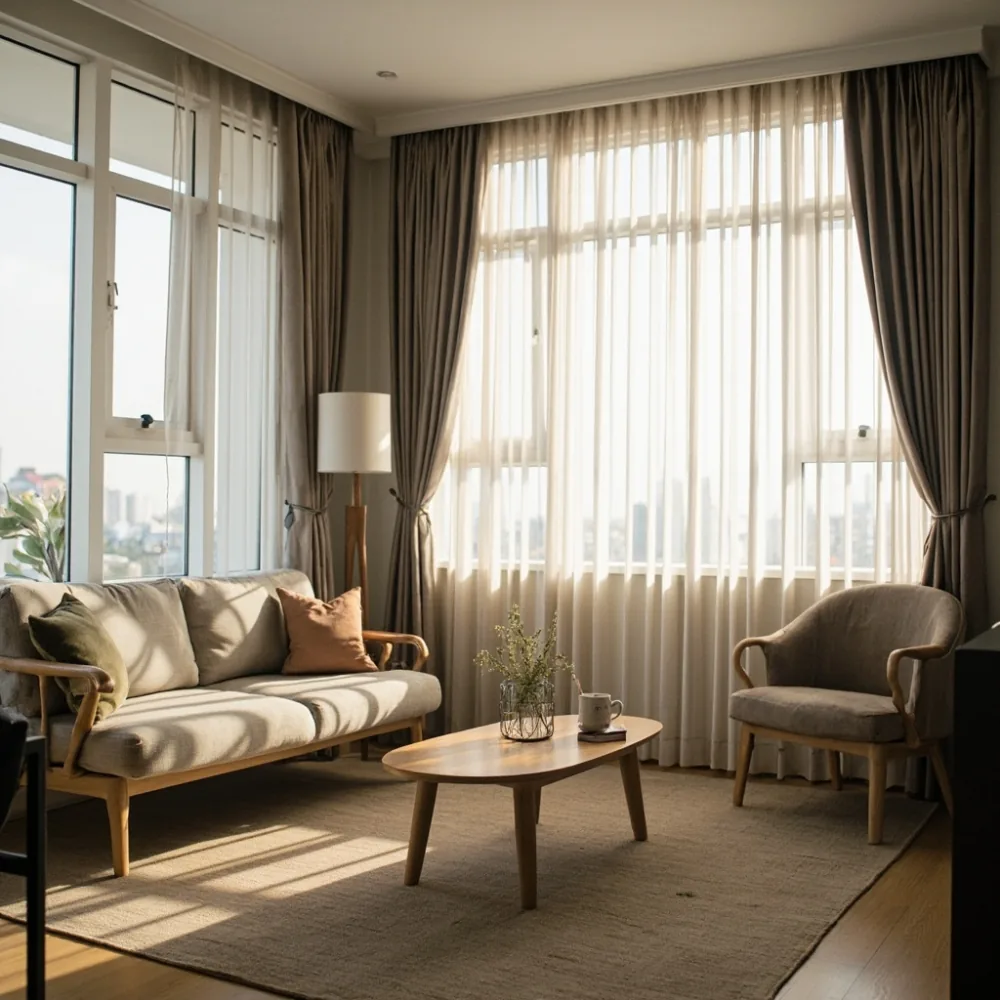
A practical visual formula
Aim for roughly 70–80% calm visual surfaces, with the remaining 20–30% carrying warmth, texture and daily life. Anchor the room with one plain timber piece, add linen, wool, cotton or woven fibres, then introduce books, ceramics and plants irregularly. Use warm lighting around 2700–3000K, matte finishes and restrained contrast rather than filling every surface.
How to mix Japandi with existing Singapore interiors
I think good Japandi design is less about owning a specific chair and more about controlling contrast. Pale timber, earthy textiles, simple silhouettes and uncluttered layouts create the familiar look, but a home still needs warmth. A completely beige room can feel more like a display suite than somewhere people actually live.
For Singapore, I would build around three layers: one plain anchor piece, a few warm natural textures and some evidence of daily life. A solid oak dining table or light ash cabinet can carry the neutral side. Linen curtains, woven baskets and wool or cotton cushions stop it feeling cold. Books, ceramics and a little greenery add irregularity without turning the room into a styled vignette.
Scale matters more than colour. A 180 cm sofa in a compact HDB living room may look elegant on a catalogue but crowd the coffee table. A 160–170 cm model often gives better circulation while retaining a proper seat. In a larger condo, I prefer loose seating that can be rearranged rather than a fixed matching suite.
- Keep roughly 70–80% of visible surfaces calm and uncluttered.
- Mix at least two wood tones if your floor and main furniture already share a similar colour.
- Choose warm white lighting around 2700–3000K rather than cool blue-white lamps.
- Use matte or lightly textured finishes; excessive gloss reads modern, not Japandi.
You do not need to replace every item. A mid-century sideboard, simple upholstered chair and warm rug can make an ordinary Singapore flat feel considered. The key is to make each object earn its place.
Is Japandi furniture suitable for HDB and condo layouts?
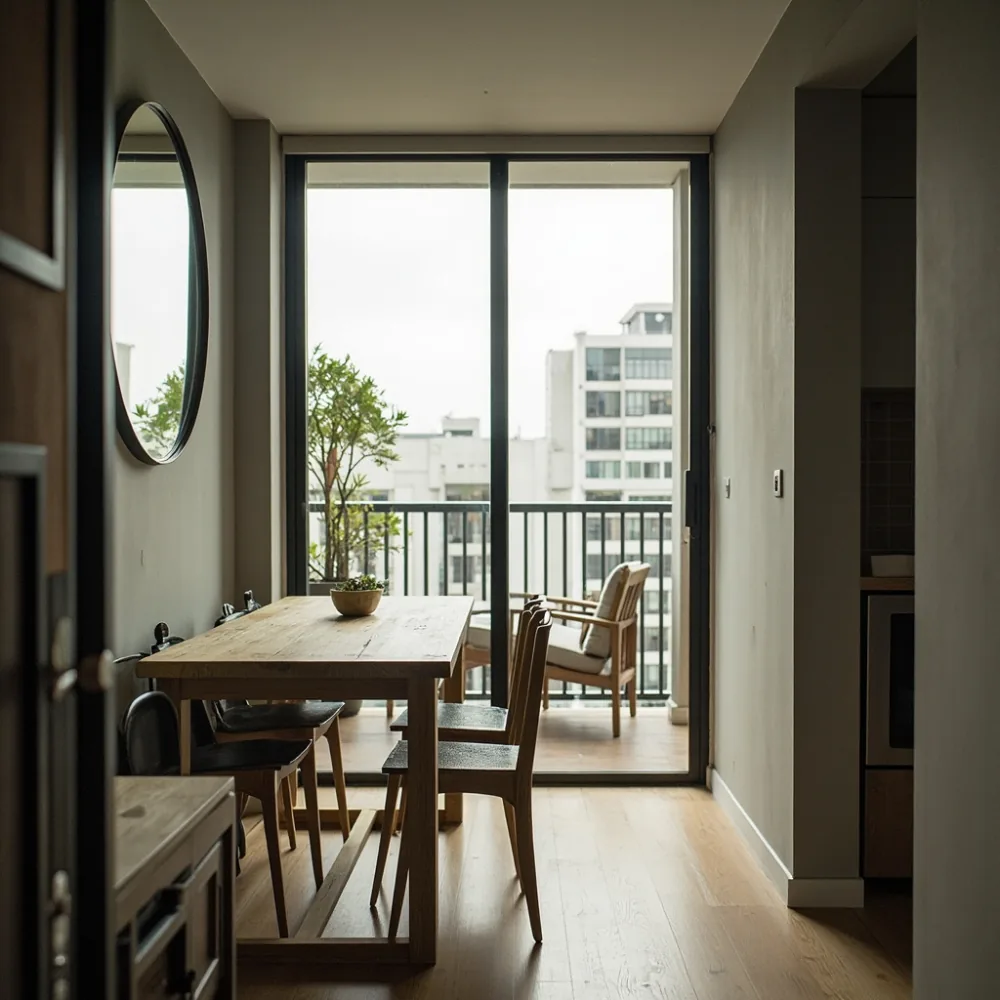
Matching pieces to common Singapore layouts
Measure the fixed constraints before choosing furniture: the entry-to-kitchen route, dining-chair pull-out space, wardrobe-door swings and gaps around sofas. A 160–170 cm sofa may suit a compact HDB living room better than a larger model. For narrow dining areas, consider a 110–120 cm round table for four or a 140 × 80 cm rectangular table for six. Japandi styling cannot compensate for poor circulation.
Why small space furniture should be measured before ordered
Japandi furniture can suit both HDB and condo homes, but “Japandi” itself does not solve a layout. I start with the clearances that people forget: the route from the front door to the kitchen, the space needed to pull out a dining chair, the door swing beside a wardrobe and the gap between a sofa arm and the wall.
In a typical 3-room HDB flat, the living room may offer only about 2.7–3.3 metres of usable width, while a compact dining zone may be 2.4–3 metres across. Condos are often more generous, yet a generous floor area can still have awkward columns, balcony thresholds and fixed kitchen cabinetry. Measure those constraints before choosing a sofa or table.
For a narrow dining area, a round table of 110–120 cm can seat four if nobody needs to squeeze past. A rectangular 140 × 80 cm table is safer for six when circulation is tight. For a living room, aim for a coffee table at least 35–40 cm above the sofa and leave 35–45 cm between them. Small space furniture should reduce visual bulk, not remove the clearance needed to use the room.
- 3-room HDB living room: consider sofas around 160–190 cm wide and tables under 100 cm long.
- Compact dining zone: choose 110–120 cm round or 140 × 80 cm rectangular tables.
- Condo lounge with a wide window: pair a larger sofa with one substantial side table instead of several tiny pieces.
- Study or dining hybrid: look for a table with a 70–75 cm depth, not a broad lounge-style top.
Custom furniture can solve unusual dimensions, but the best custom piece is often the simplest one: a built-in bench, a fixed shelf or a dining top cut to the room. I would avoid making every item bespoke just to create a theme.
Which woods and finishes can handle Singapore’s humidity?
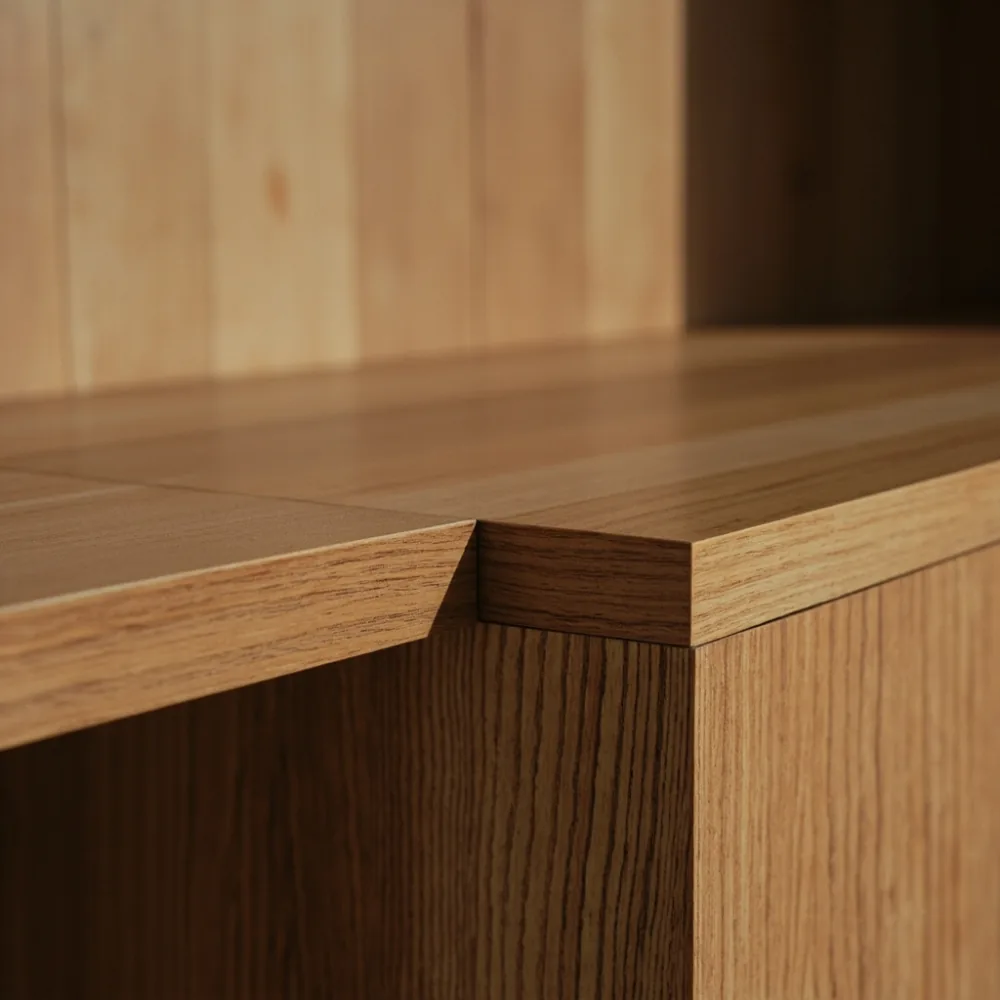
Choosing stable solid wood furniture
Treat small-space furniture as a volume and clearance decision, not merely a design choice. Leave about 35–45 cm between a sofa and coffee table, with the table roughly 35–40 cm high. Check whether chairs can be pulled back without striking walls or cabinets. Built-in benches, fixed shelves and custom-cut tops can solve awkward dimensions, but every piece does not need to be bespoke.
What to ask about moisture, coatings and warranty
Singapore humidity does not automatically ruin solid wood furniture, but untreated timber can move, swell or develop mould if it is repeatedly exposed to moisture. Engineered wood is not necessarily inferior; it can be more dimensionally stable in a flat where air-conditioning runs constantly and doors are frequently opened to humid corridors.
For solid wood furniture, I favour kiln-dried timber, clean joint construction and a finish that can be maintained. White oak and teak are common choices, while ash and rubberwood can also work. The species matters less than moisture control and quality. Ask whether the pieces are dried to a sensible level for tropical use, how panels are finished on all edges and whether drawer bottoms are solid, plywood or another material.
For high-risk areas, avoid untreated timber near a balcony, kitchen sink or air-conditioning unit. Do not place a solid wood console directly against a cold exterior wall where condensation is possible. Leave some ventilation and use coasters rather than decorative trays that trap moisture.
MIDHILL is a Foshan solid-wood furniture maker established in 2008 and provides a 10-year structural warranty. That is useful information when comparing construction claims, although finish coverage and humidity-related terms should still be checked in writing.
- Ask for finished dimensions and net product weight before ordering.
- Check whether back panels and drawer bottoms are included in the structural warranty.
- Confirm the coating type, maintenance instructions and approved cleaning products.
- Keep delivery packaging until you have inspected corners, joints and surfaces.
I also avoid the phrase “waterproof” for indoor wood. A well-finished piece can tolerate occasional splashes, but prolonged wet contact is different.
How much should Japandi furniture cost in Singapore?
A realistic price range by category
Singapore’s humidity makes moisture control more important than the wood species. Ask whether solid timber is kiln-dried and suitable for tropical interiors, and how edges, drawer bottoms and back panels are finished. Avoid untreated wood near balconies, sinks or air-conditioning units, and use coasters rather than moisture-trapping trays. Also request the coating type, cleaning guidance and written warranty coverage for moisture-related issues.
How to compare quotes without comparing the wrong things
A sensible Japandi furniture budget in Singapore can start around SGD 1,500 for a small dining arrangement, but good solid wood pieces usually cost more. I use the figures below as planning ranges, not fixed market prices. Material, dimensions, finish, hardware, brand and delivery scope can move the final price substantially.
The important comparison is like-for-like. Some quotes include legs, assembly, floor protection and delivery to the lift lobby; others do not. Some dining tables list a tabletop material but hide the fact that the base or frame is veneer or particleboard. A lower sticker price may also mean thinner components, simpler drawers and no warranty.
| Item | Typical dimensions | Planning weight | Indicative price |
|---|---|---|---|
| Solid wood dining table | 140 × 80 × 75 cm | 45–65 kg | SGD 1,200–2,600 |
| Upholstered sofa | 170 × 85 × 78 cm | 55–85 kg | SGD 1,800–4,500 |
| Oak-toned sideboard | 150 × 40 × 75 cm | 40–60 kg | SGD 1,400–3,200 |
| Low coffee table | 100 × 50 × 35 cm | 15–28 kg | SGD 450–1,200 |
| Writing or dining chair | 48 × 52 × 78 cm | 7–12 kg | SGD 250–900 each |
Budget about SGD 80–250 for delivery and assembly in most Singapore districts, with stairs, narrow corridors and upper-floor access potentially adding more. Ask whether the quotation covers the doorstep, lift lobby or room placement. In new developments, the loading bay or parking restrictions may also affect the final charge.
Should I buy a leather sofa for a Japandi living room?
How to choose leather that suits Singapore
Compare quotations using identical specifications: materials, dimensions, finish, hardware, construction, delivery scope and warranty. Check whether the table base, drawer boxes and back panels match the stated timber. Record the finished dimensions and net weight, then confirm whether delivery includes carrying, assembly, floor protection and packaging removal. A lower price may reflect thinner components or excluded services rather than better value.
Why frame comfort matters more than hide colour
A leather sofa can anchor a Japandi living room beautifully, but I would not choose it purely for the photograph. Singapore’s heat, humidity and heavy air-conditioning can make a cold leather seat less comfortable than a breathable fabric. Full-grain or top-grain leather generally ages well, while corrected-grain or coated leather may be easier to wipe but can feel more synthetic.
Colour is only one factor. Warm tan, chocolate and dark brown work with wood, while cream can create a softer, Scandinavian version. Avoid assuming a pale leather will stay unmarked in a family home unless you are comfortable with patina and cleaning.
Check the frame, seat depth and cushion construction before the hide. A sofa with a kiln-dried hardwood frame, good suspension and medium-firm foam will usually serve longer than a dramatic shape with a weak base. Test it in person if possible, especially if you sit for long periods.
- Keep seat depth around 55–60 cm for comfortable everyday use.
- Look for removable or washable covers if children and pets are part of the household.
- Protect leather from direct balcony sunlight and wipe spills promptly.
- Allow a new leather sofa to acclimatise in the room according to the seller’s care instructions.
For cooler bedrooms, leather may also feel excessive. I would use washed linen, cotton or a durable woven textile there and reserve leather for a living room where it will be used often.
What should I measure before ordering Japandi furniture?
A room-measurement checklist
A leather sofa can suit Japandi, but choose comfort and construction before hide colour. Ask about the frame timber, suspension, cushion density and seat depth; around 55–60 cm is comfortable for everyday use. Full-grain and top-grain leather usually develop character, while coated options are easier to wipe but may feel synthetic. Protect leather from direct sunlight, clean spills promptly and follow the seller’s care instructions.
How to avoid delivery-day surprises
Measure the furniture and the route, not only the room. For a dining table, leave at least 75–90 cm behind each seated person where circulation is required; 60 cm may be workable in a very tight zone but feels restrictive. A chair pulled out needs space to return without hitting a wall or cabinet.
Record door widths, lift car dimensions, hallway turns and staircase turns. A 180 cm sideboard may fit through an 85 cm doorway but still fail at a tight right-angle turn. If a piece cannot be assembled outside the room, confirm that the retailer provides in-room assembly.
Check floor level, parking access and the nearest lift. Some HDB blocks and older buildings have limited loading areas, while condo management may require a loading-time booking or protective floor covering. Ask whether delivery includes carrying, unpacking, assembly and packaging removal. If the quotation separates each service, the total can be clearer.
For custom furniture, request a dimensioned drawing showing the top, apron, leg position and clearances. Verify whether handles protrude beyond the stated cabinet depth. For slim furniture, watch the weight too: a tall, narrow display unit at 35 kg needs two people and a safe route.
- Measure at both the widest and narrowest points of the route.
- Confirm the furniture’s packed dimensions as well as its assembled dimensions.
- Check door-handle, socket and skirting-board obstructions.
- Photograph access points and share them with the delivery team before dispatch.
How long does furniture delivery and assembly take in Singapore?
Typical lead times
Measure both the furniture and its complete access route. For a dining table, allow about 75–90 cm behind seated people where circulation is needed, and check that pulled-out chairs will not hit walls or cabinets. Record doorway widths, lift-car dimensions, hallway turns, floor level and parking access. Confirm packed dimensions, including protrusions such as handles, and ask whether in-room assembly is available.
Why custom furniture needs earlier planning
For standard in-stock pieces, I would allow roughly 7–14 days for delivery within Singapore once payment is confirmed. Made-to-order furniture commonly takes 4–8 weeks, while a fully bespoke dining table or storage system may need 8–12 weeks. These are planning ranges; peak moving periods, holiday closures and complex approvals can extend them.
Custom furniture benefits from an early site visit. The maker should confirm measurements, access, electrical positions and installation details before production. I would avoid agreeing to a final installation date until the custom item has arrived locally. If the whole room must be completed at once, stockier alternatives may be more practical.
Delivery day itself may take 30–90 minutes for a straightforward sofa or table. A fitted wardrobe or complicated dining set can take longer, especially if packaging removal and alignment are included. Before the crew arrives, clear the route, protect floors and reserve parking where possible.
I also ask whether failed delivery attempts carry a fee. Some suppliers charge again if the buyer is absent, access is blocked or the address is incomplete. Those terms are more important than a vague “free delivery” claim. For condo units, check whether the service elevator is booked and whether the driver needs a vehicle pass.
How can I mix Japandi pieces with cheaper existing furniture?
Where to spend and where to save
Prevent delivery-day surprises by documenting the route from the vehicle entrance to the intended room. Photograph narrow doors, turns, lifts, skirting boards, sockets and floor thresholds, then share them with the delivery team. Confirm whether the quote includes delivery to the lift, carrying, unpacking, assembly and packaging removal. Ask about failed-attempt fees, condo loading-booking requirements and any extra charge for stairs or restricted parking.
How to create cohesion with colour and scale
You do not need to furnish an entire flat from one collection. I would spend on the piece you touch or use most: the sofa, dining table or bed. A durable and comfortable sofa usually improves daily life, while a lower-priority side table can be replaced later if the budget is tight.
To make inexpensive pieces look connected, repeat two colours and one material. For example, pair light oak furniture with a warm beige sofa, charcoal textiles and matte black metal details. If an existing sofa is visually loud, a plain rug and restrained timber tables can reduce the effect, but no accessory can fully hide a bulky silhouette.
Scale is another useful lever. A slim 160 cm sofa, low coffee table and vertical shelving create a lighter room even if the finishes are not identical. Avoid matching every leg and edge exactly; that can look overly coordinated. Slight variation is more relaxed and, in my experience, easier to live with.
For durable furniture, check movement, wobble, drawer alignment and corner joints before decorating it. A stable secondhand cabinet can work well if you sand it carefully, seal the exposed timber and replace missing handles. The result may have more character than a new flat-pack import.
- Prioritise comfort in seating and stability in tables.
- Use curtains and rugs to bridge different wood colours.
- Keep visible cables, storage boxes and daily clutter contained.
- Buy one distinctive object at a time rather than many unrelated decorative pieces.
What mistakes do buyers make when styling a Japandi home?
Avoiding over-styling and false sustainability
Custom furniture should be planned before other fixed work begins because site measurements may affect layouts, services and clearances. Provide finished room dimensions, access details, electrical positions and the required installation date, then approve a dimensioned drawing showing the top, legs, handles and surrounding clearances. Confirm the maker’s current lead time in writing. If an entire room must be ready together, mix custom pieces with confirmed in-stock items rather than depending on one delayed order.
A practical final checklist
The most common mistake is buying a themed set before solving the room. Matching chairs, identical side tables and a coordinated bed frame can quickly make the home look staged. I prefer fewer pieces with better proportions and enough empty space to move comfortably.
The second mistake is confusing “minimal” with “uncomfortable”. Low lounge chairs, thin cushions and hard benches may photograph well but fail during long meals or slow evenings. Choose a dining seat with proper support, a sofa with reachable seat height and a bedside table at a useful 45–60 cm height.
Buyers can also overvalue pale woods. Dark walnut, stained ash and warm brown finishes can sit comfortably in Japandi design, especially in HDB homes with warm lighting. If everything is cream, the room may look flat rather than serene.
Finally, treat sustainability claims cautiously. Ask about timber certification where applicable, recycled content, finish durability and repair support. A product made nearby is not automatically better, and “eco-friendly” without evidence is just a marketing label. Keep the furniture long enough to matter and choose replaceable cushions or repairable construction where possible.
- Check all clearances before ordering.
- Ask about moisture treatment and the exact finish.
- Compare total delivered and installed prices.
- Review the warranty exclusions in writing.
- Sit, reach and walk through the finished arrangement before adding décor.
Frequently asked questions
What is the best Japandi furniture for a small HDB living room?
Choose compact but usable proportions: a sofa around 160–170 cm wide, a coffee table under 90–100 cm long and slim side tables. Prioritise solid timber or stable engineered construction, then verify lift and doorway access. Leave 35–45 cm between the sofa and coffee table, and avoid visually bulky pieces that block movement through the room.
Is solid wood furniture safe for Singapore’s humid climate?
It can be, provided the timber is properly dried, finished on all exposed surfaces and protected from standing moisture. Ask about kiln-drying, edge sealing, drawer construction and maintenance. Avoid untreated pieces near balconies or sinks, and leave ventilation around air-conditioning units. Warranty terms should distinguish structural coverage from finish or moisture-related issues.
How much does a Japandi dining setup cost in Singapore?
A four-seat arrangement with a solid wood table and matching chairs often costs around SGD 1,600–3,200 before delivery. A larger six-seat timber set may range from SGD 2,500–5,000. Compare material, thickness, dimensions, hardware and warranty, then add roughly SGD 80–250 for typical delivery and assembly, depending on access.
Should I choose a leather sofa or fabric for a Singapore home?
Leather works well in a frequently used living room and develops character over time, but it can feel warm or firm in humid conditions. Breathable linen, cotton or performance woven fabric may be more comfortable for daily use in a bedroom. Whichever you choose, assess the frame, suspension, seat depth and cushion quality before considering colour.
How long does custom Japandi furniture take to deliver to Singapore?
Allow about 4–8 weeks for many made-to-order pieces and 8–12 weeks for fully bespoke designs. The timeline should start after drawings and measurements are approved, not after the initial enquiry. For an entire room, confirm production and shipping milestones separately, and avoid relying on a custom arrival date for a launch party or move-in.
Questions about sizing, fabric or delivery?
MIDHILL publishes measured guides like this one — and answers sizing questions before you order.
See the collection