Caring for Lacquered Japandi Furniture in a Tropical Climate: What Tampines and Punggol Owners Need to Know
I keep a small notebook of every climate-related complaint Singaporeans bring up when they visit the showroom floor in Foshan over video call. Last month, a customer from Tampines North wrote to me about a water ring that appeared on her oak dining table after her helper set down a cold mug straight from the fridge. She had wiped it within thirty seconds, but a faint white circle still sat there the next morning. Her dining table was a Japanese-style piece finished in a high-gloss lacquer, and the air in her HDB flat had been reading 86% humidity for six straight days. That single email is the reason I am writing this piece, because her question applies to almost every Japandi-style household between Bedok Reservoir and Punggol Way.
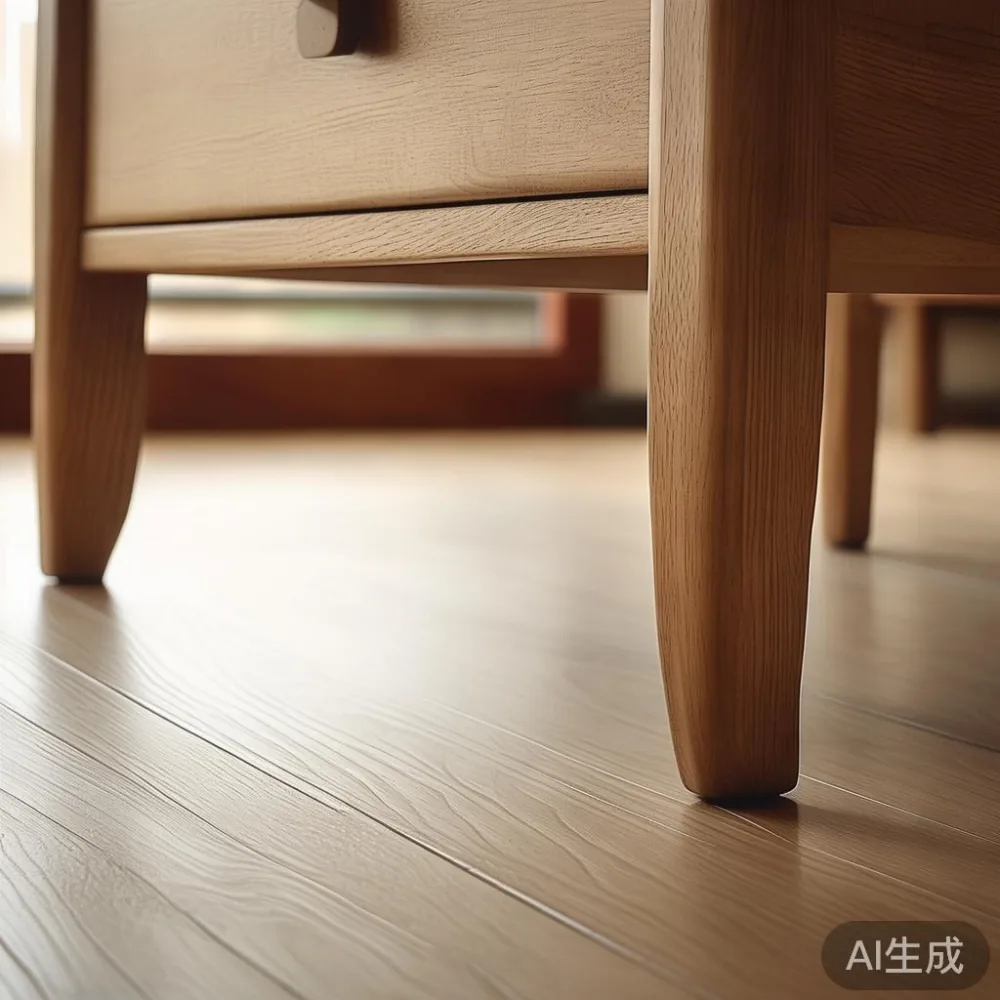
Why Singapore's Climate Is Harder on Lacquer Than Anywhere Else in the Region
Lacquer is a closed film. It does not breathe the way an oiled oak surface does. When relative humidity climbs past 80% for weeks at a time, the wood beneath the film absorbs moisture, expands roughly 0.2 mm across its width, and then contracts when the air-conditioning finally runs at night. That micro-movement is what causes the white halo, the hairline crack along a drawer rail, or the slightly tacky feel you sometimes notice on a wardrobe door in August. In a Tampines 5-room HDB, the corridor window is often left open an inch for ventilation, and a single afternoon thunderstorm is enough to push the indoor reading from 65% to 88% in two hours. A Punggol condo with full-height glazing facing the afternoon sun sees even faster swings. Lacquer tolerates slow change. It does not tolerate shocks.
For owners of Japandi-style pieces, this matters because the whole point of the look is unbroken planes of warm wood. A solid wood sofa with exposed ash arms, a tall oak wardrobe, or a marble table on a smoked oak base all rely on a perfect surface. Once the lacquer checks or clouds, the calm of the room is gone.
The Eight Items in Your Lacquer Care Kit (and the One You Should Throw Away)
You do not need twenty products. You need eight. I keep this list printed next to the sample boards in our studio because it is what we hand to clients after delivery.
1. Two microfibre cloths, 40 cm × 40 cm, 220 GSM. Keep one dry, one slightly damp. Wash them every fortnight in plain water without fabric softener. Softener leaves a residue that dulls lacquer.
2. A pH-neutral wood soap, around 250 ml. Anything between pH 6 and pH 8 is fine. Avoid anything that foams aggressively, because foam carries surfactants that sit under the film and lift it from the edges.
3. A small bottle of isopropyl alcohol, 70%, 100 ml. This is for ink, marker, or sticker glue. Never use it on the full surface; dab only on a cotton bud.
4. Soft beeswax paste, 100 g tin. One tin usually lasts a household twelve to eighteen months.
5. Felt pads, mixed pack of 24. Put them under every lamp base, every vase, every Bluetooth speaker. On a Japandi-style coffee table, this single step prevents 90% of the scratches I see.
6. A digital hygrometer, the kind that costs about S$18 at any Tampines Mall shop. Put it on the wall behind your bed frame, not on the wood.
7. A medium-soft brush, natural bristle, 2.5 cm wide. For the carved details on a French light luxury bed headboard.
8. Distilled water, 2 litres. Tap water in Singapore leaves calcium spots after the water evaporates, and those spots are the second most common reason owners call us.
Throw away: any silicone-based polish, including the spray cans that promise "shine in seconds." Silicone migrates into the wood, ruins future refinishing, and turns the surface cloudy after a few months. If your helper has been using Pledge on your dining table, stop today.
How to Style a Light Luxury Sofa in Bedroom Corners Without Damaging the Finish
This question comes up more than people expect. Many Singapore owners of 3-bedroom HDB flats do not have a separate reading room, so the bed frame gets pushed into a corner and the solid wood sofa lands at the foot of it. If you have ever wondered how to style light luxury sofa in bedroom settings without creating a humidity trap, the answer is airflow. Keep 30 cm between the back of the sofa and the wall. Keep 45 cm between the sofa arm and the side of a wardrobe. Do not push a Japandi-style nightstand flush against the sofa frame, because the two pieces will then trap moisture between them and the lacquer on both will bloom within six months.
Light luxury, whether French, American, or post-modern light luxury, almost always uses high-gloss or satin lacquer because that is the visual language of the category. So treat the sofa the same way you would a piano: wipe it down once a week, never place a wet towel on it, and rotate the cushions every fortnight so the foam does not settle unevenly. A reader in Bedok wrote to tell me she places a small 20 cm wooden tray on her sofa arm to hold her mug; that single habit has saved her from at least three ring marks since January.
Weekly and Monthly Care Routines That Actually Fit a Condo Lifestyle
Most owners in Punggol and Tampines work long hours and have helpers two or three days a week. The routine has to be realistic. Here is what I do in my own home, and what I recommend to family.
Daily (15 seconds): Run the dry microfibre over the dining table after the last meal. No product, no water. Just a sweep.
Weekly (4 minutes): Damp-wipe the solid wood sofa arms, the wardrobe door fronts, and the nightstand tops. Use the damp cloth only, not the soap, unless something has spilled.
Monthly (12 minutes): Apply a pea-sized amount of beeswax to the dining table only. Rub it in along the grain with the dry cloth. Buff off after ten minutes. Do not wax the wardrobe or the sofa. Wax on large vertical surfaces streaks.
Quarterly (25 minutes): Pull the wardrobe 10 cm away from the wall, vacuum the dust off the back panel, and check the corners for any sign of mould. Singapore air carries mould spores year-round, and a Punggol corner unit with a north-facing wall is the highest-risk spot I see.
Yearly (one afternoon): Book a refinishing assessment. Most Japandi-style pieces from a proper maker carry a lifetime refinishing service, which means a technician can sand back 0.3 mm of lacquer and re-coat the piece in your home within a day. The cost is usually between S$120 and S$280 per piece, depending on the surface area, and the room usually only needs to be empty of small items.
Common Mistakes I See in HDB Flats and Condos Every Month
Three mistakes appear again and again in my notes. Number one: the coaster. People buy ceramic or glass coasters with a felt bottom, then place a cold mug on them. The condensation runs off the coaster, under the felt, and pools directly on the lacquer. The felt hides the water long enough for it to mark the surface. Switch to a coaster with a raised rim, around 4 mm high, so the water cannot escape sideways.
Number two: the marble table. A Japandi-style marble table on an oak base is one of the most asked-about pieces for sale Minimalist furniture buyers in Singapore. The marble needs its own care. Wipe it with a pH-neutral stone soap, never vinegar, and keep a separate cloth for it. The oak base is lacquered and the marble is not, so they cannot share products.
Number three: the air-con vent. I visited a customer in Punggol last April whose bed frame showed long cracks along the headboard. The split-unit air-conditioner was blowing directly onto the wood every night for eight hours. Direct, cold, dry air on one side and humid room air on the other is the fastest way to split a lacquered panel. Angle the louvre so the air goes up, then across the ceiling, never at the wood.
What About a Scandinavian Bed Frame or a European Light Luxury Bed in the Same Room?
Many buyers shopping for the best Scandinavian bed for 2026 are choosing low-platform oak frames with paper-cord headboards, while their partner wants an upholstered European light luxury bed. The two sit on opposite sides of the design spectrum, and the comparison between a European light luxury bed vs French provincial bed comes up in almost every showroom visit. Putting them in the same room is fine, but the care rules differ. The Scandinavian oak frame wants beeswax twice a year and no silicone polish ever. The European upholstered headboard wants a fabric spray and a weekly vacuum with the upholstery tool. They are not interchangeable, and mixing the products is the surest way to ruin both.
If you are the type of buyer who also browses wholesale Mid-century modern furniture catalogues, you will notice that the same principle applies to teak and walnut. The finish might be oil, lacquer, or hard wax, and the care product has to match the finish, not the wood species. A teak dining table finished in lacquer behaves like oak. A teak dining table finished in oil behaves like an outdoor deck. They are not the same product.
Frequently Asked Questions from Tampines and Punggol Homeowners
"Is lacquered furniture safe for a child's room with a small baby?"
Yes, once fully cured. Water-based lacquers used by most Foshan workshops, including our own studio, are fully cured within 14 days of leaving the spray booth. After that, off-gassing is below the E0 threshold that Singapore's BCA green labelling accepts. Keep the room ventilated for the first ten days, and avoid placing a teething baby directly on a headboard before the 14-day mark.
"Can I use a steam mop near a lacquered wardrobe?"
No. Steam is water at 100 degrees. Lacquer begins to soften at 65 degrees. Keep any steam device at least 1.5 m from a lacquered surface, which in a Punggol 4-room flat usually means you simply cannot use one in the bedroom at all.
"My dining table has a white ring after the helper put a hot pot on it. Will it buff out?"
White rings from heat are moisture trapped under the lacquer. Try a small amount of non-gel toothpaste on a soft cloth, rub along the grain for thirty seconds, and wipe clean. If the ring is still there after two attempts, the damage is in the lacquer film itself, not the wood, and you will need a refinishing visit. Most good makers, including the team here, offer this as a paid or warranty service.
"How do I lift a small dent in a lacquered surface?"
Place a damp cotton cloth over the dent and press a warm iron (medium setting, no steam) onto the cloth for eight seconds. The steam swells the compressed wood fibres back toward the surface. Let it dry for 24 hours, then apply a thin coat of beeswax. This works on dents up to 2 mm deep; deeper marks need a technician.
"What about Japandi-style pieces under 2000 Coastal furniture budgets?"
Coastal and Japandi share the calm neutral palette, but the construction quality at the under S$2,000 price point is rarely solid wood. You will mostly see MDF with a printed laminate. Those surfaces cannot be sanded and re-lacquered the way a solid oak piece can. If you want true lifetime refinishing, the budget needs to start closer to S$2,400 for a dining table and S$1,800 for a nightstand, which is the price band where solid hardwood begins. For readers searching under 2000 Coastal furniture options, the trade-off is real and worth thinking through before you click checkout.
The Delivery and After-Care Picture for Singapore Owners
Most pieces ship from Foshan to Singapore by sea in around 18 to 24 days, then clear customs in 3 to 5 working days. Delivery to an HDB flat in Tampines or a condo in Punggol is by appointment, and the team will lift pieces up to the floor your lift serves, provided the lift interior is at least 1.6 m deep and the corridor turn is wider than 2.2 m. Older blocks in Bedok sometimes have tighter corridors, so a wardrobe may need to come in flat-pack even if it is solid wood. There is no extra charge for that. The 10-year structural warranty covers joinery, drawer runners, and any cracking of the wood itself. The lifetime refinishing service covers surface wear. Both transfer to the second owner if you sell the piece, which is unusual in the industry and worth flagging on the listing.
If you are buying a Japandi-style bed frame, a wardrobe, a nightstand, or a dining table from a maker that exports to 15 or more countries, ask for the moisture-content reading at the time of packing. It should be between 8% and 10%. Anything above 12% is too wet for Singapore and will move once it lands here. A proper workshop will hand you that number on a printed sheet. When a customer in Punggol asked for the reading on her MIDHILL dining table last month, the team sent a photo of the meter and the box label within the hour. That is the level of paperwork you should expect, and it is the safest indicator that the piece has been dried, finished, and packed for a tropical destination rather than a Shanghai showroom.
Caring for lacquer in Singapore is not difficult, but it is specific. Keep the humidity between 45% and 65%, wipe with a damp microfibre rather than a wet one, never let a hot pot sit directly on the surface, and book a refinishing assessment once a year. Do those four things and a Japandi-style piece will outlast two sets of upholstery, three different sofa covers, and at least one renovation cycle in your HDB flat. That is the long, quiet reward of owning solid wood furniture finished properly.