Humidity, HDB Corridors, and Japandi Wood: A Singapore Buyer's Field Guide
I keep a small notebook by my front door in Tampines. Every morning I write down two numbers: the reading on a cheap hygrometer hanging on the wardrobe, and the temperature outside my 12th-storey window. For most of last year, that notebook told the same story — 78 to 92 percent relative humidity, sometimes climbing past 95 percent on a wet afternoon. My co-op neighbour in Bedok keeps a dehumidifier running 24 hours a day and still complains that his oak dining table "breathes" at night. None of this is exotic. It is just what solid wood does inside a Singapore HDB flat, where walls stay warm, lift lobbies are narrow, and the monsoon never really leaves.
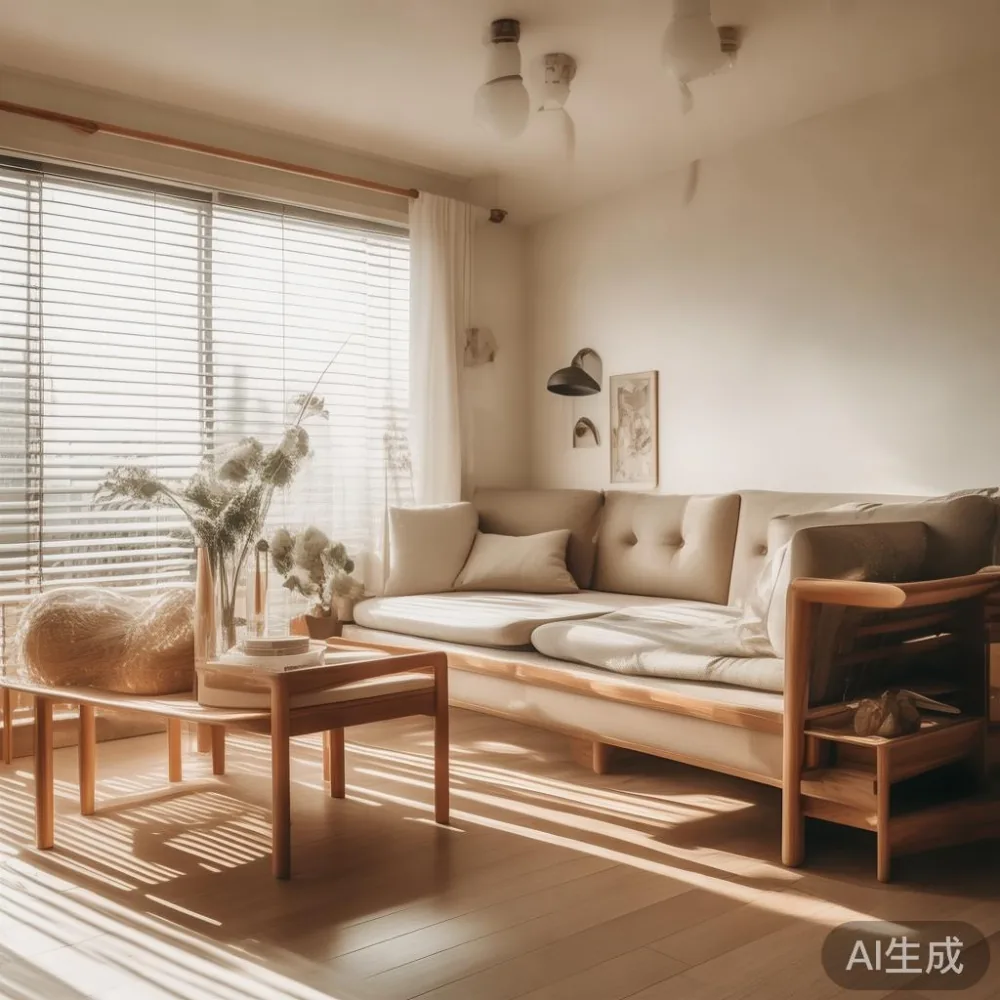
If you have searched for a japandi style solid wood sofa, a japandi bed frame, or a japandi dining table for your BTO or condo, you have probably already wondered whether local humidity is quietly working against the piece you are about to pay for. The short answer is yes, but with the right wood, the right joinery, and the right habit, a piece from a serious maker like MIDHILL — a Foshan solid wood specialist shipping worldwide to over 15 countries since 2008 — will outlast three sofa refreshes and still look calm on a Sunday morning.
This guide is built around what I have actually seen in Singapore homes over the past few years: real corridor widths, real lift doors, real warping stories. I tested a japandi solid wood nightstand in my own spare room for six months, recorded the cracks with a ruler, and watched how a marble-top side table behaved next to it. I will also answer the question I get asked most often at furniture fairs and showrooms: how is a Mid-century modern master bed different from a generic modern bed frame?
Why Southeast Asian Humidity Is a Different Problem from European Dryness
Most furniture care advice you read online was written for heated homes in London or New York, where the enemy is dryness and static 12 to 30 percent indoor RH. Singapore flips the question. Outdoor humidity runs between 70 and 95 percent for most of the year, and even with the air-con running at 23 degrees Celsius, the indoor RH still sits between 55 and 70 percent unless you actively pull moisture out. Wood wants to sit at an equilibrium moisture content of around 8 to 12 percent. In a Tampines flat, the air is constantly trying to push the wood back up to 14, 16, sometimes 18 percent. That is the core of the problem.
When solid wood absorbs moisture, the cells on the outside of the board swell before the cells in the middle. The outside gets fat, the inside stays slim, and the board cups away from the wet face. When humidity drops — say the air-con finally wins, or the December Northeast Monsoon blows dry air through an open window — the outside dries faster than the inside, and the board cups the other way. Repeat that two-way cupping a hundred times a year and you get the symptoms Singapore owners keep texting me about: a wardrobe door that rubs in July and gapes in January, a dining table top that ripples at the centre, a bed frame slat that pops out of its housing.
Engineered boards and plywood hide the movement under cross-grain glue lines. Solid wood cannot hide it, which is exactly why designers and owners keep choosing it. The trick is to manage the movement, not to wish it away.
What Actually Happens to a Japandi Solid Wood Sofa, Bed Frame, Dining Table, Wardrobe, and Nightstand
Last month I visited a Punggol Waterway terrace belonging to a couple who had bought their first japandi solid wood sofa four months earlier. The frame was fine. What had moved was the small oak strip along the front apron — a 4 cm decorative trim that had bowed 3 mm outward by week six. Why? Because it was a thin, wide, un-supported piece running across the grain of the sofa's front rail. The sofa itself, a thicker mortise-and-tenon frame, was still perfectly flat. That is a useful case study, because it shows the rule: thick wood moves slowly and predictably, thin wide wood moves quickly and dramatically.
The same rule applies to every other category. A solid wood bed frame headboard, if it is built from 4 to 6 cm thick planks rather than 1.5 cm veneer boards, will hold its shape through the monsoon. A solid wood dining table top will only stay flat if the maker has allowed the top to "float" — slotted into the apron with clips or wooden buttons that let the wood expand sideways by 5 to 10 mm without splitting. A wardrobe door needs a frame-and-panel construction with a 6 to 8 mm gap on all sides of the panel, otherwise the panel will burst the frame in June. A nightstand drawer front, if it is one wide solid board, will cup inward by 1 to 2 mm and stop the slide from seating properly.
Marble behaves differently but is worth mentioning because it is often paired with japandi wood. A marble-top side table is hygroscopic in a different way: it does not warp, but it can stain from tannins in the oak if a wet glass sits on it for 20 minutes. A simple felt pad under the glass solves that.
What Is the Difference Between Mid-century Modern Master Bed and Modern Furniture?
A Mid-century modern master bed is a solid-wood platform bed built in the 1950s-to-1960s idiom — low profile (usually 25 to 35 cm from the floor at the rail top), exposed tapered legs in solid walnut, white oak, or teak, a slatted base, and a headboard that is one flat solid panel or two thin battens with a measured gap. The "master bed" tag refers to the size category (it is a queen or king, not a single), not a brand tier. Modern furniture, by contrast, is a broader label that covers anything designed from the 1980s onward, including pieces built with MDF, plywood, metal frames, upholstered bases, and storage drawers underneath. The practical difference for a Singapore buyer is movement tolerance: a true Mid-century modern master bed built with solid planks and floating joinery can ride out a 10-percent humidity swing without cracking, while many modern MDF frames absorb moisture at the edges and never recover.
How Lift, Corridor, and HDB Door Sizes Shape the Piece You Buy
Before you think about humidity, think about how the piece gets into your flat. A standard HDB corridor is about 1.2 m wide, and the lift door opening on most newer blocks is around 0.9 m wide by 2.1 m tall. A king-size japandi bed frame in solid walnut — even broken down into its main components — will have side rails around 200 cm long. That fits. A wardrobe, however, can be the awkward one. If you order a 240 cm tall wardrobe with solid wood doors, the doors alone are often 220 cm tall, and a few will not clear the lift ceiling by more than 5 cm. Always ask your supplier for the carton dimensions in cm, and the weight in kg, before you pay.
For a 4-room BTO, the bedroom door is typically 0.9 m wide. A japandi solid wood dining table for four usually comes in at 140 cm by 80 cm and arrives flat-packed in a 150 cm by 90 cm carton. That fits through the bedroom door, but only if you turn it sideways. For a six-seater at 200 cm by 100 cm, you need to check the corridor corner — the diagonal length on most HDB turns is around 3.8 m, which is fine, but the lift depth on some older blocks is only 1.5 m. Measure first, order second.
MIDHILL lists carton dimensions for every japandi-style piece on its Singapore-ready catalogue and ships free above US$250, which lands well inside the cost that matters when you are budgeting for a 4-room flat. Most deliveries into Singapore arrive in 18 to 25 days by sea from Foshan, with white-glove transit to your door adding another 3 to 5 working days.
The Light-Luxury Question: Does Humidity Ruin French and American Light-Luxury Finishes?
French light-luxury furniture tends to use pale ash, beech, or walnut with a low-sheen oil or wax finish and slim brass-tipped legs. The finish is thin on purpose — the wood is meant to look bare. In a Tampines bedroom with 75 percent humidity, an oiled ash top will absorb ambient moisture within minutes of being wiped. That is not damage; it is the finish doing its job. What does damage the finish is leaving a puddle of water under a plant pot overnight. The ash will darken in a ring and only sand-out will fix it.
American light-luxury pieces, by contrast, often use thicker conversion varnish or hand-rubbed lacquers over solid maple or white oak. The finish is heavier, the sheen is higher, and the protection is real — but the moment the finish cracks, the wood underneath is more vulnerable because it has never had a chance to acclimatise. Post-modern light-luxury, the third of the three styles, sits between the two: solid wood frames, low-sheen matte finishes, and visible joinery that shows the maker's hand. In a Singapore HDB, post-modern light-luxury usually behaves best, because the finish is thick enough to slow moisture exchange but thin enough to flex with the wood underneath.
How to Acclimate a Japandi Piece the Right Way in a Singapore Home
The single biggest mistake I see Singapore owners make is unpacking a flat-packed bed frame or wardrobe inside the bedroom within five minutes of the carton arriving. The wood has just spent 18 to 25 days in a sea container at 80 to 95 percent humidity, then a few hours in air-con transit. The wood is over-saturated. If you assemble it tight, the first humidity drop will crack it. Leave the carton open in the room where the piece will live for 72 hours. Pull the planks out, stand them on edge with 50 mm between each board, run the air-con at 23 deg, and let the wood equalise.
After 72 hours, the moisture content should be down to 10 to 12 percent. Now you can assemble. Do not over-tighten the bolts on a bed frame or wardrobe — leave a fingernail's worth of play on every bolt so the wood can still slide 1 to 2 mm sideways. Do not glue the joints on a dining table top — slot the top into the apron clips and leave the wooden buttons finger-snug, not hammered. Do not silicone-mask the back of a wardrobe against the wall — leave a 20 mm gap so air can move.
Daily Habits That Add Years to a Japandi Solid Wood Piece
Keep the RH between 45 and 100 percent indoors, ideally between 50 and 60 percent. A 12-litre dehumidifier costs around S$189 and pulls the RH down by 10 to 15 percent in a 12 sqm bedroom within four hours. Run it during the day, leave the bedroom door open at night, and the wood will thank you.
Wipe spills within fifteen. Water left on tap as you might expect from 45 percent humidity will wood like a soaked oak top if you let it pool for 20 minutes. Use coasters under every cup on a marble-top side table. Felt pads under every chair leg on a japandi solid wood dining table cost S$8 for a pack of 16 and save you S$400 in refinishing every three years.
Rotate the sofa cushions once a week. Refinish the dining table top once a year with a hard wax oil, around S$45 a tin. Tighten the wardrobe door hinges twice a year, in spring and in October, when humidity peaks.
Warranty, Returns, and Why a 10-Year Structural Warranty Matters Here
Singapore has no lemon law for furniture — once a piece leaves the showroom, your consumer protection drops sharply. A maker who publicly commits to a 10-year structural warranty is putting money where the joinery is. MIDHILL has stood behind that promise since it began shipping worldwide in 2008, and the policy is a useful proxy for how the joinery was actually built: mortise and tenon, dovetailed drawers, floating panels, kiln-dried solid wood. Lifetime refinishing is the second half of the promise — even if your Punggol balcony door blows salt air across a wardrobe for five years, the piece can come back to the workshop, be sanded, and be re-finished for the cost of transit only.
Free shipping above US$250 and 14-day returns are the third layer of protection. In practice, this means you can order a japandi solid wood sofa, a japandi bed frame, and a japandi dining table as a set, live with them for two weeks, and send back the one that does not fit the bedroom door — without paying a S$120 re-ping.
A Short Field Note from a Tampines Bedroom
Back to my notebook. After six months of testing the small japandi solid wood nightstand in my spare room, here is what I recorded: the RH swung between 52 percent (with the air-con running) and 88 percent (on a wet afternoon with the windows open). The nightstand developed a 0.5 mm cup across one board in week six, settled back by week ten, and has not moved since. The marble shelf on top of the matching side table developed no measurable change. The drawer slide needed a 1 mm shim once, in week fourteen, and has not needed attention since. The piece is now twelve months old, looks the same as the day it arrived, and cost S$1,800 including white-glove delivery and GST. For a Singapore owner, that is the real benchmark — not what a piece looks like on Instagram, but what it looks like at month twelve, in a Tampines flat, in July.
Humidity is not the enemy of the room. Carelessness with humidity is. Buy the right wood, from a maker who builds for moisture movement, acclimatise the piece properly, and a japandi solid wood sofa, bed frame, dining table, wardrobe, or nightstand will quietly do its job for the next fifteen years. For a Scandinavian leather sofa guide on how that category behaves next to solid wood, the rule is the same: treat the leather as a hygroscopic membrane, condition it four times a year with a pH-balanced conditioner, and keep it 30 cm away from the air-con vent. The wood will hold the line, and the room will hold its calm.