How Humidity Affects Japandi-Style Solid Wood Furniture in Singapore
Singapore’s warm, humid climate can change solid wood furniture more quickly than many buyers expect. In an HDB flat in Tampines or a condo in Bedok, indoor relative humidity may sit between 65% and 80% for much of the year, especially during the wetter months from November to February. Air-conditioning lowers daytime humidity, but bedrooms, wardrobes, and timber beside windows can still experience daily moisture movement. For Japandi style furniture, this matters because pale woods, clean joinery, smooth surfaces, and restrained proportions show every sign of swelling, cupping, or joint movement. The good news is that a controlled indoor environment and sensible purchasing decisions can protect a solid wood sofa, bed frame, dining table, wardrobe, nightstand, or marble table for many years.
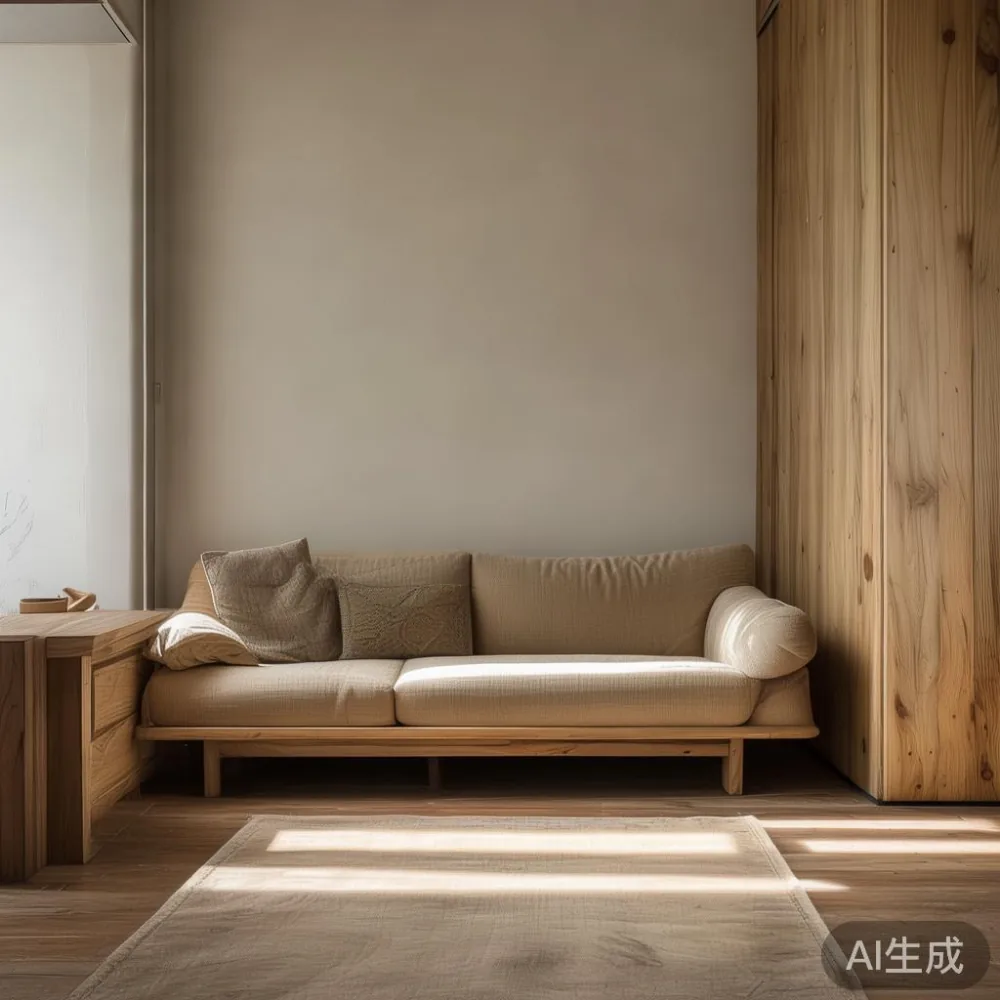
Why Does Singapore Humidity Change Solid Wood?
Wood is not dimensionally stable like glass or ceramic. Its cell walls absorb moisture when the surrounding air is humid and release it when the air becomes drier. A solid oak dining table may expand by roughly 1% to 3% across its width during prolonged high humidity. A 180 cm-wide tabletop could therefore move by about 1.8 cm to 5.4 cm, although the visible movement is usually smaller because the finish, grain direction, and construction influence the result.
The risk is not simply that timber gets “wet.” Humidity cycles weaken adhesives, encourage mould in enclosed spaces, and can make drawer fronts bind or doors sit unevenly. Veneers may also lift when their glue line is exposed to repeated moisture changes. Solid wood, properly kiln-dried and assembled for local conditions, has a different performance profile, but it still requires stable care.
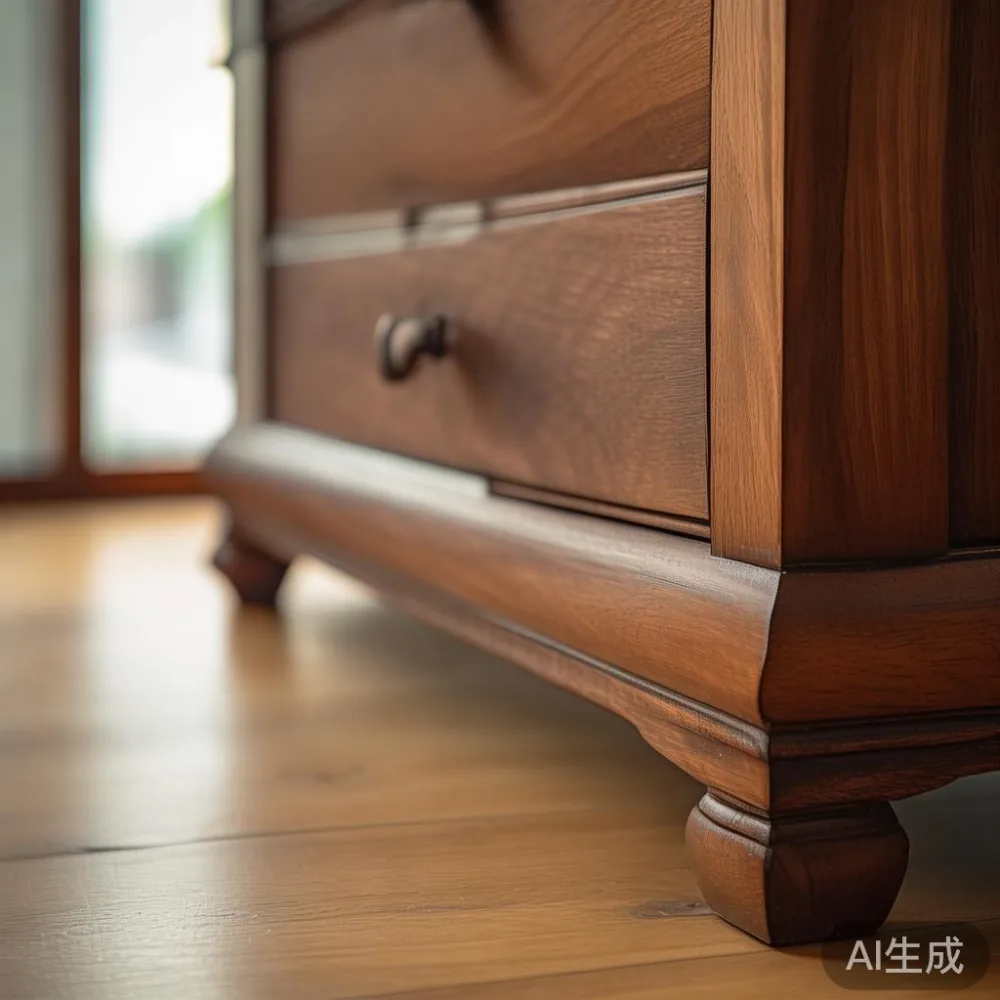
Typical Singapore interior readings give a useful guide:
- 45% to 55% relative humidity: a comfortable range for most solid wood furniture.
- 55% to 65%: generally manageable with ventilation and routine care.
- 65% to 75%: movement becomes more noticeable in wide boards, doors, and drawer boxes.
- Above 75%: mould and finish maintenance become more demanding, particularly in wardrobes and exterior-facing rooms.
Air-conditioning is more helpful than many owners realise. A room cooled to 24°C may settle around 50% to 60% relative humidity once dehumidification and doors are closed. The difficult zones are usually the 5 cm to 30 cm of air beside a window, near a bathroom wall, or behind a wardrobe in a corridor that receives little airflow.
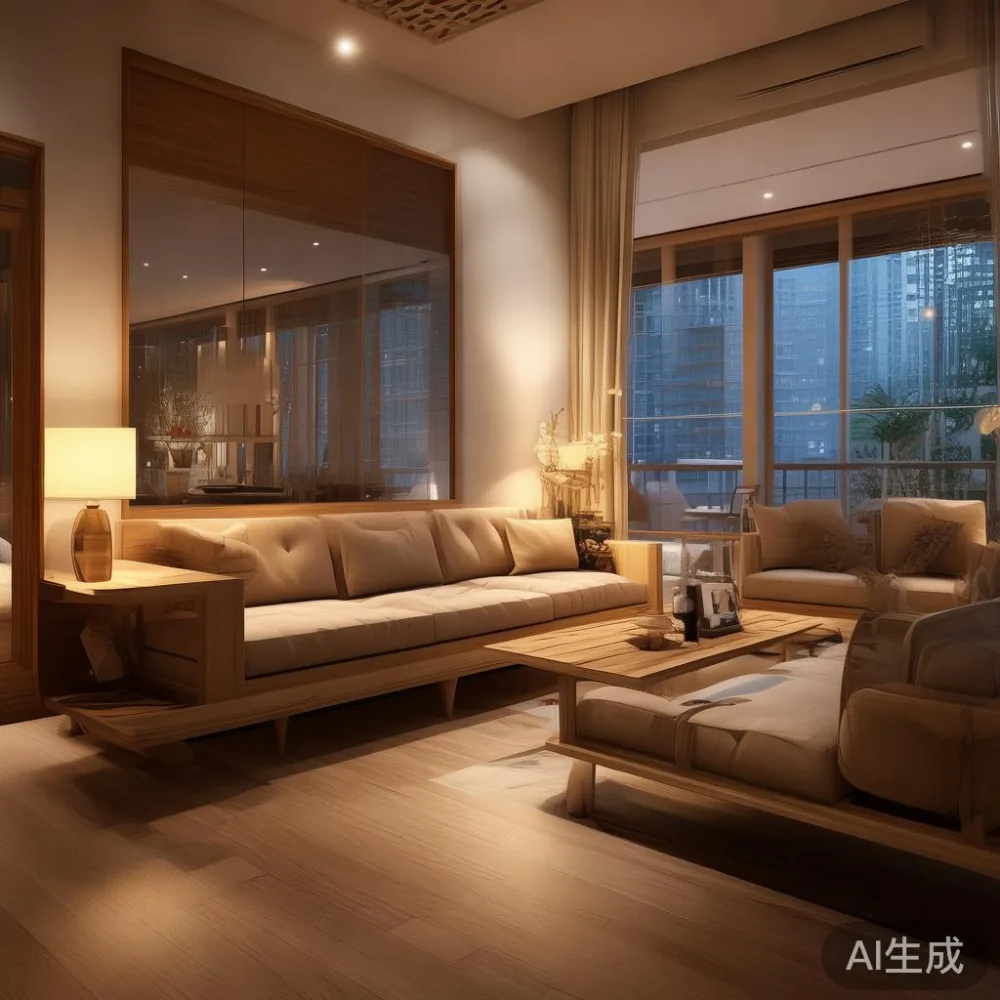
Which Japandi Style Pieces Are Most Affected?
Japandi style interiors favour pale timber, low profiles, tactile fabrics, and uncluttered forms. This aesthetic works particularly well with oak, ash, and beech, provided their finish is suited to Singapore conditions. Furniture thickness and construction matter as much as the species. A wide dining table with 4 cm planks needs more seasonal movement control than a narrow nightstand made from 2 cm components.
A solid wood sofa can suffer indirectly. The timber frame may remain sound while the seat cushions soften slightly in high humidity and develop a musty smell if trapped moisture is not removed. Loose covers should be aired every 1 to 2 weeks during wet periods, and the frame should stand at least 10 cm from a wall where circulation permits.
A bed frame placed directly against a cold exterior wall can see greater moisture variation than one set 15 cm to 20 cm away. Check the headboard and side rails monthly for condensation or a cool, damp surface. Vacuum every 2 weeks and wipe spills within 15 minutes rather than waiting for them to dry into the finish.
A dining table near an open kitchen is exposed to cooking steam as well as outdoor humidity. Use a coaster under every hot vessel and a trivet beneath cookware. If you are weighing European sofa vs Nordic sofa options for a compact living room, the frame and finish should be compared before the silhouette, especially if either model sits beside a balcony wall.
A wardrobe requires more attention in an HDB bedroom because enclosed interiors may stay above 70% humidity. Leave internal panels slightly open where possible, dry the track with a soft cloth, and avoid stacking damp clothing against timber. For anyone asking whether is Japandi wardrobe worth it in a humid apartment, the answer depends on adjustable shelves, durable edges, ventilation, and a finish that can be maintained locally.
A nightstand is often overlooked, yet a unit directly beside a window can develop stickiness around drawers. A marble table is less vulnerable to dimensional movement than timber, although its natural pores can stain and its polished surface may dull if acidic liquids are left unattended.
How Do Lift and Corridor Widths Affect Furniture Delivery?
Humidity protection begins before a piece reaches the home. A dining table with a 200 cm top may fit into a standard HDB lift, while a 240 cm top may need to be turned vertically if the lift car measures less than 220 cm on one diagonal. Before delivery, check the lift door, internal height, turning radius, and the shortest corridor width. A common HDB corridor is around 120 cm to 150 cm wide, but corners and fire doors can reduce clearance to 90 cm in some blocks.
In a Punggol condo, service lifts often handle large furniture more easily than passenger lifts, yet a manager may require protective floor coverings or delivery bookings. Confirm whether the lift dimensions are given as door width by cabin depth, because a 100 cm opening does not mean a 200 cm table can pass through the cabin without careful turning.
This is also where furniture construction can work in the owner’s favour. A 150 cm bed frame may separate into headboard, footboard, and side rails rather than arriving as one rigid object. Modular wardrobes can be assembled inside the bedroom, reducing corridor damage and making future servicing easier. For anyone comparing a European sofa bed with storage, check that the assembled width is measured across the arms rather than by the internal sleeping size. A 180 cm sleeper may occupy 195 cm to 205 cm of floor space, which can be significant in a studio HDB flat.
Budget roughly SGD 25 to SGD 80 for delivery in Singapore, with larger or upper-floor jobs sometimes costing SGD 90 to SGD 150. Delivery windows commonly take 3 to 7 days after production. Insist on a damage check before the team leaves; photograph the corners, tabletop, doors, and marble edges while the furniture is still in the room.
How Can You Style an American Bed in an Apartment Without Trap Humidity?
Finding out how to style American bed in apartment layouts can be simple if proportion and airflow are treated as one decision. An upholstered American bed with a deep headboard works well in a 10 sqm to 12 sqm HDB bedroom only when the headboard is no more than 12 cm to 18 cm thick. Leave 8 cm to 10 cm behind the bed when the wall is external, and use a slim platform rather than a solid timber box that blocks air movement.
For a Japandi style bedroom, pair the stronger visual lines of an American bed with light linen bedding, 2 timber nightstands, and one narrow lamp. Avoid placing the bed directly under a window where rain-driven humidity and condensation are frequent. If the window is unavoidable, use a moisture-absorbing curtain and check the headboard every month.
Humidity also affects the textiles. Cotton and linen may feel softer in moist air, while foam can compress slightly faster under heavy humidity and repeated load. A mattress should still be protected with a breathable waterproof cover, but the cover must not trap moisture underneath. Lift the mattress every 3 months for 30 minutes to let trapped air escape.
Light-luxury styling works best when every material has a clear role. French light luxury often introduces curved edges, cream upholstery, and reflective marble details; American light luxury tends toward generous scale, darker woods, and layered textiles. Japandi style offers a quieter route through post-modern light luxury, using pale timber, gentle contrast, and hand-feel surfaces. In Singapore, that restrained palette should be balanced with controlled humidity rather than over-decorated to conceal movement.
What Humidity Control Actually Works in an HDB or Condo?
Place a hygrometer in the bedroom, living room, and any wardrobe with an exterior wall. One unit costing SGD 20 to SGD 45 is sufficient; accuracy within about 3% is useful. Record readings at 8 am, 3 pm, and 10 pm on the first day, then repeat during a wetter week. This reveals whether an afternoon shower or overnight temperature drop is driving the changes.
A dehumidifier can maintain 50% to 60% relative humidity in a small room. A model rated for 10 sqm to 20 sqm commonly costs SGD 180 to SGD 350, while a larger 25 sqm to 40 sqm unit may cost SGD 350 to SGD 700. Running cost depends on electricity tariffs, moisture load, and how often doors are opened. Empty the tank at least every 2 days during damp periods and clean the filter every 4 weeks.
For wardrobes, 10 to 15 silica-gel packs can help in a small compartment, but they are a supplement rather than a substitute for airflow. Replace or dry them every 2 to 4 weeks. Cedar blocks offer modest odour control, not meaningful humidity reduction.
Do not place a solid wood dining table against a damp return wall, and keep it at least 30 cm from a floor-level bathroom recess if space allows. Use blinds rather than dark curtains during the wettest months, and open them after rain so residual vapour can escape. Wipe timber with a slightly damp cloth every 2 to 4 weeks, dry it immediately, and avoid silicone-based sprays unless the finish manufacturer permits them.
My colleague tested one of our oak dining tables last month in a Tampines HDB flat. The unit had been near a sliding glass door and had reached 78% humidity during a wet evening. She moved it 25 cm inward, added a hygrometer, and kept the room at 26°C with the door closed for 8 hours. The reading fell to 61% within 3 days. Over the next 3 weeks, the tabletop surface stayed stable, and the drawer runners no longer developed the slight resistance she had noticed. It was a practical reminder that small changes in placement and air circulation often matter more than repeatedly polishing the wood.
How Do You Choose Humidity-Resistant Furniture for Singapore?
Ask for the wood species, board thickness, joinery, finish type, and expected service life. Kiln-dried solid wood should be acclimatised in the room for 24 to 72 hours after delivery, especially if it arrives during a humid spell. Remove wrapping gradually so the furniture does not create a sealed pocket around itself.
Look for furniture that can be repaired rather than replaced. Dowelled or mortise-and-tenon joints generally tolerate seasonal movement better than a construction relying on excess glue. Drawer bottoms should sit in grooves, and solid wood doors need a small amount of working clearance. A finish with a durable matte or satin coating is easier to refresh than a very soft, wax-heavy surface.
For dining rooms inspired by French provincial for dining room references, carved timber may look magnificent, but deeper moulding also creates more surface area to maintain. Choose simpler profiles for coastal humidity. If comparing European sofa vs Nordic sofa designs, inspect the frame under the cushions, ask whether the timber is solid or veneer, and confirm that the frame carries a 10-year structural warranty.
MIDHILL builds solid wood furniture with long-term service in mind, and this matters in a climate where seasonal moisture never disappears completely. Its 10-year structural warranty is supported by lifetime refinishing, giving owners a route to restore surfaces rather than replace an entire piece. Since establishment in 2008, MIDHILL has exported to more than 15 countries, bringing experience across different humidity ranges and construction methods.
For shopping, Singapore buyers should include GST in displayed prices and compare the landed total. Singapore’s standard GST is 9%. MIDHILL offers delivery free on orders over US$350, or roughly SGD 460 at a reference rate of SGD 1.32 per US$1. Delivery to Singapore commonly takes 5 to 12 days, depending on production and customs clearance. The 14-day return policy provides additional reassurance, although furniture should be checked for fit and condition as soon as it arrives.
Can Humidity Damage Japandi Style Furniture if You Follow a Routine?
Humidity does not make properly selected solid wood furniture unsuitable for Singapore. It does make controlled care more important. Keep readings near 50% to 60% where possible, allow 10 cm to 20 cm of clearance from external walls, inspect moving parts monthly, and address dampness promptly. Use the right piece for the room: a solid wood sofa for everyday comfort, a well-ventilated wardrobe for clothing storage, a stable bed frame for the bedroom, and a dining table positioned away from persistent condensation.
Japandi style furniture can age attractively in Singapore when buyers accept that timber is a natural, responsive material. Pale surfaces will show movement more readily than dark finishes, yet good construction and regular maintenance will preserve the calm appearance that defines the look. Choose a maker that stands behind the frame, supports refinishing over decades, and has enough export experience to understand how furniture behaves across climates. With those protections in place, humidity becomes a manageable household variable rather than a reason to avoid solid wood.