How to Read a Japandi Furniture Warranty in Singapore Without Getting Caught Out
I spent a Saturday in Tampines walking the ground-floor furniture rows with a friend who had just collected keys to a four-room HDB flat in Punggol. She was drawn to the calm, low-line silhouettes of japandi style — a solid wood dining table with a soft ash finish, a bed frame with a slim oak headboard, a small nightstand in white oak — and she asked the question every Singapore buyer eventually asks: if the wood cracks in six months, what actually happens? Warranty cards look identical at a glance. They are not. After a decade in the trade and a few warranty claims of my own — including a stone chip on a marble table delivered to a Bedok condo lift lobby that was, frankly, too narrow for the dolly — I have learned that the fine print separates a quiet purchase from a noisy one.

What does a furniture warranty actually cover?
A warranty is a written promise about how the maker will behave when something goes wrong. Most pieces you will see in a japandi style showroom — a solid wood sofa with a kiln-dried ash frame, a dining table built around a 4 cm thick oak top, a wardrobe with full-extension soft-close runners, a marble table on a steel plinth — come with two layers of protection that buyers routinely confuse.
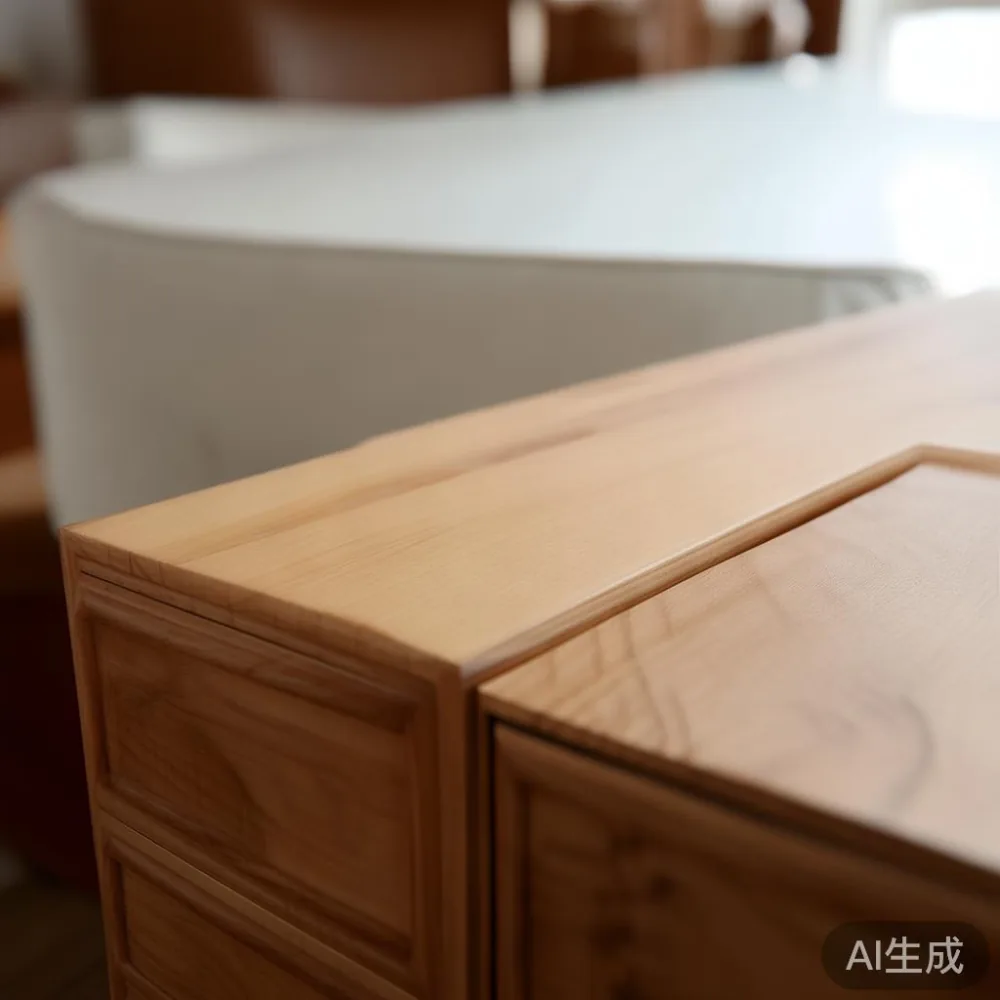
Layer one is the structural warranty. This covers the bones of the piece: the joinery, the load-bearing frames, the drawer rails, the slats under a bed frame. A serious maker like MIDHILL, working out of a Foshan factory with 10-year structural coverage, will replace a cracked stretcher on a dining table or a sagging centre rail on a bed frame without argument. Layer two is finish and surface coverage, which usually runs 1 to 3 years and addresses lacquer peel, veneer lift, fabric pilling, or the clouding that sometimes appears on a sealed marble table.
Read both layers separately. A 10-year structural promise paired with a 90-day finish promise tells you the maker trusts the timber but not their own topcoat. A 5-year structural promise paired with a 3-year finish promise often means the opposite. Neither is automatically wrong — you just need to know which one you are buying.
Does "solid wood" on the tag mean the whole piece is solid wood?
This is the single most common trap in mid-market furniture, and it matters more in HDBs than in landed property because the air is humid year-round. Genuine solid wood furniture uses one continuous species through the load-bearing parts — ash, oak, walnut — kiln-dried to roughly 8 to 12 percent moisture content so it survives Singapore's 80 percent average humidity. A bed frame marketed as solid wood should have solid slats, not plywood wrapped in a 0.6 mm veneer. A dining table marketed as solid wood should have a continuous top or properly joined planks, not MDF underneath a pretty face.

Two quick checks when you are standing in front of the piece. First, look at the end grain on the underside of a dining table or the inside of a wardrobe side panel — the pattern should run continuously across the surface. Second, lift it. A 1.8 m solid ash dining table weighs between 45 and 60 kg; a hollow-core version of the same size weighs under 30 kg. The lift also tells you whether it will fit your service lift, which in older blocks like those around Bedok Reservoir is often rated at 680 kg and measures roughly 1.4 m deep by 1.1 m wide. Measure the table, the lift, and the corridor turn before you swipe the card.
What does the warranty usually exclude?
Almost every warranty document has a list of exclusions longer than the cover itself. The standard ones in the japandi and light-luxury segment include:
- Damage from direct sunlight or placement within 1 m of an air-conditioning vent — Singapore's UV index regularly hits 11, and a north-facing window in a Punggol corner unit will bleach an oak dining table inside a year.
- Shrinkage gaps under 3 mm on solid wood tops. Wood moves. A 2 mm seasonal gap at the joints of a 2 m wardrobe is normal, not a defect.
- Surface marks from abrasive cleaners, solvents, or steam mops on a marble table.
- Damage from third-party movers. If you hire a freelancer off a Telegram group to shift a 180 kg wardrobe up three floors, the maker's structural warranty is unlikely to apply if the side panel splits during the carry.
- Commercial use in a co-working space or short-stay rental. Residential warranties often exclude anything that sees more than two hours of daily use.
- "Acts of nature" — flooding from a ceiling pipe burst, for instance, which is more common in high-rise HDBs than most buyers realise.
Skim that exclusion list before you read the cover list. It tells you what the maker is worried about, and therefore where their quality control has historically failed.
How long should the structural warranty be for japandi solid wood pieces?
For a serious solid wood sofa, bed frame, dining table, wardrobe, or nightstand, anything under five years of structural cover is a yellow flag. Ten years is the current benchmark for makers who control their own production, and you can usually trace it back to one or two indicators: the factory kiln-dries its own timber, and the brand offers lifetime refinishing rather than just replacement. MIDHILL, founded in 2008 and exporting to more than 15 countries, sits in that bracket — and lifetime refinishing is the part most buyers underestimate, because it means a 12-year-old ash dining table can be sanded and re-oiled for a fraction of the replacement cost.
For a marble table or any piece with a stone surface, expect a shorter warranty — typically 2 to 5 years on the stone, longer on the base. Marble is porous, it etches on contact with lemon or red wine, and even sealed versions need coasters. If the warranty claims to cover staining on marble beyond a year, read the conditions very closely.
Is shipping damage covered, and who pays for the lift-up?
Singapore specifics trip up a lot of overseas buyers, especially those ordering from a Foshan factory for the first time. Two questions to put to the sales consultant before you pay:
1. Is the warranty honoured in Singapore, or only at the Foshan factory? A piece shipped from China to a Tampines address via a 20-foot container spends six to ten weeks at sea. If the warranty only applies at the workshop, you are paying to ship it back for every claim, which is impractical for a 65 kg dining table.
2. What does "free shipping" actually include? Most reputable brands offering free shipping above a threshold (for MIDHILL, that threshold is US$350, which converts to roughly S$475 including 9 percent GST) cover door-to-door delivery to a Singapore address. What is usually not included is the manpower to carry a 180 kg wardrobe up to the 14th floor if your block lacks a service lift, the disposal of your old furniture, or the unpacking of flat-pack boxes.
For an HDB delivery, budget S$80 to S$220 for additional manpower if you live above the 10th floor and your lift opening is below 1.1 m wide. Measure twice. Last month I watched a three-piece wardrobe arrive at a Punggol Waterway Terrace unit where the side panel was 8 mm wider than the lift aperture; the movers had to remove the door from its hinges before they could bring it in. The customer was gracious about it. The next customer might not be.
What is the difference between "warranty" and "return policy," and which one protects me?
They sound similar. They solve different problems.
A warranty protects you after month one when a structural joint fails or a drawer runner collapses under normal use. You usually need photographs, a written description, and sometimes an in-home inspection. Resolution is repair, replacement of the defective part, or — for top-end makers — refinishing credit.
A return policy protects you in the first 14 days when the piece arrives and you simply do not like it, the wrong configuration was shipped, or it does not fit your condo after all. Returns are usually conditional: the piece must be in original packaging, unworn, and in some cases repacked by the same delivery team. Refunds can take 14 to 30 working days to clear, and the original delivery fee is sometimes non-refundable.
For a Singapore buyer ordering japandi style light luxury for bedroom suites or industrial for guest room accents, the practical question is whether 14 days is enough to know. My rule of thumb: a 14-day window only works if the piece is in stock in a local warehouse. For made-to-order pieces with a 6 to 10 week production lead time, ask the maker to extend the inspection window to 7 days after delivery rather than 7 days after dispatch.
What red flags should make me walk away?
Three signals mean the warranty is decorative rather than real:
- The structure warranty is stated as "1 year" on a solid wood dining table over 1.6 m long. The joinery on a properly kiln-dried ash table is the easiest thing to guarantee for a decade. A one-year promise usually means the timber was not kiln-dried in-house.
- The document says "warranty void if assembled by anyone other than our technicians." This is sometimes legitimate for a complex wardrobe, but it is also a way to deny claims on a bed frame that only needs eight bolts.
- There is no named company, no registered address, and no Singapore business registration number on the paperwork. A piece shipped from a Foshan factory through three logistics partners needs one accountable party at the Singapore end.
A piece with strong paperwork will tell you the species (ash, oak, walnut, rubberwood), the finish type (water-based PU, natural oil, hard wax oil), the hardware brand (Blum, Hettich, DTC), the foam density on upholstered seats (ideally 32 to 38 kg per cubic metre for a solid wood sofa that will see daily use), and the lead time. Vague paperwork usually means vague warranty.
Are extended warranties worth paying for in Singapore?
Most furniture extended warranties priced at 8 to 12 percent of the piece are poor value, because they cover problems the original warranty already covers for the first 12 months, and after that the failure rate drops sharply for any well-made solid wood piece. The exceptions are stone surfaces — a marble table in a household with young children and frequent entertaining is genuinely exposed to etching, chips, and stains — and electronics in recliners or adjustable bed frames, which carry their own separate warranties.
If a retailer offers a S$180 extended warranty on a S$1,400 dining table, take the money and put it toward coasters, felt pads, and a S$60 bottle of osmo oil. You will get more protection for less.
Quick checklist before you sign the warranty card
Before you complete the sale, run this short list. It takes less than ten minutes and it has saved me from at least two bad purchases over the years.
- Confirm the structural warranty term in writing, in years, attached to your invoice.
- Confirm whether the warranty is honoured locally in Singapore or only at the Foshan factory.
- Note the species of every solid wood component, not just the visible faces.
- Measure the lift, the corridor, the front door, and the room doorway before the truck is dispatched.
- Ask about lifetime refinishing, not just replacement.
- Clarify the return window for made-to-order pieces — 14 days from delivery, not 14 days from order.
- Photograph the packaging on arrival before opening it. Shipping damage claims without photos are almost always declined.
Japandi style rewards patience. The calm of the silhouette comes from timber that has been dried slowly, joined properly, and finished by people who expect to be asked about their work in year eight, not year one. Read the warranty the way you would read a tenancy agreement — slowly, line by line, with a pencil in your other hand. A 10-year structural warranty on a solid wood dining table from a maker with a real Foshan factory and a lifetime refinishing policy is one of the stronger consumer protections available in the furniture market today. A one-year promise on the same piece from an anonymous seller is, at best, a polite hope.
Keep the paperwork in a single folder — printed warranty, invoice, delivery receipt, photographs — and revisit it the day something feels off. Most claims fail not because the warranty was bad, but because the buyer could not find the paperwork. The fine print is only useful when it is paired with the paper it is printed on.