How to Match Japandi Style Furniture to a Warm Minimal Interior (Without Losing the Cosy)
Most HDB and condo owners in Tampines, Bedok and Punggol start with the same instinct: buy white walls, buy a grey sofa, buy a glass dining table. The room looks tidy on day one, and by day thirty it feels like a showroom nobody lives in. The fix is rarely more paint or more accessories. It is usually the furniture, and specifically whether the pieces you choose belong to a coherent quiet language. That language is japandi style, and it is the most forgiving framework Singapore homes have for achieving a warm minimal interior without going cold or going cluttered.
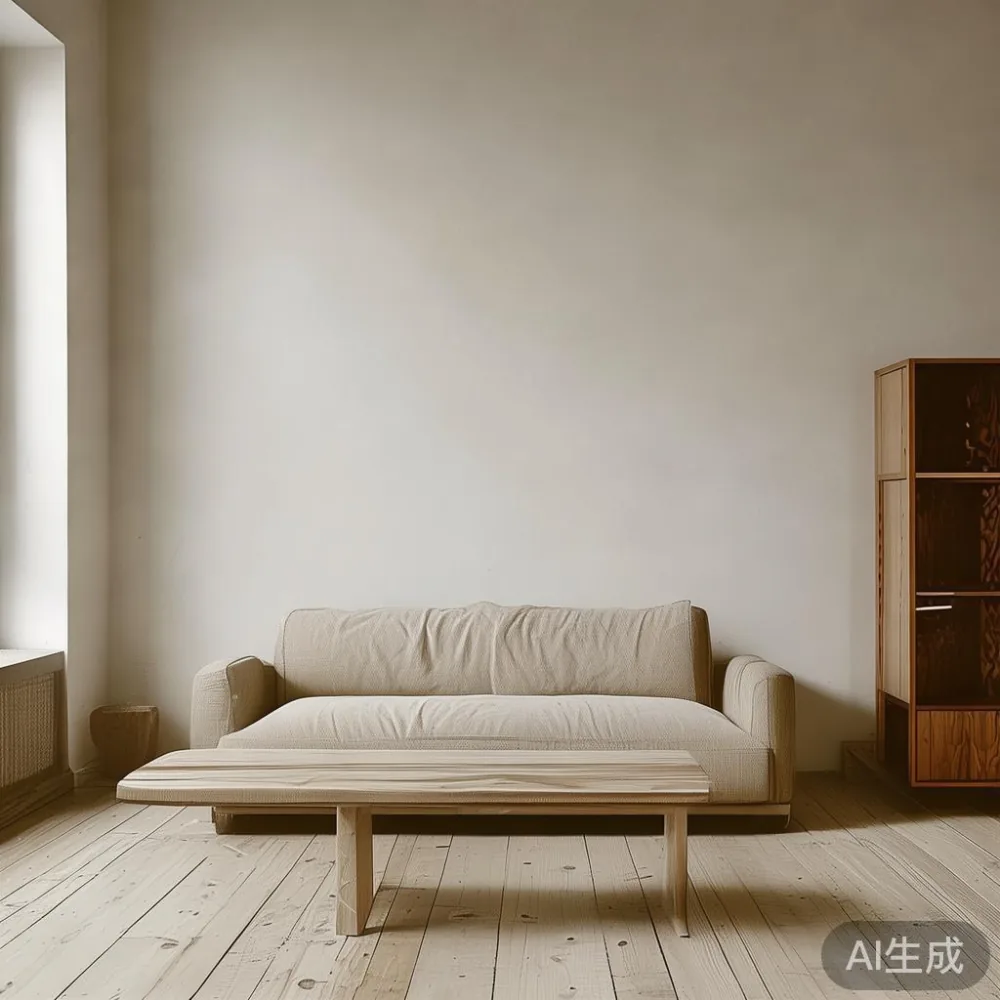
Japandi style is not a mash-up of two Pinterest boards. It is the meeting point between Japanese wabi-sabi (the beauty of an imperfect surface, a softened edge, a visible grain) and Scandinavian hygge (the comfort of layered light, natural linen, a solid oak leg). When you commit to japandi style furniture, you stop choosing pieces for their colour and start choosing them for their material honesty. A solid wood sofa frame in white oak, a bed frame with mortise-and-tenon joinery, a dining table with a hand-planed surface — these all carry weight and grain, and that is what warms a minimal room back up.
MIDHILL has been making solid wood furniture in Foshan since 2008, exporting to more than fifteen countries with a ten-year structural warranty and lifetime refinishing service. I visited their showroom last month with a colleague who was furnishing a 95 sqm Punggol condo, and what struck me was how disciplined the curation was — every piece was either Japanese-leaning, Scandinavian-leaning, or a calm blend, never anything loud. That kind of restraint is what most Singapore homes actually need.
What Does a Warm Minimal Interior Actually Look Like in a Singapore HDB?
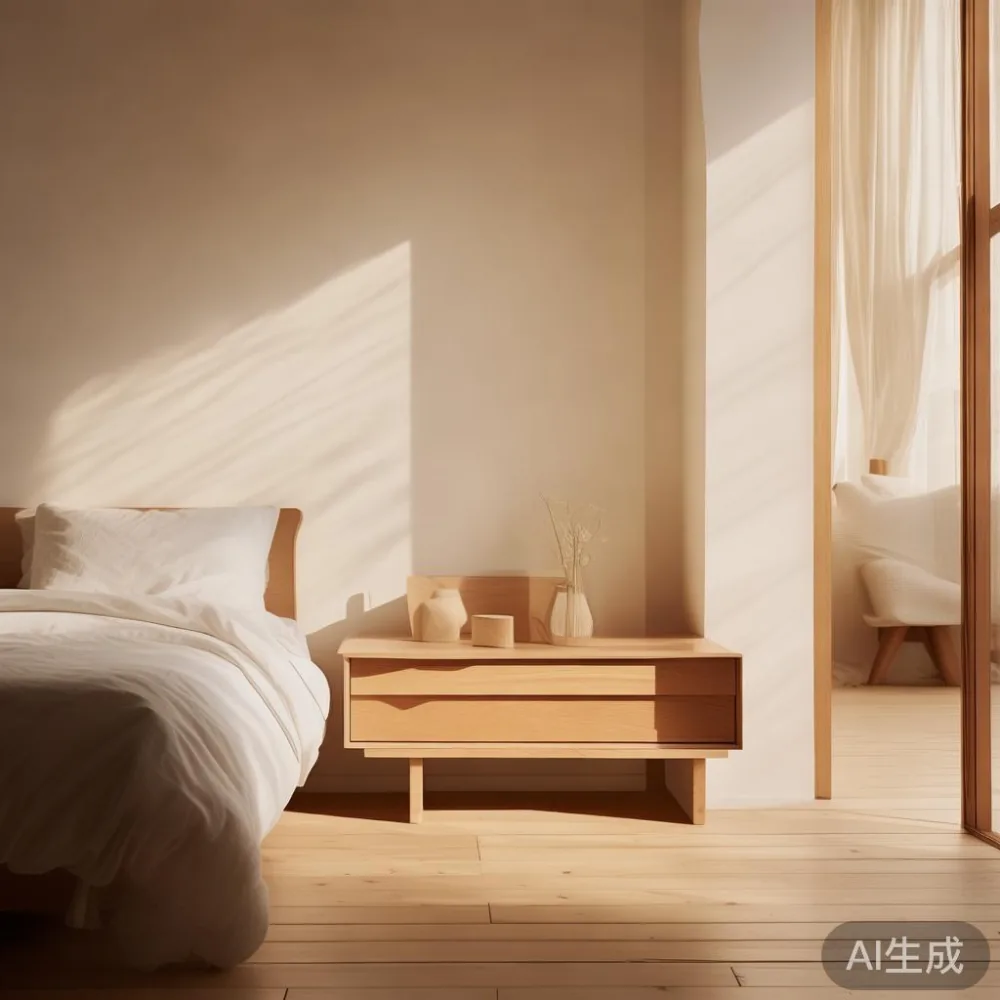
A warm minimal interior is not a beige box. It is a room with very few pieces, where each piece has a job, where the floor and walls stay quiet, and where texture does the work that colour normally would. In a typical four-room HDB around 92 sqm, you are usually working with a 3.2 m x 4.5 m living room, 2.7 m ceilings, and light from one or two windows. Lift openings in most BTOs are around 0.9 m wide, corridors 1.2 m, so any sofa deeper than 95 cm or any wardrobe panel longer than 2.4 m needs to be planned for delivery, not just for the room. This is where solid wood pieces from a maker used to Singapore exports pay off — flat-pack versus fully assembled changes your staircase math.
Warmth in this kind of room comes from four sources: wood tone (oak, ash, walnut, light teak), textile weight (linen, boucle, brushed cotton), light temperature (2700K bulbs at 80 CRI, not 6500K office white), and negative space. If you cover all four, even a 60 sqm one-bedder in Bedok can feel like a ryokan lobby. Skip any of them and the room tilts cold.
Is a French Sofa Worth It for a Small Singapore Living Room?
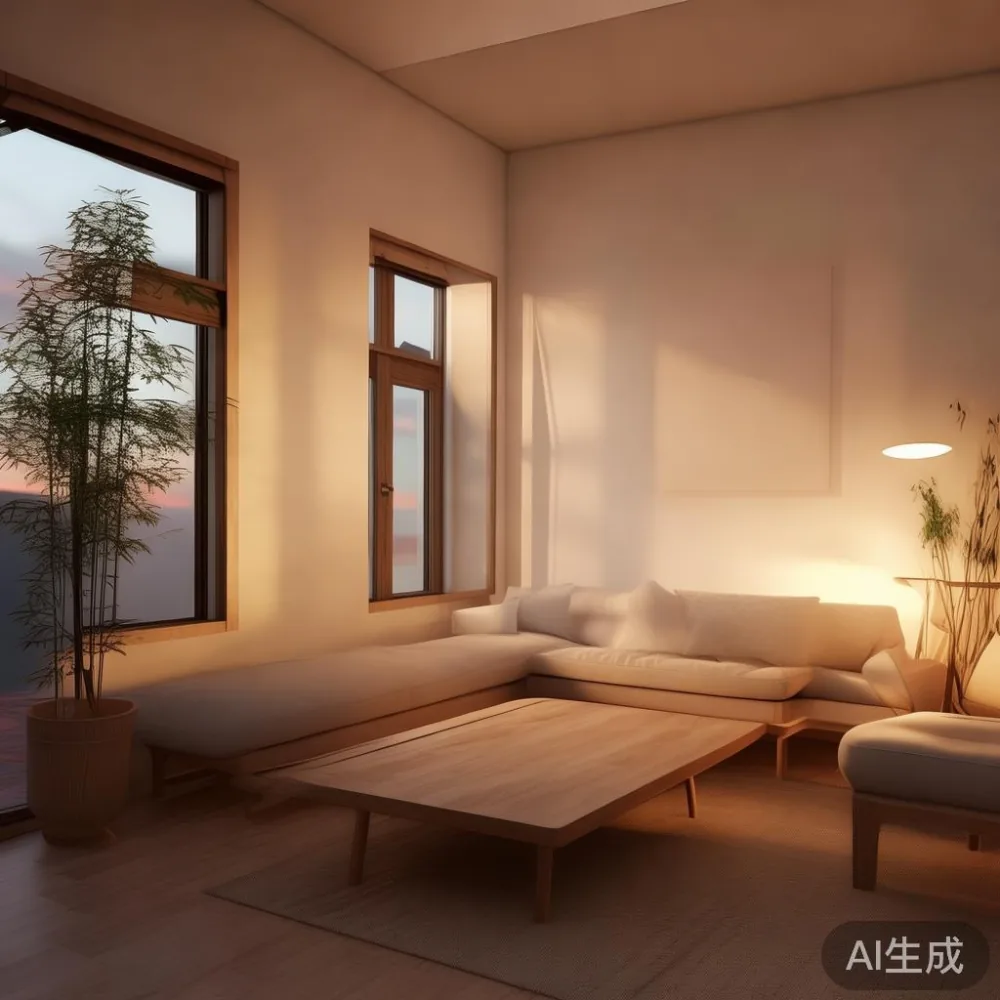
Short answer: only if it is a French light luxury piece, not a full French provincial one. The difference matters. French light luxury keeps the curved silhouette and the low seat depth (around 58 cm seat height, 90 cm depth) that French sofas are known for, but drops the gold trim, the tufted back, and the heavy skirt. In a 3.2 m wide HDB living room, a French light luxury sofa in oat boucle, around 210 cm wide, leaves you 1.1 m of walkway on each side, which is the minimum comfortable passage for two adults walking past each other.
If you have ever wondered is French sofa worth it for a warm minimal room, the honest test is this: can you read the wood leg through the upholstery? On a genuine French light luxury piece, you can — it is usually a tapered beech or walnut leg, 18 cm tall, visible. On a flat-pack imitation, the leg is plastic or hidden under a skirt. The leg is the tell. A light blue luxury sofa in this category is actually a very Singapore-friendly move: pale blue boucle reads as cool against warm oak, and in afternoon light it photographs almost white, which keeps the room looking minimal rather than busy. Just check the foam density (30 kg/m³ minimum) and the frame — solid beech, not plywood.
How Do You Pick a Japandi Bed Frame Without Wasting S$1,800?
The bed is the largest object in your bedroom, and the most expensive mistake. A japandi bed frame is low (headboard 85-95 cm, platform 18-25 cm off the floor), wide enough that the mattress fills 90% of the frame width (so a 150 cm mattress on a 160 cm frame), and made of solid wood with a clear grain. Oak and ash are the most common. Walnut is warmer but adds around S$600 to S$900 at the same size. For a Singapore master bedroom around 12 sqm, a queen (152 cm x 188 cm) is the practical choice; a king (183 cm x 203 cm) only fits if your wardrobe depth is under 55 cm.
If you are researching the best Scandinavian bed for 2026, focus on three numbers: frame weight (a real solid oak queen should weigh 55-70 kg — if the listing says 25 kg, it is veneer), slat spacing (under 7 cm so your mattress warranty stays valid), and centre support leg (a queen needs one at the midpoint, a king needs two). Storage beds look tempting in HDBs, but the hydraulic mechanism adds 12 cm of height and usually pushes the mattress up to 55 cm, which breaks the low japandi silhouette. A drawer platform on casters is the quieter compromise.
Coastal for Small Living Room — Why Most Singapore Versions Fail
Coastal for small living room is a search term I see every week, and most of the results are wrong for a warm minimal interior. True coastal relies on weathered greys, rattan, and white linen — beautiful, but it goes cold in a Singapore afternoon with the curtains drawn and the aircon on 24 degrees. The japandi-aware version keeps one coastal element (a single washed-oak console, a linen slipcover, a pale blue ceramic) and drops everything else. One coastal piece reads as a soft accent; four coastal pieces turn a Tampines flat into a Phuket hotel lobby.
A practical rule: in a small living room under 20 sqm, you get one coastal-style accent, one solid wood anchor piece (a sofa, a dining table, or a wardrobe — not all three), and the rest has to be quiet. The anchor piece should sit opposite your window if possible, so the grain catches the light. This is also why Modern light luxury for small living room works as a category: it strips the ornament off light-luxury silhouettes so the wood and the textile carry the room instead of the carving.
Dining Tables, Wardrobes and Nightstands — The Sizing Cheat Sheet
Three pieces cause the most regret in Singapore homes: the dining table that is 10 cm too wide, the wardrobe that blocks the aircon return, and the nightstand that is too tall for the bed.
For a four-person dining table in a HDB dining area around 2.4 m x 2.8 m, you want 120 cm x 70 cm with a 60 cm clearance on every side. Six-person needs 150 cm x 80 cm with 70 cm clearance. Anything wider than 90 cm is a mistake in a standard HDB because the corridor swing-in from the kitchen will clip the corner. MIDHILL dining table wholesale options are usually spec'd at 25 mm thick tops with mortise-and-tenon legs, which matters because a 150 cm x 80 cm solid oak table weighs 45-55 kg — you will feel that on delivery day, and so will the two men carrying it up to your Bedok unit on the 14th floor. Plan the lift booking.
Wardrobes in HDBs usually max out at 2.4 m height (ceiling constraint) and 2.0 m width per panel because anything wider will not enter the lift on most projects in Punggol and Sengkang. A japandi wardrobe should be floor-to-ceiling, flush-front, with a single horizontal pull at 105 cm height. Sliding doors save floor space but cost you 8 cm of internal depth — measure twice.
Nightstands are the easiest fix. The top should sit 5-8 cm above your mattress top, and the inside should hold a 16 cm water glass, a phone, and a book. Anything taller breaks the eye line from your pillow to the doorway, and the room will feel restless no matter how calm the rest of it is.
Marble Tables, Light Luxury, and Where Post-Modern Fits
Marble gets a bad rap in minimal homes because people buy white Carrara with gold veining and then wonder why the room feels like a bridal boutique. In a japandi warm minimal interior, the marble should be quiet: honed (not polished), warm-grey or sand-toned (not icy white), and used on a small surface — a coffee table at 110 cm x 60 cm, a side table at 45 cm diameter, or a console at 120 cm x 35 cm. A round marble coffee table softens a rectangular sofa arrangement, which is the only geometry trick a small living room ever needs.
Post-modern light luxury enters here: a slightly sculptural leg, an asymmetric base, a stone top in an unusual shape. Done with restraint, it gives the room a single moment of personality without breaking the quiet. The trap is doing it twice in the same room. One post-modern piece per space. Two is a collection; three is a showroom.
What Should I Actually Buy First When Furnishing a Japandi Home?
The order matters more than the pieces. Start with the bed frame and the dining table — these are the two largest solid wood anchors in the home, and they set the wood tone for everything else. Then the sofa, because its depth decides your rug size and your TV console length. Then the wardrobe, because its height and finish need to match the bed frame's wood. Nightstands and marble tables come last, because they are accents and accents are easier to swap.
Budget in SGD for a full warm minimal japandi set in a 95 sqm Punggol condo, excluding mattress and appliances: bed frame S$1,400-S$2,200, dining table for four S$1,100-S$1,800, two-seater solid wood sofa S$2,200-S$3,400, three-door wardrobe S$2,800-S$4,200, two nightstands S$500-S$800, marble coffee table S$900-S$1,400. Add 8% GST and shipping over S$350 free, with 14-day returns if the grain doesn't match what you expected. Delivery to most Singapore addresses runs 14-21 working days from a Foshan shipment, occasionally 25 during peak furniture fair weeks in March and September.
One last note from my colleague's Punggol project. She chose an oak bed frame, a walnut dining table, and stuck with them across the rest of the apartment — nightstands in oak, wardrobe fronts in oak veneer over solid oak framing, sofa legs in ash. Three woods, one warm direction. The room reads minimal because the eye stops moving. It reads warm because every surface has grain. That is the whole job, and it is what japandi style furniture is built to do.