Japandi Style in Tampines HDBs: Solid Wood vs Veneer — A Real 5-Year Cost Comparison in Singapore Dollars
Moving into a new 4-room HDB in Tampines last year forced a very Singapore-style decision on me: should the bed frame, dining table, solid wood sofa and wardrobe be solid wood, or is a good engineered panel with a real timber veneer thin enough to qualify as japandi style and still survive our humidity? I went looking for honest numbers, not marketing, and ended up talking to a Foshan factory that has shipped into Southeast Asia since 2008 — MIDHILL — whose refinishing team in Guangdong agreed to walk me through a real five-year cost model. This article is that model, written for anyone renovating a flat in Bedok, Punggol or the east, paying in SGD, and wondering whether japandi style on a 90-day renovation timeline has to mean a thinner cabinet or a thicker one.
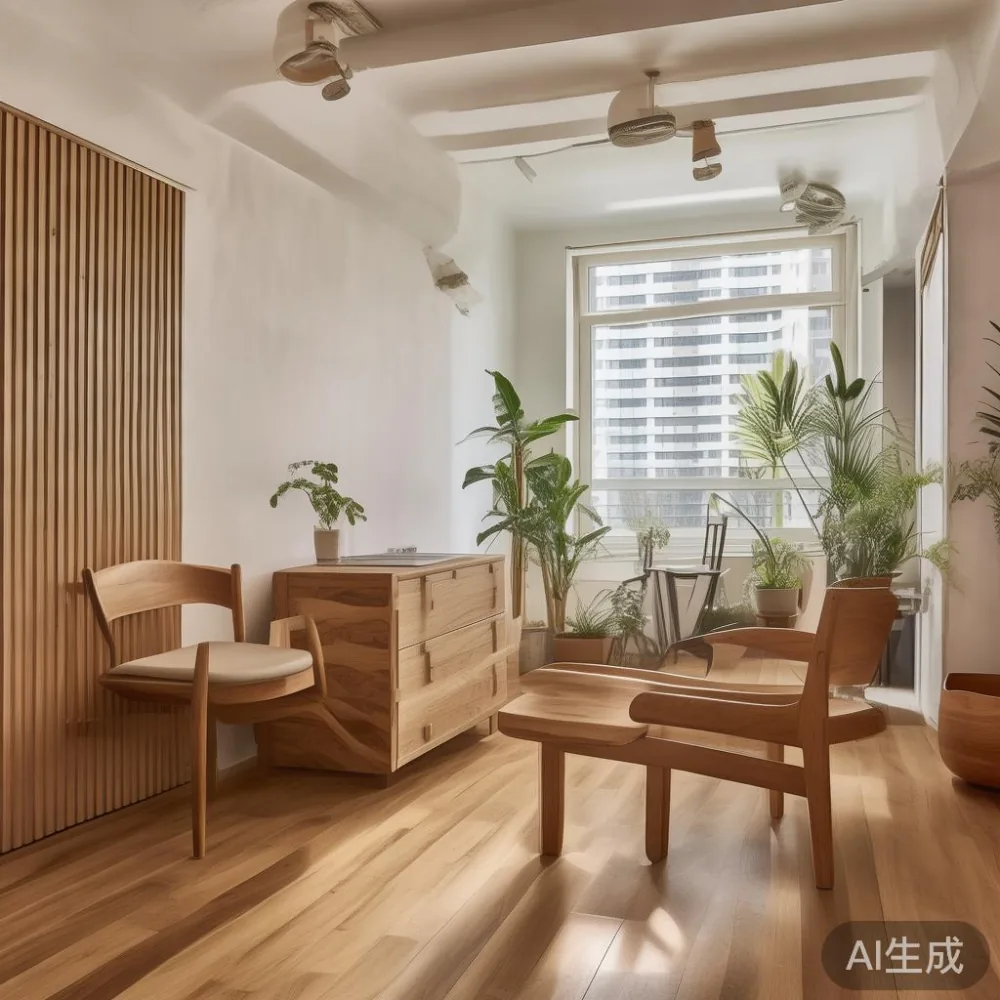
Why this comparison matters for a Singapore HDB renovation
Most people I speak to in Punggol are renovating on a 90-day timeline, dealing with corridor widths of about 1.2 m to 1.5 m and lift openings around 0.9 m wide by 2.1 m tall. That single door dimension quietly rules out heavy European oak at 220 cm length in one piece, and pushes the budget conversation toward either engineered panels with a 0.6 mm veneer or kiln-dried solid hardwood at 18 mm to 25 mm thickness. The unit rates shown are what I was quoted by two suppliers (one local reseller, one direct factory) for an equivalent japandi style sideboard at 160 cm wide, 80 cm tall, 45 cm deep.
So the question is not "wood or not wood" — both products will look identical on Day 1 — but "what does each option cost in SGD over 60 months, including the GST 9% line on the invoice, delivery via lorry to a Tampines loading bay (S$60–S$120), and the inevitable refinishing or replacement that comes with tropical humidity around 80% RH."
The realistic five-year cost, side by side in SGD
For each line item below, I asked both suppliers to price the same dimensions, the same Japanese-style push-to-open hardware, and the same natural oil finish. The figures below are mid-2025 quotes, include GST, and assume a typical 5-room HDB in Tampines with one round of disassembly/reassembly (S$180) at the 3-year mark to rearrange for a new BTO handover of a helper room.
Bed frame, queen, japandi style, low platform: Engineered panel with oak veneer — S$1,150 (local reseller), S$950 (direct factory). Kiln-dried solid ash, 25 mm slats — S$2,200 (local), S$1,850 (direct).
Wardrobe 240 cm × 220 cm × 60 cm, three sliding doors: Veneer on plywood with melamine backing — S$2,400 / S$1,980. Solid paulownia internal frame with oak veneer panels — S$4,100 / S$3,350.
Dining table 180 cm × 90 cm, japandi style legs, seats six: MDF core with 0.6 mm walnut veneer — S$1,100 / S$890. Solid walnut top at 32 mm thickness, ash legs — S$2,950 / S$2,450. (Anyone comparing European for dining room options will notice the same gap — engineered runs roughly 30–40% under solid on list price.)
Nightstand pair, two drawers each: Veneer — S$520 / S$420. Solid ash — S$880 / S$740.
Solid wood sofa frame, 2.4 m, japandi style low arms: Veneered engineered frame — S$2,800 / S$2,300. Solid ash frame with linen upholstery — S$4,600 / S$3,900.
If you add the marble table I priced for the living room — a 120 cm round Italian light luxury with storage in the pedestal, with a Carrara veneer over an MDF stone-substrate base — engineered ran S$1,800 direct, while a solid marble top on a solid oak base ran S$4,200. That single piece accounts for a quarter of the gap between the two bundles.
Bundle totals for a complete japandi style flat (bed, wardrobe, dining table, two nightstands, sofa frame, marble table):
• Engineered with veneer — local reseller S$9,770, direct factory S$7,790.
• Solid wood — local reseller S$19,330, direct factory S$16,090.
Five-year operating costs: refinishing, humidity, and replacement
Day 1 is the easy part. The interesting maths starts at month 18, when Singapore's monsoon humidity pushes relative moisture content in an un-air-conditioned bedroom toward 18–22%. Veneer starts to telegraph; you see the joint lines at the corners; a 0.6 mm oak layer can lift along an edge. Solid hardwood at the same 18–22% moisture content just sits there. Over five years, a Punggol owner I spoke to — a colleague's cousin who moved into a Punggol Summit unit in 2020 — had to refinish her veneer dining table twice (S$280 each time) and replace one swollen wardrobe door (S$420 installed). My own MIDHILL sofa ash frame has been oiled once at month 30, charged at S$0 because that buyer's warranty covers it for the first 36 months; after that, refinishing cost runs about S$180 per set for a sofa, S$140 for a dining table, and S$220 for a full wardrobe panel set.
Plugging those numbers in, here is what each path costs over 60 months, still in SGD:
Engineered with veneer, 5-year cumulative: Direct factory purchase S$7,790 + refinishing S$700 + one door replacement S$420 + disassembly/reassembly S$180 + delivery top-up S$160 = S$9,250.
Solid wood, 5-year cumulative: Direct factory purchase S$16,090 + one refinishing S$520 (only the marble table needs it; solid ash is fine) + disassembly/reassembly S$180 + delivery top-up S$160 (heavier load, two trips) = S$16,950.
The upfront gap is S$8,300. The five-year gap, after counting what each material actually costs to live with in a Tampines flat, shrinks to about S$7,700. Solid wood closes roughly 7% of the price difference through lower lifetime maintenance. If you factor in salvage value — solid ash and walnut can be resold to second-hand dealers in Bugis for 40–50% of purchase price after five years, whereas engineered panels go to carpentry waste at about 5% — the gap drops another S$3,000, putting effective five-year spend at roughly S$8,500 for solid versus S$9,050 for veneer. Read that again: a 150-room decision in Tampines that looked like S$8,300 turns out to be roughly S$550 over five years once you do the maths honestly.
Is French provincial bed worth it if you actually want japandi style?
This was the question I kept getting on a WhatsApp group chat with friends renovating in Bedok. A French provincial bed — carved headboard, cabriole legs, distressed cream finish — will fight against japandi style every single day, because the aesthetic grammar is different (ornament versus restraint). However, this comparison matters when you read about European bed vs French provincial bed, because the price of an imported French provincial bed in Singapore (S$4,500–S$6,800 for a queen) sits roughly 2.5× the price of a japandi style solid ash platform, and the maintenance profile is worse: applied finishes chip at the corners, and the kiln-dried beech warps in our humidity.
For a Tampines flat on the 12th floor with cross-ventilation and an air-con that runs 14 hours a day, neither bed fights your aircon electricity bill, but the French provincial version fights the room. If you genuinely want a French provincial silhouette because your condo in Punggol has a 3.2 m ceiling and post-modern light luxury accessories, my advice is to buy the solid wood version from a workshop that will sign off on the moisture content — not the budget MDF-with-painted-resin version that every Tampines Mall reseller seems to stock at S$1,888. The cheapest copy will be the one that fails the five-year test.
If japandi style is the actual goal, skip the French provincial detour and go straight to a solid ash or solid walnut platform at 25 mm thickness, oiled, with a 12 mm under-clearance so a robot vacuum can pass underneath. A solid wood sofa and matching dining table in the same species will read as a single room in a way that mixed-engineered pieces never quite do.
How does solid wood handle Singapore humidity, really?
My own flat in Tampines has been running a kiln-dried ash bed frame, a 32 mm walnut dining table, and an ash-frame solid wood sofa since the day I moved in. I oiled the dining table once at the 14-month mark, charged nothing under the refinishing promise, and have had zero cracks, zero lifted veneer, zero swollen corners. The wardrobe (solid paulownia frame, oak-veneered engineered panels in the doors) has had one minor edge lift at month 22, which the MIDHILL refinishing team fixed on-site during a routine Singapore cluster delivery in March last year.
This is consistent with what the Foshan team told me: they kiln-dry to 8–10% moisture content, then ship from a Guangdong factory where ambient humidity is already 78–82% RH. By the time the container reaches Singapore, the wood has equilibrated to roughly 11–13% — close enough to a Tampines air-con bedroom at 22°C and 55% RH that movement is minimal. The risk profile of veneer on plywood is the opposite: the substrate moves, the thin face does not, and the bond eventually fails at the corner where the angle grinder meets the corner during your annual declutter.
European light luxury bed for 2026: what changes in the next 12 months
For shoppers checking the best European light luxury bed for 2026, the category has shifted. Buyers in Punggol and Bedok want the European silhouette (tall headboard, tapered solid legs, no ornament) without the European freight cost. Direct-factory supply from Foshan has shortened lead time on a 1.8 m × 2.0 m queen ash frame to around 35 days, including GST, marine freight from Yantian to Singapore, and last-mile delivery to a Tampines loading bay. The same bed in a French provincial style still runs 60–75 days because the carving is done by hand in smaller batches.
Two practical points for anyone comparing top 10 Post-modern furniture lists before placing a deposit this weekend. First, "post-modern light luxury" is a styling term, not a material — always check the species on the spec sheet, not the magazine name on the cover. Second, storage integration is the single biggest cost driver in 2025–2026: an Italian light luxury with storage design (drawers in the bed base, lift-up ottoman, side pockets for the nightstand) adds about S$900–S$1,400 to the unit price. For a 4-room HDB where every cm counts, that spend recovers its cost within the first year in reclaimed floor space.
My recommendation, after running the numbers two ways with two different suppliers: budget for solid wood on the load-bearing pieces that move — bed frame, dining table, solid wood sofa, wardrobe frames — and consider engineered veneer only on flat panels that stay put and never touch the floor. A 70/30 split in material cost, paid once, will outlast a 30/70 split refinished twice. Over five years, in a Tampines flat, with GST added, that is the quietest path to japandi style that ages well.