Humidity, Solid Wood Furniture and Japandi Style Homes in Southeast Asia
Singapore’s tropical climate can make a carefully chosen solid wood piece feel quite different inside an HDB flat, private condominium or compact landed home. Warm, moisture-laden air enters through open windows, corridor air-conditioning gaps and frequently opened doors, while an apartment’s lift and corridor dimensions determine how new furniture can be delivered. Understanding how humidity affects timber is therefore as practical as measuring a dining table against the dining room.

At MIDHILL, a Foshan solid wood furniture maker established in 2008 and exporting to more than 15 countries, our approach is simple: explain the material, set realistic expectations and build furniture intended for long use. The company provides a 10-year structural warranty, lifetime refinishing, free shipping above US$350 and a 14-day return policy. For Singapore buyers, quoted prices and delivery arrangements should be confirmed in SGD, with GST shown separately where applicable.
Why does humidity affect solid wood furniture in Singapore?
Wood is hygroscopic: it absorbs moisture when surrounding humidity rises and releases moisture when the air becomes drier. In Singapore, outdoor relative humidity often ranges from roughly 70% to 90%, while air-conditioned interiors may fall to about 45% to 60%. A solid oak bed frame or teak dining table placed near an open balcony can gain moisture faster than the same piece kept away from direct air movement.
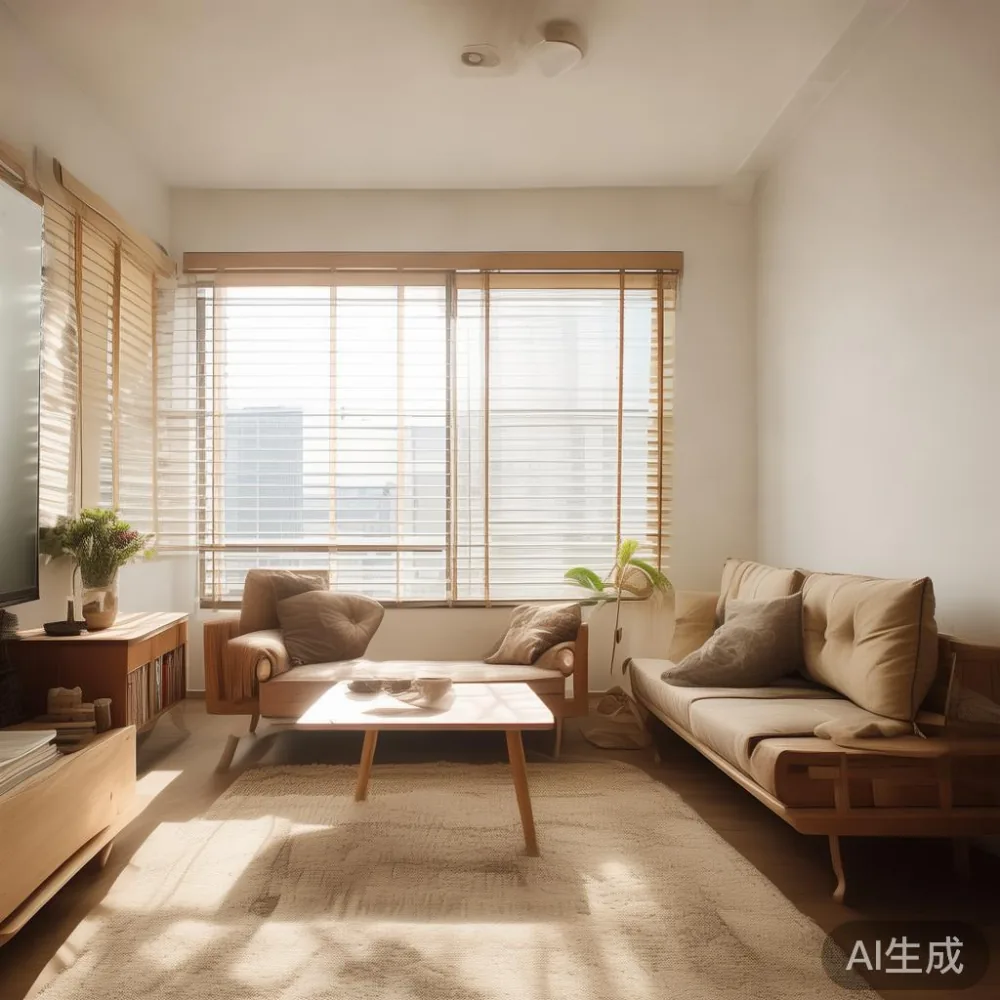
Seasonal rain, higher sea-level humidity and the way each home is ventilated all affect the result. A Tampines HDB flat with cross-ventilation may experience fewer pronounced changes than a Bedok unit with west-facing windows, but air conditioning can still create a sharp contrast between a cool bedroom and a humid corridor. In Punggol, newly occupied residences sometimes retain construction moisture in floors and wall finishes for several months, adding another source of ambient humidity.
Moderate and gradual moisture movement does not automatically ruin solid wood furniture. It can cause minor expansion across the grain, temporary gaps of less than 1 mm and slight surface movement. Problems become more likely when changes are rapid, repeated or excessive. Wood should not be treated like marble, vinyl or sealed metal: even a well-finished solid wood sofa frame or wardrobe may need a stable indoor environment.
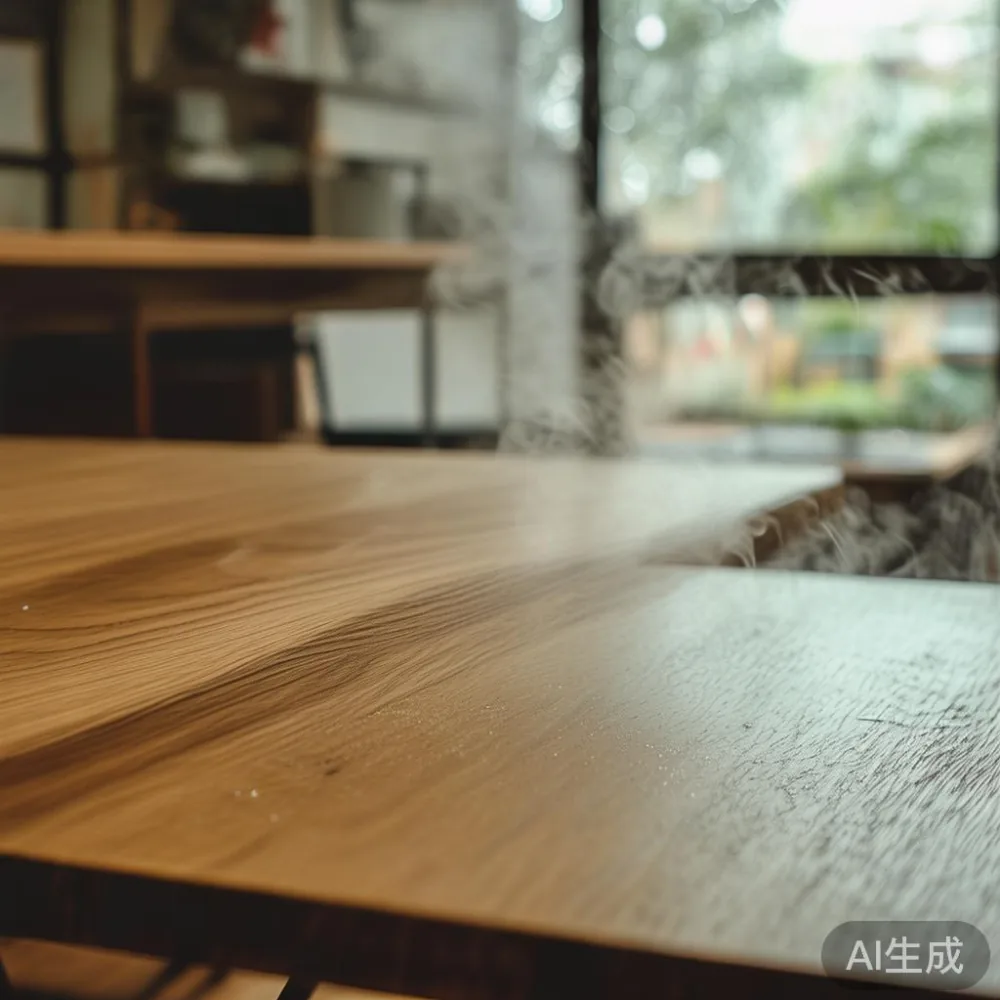
The practical target for most wooden furniture is around 40% to 60% relative humidity, with ordinary Singapore living conditions safely usable if airflow and care are managed. Hygrometers are inexpensive; a model with a 1% increment is sufficient for monitoring a bedroom, dining area or walk-in wardrobe. Position it near the furniture, not beside an air-conditioning vent or window, and record readings at similar times over 7 days.
What happens to a solid wood bed frame in a humid HDB bedroom?
A solid wood bed frame gives a Singapore bedroom useful thermal mass and a stable visual centre. It also responds noticeably to humidity. Slats, side rails, drawer components and the headboard can each move by slightly different amounts, so a joint that appears tight on delivery day may develop a thin line as timber expands.
Allow the frame to acclimatise before installation. Keep it in its packaging for 24 to 72 hours if possible, then unwrap it and leave it in the intended room with good circulation. Do not place it directly against a cold exterior wall, next to a running air conditioner or under a leaking window. Leave roughly 5 to 8 cm between the frame and curtains where the layout allows, and check the level after 7 days.
Singapore mattresses also deserve attention. A breathable cotton or linen cover helps reduce trapped moisture, while a waterproof protector should be breathable rather than completely sealed. If a mattress sits directly on solid timber slats, inspect them every 6 months for rubbing, bending or raised edges. A frame with 14 to 16 slats supporting a 160 cm by 200 cm mattress gives useful spacing, while the exact number should follow the bed design and mattress weight.
For shoppers comparing silhouettes, a search for the best European bed for 2026 can surface useful design cues, but timber species, joinery and local climate suitability matter more than a trend label. French provincial beds may suit a traditional apartment, while a low Japanese-inspired platform expresses japandi style more directly. Buyers should request the actual wood species, finish and maintenance instructions rather than relying on a photograph.
How should I protect a dining table, wardrobe and nightstand?
A dining table is often the first place where humidity becomes visible because people gather around it, wipe it frequently and place warm dishes on its surface. Use a placemat measuring at least 40 cm by 30 cm, a felt-bottomed coaster and a stable humidity range. Wipe spills within 10 minutes, especially water, alcohol or oil. Lift table runners and accessories rather than sliding them, because trapped grit can scratch the finish.
For a wardrobe in a humid Punggol or Tampines bedroom, allow space for airflow behind the sides where practical and avoid pushing the carcass tightly into an exterior wall. Adjustable feet or a plinth clearance of 3 to 5 cm can help. Check doors every 3 months, particularly after monsoon periods. If a door catches, identify the cause before tightening the hinge: seasonal swelling may require a hinge adjustment rather than sanding or forcing the wood.
A nightstand experiences both humidity and repeated hand contact. Keep electronics on a protective tray, allow 5 cm of clearance around a charging cable and remove scented candles or diffusers if they create condensation near the top. A closed drawer can protect the interior, but avoid packing clothes damp inside it. For coastal areas and upper-floor units near the sea, stable room conditions remain more dependable than expecting sealed furniture to ignore the climate.
Light-luxury positioning should guide proportion and finish, not disguise care. A solid wood bed frame with restrained hardware, a dining table with tapered legs and a wardrobe with continuous grain can show French light luxury, American light luxury or post-modern light luxury. Japandi style remains relevant because its pale woods, clean lines and functional storage suit compact homes. A marble table may provide a cool, moisture-resistant surface, but it should not be treated as proof that the surrounding wood is humidity-proof.
Can a Japandi style solid wood sofa fit into my Singapore home?
A Japandi style solid wood sofa can work well in a condo living room if the dimensions respect circulation rather than merely filling the wall. Check the lift car’s internal width and depth, the turning radius at the corridor and the doorway measurements before ordering. A common residential lift interior is about 110 cm wide and 140 cm deep, but larger condominium lifts and rebuilt HDB lifts can differ. The packed sofa may measure 220 cm wide by 90 cm deep by 85 cm high, so the package may need to be turned on its side or partially assembled.
Measure the lift door opening separately from the cab. A 90 cm doorway allows a 85 cm package to pass upright, while a 100 cm opening gives more handling room. Add at least 10 cm of working clearance around the package. In narrow corridors, protect corners with cardboard and use 2 to 4 furniture sliders; do not drag unprotected legs or a solid wood dining table base.
Before delivery, compare the route from the lift to the living room. Standard HDB corridors may be about 120 cm wide, with a ceiling height near 240 cm, while landing turns can restrict longer packages. Some furniture providers combine delivery and assembly, while others ask the recipient to move flat-pack boxes from the lift lobby. Confirm this in writing, along with the delivery window in days and any lift-booking charge in SGD.
The answer is usually yes, provided access and moisture are managed. A solid wood sofa with removable cushions may be easier to transport than a rigid upholstered frame. Keep it 20 to 30 cm from sheer curtains and 45 cm from an open balcony door where space allows. Run the air conditioner or dehumidifier if the room exceeds 65% relative humidity for long periods.
How do I compare French provincial and Japanese-inspired furniture for humid rooms?
Japanese sofa vs French provincial sofa is a comparison about more than carved details. A Japanese-inspired design usually uses a lower profile, simpler joinery and lighter visual weight, which can complement japandi style interiors. A French provincial sofa often carries a deeper seat, curved arms and a more decorative frame. In a compact Singapore living room, the Japanese-inspired arrangement may preserve more floor circulation, but comfort and room dimensions should decide the choice.
Look for kiln-dried timber, dowelled or mortise-and-tenon joints, solid drawer boxes and a finish that can be maintained. Ask whether “solid wood” applies to the visible frame, the legs, the side panels or the entire piece; mixed construction is common. A dining table with a solid wood top and hardwood base can perform well if both components are finished on all exposed faces. Stone or marble tops can reduce humidity sensitivity at the surface, yet the base, joints and cabinetry still need ventilation.
Buyers searching for a French provincial coffee table may focus on the apron, corners and underside. Ensure there is no trapped water ring beneath a coaster, and use a stable rug beneath the table if it is walked around frequently. Product pages that use phrases such as for sale Rustic furniture or top 10 Italian light luxury furniture can be starting points for visual research, but local humidity, warranty terms and delivery access should carry greater weight than a ranking.
What should I do before delivery and after installation?
Start with a 7-day room check. Record humidity near the floor, at tabletop height and beside the wall where the furniture will stand. If readings remain between 50% and 65%, normal precautions are usually sufficient. If they repeatedly exceed 70%, use a dehumidifier or improve ventilation before installing delicate pieces. Aim for steady conditions rather than opening windows and running air conditioning at opposing temperature and humidity settings throughout the day.
Ask MIDHILL to confirm the packed dimensions in centimetres, the gross weight in kilograms, the number of cartons and the delivery lead time in working days. For larger items, request the lift-access measurements directly from the building management office because renovation work can alter usable space. Ensure the floor is level and that the route can accommodate the package with a 10 cm safety margin.
On arrival, inspect the cartons for moisture, punctures or crushed corners before signing. Photograph the package, furniture and access route. Compare wood tone and movement under neutral daylight, then retain the care instructions and warranty documents. A 10-year structural warranty addresses specified structural defects, while lifetime refinishing can support long-term surface care, but the exact coverage and exclusions should be reviewed before purchase.
After installation, wipe wooden surfaces with a slightly damp cloth and dry them immediately. Avoid silicone-based sprays, abrasive cleaners and furniture polish unless the finish manufacturer permits them. Re-oil or renew the finish only according to the product guidance, often every 12 to 24 months depending on exposure and finish type. Coastal for guest room projects benefit from ventilation, stable readings and a wipe-clean surface rather than aggressive chemical treatment.
For practical questions, contact MIDHILL on +86 188 2788 2512 and request the packed specifications, wood details, current SGD price, GST treatment and expected delivery days. The goal is not to fight Singapore’s humidity, but to let solid wood move within reasonable limits while the home maintains stable conditions.
How can I preserve Japandi style furniture for 10 years or longer?
Long-term care depends on routine rather than a single treatment. Vacuum upholstered cushions every 1 to 2 weeks, lift them to clean beneath and address spills promptly. Dust solid wood surfaces weekly with a soft microfiber cloth. Keep dining-table heat limits in mind: a protective mat should remain below approximately 60°C, and hot cooking vessels should never stand directly on timber.
Inspect joints and fixings every 6 months. Recheck wardrobe gaps, bed-frame connections and nightstand levels after the two wettest quarters. Keep the finish away from standing water, and repair scratches as soon as they appear. If a surface needs restoration, ask about refinishing before applying an incompatible colour or filler.
Useful design guidance can come from the best European bed for 2026, a top 10 Italian light luxury furniture list or a search for for sale Rustic furniture, but none replaces local knowledge. A Japandi style interior works well with solid wood because grain variation and gentle seasonal movement are part of its material character. In Singapore, measure the room, control humidity, understand the access route and select care products suited to the finish.
With sensible humidity management, a dining table can host years of meals, a wardrobe can remain orderly, a nightstand can serve a bedside lamp and a solid wood sofa can anchor daily living. That combination of material honesty, light-luxury detailing and disciplined care supports the longevity expected from a 10-year structural warranty and a lifetime refinishing service.